CAPE TOWN, South Africa (AP) — The head organizer of the 2010 World Cup was reelected president of South Africa's soccer federation on Saturday despite facing criminal charges over alleged fraud while in office.
Danny Jordaan, 75, beat challenger Sandile Zungu, a South African businessman and soccer club owner, by 157 votes to 82, according to an announcement by the South African Football Association. Jordaan has been head of SAFA since 2013 and will serve a fourth term.
Jordaan was a pivotal figure in bringing the World Cup to Africa for the first time in 2010 and his work was praised in helping make the tournament a success.
But he has been followed by controversy since then.
He came under scrutiny in 2015 over if he had knowledge of an alleged $10 million bribe made by South Africa to a FIFA official to help win the 2010 hosting rights. The allegation against unidentified South African bid officials was contained in an indictment by the U.S. Department of Justice. South Africa denied the allegation.
Jordaan was accused in 2017 of rape by South African singer and political activist Jennifer Ferguson, who said the rape happened more than two decades earlier. Jordaan denied that allegation, and charges against him were dropped because of a lack of evidence.
Jordaan was arrested in 2024 and charged with fraud and theft for the alleged misuse of around $70,000 while SAFA president. He was accused alongside several others, including a former acting CEO of SAFA and the chief financial officer of SAFA.
The charges accuse Jordaan of using SAFA money to hire personal security and a PR company to enhance his public image in the wake of the Ferguson rape allegations.
The fraud case has been bogged down by delays and is yet to go to trial. Jordaan and his co-accused denied wrongdoing.
The buildup to Saturday's SAFA election was also troubled, with the national association saying some voting officials had received death threats and others had been harassed and intimidated. SAFA said it would notify the police but didn't say who was behind the threats.
See AP’s full soccer coverage here

FILE - Danny Jordaan, South African soccer association president, left, speaks during a joint media briefing in Johannesburg, South Africa, on July 5, 2023. (AP Photo/Themba Hadebe, File)
The Atlantic is quiet — record quiet — this hurricane season thanks to an enormous El Nino that crushes storms before they get going.
No Atlantic hurricanes have formed yet this year and none are likely to form for at least another week, even though this would normally be the peak of the season, according to the National Hurricane Center. Only five relatively weak and brief tropical storms have spun up this season.
On Saturday, 2026 set a record for the longest a season has begun without a storm that has reached winds of 64 mph (103 kph) to qualify as a hurricane — at least in the satellite era, said Nick Novella, a meteorologist at the government's Weather Prediction Center. Before the 1950s there were a few years where no hurricanes were recorded this late in the season, but meteorologists don't trust those records because ocean monitoring wasn't complete.
Overall hurricane activity using a measurement that factors in the number of storms, their strength and how long they last is also at a post-1950 record low, according to Colorado State University hurricane expert Phil Klotzbach. Storm activity in the Atlantic is only 7% of normal for this time of year.
People shouldn't let down their guard because it just takes one storm, even during an El Nino, to be catastrophic. Several experts pointed to 1992, which kicked off late but nastily with devastating Hurricane Andrew.
“It’s really staggering, just how inhospitable the Atlantic is to anything that could form a tropical cyclone right now,” said Kristen Corbosiero, a University at Albany atmospheric science professor. “Anything that tries to form is just getting this triple whammy” of winds that decapitate a storm, dry air that starves it and downward pushing winds that basically stomp it.
Those three forces are classic impacts of El Nino, the natural and temporary warming of parts of the equatorial Pacific that warps and warms weather worldwide, five experts told The Associated Press.
"It's just hammering the Atlantic. It’s just impressive,” Klotzbach said. “We haven’t even had anything really even close to a hurricane.”
The biggest El Nino effect in the Atlantic is record-strong wind shear, which is when strong easterly winds hit a storm system at low levels while strong westerly winds push it the other way at upper altitudes. The result is that they “tear apart” the storm, Corbosiero said.
In the area between Africa and the Caribbean where the strongest storms normally form and head west, that wind shear is about 45 mph (74 kph) more than what a tropical cyclone can withstand, Corbosiero said. That's an unheard of level, she said.
“Their heads are cut off before they even have a chance,” said University of Miami hurricane expert Brian McNoldy.
The one area where wind shear hasn't been high has been the Gulf of Mexico and those storms tend to really get going later in the season, so there could still be some strong ones coming to that region, Corbosiero and others warned.
Along with the dry air that starves the storm, African dust is choking it and there are fewer “seeds” of stormy weather that could develop, all classic El Nino signs, the experts said. And in the Atlantic, high pressure is pushing the air downward, which also hinders storms from forming, they said.
This is all despite warm waters — the world's oceans have been record hot for 100 days — that normally feed storms. It shows the power of El Nino to overcome that, Klotzbach said.
The trouble is the Atlantic waters, while warm, haven't warmed up nearly as quickly as the atmosphere above, which got hotter quickly as part of El Nino, said Massachusetts Institute of Technology meteorology professor Kerry Emanuel. His research found what matters more than just the water temperature is the difference in temperature between the air and the water; because hurricanes are powered by the flow of heat from the ocean to the air, the higher that is, the less storm activity there will be.
The waters of the Atlantic are a few months behind the atmosphere in feeling the El Nino effect. But next year, as the El Nino winds down and cools closer to normal, the warm water will persist, which will increase the odds for next season to be extra busy, Emanuel said.
Just as El Nino traditionally dampens Atlantic hurricane season, it tends to rev up tropical cyclone activity in the Pacific, with moist air and little wind shear. And so far this year, storm activity in the eastern Pacific is nearly double normal, with hurricanes lasting much longer than usual. In the central Pacific, activity is about 40% more than normal.
“It's just a party out there, one right after the other in the eastern Pacific,” Klotzbach said.
While the Atlantic has had only five small tropical storms, there have been 16 named storms in the eastern Pacific and 20 in the central Pacific.
Hawaii has been hit twice. El Nino tends to push storms farther west than other years, Corbosiero said.
Because scientists have long known about El Nino's effects on storm activity in both oceans, forecasters months ago predicted a slow Atlantic hurricane season.
“I don't think anyone really foresaw it being this quiet,” McNoldy said. “This is quite remarkable.”
The Associated Press’ climate and environmental coverage receives financial support from multiple private foundations. AP is solely responsible for all content. Find AP’s standards for working with philanthropies, a list of supporters and funded coverage areas at AP.org.
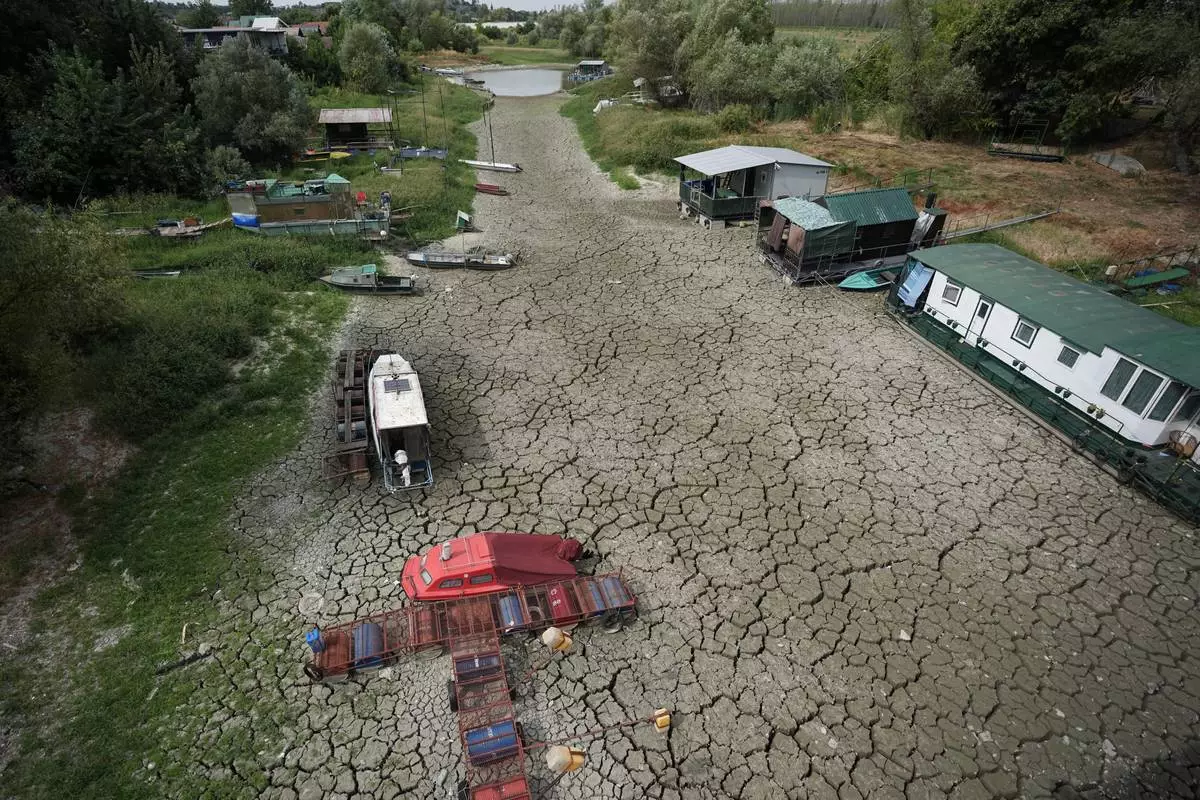
FILE - Boats sit on dry ground as water levels have dropped on the Danube River in Petrovaradin, Serbia, Aug. 25, 2026. (AP Photo/Darko Vojinovic, File)
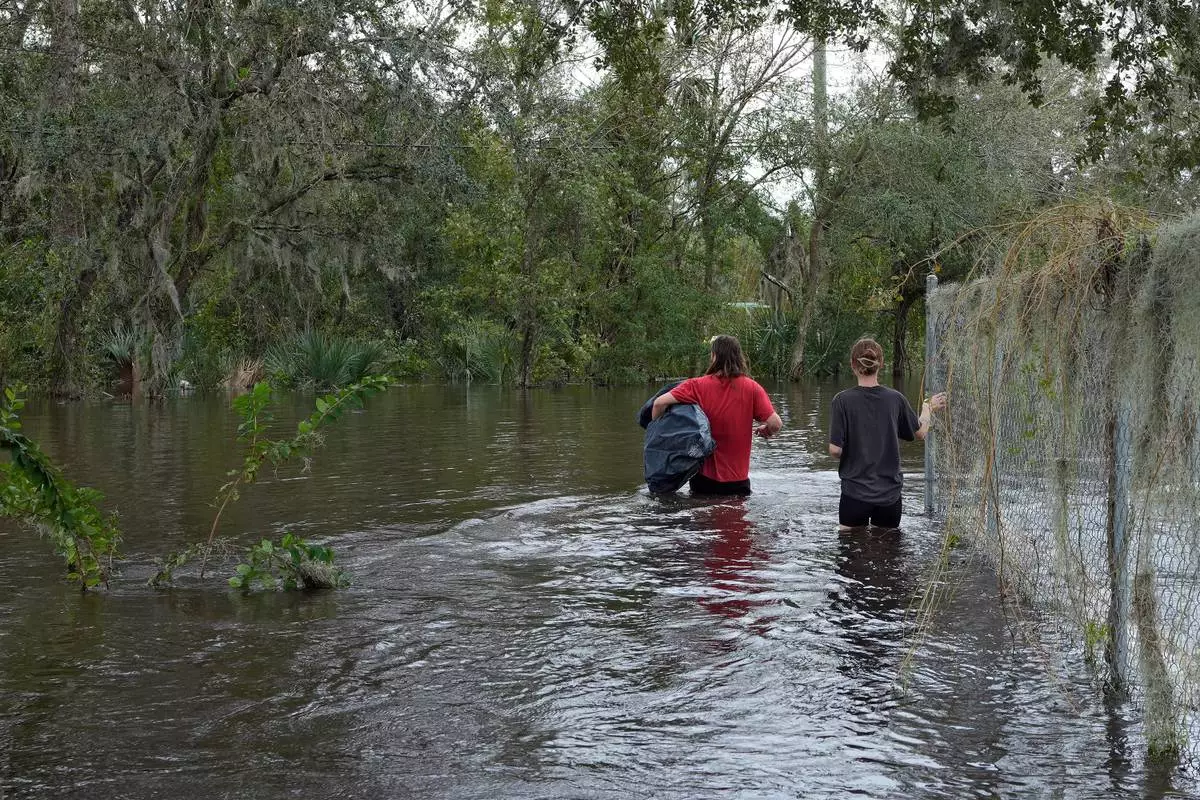
FILE - Connor Hughes and Kaylee Swenson walk through floodwaters from the Alafia River caused by Hurricane Milton, Oct. 11, 2024, in Lithia, Fla. (AP Photo/Chris O'Meara, File)
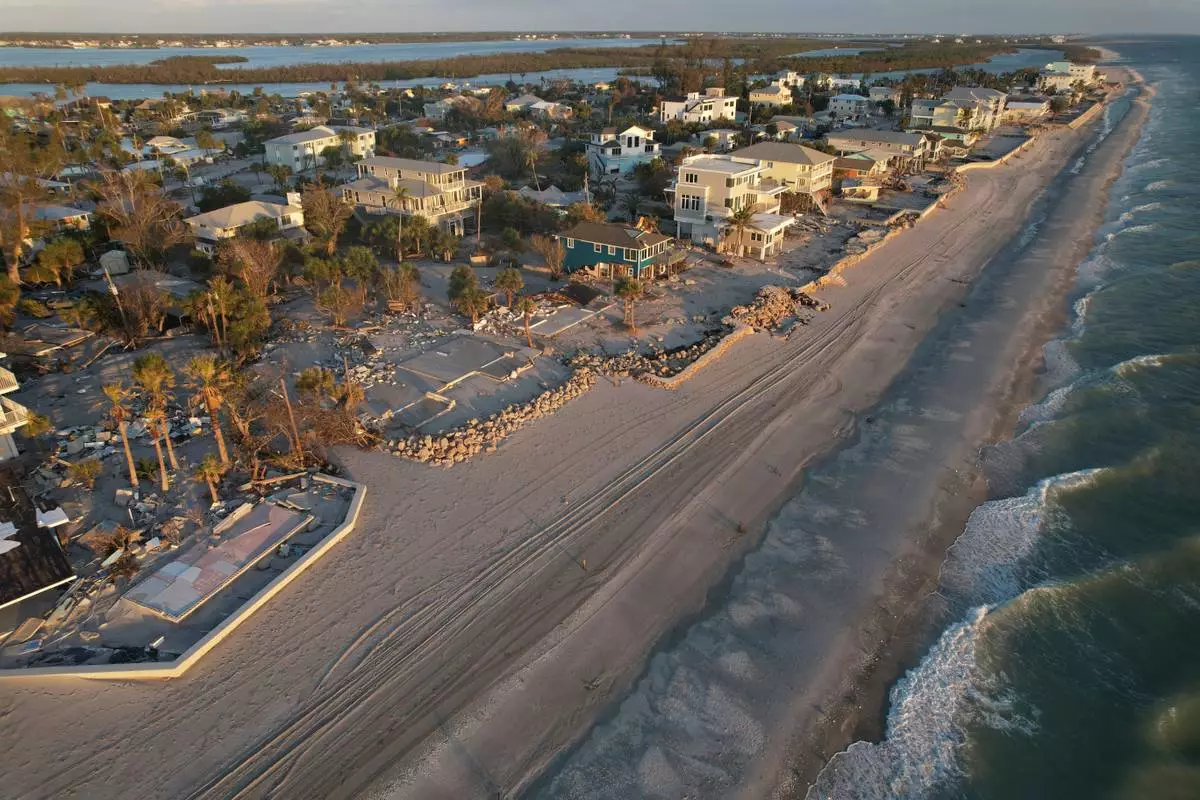
FILE - Waves roll in from the Gulf of Mexico toward lots where only empty foundations and debris remain after homes were swept away in Hurricane Milton on Manasota Key in Englewood, Fla., Oct. 13, 2024. (AP Photo/Rebecca Blackwell, File)