BALTIMORE (AP) — With a rapid double blow at the start of the second half and powerful finish, South Africa overran New Zealand 43-28 Saturday in the fourth and final test between rugby’s Greatest Rivals.
Only three points separated the teams at halftime but tries to Malcolm Marx and Pieter-Steph du Toit in the 49th and 53rd minutes gave the Springboks a critical 15-point margin.
Click to Gallery
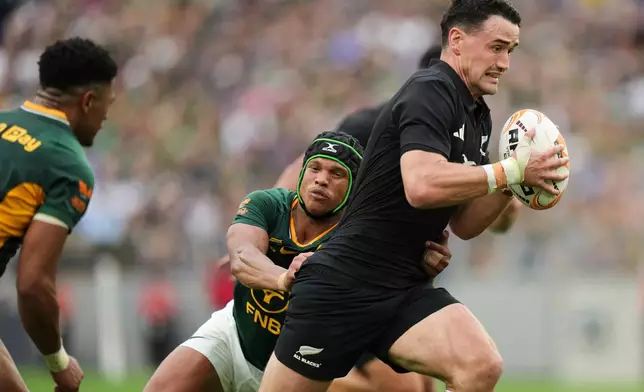
New Zealand's Will Jordan runs towards the try line during their rugby international in Baltimore, USA, Saturday, Sept. 12, 2026. (AP Photo/Stephanie Scarbrough)
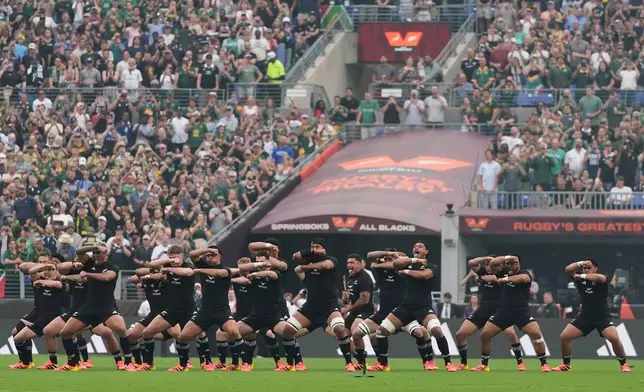
The New Zealand All Blacks perform the haka ahead of their rugby international against the Springboks in Baltimore, USA, Saturday, Sept. 12, 2026. (AP Photo/Stephanie Scarbrough)
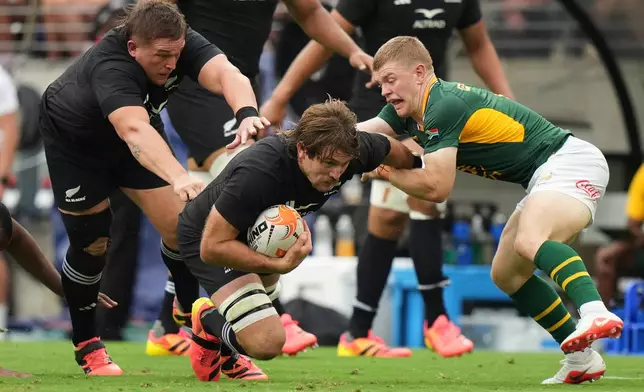
New Zealand's Ethan Blackadder runs at South Africa's Morne van den Berg, right, as teammate Ethan De Groot, follows during their rugby international in Baltimore, USA, Saturday, Sept. 12, 2026. (AP Photo/Stephanie Scarbrough)
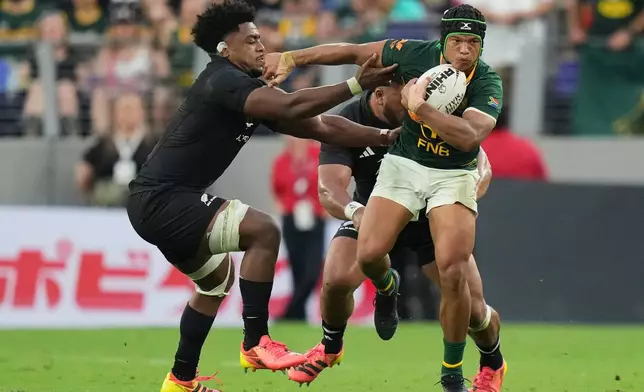
South Africa's Kurt-Lee Arendse, right, attempts to break the tackle of New Zealand's Peter Lakai during their rugby international in Baltimore, USA, Saturday, Sept. 12, 2026. (AP Photo/Stephanie Scarbrough)
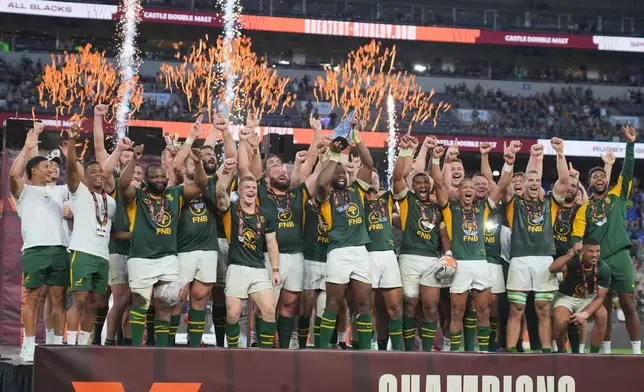
South African players celebrate after defeating the All Blacks in their rugby international in Baltimore, USA, Saturday, Sept. 12, 2026. (AP Photo/Stephanie Scarbrough)
The All Blacks counterpunched with a try to Ethan Blackadder before Kurt Lee Arendse arrested New Zealand’s momentum and went more than 50 meters for the try that settled the match and series.
As in the last three tests, South Africa had just too much for New Zealand: too much field position, too much time in the 22, too much edge at set pieces and in the air, and too much ferocity in defense. In front of almost 70,000 fans at the home of the Baltimore Ravens, South Africa had too much.
Cameron Hanekom’s try in the 78th minute made the margin greater on the scoreboard than it was on the field, though the All Blacks had the final word with a try in the last minute to Beauden Barrett.
Springboks captain Siya Kolisi defined the margin between the teams.
“We’ve got coach Rassie (Erasmus),” he said. “He knows us and gets us up. When he speaks to us he reminds us where we come from.
“The players who are in the group but not playing today, we do it for them, the guys who are injured and also for the people of South Africa who would love to have the opportunities we have.”
The Springboks administered the coup de grace after four weeks of gripping hostilities Saturday, winning the series 3-1 in a manner which will reverberate through international rugby in the 12 months before the next World Cup. They are world champions and will not easily concede that title.
The All Blacks started poorly, conceding two penalties in the first four minutes, the second of which Sacha Feinberg-Mngomezulu stroked between the posts. New Zealand also turned over its first possession in South Africa’s 22.
But when the passes stuck in the eighth minute, it again found a weakness on the edges of the South African defense. Quick hands found Damian McKenzie on the left wing, he stepped infield past Damian Willemse and Malcolm Marx before the ball found captain Codie Taylor to barrel over for the try.
South Africa then exposed the All Blacks’ weakness against quick phase ball and strong carries inside its 22. The Springboks took the ball to the line, scrumhalf Morne van den Berg went close and Damian de Allende dashed through a hole left by a defensive misread.
Van den Berg was Player of the Match and a constant threat.
Just as the game was heating up, a long delay caused by communications issues among the referee brought the action to a halt.
Communications restored, South Africa had a chance to bring its formidable lineout drive to bear. When the All Blacks halted the maul, van den Berg darted around the fringe and found the defense absent again for the Springboks’ second try.
In a highlight of the match, the All Blacks battered the Springboks defense close to the line and found it impenetrable through 32 phases until quick hands from Richie Mo’unga and Jordie Barrett put Will Jordan over. The teams went to halftime with South Africa leading 17-14.
Two dangerous incursions gave the Springboks field position and, after both teams went to their benches, the All Blacks conceded a scrum penalty. South Africa opted for the lineout drive and, on the second push, the backs joined in to force Marx over the line.
The second try came almost immediately and broke the game open. A knock-on gave South Africa a scrum, from which van den Berg went short side and found Feinberg-Mngomezulu at pace. With the All Blacks retreating, Andre Esterhuizen carried into the 22 before South Africa patiently worked the ball to du Toit, who finished the move.
By the time the All Blacks left the field at the end of the last of four majestic tests in the “ Greatest Rivalry ” series, the optimism that had been present at the tour’s outset six weeks before had drained away.
In its place was a weariness and a steel that might reappear, tempered by another year’s experience, when the World Cup comes around.
After winning the first test, the All Blacks kept close in tests two and three, but close wasn’t good enough against the world champion in its own backyard.
By the start of the final test, the All Blacks were battered, while the Springboks mostly were unscathed. The All Blacks had lost their captain Ardie Savea and a number of notable others to injuries, forcing changes to their pack and backline.
Mo’unga, who hadn’t played a test since the 2023 World Cup final in which South Africa edged New Zealand by a point, had been installed at flyhalf in place of the younger Ruben Love.
They still fought hard in the final test but South Africa had too much.
__
See AP’s full rugby coverage here
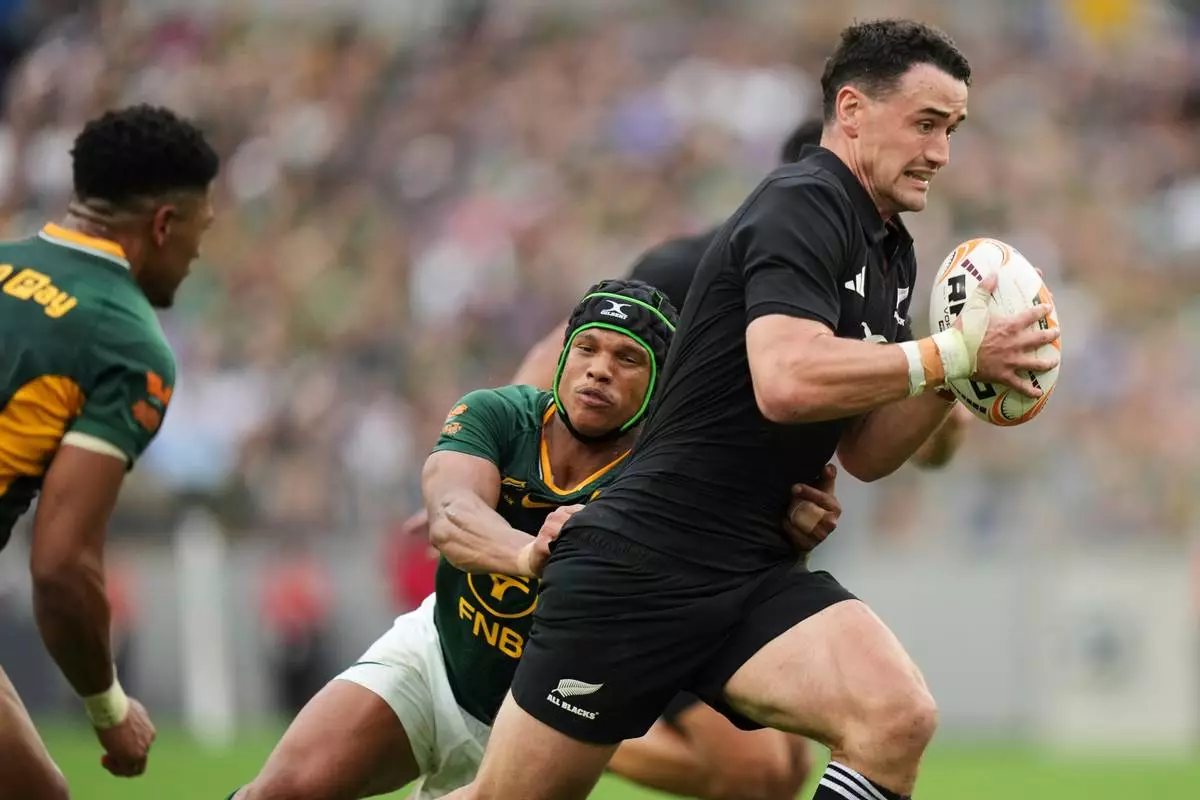
New Zealand's Will Jordan runs towards the try line during their rugby international in Baltimore, USA, Saturday, Sept. 12, 2026. (AP Photo/Stephanie Scarbrough)
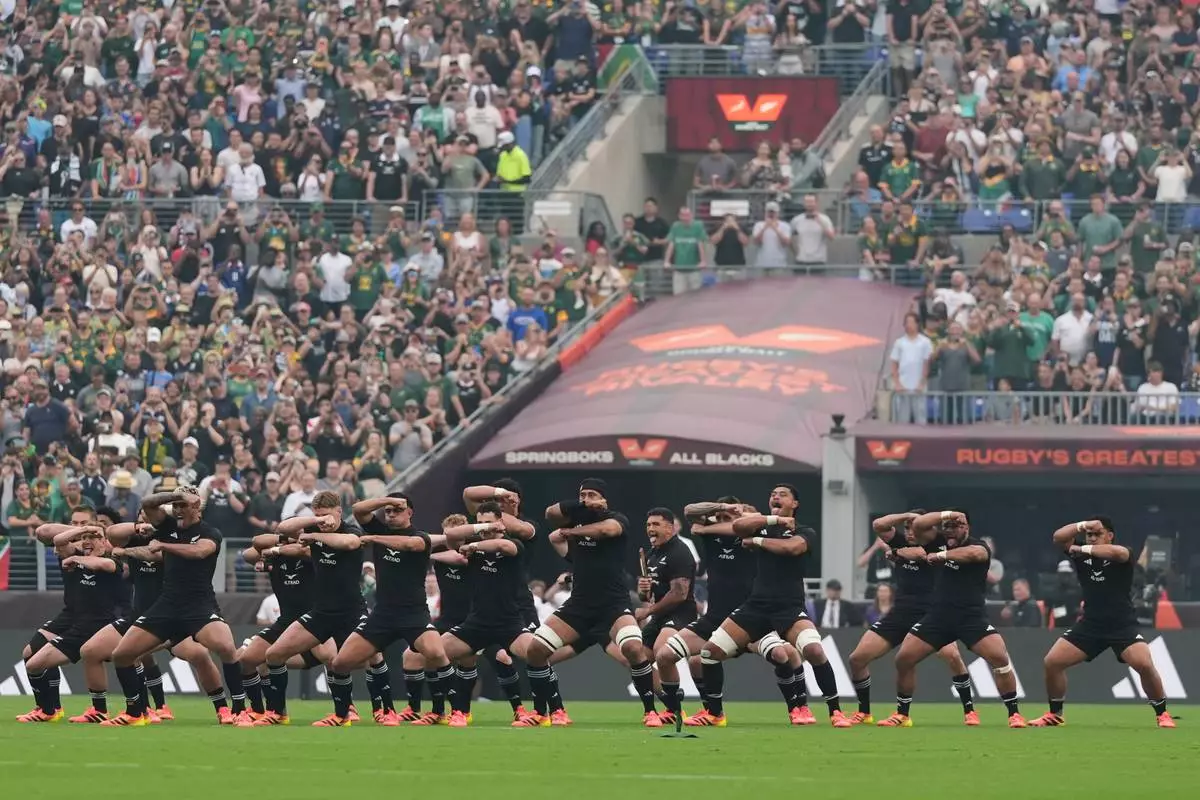
The New Zealand All Blacks perform the haka ahead of their rugby international against the Springboks in Baltimore, USA, Saturday, Sept. 12, 2026. (AP Photo/Stephanie Scarbrough)
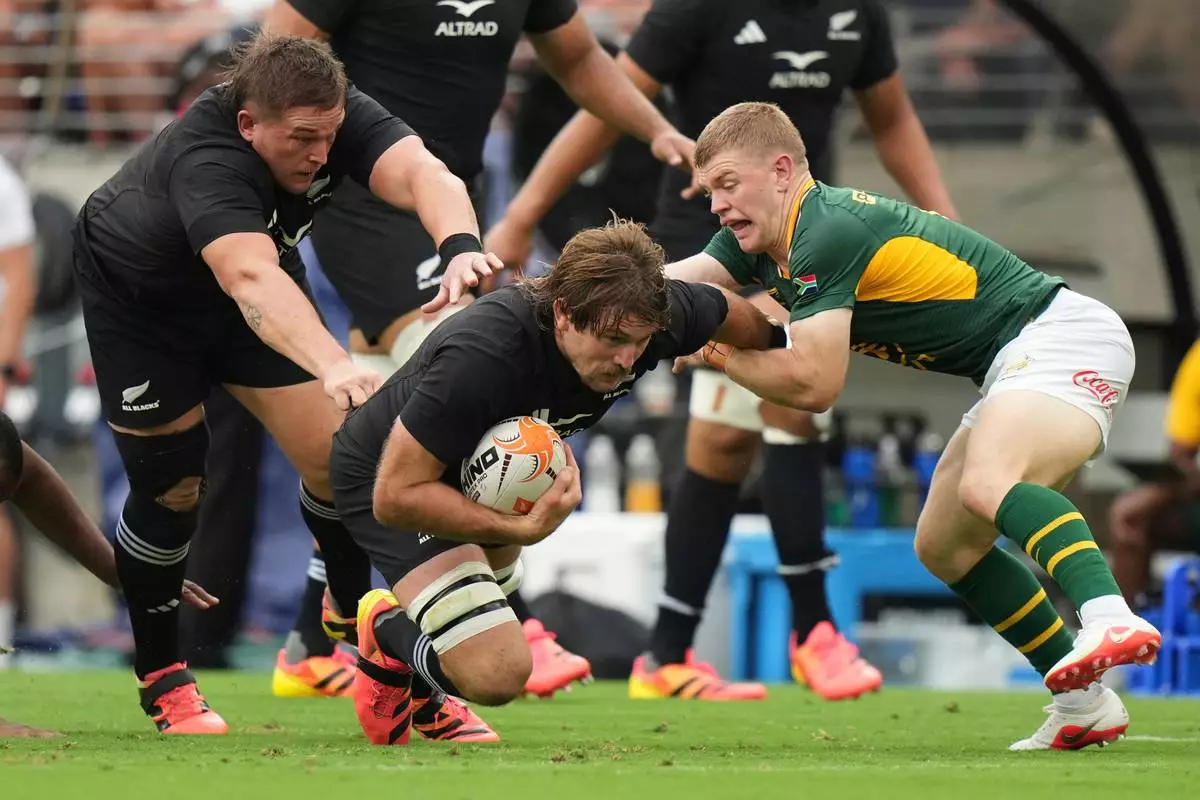
New Zealand's Ethan Blackadder runs at South Africa's Morne van den Berg, right, as teammate Ethan De Groot, follows during their rugby international in Baltimore, USA, Saturday, Sept. 12, 2026. (AP Photo/Stephanie Scarbrough)
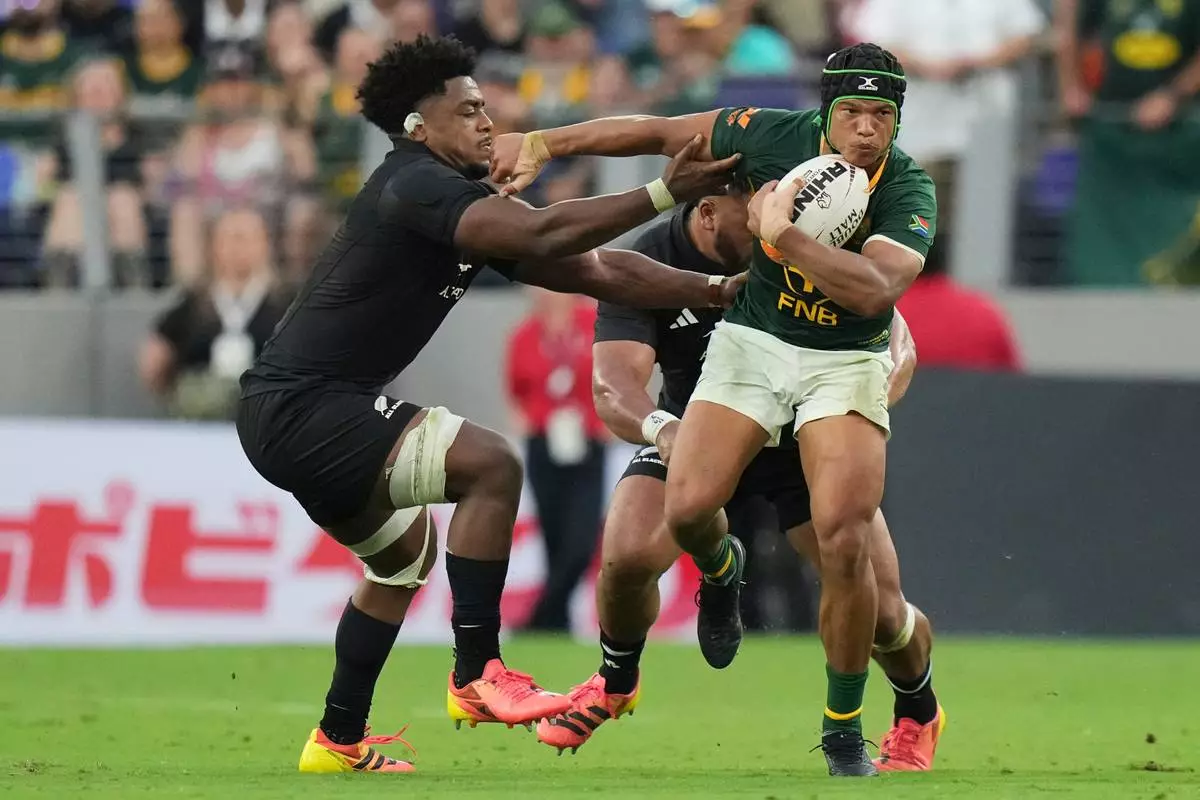
South Africa's Kurt-Lee Arendse, right, attempts to break the tackle of New Zealand's Peter Lakai during their rugby international in Baltimore, USA, Saturday, Sept. 12, 2026. (AP Photo/Stephanie Scarbrough)

South African players celebrate after defeating the All Blacks in their rugby international in Baltimore, USA, Saturday, Sept. 12, 2026. (AP Photo/Stephanie Scarbrough)