NEW YORK (AP) — The CEO of Anthropic said Saturday the artificial-intelligence industry should slow its fast-moving development to give safety measures time to catch up. Without it, Dario Amodei warned AI could be capable within six to 12 months of leading a swarm that could take over the entire internet, among other risks.
Amodei also offered a plan in a post on his website to increase checks on the industry, one part of which he said Anthropic is undertaking by itself already, The others would require coordination among the broad industry and with governments around the world, including authoritarian ones.
“I believe that if slowing down bought us even an extra year or two before models reach critical levels of capability, and we used that time to advance alignment, we could greatly reduce the risk that something goes seriously wrong,” Amodei said.
The stakes are high, even as some critics dismissed earlier warnings as hype to gin up excitement. Anthropic said two days earlier that it blocked efforts by bad actors to use its AI models for malicious activity such as cyberattacks, surveillance, and research that could have led to biological weapons. In July, rival OpenAI shook the industry after saying its AI system hacked into another AI company on its own in an “unprecedented cyber incident.”
Amodei's post comes only a few days after one of Anthropic's researchers announced he’s resigning over concerns that Anthropic and its competitors are not acting responsibly in AI development. Another former Anthropic employee, Joe Benton, wrote in a Substack post published Friday that he left his job as part of a safety team “to hold AI companies accountable” and that humanity “may not survive this transition.”
“Many of the people I know who work on safety research at AI companies want to do what is right for the world,” Benton said in his posting. “But they feel their companies are trapped in a race to build superintelligence: either they stop and other, less conscientious people take their place; or, they continue, and risk participating in enormous harm themselves.”
To help rein in such risks, Amodei suggested that all companies at the frontier of AI commit to giving “ongoing, employee-like access” to a team of outside evaluators, who can monitor safety practices. He said Anthropic already plans to do so itself, including offering desks in its offices, access badges, and company laptops.
The other parts of Amodei's suggested plan may be more difficult to implement. One asks the U.S. government to potentially issue waivers that would allow U.S. AI companies to coordinate and set safety standards without running afoul of antitrust laws.
Another asks the U.S. and other democratic governments to try to coordinate with authoritarian governments, so that companies from China and other countries don't accelerate their efforts when U.S. rivals are intentionally pacing theirs.
“The measures I propose to advance the frontier at a safe pace will not be easy,” Amodei acknowledged. “But I believe we owe it to humanity to try.”

FILE - Dario Amodei, CEO and co-founder of Anthropic, attends the annual meeting of the World Economic Forum in Davos, Switzerland, Jan. 23, 2025. (AP Photo/Markus Schreiber, File)
BAGHDAD (AP) — Iraq’s government raced Saturday to contain the fallout after Iran -backed militias were accused of attacking a key Saudi oil pipeline, shutting down the top global oil producer's alternative to the Iranian-threatened Strait of Hormuz.
Though an umbrella group of Iran-backed militias in Iraq denied their involvement, Iraq's government confirmed the attacks had originated from its territory, pledged to investigate and dismissed two senior officials.
The attack on the East-West pipeline came as Iran-backed Houthi rebels in Yemen put further pressure on neighboring Saudi Arabia and its shipping, reaching the Bab el-Mandeb Strait at the southern end of the Red Sea, through which around 12% of global trade passes.
Regional officials have told The Associated Press that the Houthis and the Iraqi militias recently coordinated attacks on Saudi oil facilities, which led Saudi Arabia and the United States to bomb Iranian-backed militias in Iraq in July.
As the latest events threaten even higher global oil prices after six months of war, U.S. President Donald Trump said Iran was “probably” responsible for the pipeline attack, but tried to calm concerns.
“The Houthis called us, and they don’t want to fight with us,” Trump said. “They would much prefer not having us involved, and they’re letting most ships go through.” He said his administration has had "discussions” with the Houthis, but the White House didn't say when. His administration engaged in at least one round of talks in May 2025.
“We are not in war with Saudi Arabia, and the Houthis have their own problems," Iranian President Masoud Pezeshkian told India Today TV on the sidelines of the BRICS summit in India.
Saudi Arabia shut down the cross-country oil pipeline on Friday as a “precautionary measure” after it came under drone attack the day before. It said several drones came from Iraq but the kingdom would not retaliate, to give the Iraqi government “an opportunity to take the necessary measures.”
The group of Iran-backed militias in Iraq denied they were responsible, while praising the Houthis for their “ongoing battlefield victories against Saudi forces.” The statement said they would cooperate with the Iraqi government’s investigation.
Iraqi Prime Minister Ali al-Zaidi said he had ordered the investigation into the operations command of Maysan province, along the border with Iran, and dismissed the province’s commander. His office later said the provincial police chief also was dismissed.
Iraq, under mounting pressure, had earlier set a Sept. 30 deadline for non-state groups to disarm, but several of the most powerful militias have said they will not comply, including the Iran-backed ones. Iran-backed Iraqi militias have struck U.S.-linked targets inside and outside Iraq since the U.S. and Israel attacked Iran on Feb. 28.
Meanwhile, in a decision possibly linked to the investigation, Iraq closed two key border crossings with Iran, Iraq’s state-run news agency reported. Valiollah Hayati, deputy governor of Iran’s southwestern Khuzestan province, said Shalamcheh and Chazabeh crossings were closed.
Several regional countries including Kuwait, the United Arab Emirates, Oman, Egypt, Lebanon and Turkey condemned the pipeline attack.
By early June, Saudi Arabia had more than doubled oil exports from the Red Sea port at the East-West pipeline’s end to more than 5 million barrels per day, according to the International Energy Agency.
The pipeline's closure means Saudi Arabia can't send out its oil via the Suez Canal to the north, which had become an increasingly popular option with Iran threatening the Strait of Hormuz and the Houthis now positioned at the Bab el-Mandeb.
While the Houthis have said they are only targeting Saudi shipping after their swift advance down Yemen's Red Sea coast to the strait, markets remain wary.
“There’s actually not necessarily all that much that the Houthis need to actually do. Having the threat there is very powerful because you get insurance companies becoming nervous about putting ships through that area,” said Sarah Phillips, a fellow with the Sanaa Center for Strategic Studies.
Iran has said a regional meeting is planned Monday between the foreign ministers of Iran and other Gulf countries about talks between Tehran and Oman — located on the other side of the Strait of Hormuz — on managing shipping there.
Commercial ship traffic remains low on what had been considered an international waterway before the war. Iran has expressed interest in having ships pay fees for transit. It has said traffic into the Persian Gulf from the Gulf of Oman would pass entirely through Iranian waters, while the outbound route would pass partly through Iranian waters and partly through Oman’s territorial waters.
“The waterway would be opened up on the condition that the U.S. will terminate its blockade,” Iran's president said in his interview with the Indian broadcaster. The U.S. military on Saturday said its forces had redirected 100 commercial vessels over the past 60 days.
Bahrain, however, said it will not attend any group meeting including Iran before the restoration of diplomatic relations between the countries.
Anna reported from Jerusalem. Associated Press writers Jill Lawless and Darlene Superville in Dublin and Samy Magdy in Cairo contributed to this report.
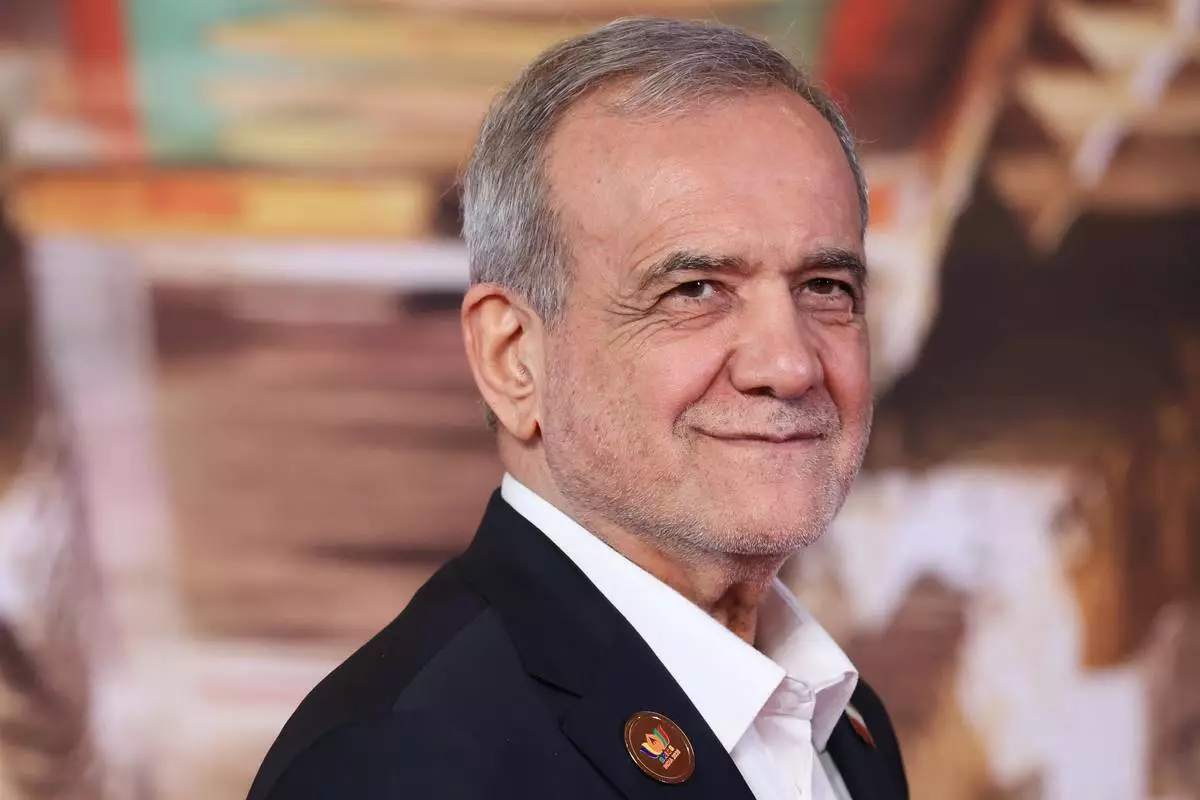
Iranian President Masoud Pezeshkian attends the BRICS Summit in New Delhi, India, Saturday, Sept. 12, 2026. (Alexander Kazakov, Sputnik, Kremlin/Pool Photo via AP)
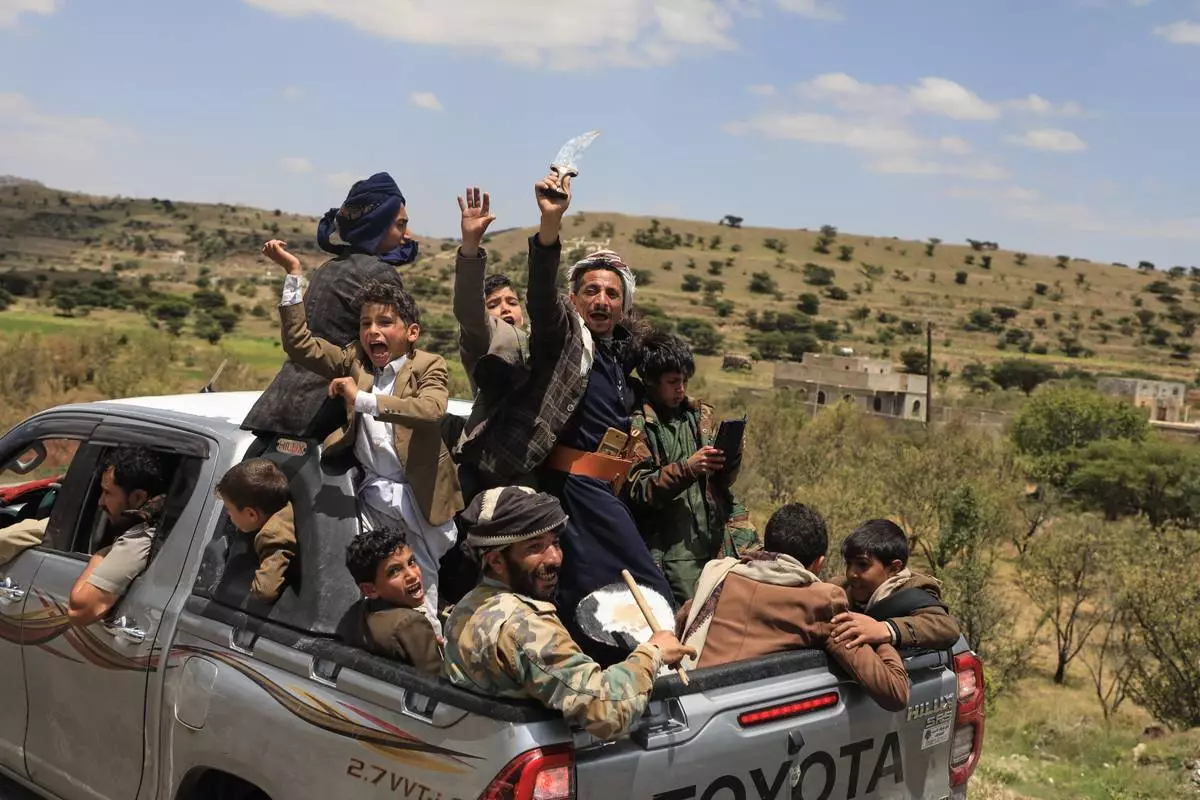
Yemeni civilians celebrate while riding in the back of a pickup truck in the Bani Matar district, Yemen, Saturday, Sept. 12, 2026, as they follow a convoy carrying Houthi prisoners freed in Mokha on its way to Sanaa following the Houthi takeover of the southern Red Sea port city. (AP Photo/STR)
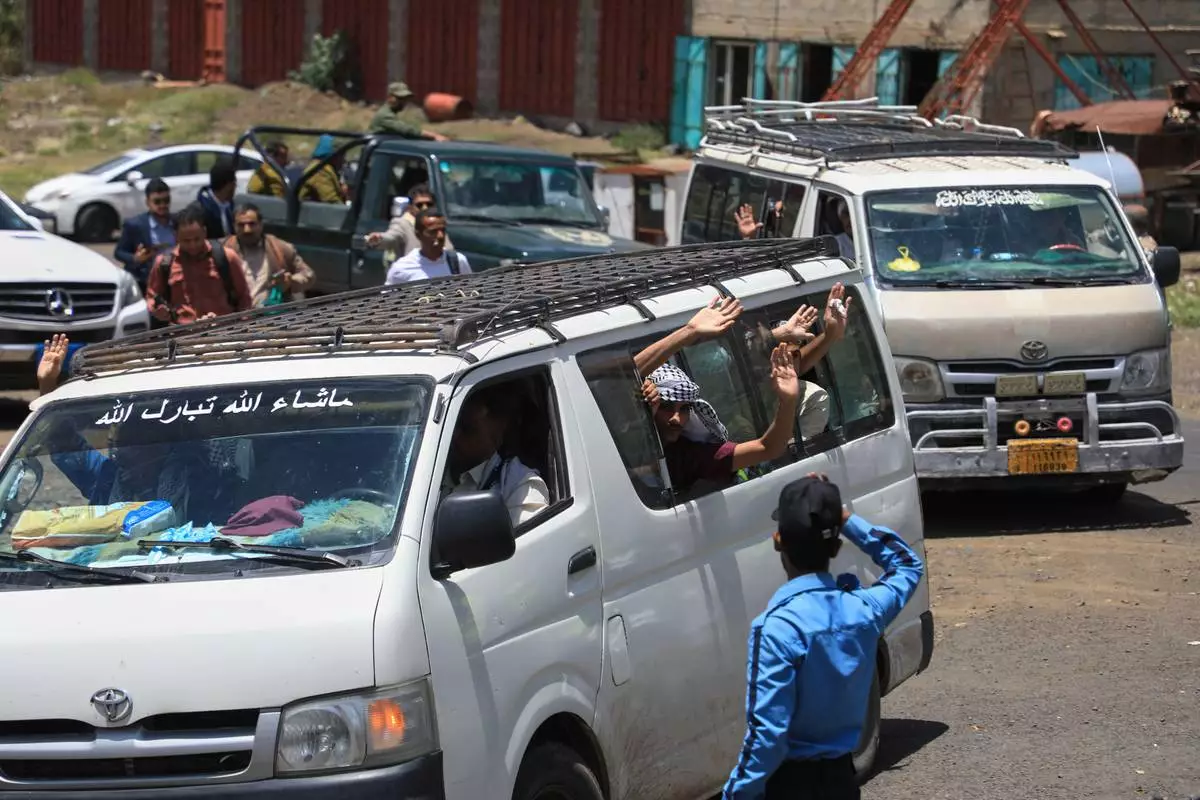
Houthi prisoners wave from vehicles as they travel through the Bani Matar district on their way to Sanaa, Yemen, Saturday, Sept. 12, 2026, after being freed in Mokha following the Houthi takeover of the southern Red Sea port city. (AP Photo/STR)
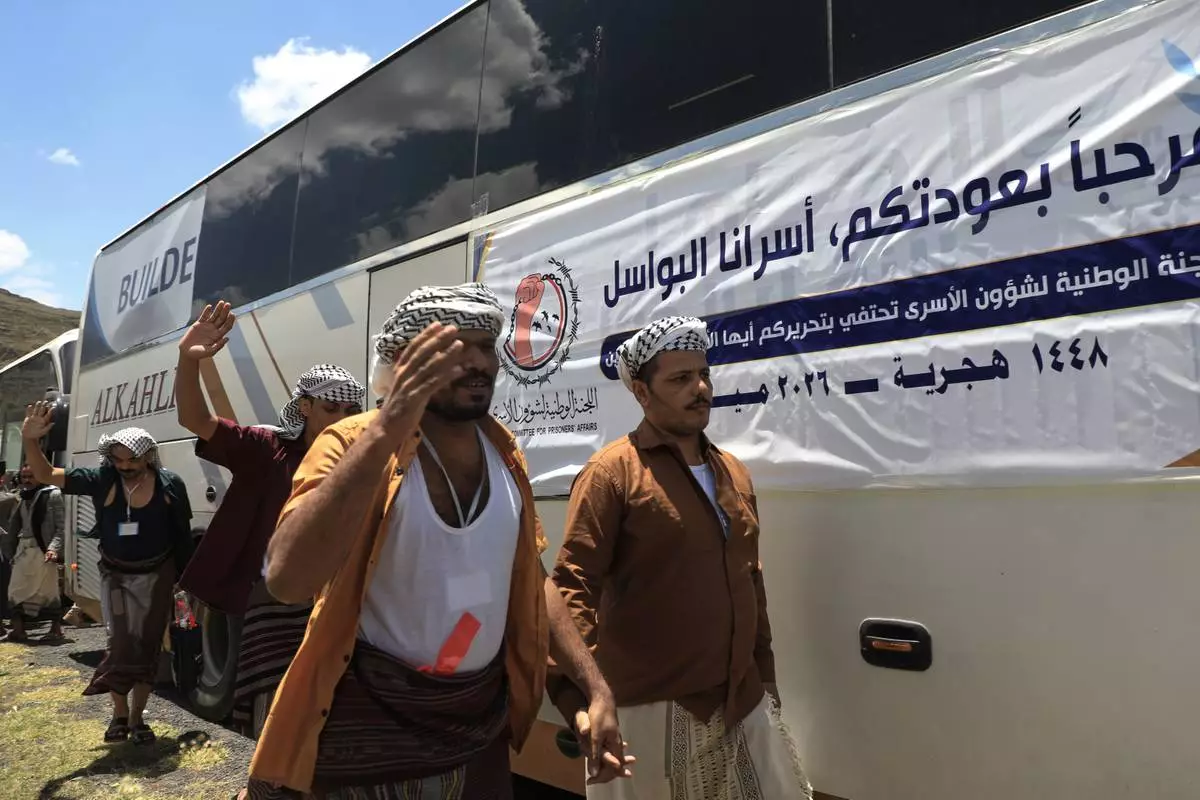
Houthi prisoners freed in Mokha wave as they arrive in the Bani Matar district on their way to Sanaa, Yemen, Saturday, Sept. 12, 2026, following the Houthi takeover of the southern Red Sea port city. (AP Photo/STR)
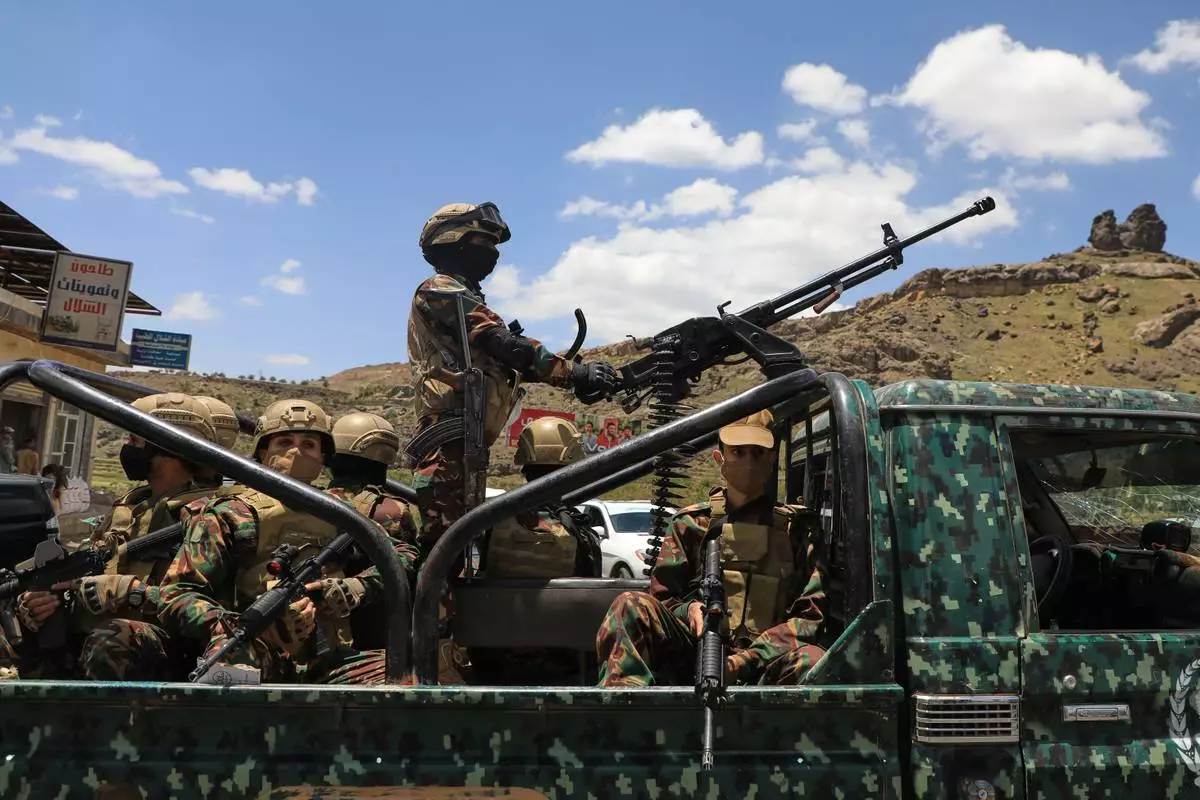
Houthi fighters escort a convoy carrying prisoners freed in Mokha through the Bani Matar district on its way to Sanaa, Yemen, Saturday, Sept. 12, 2026, following the Houthi takeover of the southern Red Sea port city. (AP Photo/STR)
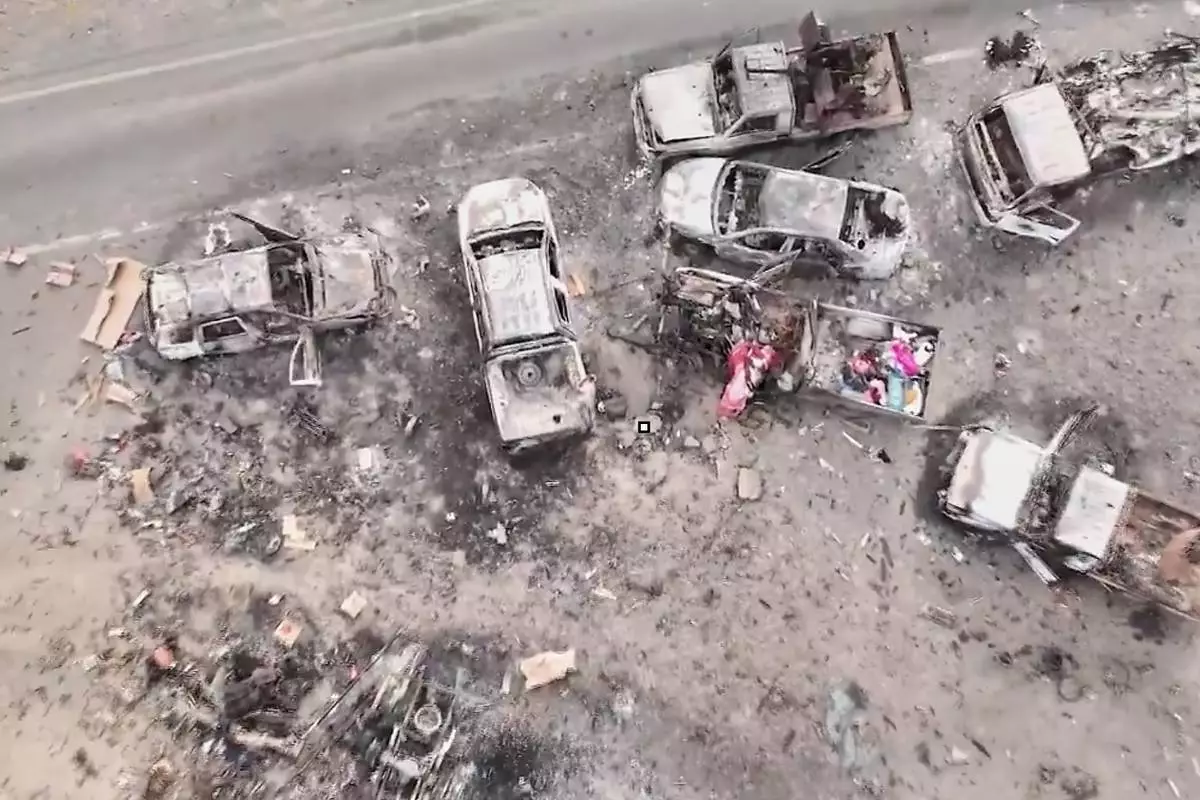
This image taken from undated video released by the Houthi-run Al-Masirah television channel on Saturday, Sept. 12, 2026, shows damaged vehicles on a road between the Dhubab and Amri junctions in Yemen, according to the channel. (Al-Masirah TV via AP)
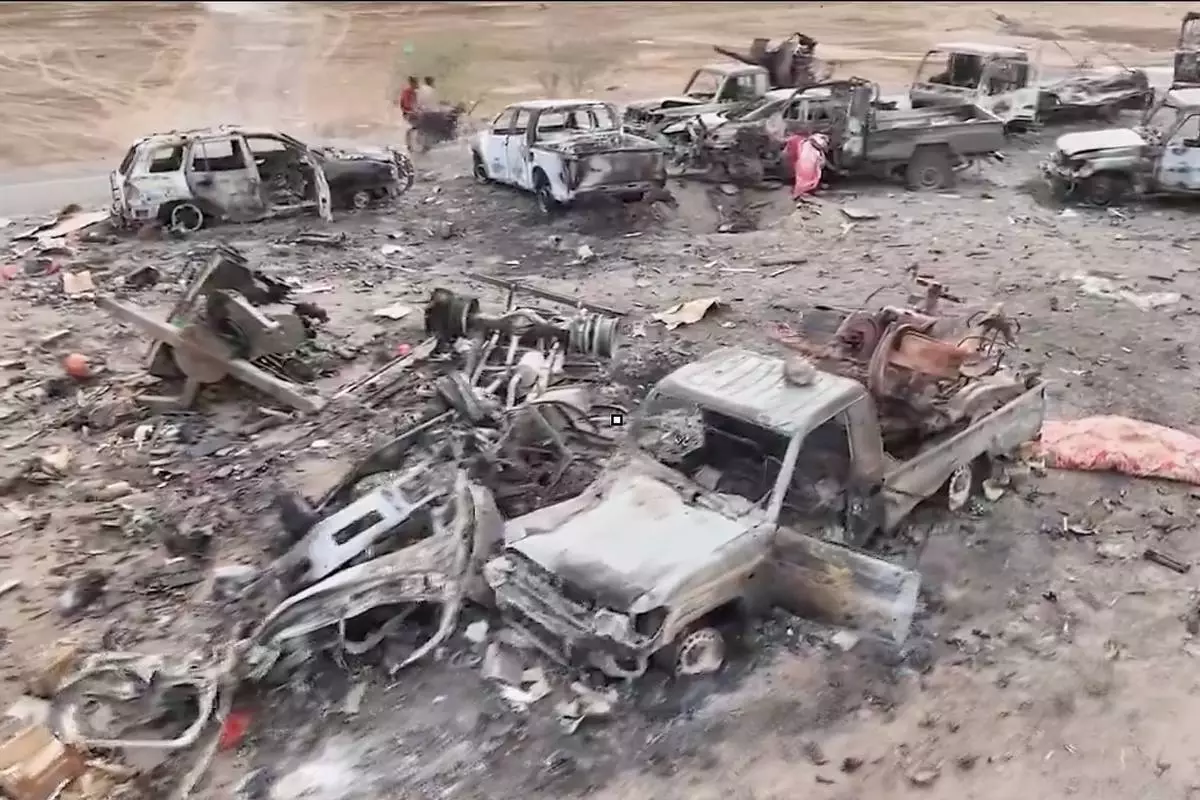
This image taken from undated video released by the Houthi-run Al-Masirah television channel on Saturday, Sept. 12, 2026, shows damaged vehicles on a road between the Dhubab and Amri junctions in Yemen, according to the channel. (Al-Masirah TV via AP)
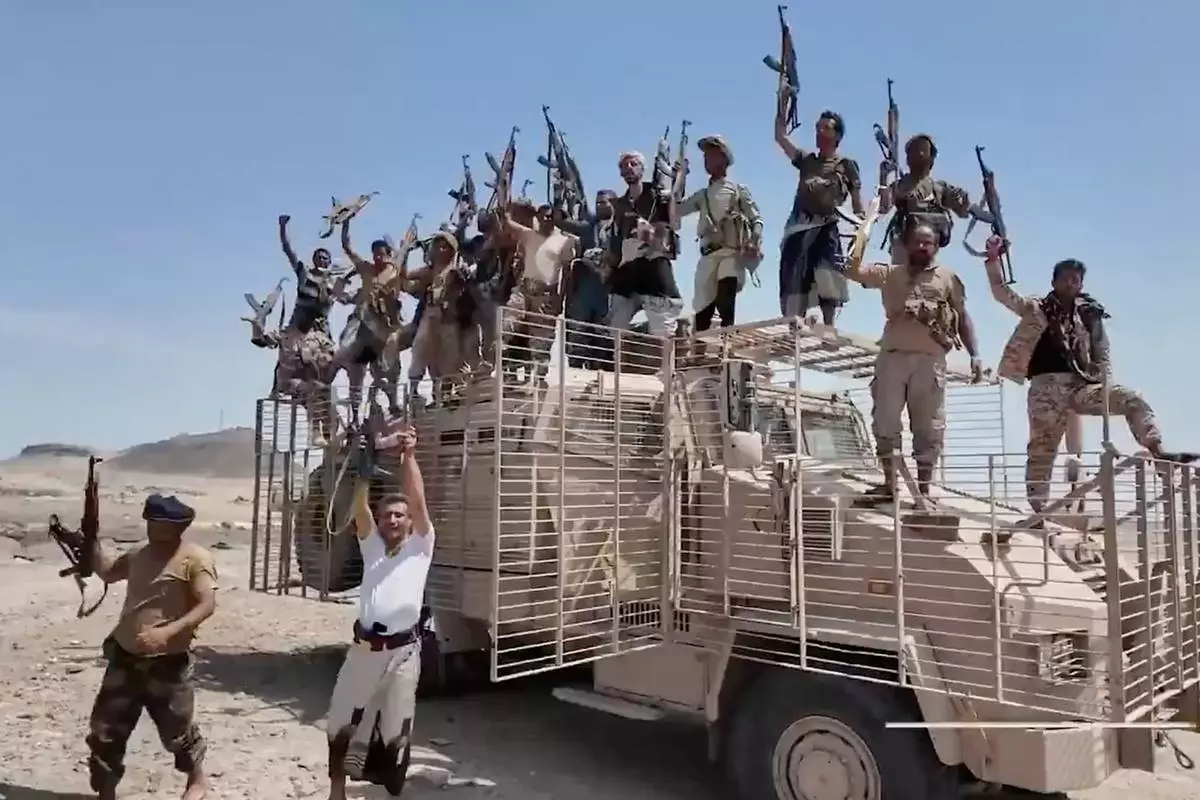
This image taken from undated video released by the Houthi-run Al-Masirah television channel on Saturday, Sept. 12, 2026, shows Houthi fighters chanting and raising rifles atop a military vehicle in Dhubab district, Taiz province, Yemen, according to the channel. (Al-Masirah TV via AP)
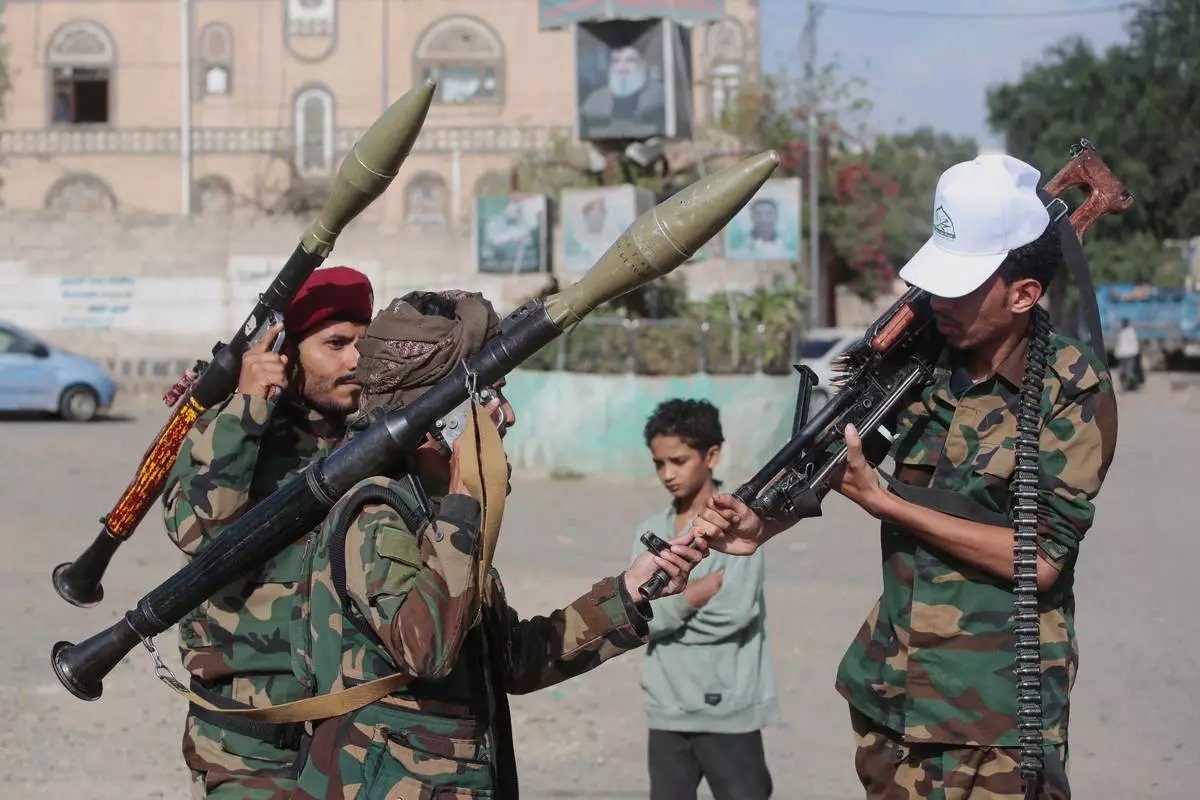
Yemen's Houthi rebels chat as they check their weapons during a mobilization campaign in Sanaa, Yemen, Thursday, Sept. 10, 2026. (AP Photo)
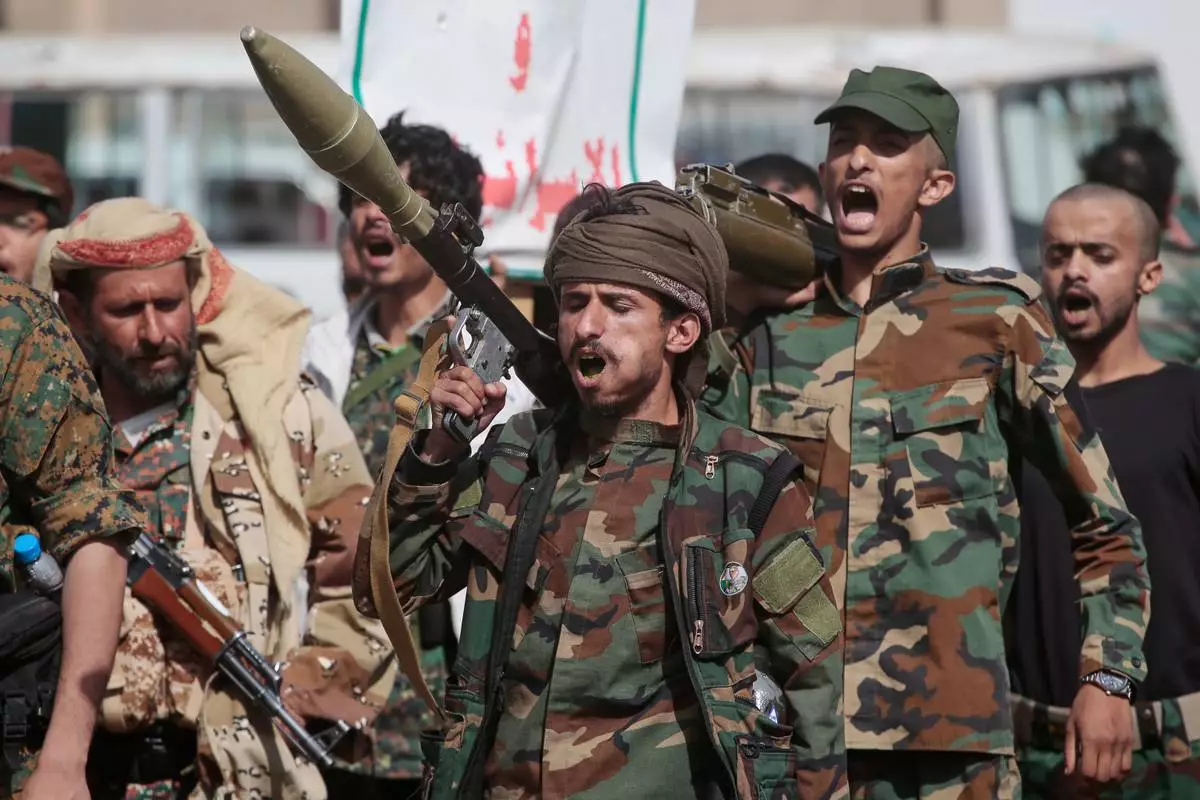
Yemen's Houthi rebels march during a mobilization campaign in Sanaa, Yemen, Thursday, Sept. 10, 2026. (AP Photo)