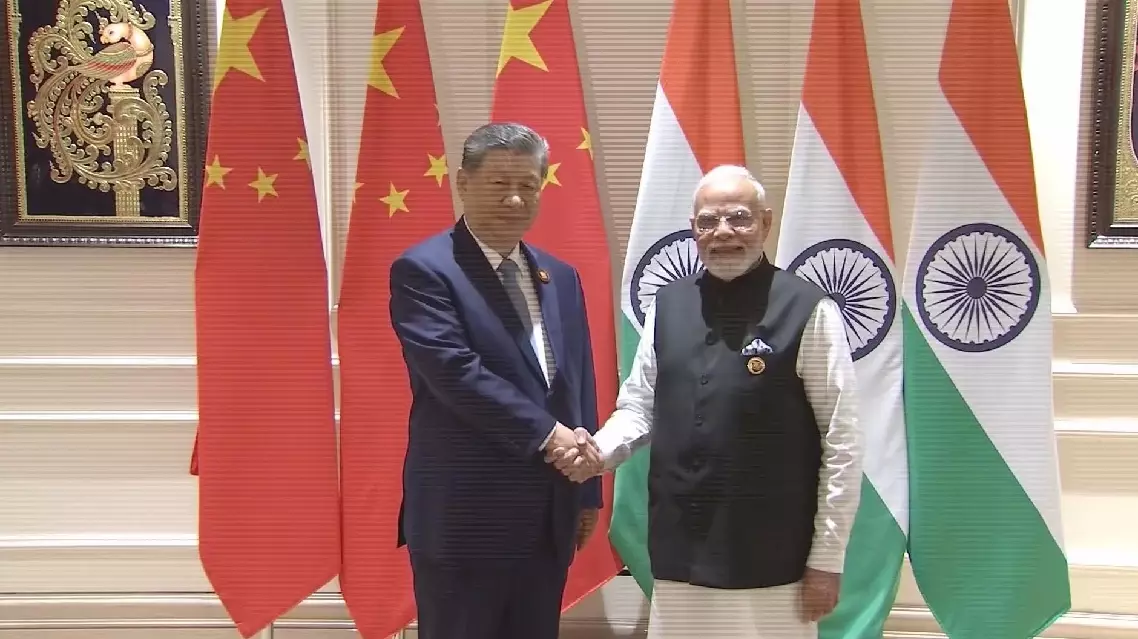
Chinese President Xi Jinping and Indian Prime Minister Narendra Modi conducted a candid and in-depth exchange of views on Saturday in the Indian capital of New Delhi, and reached important consensus that China and India should be partners.
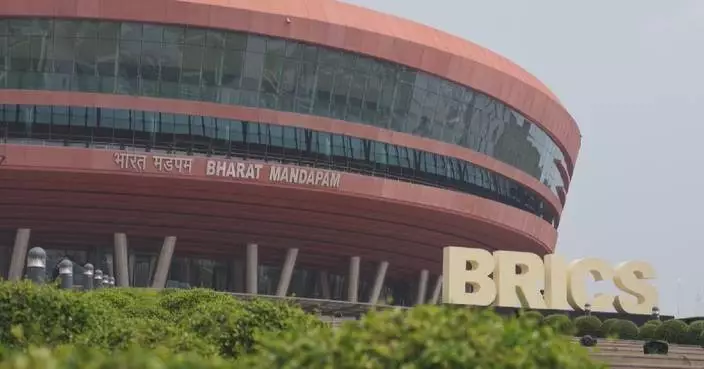
The two leaders met on the sidelines of the 18th BRICS Summit.
Xi said China has always viewed and developed its relations with India from a strategic height and with a long-term perspective.
Xi noted that he has met with Modi twice over the past two years, guiding bilateral relations from a new start to a further improvement.
Institutional exchanges between the two countries have gradually resumed, the list of areas of cooperation has continued to grow, and bilateral trade has reached a new record high, Xi added.
Xi said such hard-won progress should be cherished. Noting that China and India have different national conditions, Xi said they can draw on each other's strengths, support one another, help each other succeed and pursue common development.
Amid a turbulent international landscape, China and India, as the world's two most populous countries and important members of the Global South, shoulder important responsibilities, Xi said.
Xi called on the two sides to keep in mind the future of humanity and the well-being of peoples, work together to promote high-quality development of greater BRICS cooperation, and contribute more positive energy to world peace, stability, development and prosperity.
Underscoring objective and rational strategic perception in calibrating China-India relations, Xi said China and India are partners for cooperation, not rivals. The two countries provide development opportunities for each other rather than pose threats to each other, he added.
That is a strategic judgment based on the development stages of the two countries and the international environment, and serves the common interests of both countries and their peoples, Xi said.
Xi called on both sides to help each other succeed through win-win cooperation.
The two sides, Xi said, should focus on development as their greatest common denominator, while strengthening friendly exchanges and mutually beneficial cooperation.
He called on the two sides to expand cooperation in people-to-people exchanges, direct flights and other areas to effectively strengthen the public support for bilateral relations.
The two sides should also balance and address each other's economic and trade concerns, and promote a sound and stable development of bilateral economic and trade ties, Xi added.
Xi called on China and India to draw on political wisdom of mutual respect and understanding to overcome disruptions, urging both sides to pursue parallel progress in bilateral ties and border issues with the two tracks reinforcing each other, so as to maintain peace and tranquility in border areas.
He also urged China and India to promote multilateral cooperation with openness and inclusiveness to benefit the world.
Xi said the two countries should support each other as rotating chair of the BRICS, strengthen coordination within such multilateral frameworks as the United Nations, the Shanghai Cooperation Organization and the Group of 20, stand together in addressing global challenges, and unequivocally uphold international fairness and justice.
Modi said he has held several productive meetings with Xi, guiding India-China relations toward a positive direction, which serves the common interests of the more than 2.8 billion people of both countries.
The two major civilizations of India and China have, over thousands of years, learned from each other through exchanges and moved forward hand in hand, he said.
India always views India-China relations from a strategic height and a long-term perspective, and is willing to be a partner rather than a rival to China, and to regard each other's development as an opportunity rather than a challenge, he noted.
India adheres to an independent foreign policy, and the development of its relations with China is not subject to the influence of any third party, he said.
India's policy and position on the issues related to Taiwan and Xizang remain unchanged, and it does not allow any force to engage in anti-China activities in India, he said.
India is ready to maintain high-level exchanges with China on the basis of mutual respect and mutual trust, strengthen strategic communication, promote mutually beneficial cooperation, and enhance people-to-people exchanges, so as to advance bilateral relations to greater heights, Modi said.
The two sides should work together to safeguard peace and tranquility in the border areas, he added.
India thanked China for its support for India's hosting of the BRICS summit and will fully support China in assuming the BRICS chairmanship next year, he said.
Modi said India is ready to closely coordinate and cooperate with China to jointly strengthen cooperation among Global South countries, promote a more multipolar world and global economic growth, and serve as a force for stability and progress in a turbulent world.
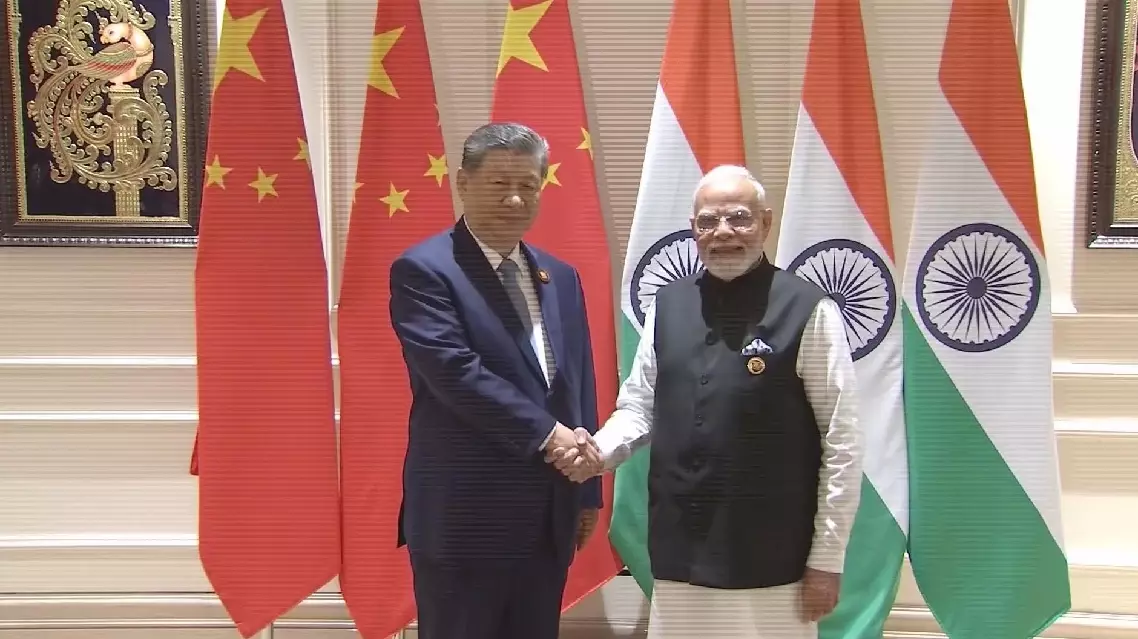
Xi, Modi conduct in-depth exchange of views, agree China, India should be partners
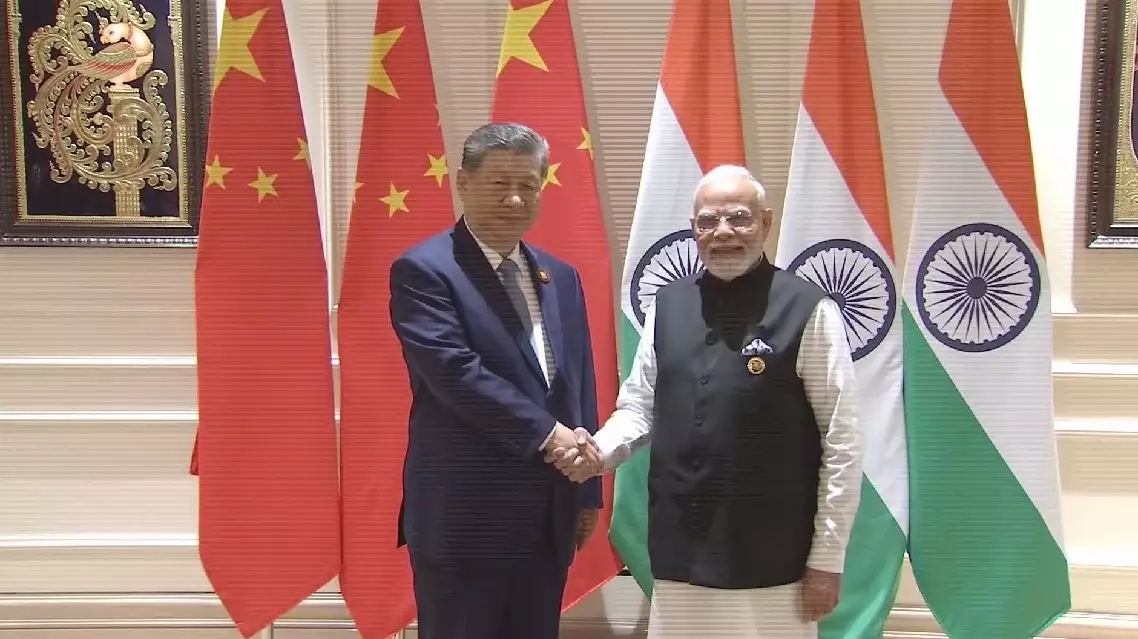
Xi, Modi conduct in-depth exchange of views, agree China, India should be partners
Xi, Modi conduct in-depth exchange of views, agree China, India should be partners