Skip to Content Facebook Feature Image

Humanoid robots showcase advances in embodied AI at CIFTIS

China

China

China

Humanoid robots showcase advances in embodied AI at CIFTIS

2026-09-13 12:13 Last Updated At:12:37

Embodied artificial intelligence (AI) has emerged as a major highlight at the ongoing 2026 China International Fair for Trade in Services (CIFTIS), with humanoid robots and related technologies showcasing advances across the industry's full industrial chain -- from whole-machine motion and underlying control systems to data collection and training.

More than 130 companies and institutions are exhibiting in the telecommunications, computer and information services exhibition hall at this year's CIFTIS, where the full industrial chain of embodied AI is on display.

Humanoid robots are among the key attractions, demonstrating technologies covering whole-machine movement, underlying control and data collection.

One humanoid robot on display is equipped with a domestically-developed electronic architecture platform for robots. The architecture is designed to meet functional and safety requirements across a range of applications, including daily life, industrial production and healthcare.

"With the enhanced security functions of the electronic architecture, we can effectively prevent cyberattacks or damage caused by viruses, ensuring that our robots can carry out their designated tasks in a secure state," said Li Ping, a representative of an exhibiting company.

Difficulties and high costs in collecting and calibrating data have long been the challenges hindering the development of the embodied AI industry.

An exhibitor specializing in data services for embodied robots has developed a simulation training system that can highly replicate real-world physical environments.

The system allows robots to undergo repeated training and trial-and-error in virtual settings, significantly reducing training costs for embodied intelligence companies.

The company has so far made more than 100,000 hours of human behavior datasets freely available worldwide, covering 15,000 different scenarios.

"We hope this can help small and medium enterprises in China's embodied AI industry, as well as research institutions, conduct training more quickly and lower the barriers to accessing data. Meanwhile, we are also promoting the standardization of data products and hope to process the data to a high-quality standardized level, so that the same dataset can be reused by multiple teams," said Dong Xiaochao, a representative of the exhibiting company.

The five-day CIFTIS opened on Wednesday, drawing participants from 90 countries, regions and international organizations, with over 1,800 companies showcasing their service products on-site.
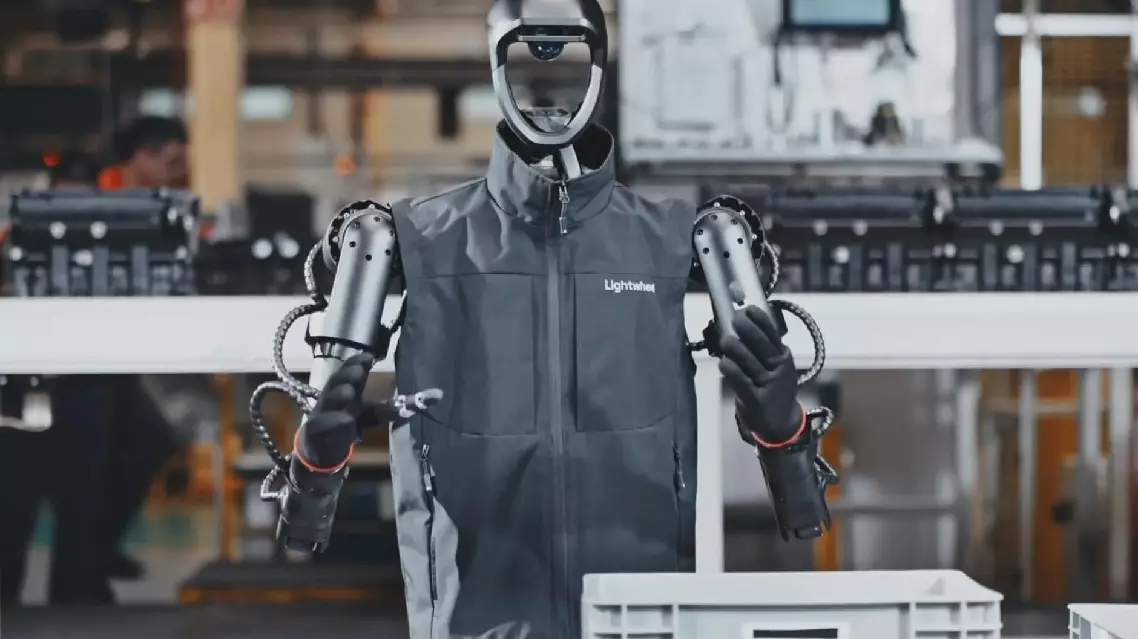
Humanoid robots showcase advances in embodied AI at CIFTIS


Humanoid robots showcase advances in embodied AI at CIFTIS

The BRICS cooperation mechanism creates greater predictability for smaller countries in an increasingly unstable world, said an Azerbaijani expert.

Established 20 years ago, the BRICS has now become the world's most influential platform for cooperation among emerging markets and developing countries.

As BRICS leaders are gathering in New Delhi, India for the 18th BRICS Summit this weekend, Farhad Mammadov, director of the Center for Studies of the South Caucasus, sat with the China Global Television Network to talk about the significance of the event and explain the reason why Azerbaijan has formally applied to join the bloc.

"The political dialogue taking place within the framework of BRICS is of great importance to Azerbaijan. Azerbaijan's application to join the cooperation mechanism reflects, first and foremost, the recognition of the value of political dialogue conducted within the organization. The current world order and international relations are facing a crisis, leaving small and medium-sized countries in an unstable environment. The emergence of cooperation mechanisms like BRICS makes it possible to establish at least some degree of predictability," he said.

Mammadov pointed out that as regional conflicts in key waterways force global trade to shift toward alternative land corridors, the BRICS and Chinese initiatives can help Azerbaijan strengthen its role as a regional transit hub.

"Traditional trade routes used for decades are now in high-risk zones. There is a pressing need to develop new overland routes that offer greater safety and predictability for major producers. In this context, financial mechanisms established by China and within the BRICS framework create opportunities for implementing major infrastructure projects, which also involve Azerbaijan to varying degrees. Consequently, cooperation with both Chinese financial institutions and BRICS platforms is a key part of Azerbaijan's efforts to further expand and deepen its role as a transit hub," Mammadov said.

BRICS was initially formed by Brazil, Russia, India and China, later expanding with the addition of South Africa. Today, the bloc has expanded to 11 member countries and 10 partner countries, becoming a force for advancing a multipolar world and greater democracy in international relations.

BRICS brings predictability for development of smaller nations: Azerbaijani expert

BRICS brings predictability for development of smaller nations: Azerbaijani expert

Recommended Articles