Two political leaders from Taiwan have spoken out against recent remarks by Lai Ching-te, who claimed that United Nations General Assembly Resolution 2758 pertains only to China's representation at the UN and has "nothing to do with Taiwan."
Their comments came at the Sixth Cross-Strait Exchange Seminar held on Friday in Urumqi, Xinjiang Uygur Autonomous Region.
Lai, at a separate event, asserted that Taiwan is a "sovereign independent nation," drawing criticism from Taiwan's Labor Party President Wu Rongyuan and New Party Chairman Wu Cherng-dean.
"The resolution 2758 of the United Nations General Assembly fully reflects and solemnly affirms the one-China principle. Apart from that, a series of international legal documents after World War II, including the Cairo Declaration and the Potsdam Proclamation, have clearly stated that China has sovereignty over Taiwan. What Lai said has distorted the legal principles and historical facts. Now, the Taiwan separatists are colluding with external forces and going against the motherland. That’s really ridiculous and will only turn out to be a chess piece of others," said Wu Rongyuan.
"Such a Taiwan separatist. Lai tries stubbornly to distort the facts, but what he says and does cannot change everything. There is no dispute that Taiwan is part of China. The compatriots on the Chinese mainland and in Taiwan all know that. So now we are not talking about whether we should reunify the country or not. We are talking about starting to study how to achieve reunification and the great rejuvenation of the nation for the people. I have full confidence that this is the trend and we should work together in this direction," said Wu Cherng-dean.
Both party leaders reiterated that there is only one China and that reunification remains an irreversible trend.
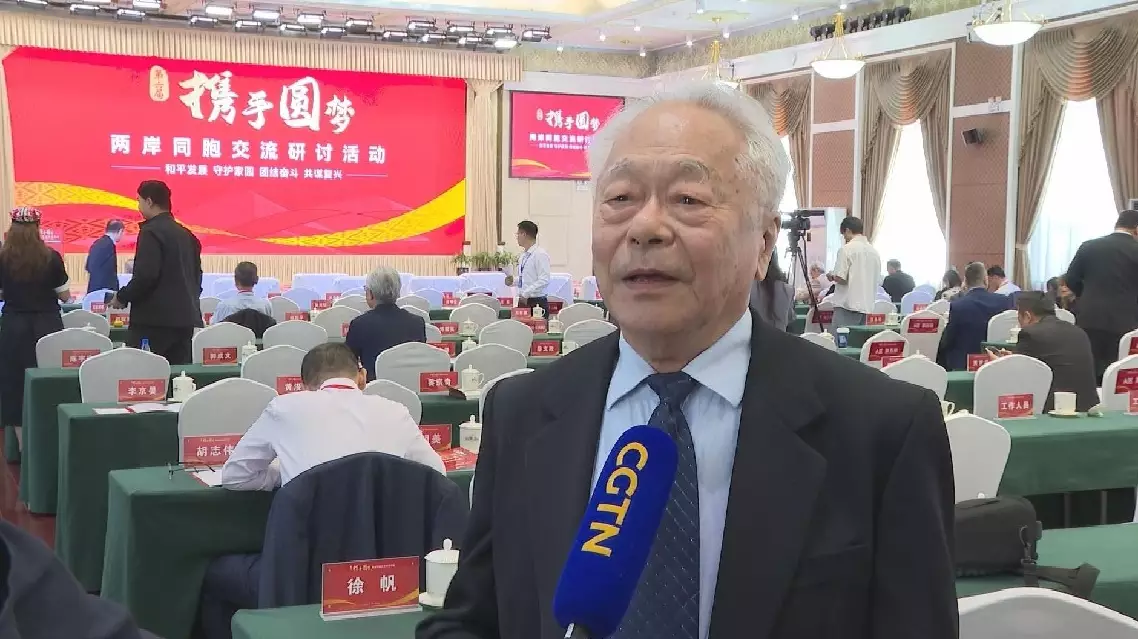
Taiwan party leaders criticize Lai Ching-te for distorting historical facts
India, heavily reliant on China for electronic components, is seeking to strengthen its own manufacturing capacity by adopting technologies from its largest trading partner as the BRICS summit opens with trade cooperation high on the agenda.
As the BRICS summit gets underway, boosting trade within the bloc is a key focus. This year, China has become India's largest trading partner, with electronics making up a significant share of that trade.
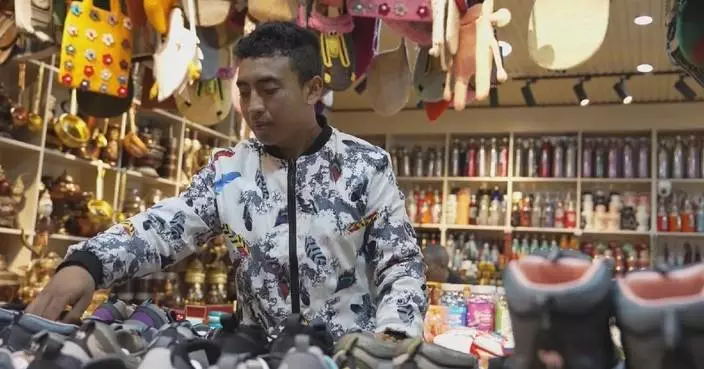
Pramod Yadav, director of AD Net, has been selling cables, mobile and laptop accessories, and monitoring cameras in New Delhi's Nehru Place, where for decades Indians have come to buy, repair and upgrade their technology, for more than 20 years.
He has witnessed a shift from loose, unbranded imports brought in through grey channels to finished products and components supplied directly by major manufacturing hubs in China.
While India's electronics manufacturing sector is seeing increased investment and ambition, significant gaps remain to be addressed.
"We need to focus more on things like molding machines and components, such as ICs (integrated circuits) and chips, right here in India. We should learn from China -- observing how they manufacture these products and understanding their technology, so that we can then advance this sector in India," said Yadav.
India imports more than 10 billion U.S. dollar worth of electronic components from China each year, spanning key categories such as displays, batteries, PCBs and camera modules.
China also remains India's largest source of integrated circuits, with imports rising nearly 64 percent year on year.
India's own semiconductor mission is racing to close that gap. But observers say a faster way to strengthen manufacturing in the long run would be to ease restrictions on the transfer of machinery and technical know-how.
"I think what it should be that we should allow the machinery and technology come in without any duty and any customs problems. So rather than people importing those products, they can manufacture here. It will create employment. Let technology import freely and rather encourage it," said Mohammed Saqib, president of India-China Economic and Cultural Council.
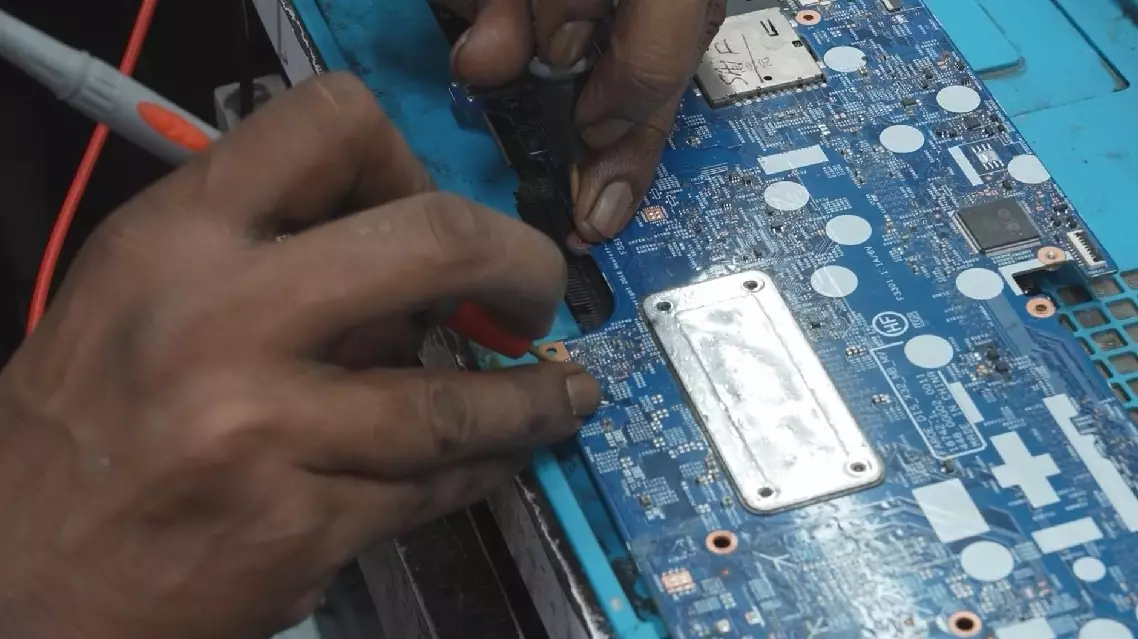
India seeks China technology skills to strengthen electronics manufacturing