As the BRICS summit opened Saturday in India, the impact of the group's decisions was being felt far beyond the meeting halls, reaching the streets and homes of ordinary South Africans.
South Africa's strained water, electricity and sanitation systems could soon receive a boost after the BRICS-founded New Development Bank (NDB) approved a one-billion-dollar program for the country's eight major metropolitan areas.
In Johannesburg, the country's economic hub, aging infrastructure and poor services have become urgent concerns. Executive Mayor Dada Morero said the new funding will target critical needs.
"We have prioritized water and electricity infrastructure. And of course, the third priority will be on our road infrastructure. So those three key are important for us. Because if we don't have water, then the city will not function. We don't have power, the city will not function. Those two are in the main A priority, including the road infrastructure focusing on resurfacing of our roads so that we can increase the lifespan of our roads," said Morero.
With municipal debt mounting and infrastructure funding falling short, Johannesburg was forced to seek help after the National Treasury temporarily froze new financing earlier this year. Morero said the city has been relying on its own resources but needs outside help to keep up.
"We're relying on our own money that we are raising to supply water and electricity. And of course, the money we raise through rates and taxes. But over and above, we also have to raise money in the capital market for us to be able to support infrastructure," he said.
South Africa's national government also sees value in turning to multilateral lenders like the New Development Bank for support.
"It is better to have funding from the multinational institution than going straight to the market. It relieves us from the burden of going straight to the market. So we've got a funding model which looks at how much we go to the market and how much do we get from the institutions and NDB, AfDB, African Development Bank, KFW, World Bank," said Enoch Godongwana, finance minister.
Still, some experts warned that loans from international lenders may come with new risks, especially when priced in U.S. dollars.
"The BRICS New Development Bank needs to de-dollarize and lend in local currencies, especially where it's local goods, where you don't necessarily have any increase in export capacity. Not only is it more expensive if you borrow in dollars than if you borrow in rand, because of the tendency of our currency to decline, but that also means a very high interest rate internationally," said Patrick Bond, distinguished professor of sociology at the University of Johannesburg.
The NDB is now backing Pretoria's Credit Guarantee Vehicle with a 100-million-dollar investment aimed at unlocking more infrastructure spending.
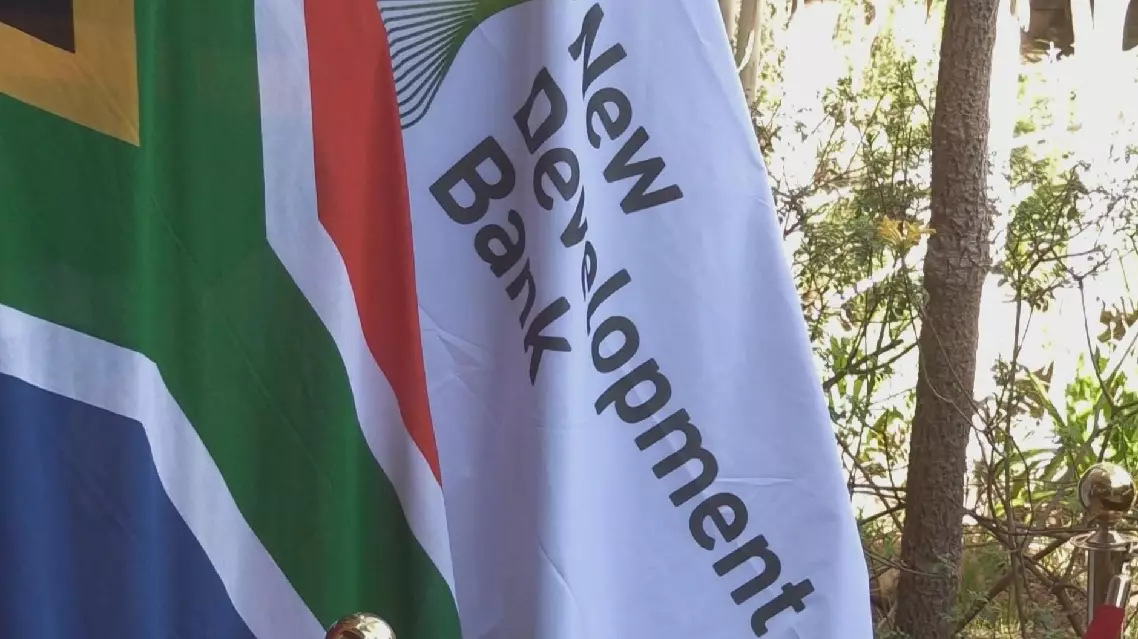
BRICS bank funds infrastructure repairs in South African cities