Computing power services are gaining momentum as artificial intelligence (AI) technology evolves, opening new avenues for the development of trade in services and becoming a highlight of the ongoing 2026 China International Fair for Trade in Services (CIFTIS) in Beijing.
The five-day CIFTIS opened on Wednesday, drawing participants from 90 countries, regions and international organizations, with over 1,800 companies showcasing their service products on-site.
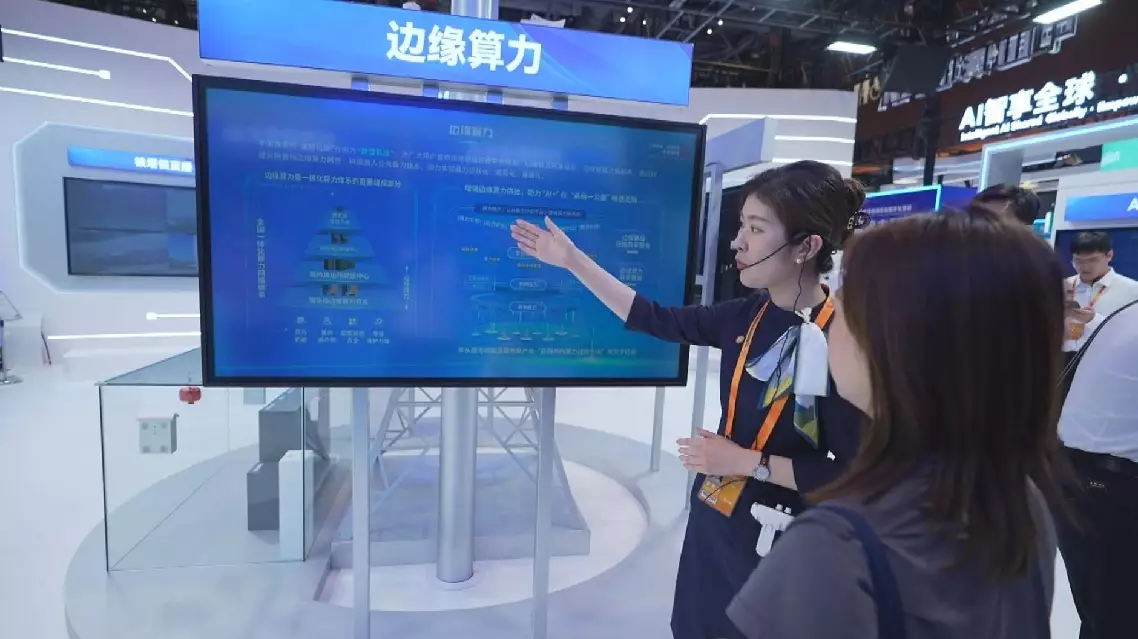
Exhibitors at the 2026 Thematic Exhibition: Telecommunications, Computers and Information Services are shifting their focus from traditional communication offerings to integrated services combining computing power and AI.
"Currently, we operate over 2 million base stations, and each base station has a supporting communication machine room. We have integrated computing facilities into these machine rooms, upgrading them into data centers that can provide localized, distributed computing services. This enables real-time computing support for applications such as AI-powered forest fire prevention, disaster mitigation, and water quality monitoring in local areas," said Qiao Zhi, a staff member of China Tower Beijing Branch.
Beyond these application services, China's industry chain leaders are showcasing a broad array of innovative solutions at the upstream segment, including chip design, testing, verification, and technical licensing. Chinese service providers are offering tailored solutions for a diverse range of regions and markets.
"For example, European and American clients tend to prefer large-model, high-performance chips, while clients from the Middle East and Southeast Asia focus more on edge-side AI chips, mainly to assist their smart city projects and robotics initiatives. Chinese enterprises can meet the customized demands of different regions, different customers and different scenarios," said Wang Wenqian, head of research and development of the Joinsilicon, which provides customized products and solutions for the semiconductor industry.
Services that can be digitally delivered, including those related to computing power, are becoming an important engine driving the growth of services trade. According to China's Trade in Services Development Index Report 2026 released at the CIFTIS, the share of digitally deliverable services in global services exports rose to 57.9 percent in 2025.
Computing power services emerge as new growth driver for trade in services
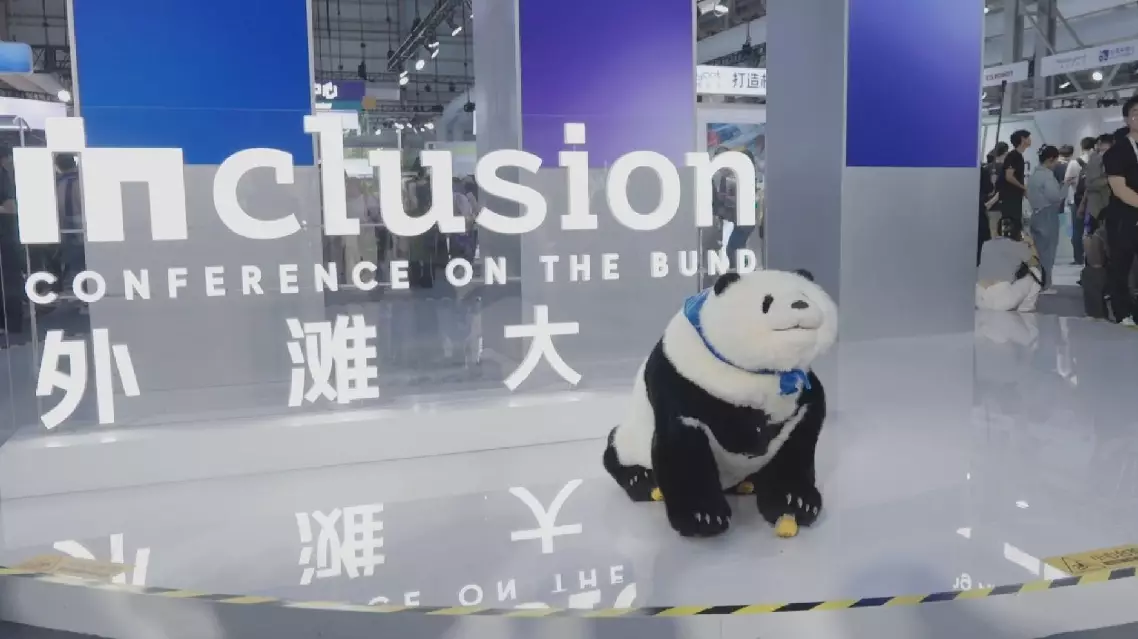
Artificial intelligence (AI) agents, embodied intelligence, and other emerging technologies took center stage at the four-day 2026 Inclusion Conference on the Bund in Shanghai, which concluded Saturday.
Under the theme of "Building the AI Economy Together," the conference attracted more than 300 companies to showcase their technologies, with applications ranging from AI agents and financial services to embodied intelligence and industrial systems.
The displays signaled a new phase in integrating AI into enterprise workflows, financial transactions and industrial automation as the tech industry shifts from building ever larger models to deploying practical real-world applications.
"I would expect in one or two years' time -- in fact it's already happening -- it's becoming a platform from which we do all the works on top of this platform. So also now the important part is [that] it's going to impact every field. The question is how we work to take advantage of AI to do our work at the next higher level," said Chua Tat-seng, a fellow at Singapore National Academy of Science.
For enterprises, the commercial incentive lies in boosting productivity, cutting operating costs and automating complex tasks, with experts noting that digital agents are already delivering the most immediate utility to specialized professionals.
"For the digital world, the question is how we can scale it up and also make very general agents [available] to everyone. So now actually for the current stage, for the people who can benefit most from the digital agents are actually the experts in different subfields," said Liu Ziwei, an associate professor at the Nanyang Technological University.
AI is moving beyond the digital world. More than 40 embodied-intelligence companies are presenting technologies designed for real-world environments, signaling a shift from generating information toward robots executing real-world labor. That shift could be where the next phase of the AI economy begins.
"Painting a fan may look like a fun and simple task, but it actually shows how robots are evolving from simply being able to grasp and lift objects. Each joint has a built-in torque sensor, giving the entire arm a sense of force," said Yang Wentao, director of the business department of Flexiv, a deep-tech company that is committed to developing and manufacturing general-purpose adaptive robots.
Yang added that combined with precise force control and fast response, the robot can sense contact in real time and adjust its movements accordingly.
Despite rapid advancements, industry developers emphasize that hardware and software integration remains in a formative stage.
"Robotics, no matter the hardware or software, is not mature at all. We are working on our robotics. For example, [in case of] some far distance or some dangerous space, so humans or manpower would be reluctant to do that. So we can replace [them] with humanoids to have this task fulfilled," said Li Hongyang, a 2026 Ant Intech Awards winner.
Practical AI applications, embodied robotics take center stage at Shanghai's Inclusion Conference