Europe's biggest flea market in France attracted bargain hunters last week as inflation forced shoppers to seek savings.
With inflation biting across Europe, the historic Braderie de Lille drew massive crowds and vendors on September 5 and 6, turning the city's streets into a lively arena for thrifty shoppers and sellers alike.
The tradition, dating back to the 12th century, brought together thousands of vendors and millions of visitors looking to stretch their budgets and find secondhand gems.
"It's a way of saving money and for people to avoid throwing things out," said Patricia Chardon, a visitor from Montpellier.
For senior shoppers in particular, holding onto their spending power is a key concern.
"For retired people, the thing we need to defend is our purchase power," said Michel, a Lille resident.
French people are well aware of the economic conditions they are living in, said Gabriel Attal, a presidential candidate who visited the market.
This year, the event also served as a showcase of modern payment technology, with the European Union promoting its new cross-border payment app, Wero.
"Obviously having so many countries involved gives you an opportunity to have a much wider commercial impact," said Lucas Lokumo from Wero.
But digital changes couldn't displace old habits for some vendors. For Lucas Thury, a vendor at the market, he still prefers to deal with everything by hand at his stall.
"It's more practical. I jot down the number of sales, the number of customers. It's way faster with a bit of paper and a pencil," said Thury.
Last week's event proved, whether with cash or digital payments, the instinct to hunt for bargains and unexpected treasures remains as strong as ever.

Lille flea market draws crowds amid inflation woes
India, heavily reliant on China for electronic components, is seeking to strengthen its own manufacturing capacity by adopting technologies from its largest trading partner as the BRICS summit opens with trade cooperation high on the agenda.
As the BRICS summit gets underway, boosting trade within the bloc is a key focus. This year, China has become India's largest trading partner, with electronics making up a significant share of that trade.
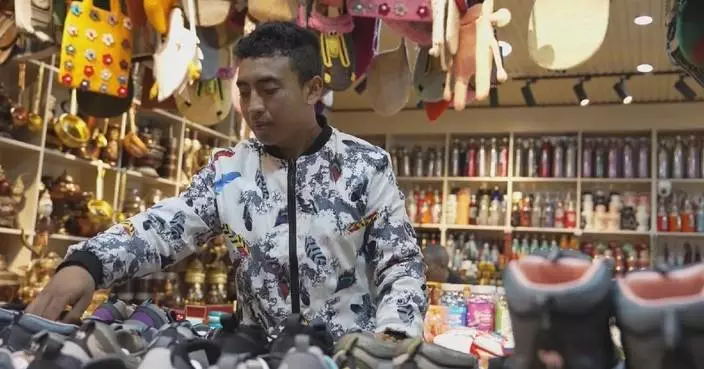
Pramod Yadav, director of AD Net, has been selling cables, mobile and laptop accessories, and monitoring cameras in New Delhi's Nehru Place, where for decades Indians have come to buy, repair and upgrade their technology, for more than 20 years.
He has witnessed a shift from loose, unbranded imports brought in through grey channels to finished products and components supplied directly by major manufacturing hubs in China.
While India's electronics manufacturing sector is seeing increased investment and ambition, significant gaps remain to be addressed.
"We need to focus more on things like molding machines and components, such as ICs (integrated circuits) and chips, right here in India. We should learn from China -- observing how they manufacture these products and understanding their technology, so that we can then advance this sector in India," said Yadav.
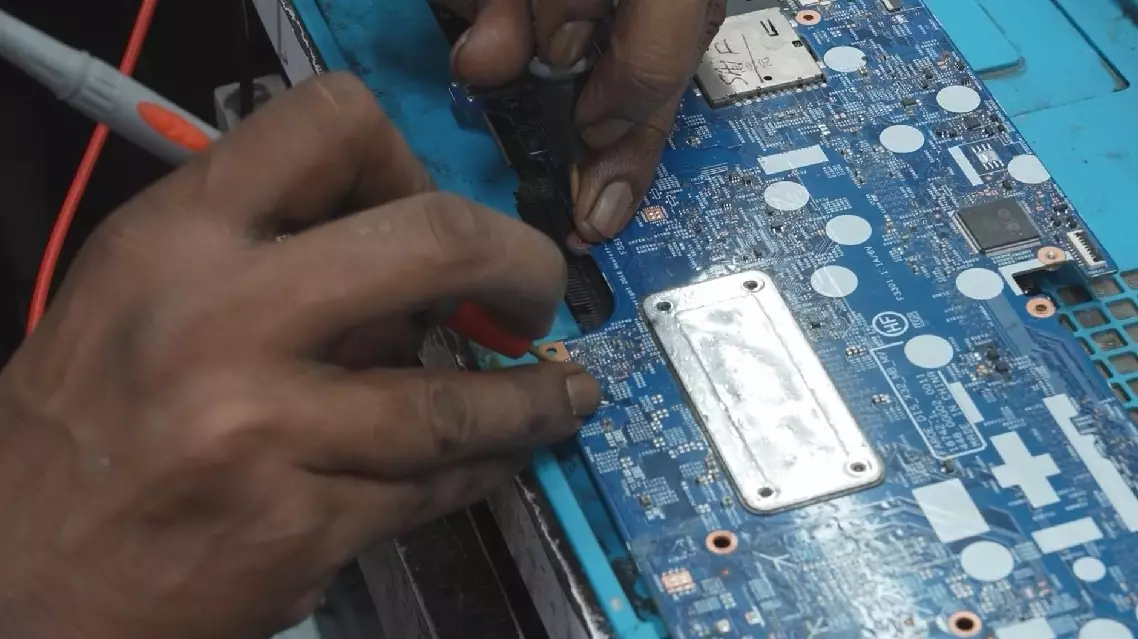
India imports more than 10 billion U.S. dollar worth of electronic components from China each year, spanning key categories such as displays, batteries, PCBs and camera modules.
China also remains India's largest source of integrated circuits, with imports rising nearly 64 percent year on year.
India's own semiconductor mission is racing to close that gap. But observers say a faster way to strengthen manufacturing in the long run would be to ease restrictions on the transfer of machinery and technical know-how.
"I think what it should be that we should allow the machinery and technology come in without any duty and any customs problems. So rather than people importing those products, they can manufacture here. It will create employment. Let technology import freely and rather encourage it," said Mohammed Saqib, president of India-China Economic and Cultural Council.
India seeks China technology skills to strengthen electronics manufacturing