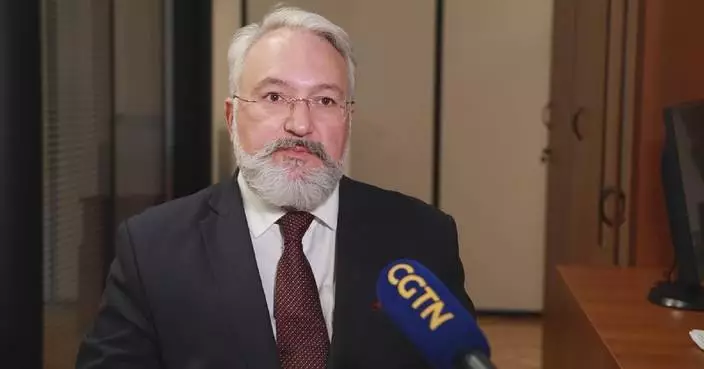
Ianushauskas Stanislav, a PhD student from Russia at Wuhan University, central China's Hubei Province, has hailed China's "significant achievements" in green transformation after years of firsthand observation, saying Russia and China have vast potential for deeper environmental cooperation.
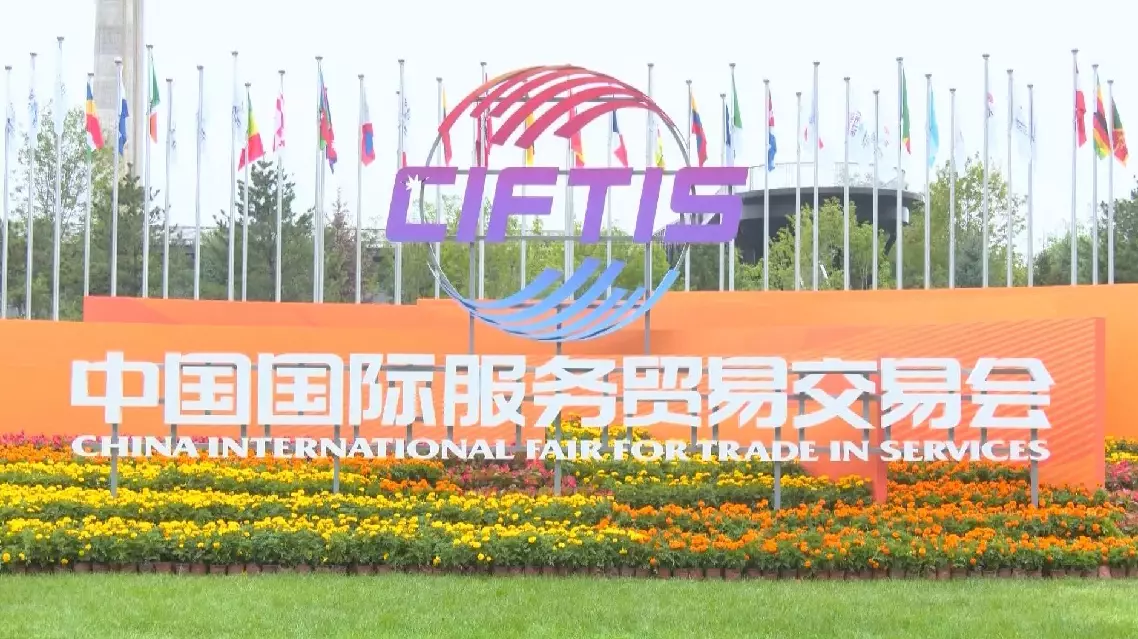
Speaking against the backdrop of the just-concluded 2026 China International Fair for Trade in Services (CIFTIS), where environment and energy services were among this year's headline themes, the environmental law researcher said China's rapid development has increasingly embraced sustainability.
"Having lived in China for more than seven years, I've been deeply impressed by the speed of China's development. I've personally witnessed significant changes in infrastructure, technology, public transportation and urban life. At the same time, I've noticed that China is placing increasing importance on environmental protection and sustainable development, which is particularly closely related to my academic field," said Stanislav.
His research has taken him to visit places along the Yangtze River in Hubei Province, where he observed practical ecological governance measures, as well as China's large-scale rollout of renewable energy. The experience, he said, has shown him that effective bilateral cooperation must extend beyond government channels to include academic institutions, cities and young people.
"The opening of the Russian Consulate General in Wuhan is especially meaningful to me, as it demonstrates that China-Russia cooperation is continuously deepening at the regional level. I have realized that cooperation should not only take place between governments. Universities, research institutions, cities, enterprises and young people can all play important roles in promoting long-term China-Russia relations," said Stanislav.
With both nations endowed with vast territories and abundant natural resources, Stanislav sees particular promise in joint efforts on forest protection, water resource management and green technology -- areas that mirror the CIFTIS focus on low-carbon transition, the circular economy and advanced new materials.
"Both countries have vast territories and abundant natural resources, creating significant potential for cooperation in fields including forest protection, water resource management, renewable energy and environmental law. Such cooperation can create new opportunities for young people, researchers and enterprises while also improving environmental quality and enhancing people's daily lives," said Stanislav.
The five-day CIFTIS opened on Sept 9, drawing participants from 90 countries, regions and international organizations, with over 1,800 companies showcasing their service products on site.
Russian student hails China's green gains, sees great potential for deeper cooperation between two countries
The escalating tensions between Saudi Arabia and Yemen's Houthi group reflect a broader strategic contest over key maritime routes and regional security, with the Houthis group seeking to put additional pressure on Saudi Arabia while avoiding a wider confrontation, said a Chinese expert on the Middle East.
Zhang Chuchu, deputy director of the Middle East Studies Center at Fudan University in Shanghai, said in a recent interview the Houthis' efforts to restrict access around strategic maritime chokepoints are aimed in part at coordinating with Iran to create pressure on Saudi Arabia from two directions.
"At this time, one of the purposes of the Houthi armed group's efforts to control the straits is to join hands with Iran to put Saudi Arabia under dual pressure. We know that, amid the frequent disruptions in shipping in the Strait of Hormuz, part of Saudi Arabia's oil transportation would become more dependent on the western coast's Yanbu Port and routes through the Bab el-Mandeb Strait. If Saudi Arabia's oil transportation is obstructed from both sides, it would face huge economic losses. The Mocha and Hanish Islands are key chokepoints along international shipping routes. By taking control of these strategic high points, the Houthi armed group not only seeks to reduce the opponent's strongholds, but also hopes to gain the ability to influence the security of the southern Red Sea at any time. However, during its operations, the Houthi armed group has repeatedly stressed that its actions are targeted only at Saudi Arabia and no other countries. This is because it also seeks to send a signal to avoid making more enemies and triggering another large-scale offensive by a multinational naval coalition," Zhang said.
The expert noted that the Houthis' calculations extend beyond immediate military objectives, as control over strategically located islands and waterways could provide them with greater leverage over maritime security in the southern Red Sea.
Meanwhile, tensions between Saudi Arabia and the Houthis have continued to intensify, while the United States has so far only agreed to provide intelligence and target-identification support but rejected direct military intervention, said Zhang.
She attributed the U.S. decision to three main factors, saying Washington is seeking to avoid opening another war front in the Middle East while its military focus remains on Iran.
"First, the current strategic focus of the U.S. military in the Middle East remains on Iran. It has already deployed a large number of air and naval forces there and is suffering significant attrition, so it wants to make every effort to avoid opening a new front in Yemen. Second, from March to May last year, the U.S. military launched large-scale airstrikes and naval attacks against the Houthi armed group in Yemen. It knows very well that the Houthi armed group possesses strong asymmetric combat capabilities. Therefore, the United States is also concerned that if it resumes attacks, it may once again fail to achieve its objectives, as happened last year. The last point is that the Trump administration wants to reduce its security commitments to its allies, arguing that Gulf allies should rely on their own military capabilities to address security threats in their neighborhood, and opposing the U.S. military serving as the region's free security backstop," Zhang said.
Houthi seeks to pile pressure on Saudi Arabic: expert