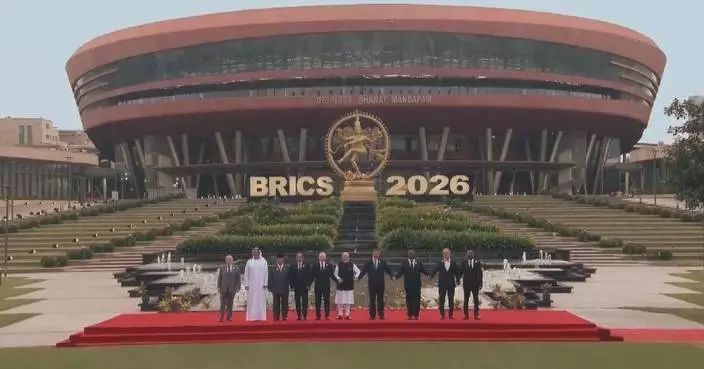
The five initiatives on "greater BRICS" cooperation proposed by Chinese President Xi Jinping at the 18th BRICS Summit in New Delhi, India, address key priorities shared by countries across the Global South, said an African journalist.
The two-day BRICS summit concluded on Sunday. On the second day of the event, Xi proposed five initiatives in areas of AI, trade and investment facilitation, digital industry, smart manufacturing, and talent development, noting that "greater BRICS" should leverage strengths in being rooted in emerging markets and connected with the Global South, uphold openness and cooperation for mutual benefit and win-win outcomes, keep industrial and supply chains stable and unimpeded, and foster integrated markets, Xi said.
Xi also noted that "greater BRICS" should build innovation incubators, upgrade traditional industries, develop emerging industries, and make forward-looking plans for future industries, so that emerging technologies can illuminate the path toward common prosperity.
Speaking in an interview with the China Global Television Network (CGTN) on the sidelines of the summit, Vasilisa Kharasakhal, an international correspondent for Sputnik Africa, highlighted the importance of AI cooperation to the growth of BRICS member countries and the world economy at large.
"I think that all the themes are really significant. This is like key topic for every country across the whole Global South. Speaking more concretely, I think that this is for example, AI cooperation. [In the] New Delhi declaration, there are also a lot of points dedicated to the technology, to the AI cooperation. And of course, they are all useful for the whole African continent, for the growth of the Global South, for the whole world," she said.
Marking its 20th anniversary this year, the BRICS was initially formed by Brazil, Russia, India and China, later expanding with the addition of South Africa. Today, the bloc has expanded to 11 member countries and 10 partner countries.
In his address at the event on Saturday, Xi said the BRICS has now become the world's most influential platform for cooperation among emerging markets and developing countries.

Xi's initiatives on "greater BRICS" cooperation resonate with Global South agenda: African journalist
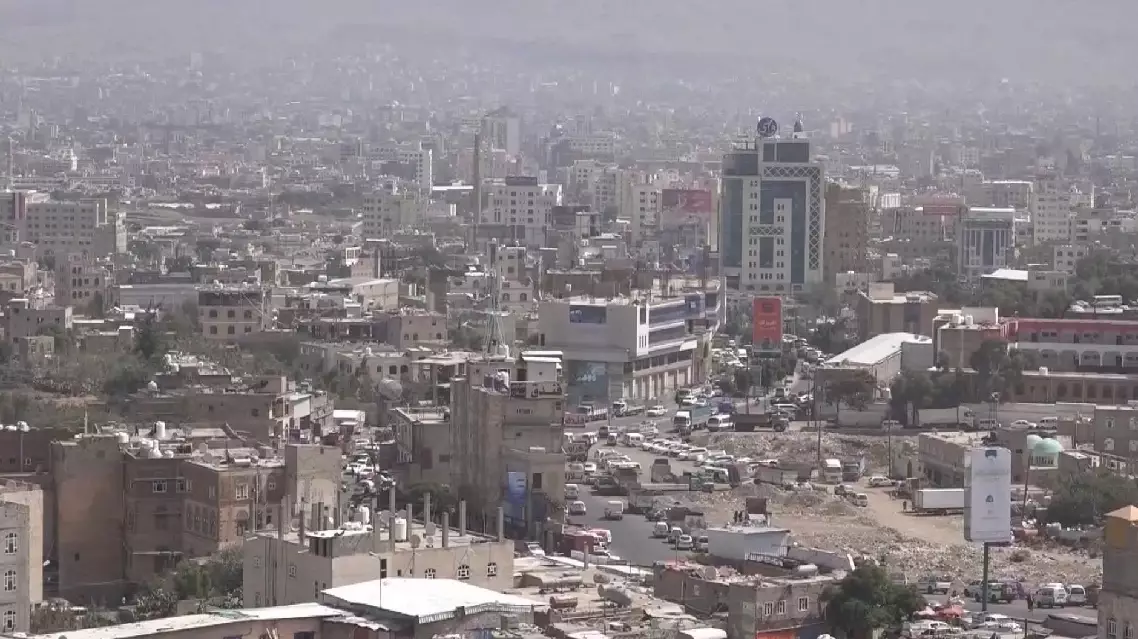
The escalating tensions between Saudi Arabia and Yemen's Houthi group reflect a broader strategic contest over key maritime routes and regional security, with the Houthis group seeking to put additional pressure on Saudi Arabia while avoiding a wider confrontation, said a Chinese expert on the Middle East.
Zhang Chuchu, deputy director of the Middle East Studies Center at Fudan University in Shanghai, said in a recent interview the Houthis' efforts to restrict access around strategic maritime chokepoints are aimed in part at coordinating with Iran to create pressure on Saudi Arabia from two directions.
"At this time, one of the purposes of the Houthi armed group's efforts to control the straits is to join hands with Iran to put Saudi Arabia under dual pressure. We know that, amid the frequent disruptions in shipping in the Strait of Hormuz, part of Saudi Arabia's oil transportation would become more dependent on the western coast's Yanbu Port and routes through the Bab el-Mandeb Strait. If Saudi Arabia's oil transportation is obstructed from both sides, it would face huge economic losses. The Mocha and Hanish Islands are key chokepoints along international shipping routes. By taking control of these strategic high points, the Houthi armed group not only seeks to reduce the opponent's strongholds, but also hopes to gain the ability to influence the security of the southern Red Sea at any time. However, during its operations, the Houthi armed group has repeatedly stressed that its actions are targeted only at Saudi Arabia and no other countries. This is because it also seeks to send a signal to avoid making more enemies and triggering another large-scale offensive by a multinational naval coalition," Zhang said.
The expert noted that the Houthis' calculations extend beyond immediate military objectives, as control over strategically located islands and waterways could provide them with greater leverage over maritime security in the southern Red Sea.
Meanwhile, tensions between Saudi Arabia and the Houthis have continued to intensify, while the United States has so far only agreed to provide intelligence and target-identification support but rejected direct military intervention, said Zhang.
She attributed the U.S. decision to three main factors, saying Washington is seeking to avoid opening another war front in the Middle East while its military focus remains on Iran.
"First, the current strategic focus of the U.S. military in the Middle East remains on Iran. It has already deployed a large number of air and naval forces there and is suffering significant attrition, so it wants to make every effort to avoid opening a new front in Yemen. Second, from March to May last year, the U.S. military launched large-scale airstrikes and naval attacks against the Houthi armed group in Yemen. It knows very well that the Houthi armed group possesses strong asymmetric combat capabilities. Therefore, the United States is also concerned that if it resumes attacks, it may once again fail to achieve its objectives, as happened last year. The last point is that the Trump administration wants to reduce its security commitments to its allies, arguing that Gulf allies should rely on their own military capabilities to address security threats in their neighborhood, and opposing the U.S. military serving as the region's free security backstop," Zhang said.
Houthi seeks to pile pressure on Saudi Arabic: expert