A wealth of robots are gearing up for the inaugural China Media Group (CMG) World Robot Mount Tai Climbing Competition which will officially kick off in Tai'an City, east China's Shandong Province on Monday.
Moving beyond traditional laboratory simulation environments, the competition leverages Mount Tai's unique real-world mountain course to provide a high-standard and real-world testing platform for the technological advancement and practical application of specialized mountain robots.
"The biggest challenge is still how the robots adapt to this terrain. Some steps are high, some are low; some are wide, some are narrow. There's also a cobblestone path up ahead," said Su Qingwei, chief referee of the event's final.
Whether they're quadrupedal or bipedal robots, they all need to master one fundamental skill before climbing the mountain, which is mapping.
Chen Lin, a navigation engineer of Uniubi AI team, said they have equipped their robot dog with LiDAR to collect data and do the mapping.
"The dog is equipped with a LiDAR sensor that emits infrared laser beams to scan the entire terrain, identifying whether it is steps, rocks, roadside obstacles, or trees. It then generates a 3D point cloud map that is fed into the dog's 'brain,' allowing the dog to know which path to take," he said.
Four-legged robotic dogs have a stable base and agile gait. Once they lock onto the general direction, they can sprint uphill.
But bipedal humanoid robots are different - they're taller and their center of gravity is harder to control.
To accurately perceive every step beneath their feet, they need to master a few extra tricks.
"To adapt to the Mount Tai climbing competition, they've made numerous improvements. They've added cameras for data collection and installed additional sensors," said Su.
There's also a robot that relies entirely on the feedback it gets when its feet touch the ground.
"It operates in a 'blind climbing' mode, similar to a person climbing a mountain while blindfolded, with no visual input. When its feet make contact with the ground, it adjusts the stride length for the next step and maintains balance based on the forces acting on its joints and its movement posture. This process is continuous and real-time, giving it a reaction instinct akin to that of a human," said Zhu Shanyu, a team member of Genisom AI.
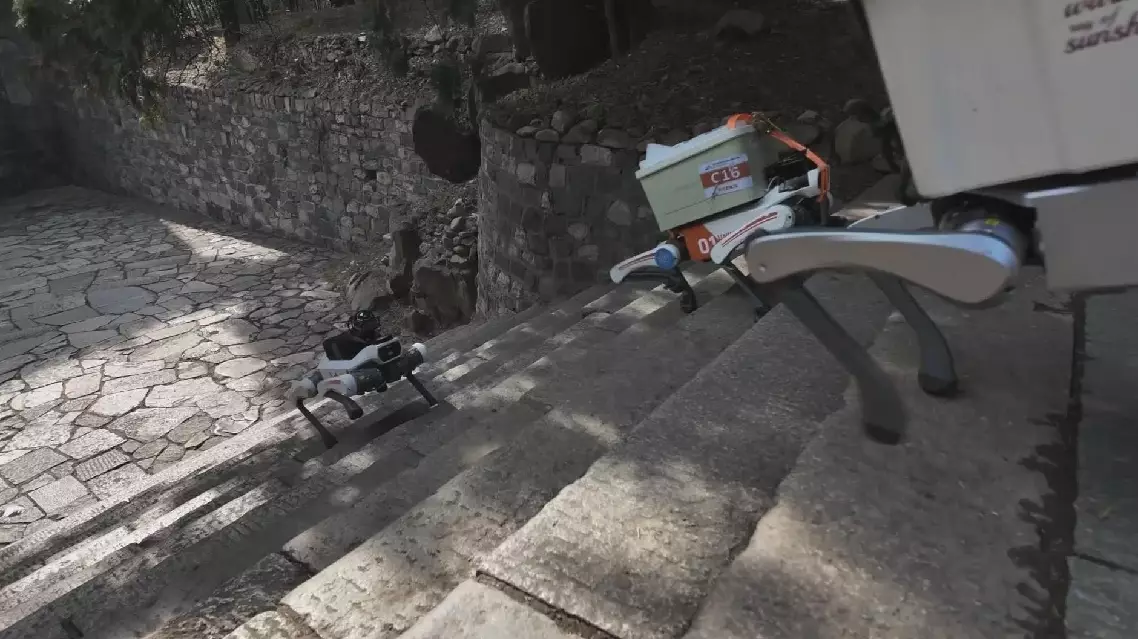
Myriad robots gear up for upcoming Mount Tai climbing competition
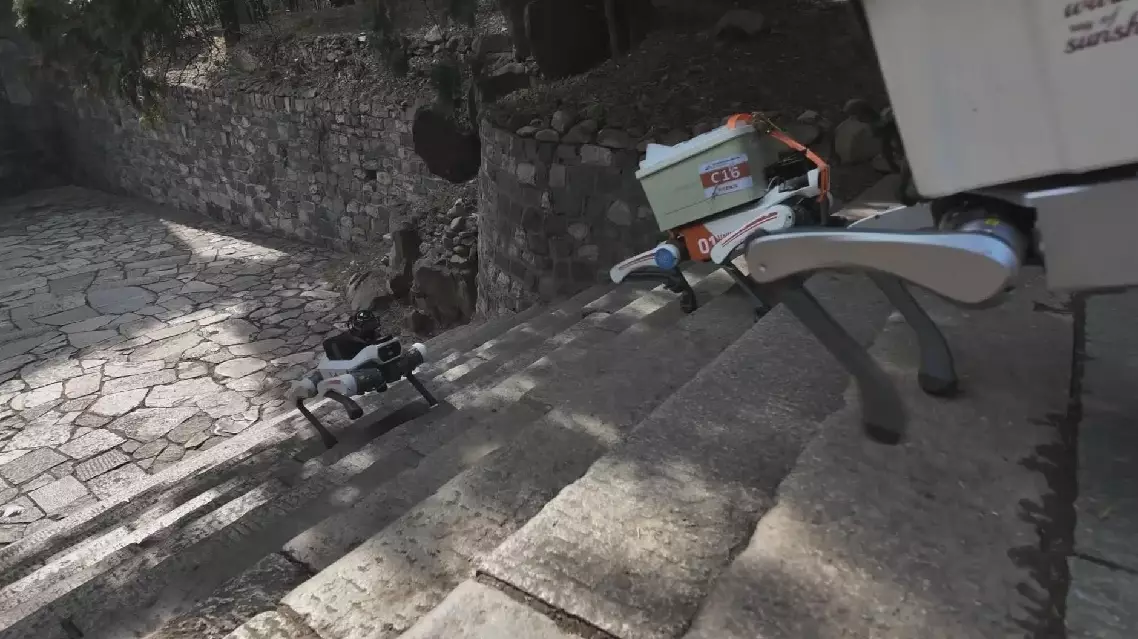
Myriad robots gear up for upcoming Mount Tai climbing competition