Decoupling from China would be an enormous mistake and disputes between countries should be settled through open dialogue, a Swiss scholar has said, as Guy Parmelin, president of the Swiss Confederation, paid a three-day working visit to China from Friday to Sunday.
The visit comes a decade after the two countries established an innovative strategic partnership in 2016, the first strategic partnership China had formed with a foreign country built around innovation.
Today, more than 1,000 Swiss companies have invested in over 2,600 projects in China, with many Swiss technology firms setting up research and development (R and D) institutions or regional headquarters covering fields such as healthcare, industrial automation, new materials and precision manufacturing.
Philippe Monnier, president of the Swiss International Society (SIS) and former executive director of the economic development agency of Switzerland's Greater Geneva Bern area, said China's huge market size, constantly upgrading consumer demand and strong R and D resources give Swiss companies the confidence to enter and take root in the country.
In Monnier's view, the appeal of the Chinese market lies not only in its scale, but also in its appetite for the new and its deep pool of engineering talent, which has drawn some of Switzerland's biggest industrial names.
"The Chinese market, of course for the Swiss company is very important, very big, but it's also very innovative and very sophisticated and the Chinese consumers are very bold. They dare to try new products before other countries. Because of the number, the very high number and the high quality of engineers in China, it is interesting for many important Swiss companies like ABB and Schindler to have major R and D centers in China," said Monnier.
Such corporate decisions build on a solid foundation of institutional ties. In 2013, the two countries signed a free trade agreement (FTA), the first such deal between China and a country on the European continent.
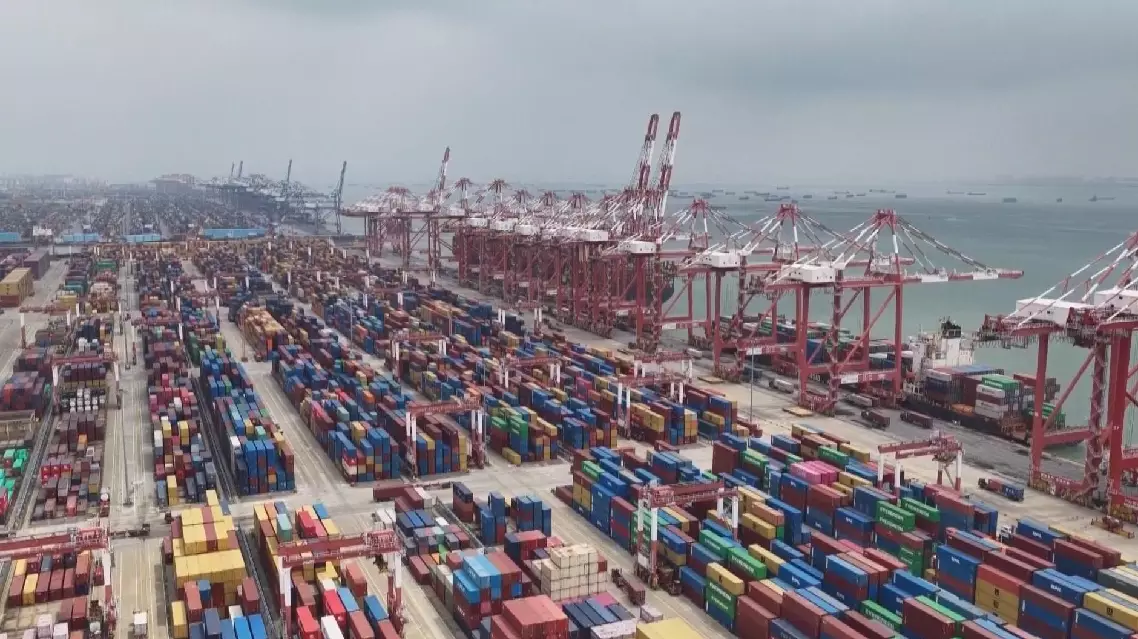
Since the pact took effect, bilateral economic and trade relations have continued to deepen, with Switzerland now ranking as China's seventh-largest trading partner in Europe and China standing as Switzerland's largest trading partner in Asia.
Artificial intelligence (AI) has emerged as a key area of current cooperation, with the upgraded FTA newly incorporating provisions on digital trade. Against this backdrop, many Swiss companies are relying on Chinese open-source large language models to achieve localized and autonomous AI deployment.
For Monnier, AI is a field where the two countries complement each other, and the benefits of joining forces extend well beyond the corporate world.
"Regarding artificial intelligence, both countries, both Switzerland and China are very good. It's obvious China has incredible companies and China was also able to develop very powerful products with minimum cost and this is very important. Switzerland also has a lot of R and D centers and a lot of young companies developing sovereign AI. And combining both is certainly very interesting, not only at the company level, but also at the university and government level," said Monnier.
While some commentators in Europe have warned of a so-called "China Shock 2.0," fears that a new wave of competitive Chinese exports could hurt domestic industries, recent business sentiment data points to continued confidence in the Chinese market.
The Business Confidence Survey 2026 released by the European Union Chamber of Commerce in China shows that 75 percent of companies believe their production efficiency in China is higher than in other parts of the world, and 94 percent consider China an important sourcing destination.
"Both markets are very important, are complementary with complementary companies. If there are some issues and there are always issues and those problems have to be solved by open and friendly meetings if needed using the WTO. But I think to decouple would be an enormous mistake, especially that now to deal with the USA has become very problematic. So the other part of the world should continue cooperating and not trying to fight," said Monnier.
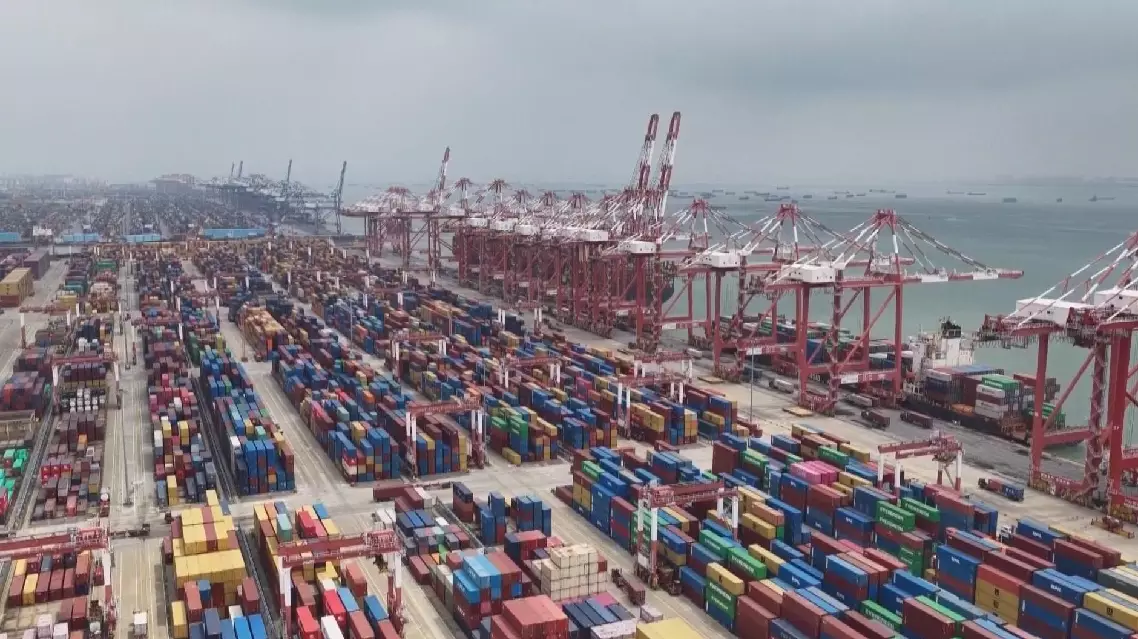
Switzerland, China highly complementary, cooperation mutually beneficial: Swiss scholar
Switzerland, China highly complementary, cooperation mutually beneficial: Swiss scholar