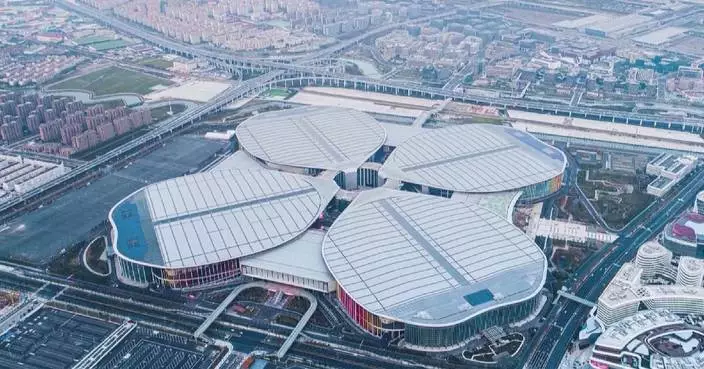
Traditional commercial markets in China are redefining the shopping experience for inbound tourists, shifting from simple product sales to personalized customization and cultural participation as foreign visitors seek more immersive consumption.
In Shanghai, the South Bund Custom Tailoring Center, formerly the well-known Dongjiadu fabric market, has attracted a wave of overseas customers ahead of the opening of the ninth China International Import Expo (CIIE).
The market has renamed itself and repositioned immersive clothing customization as its core feature as inbound tourism surges. Many foreign tourists now include a bespoke garment experience on their Shanghai must-do list.
"Because I used to live in Shanghai, I remember I always came to see Jennifer for my shirts and my trousers. So, I always come back for business every year, once a year. [This year, I] come for the conference, the CIIE. These little jackets are for my sons. They live in the countryside. So that's why we've got carrots inside, and then the quite traditional tweed on the outside. We just invented ourselves," said British tourist James.
"We found [this market] through online guides, recommending to check out this place and see what the place is. You can get really good deals on bespoke suits, tailor-made, and so on. So we just come and check it out. Compared to Finland, it's quite different. We don't have that many tailors that make the suit for you," said Finnish tourist Michael. For short-term visitors, the speed of customization directly shapes the experience. Merchants at the market said normal delivery takes seven to 10 days, but urgent orders can be completed in one or two days. As some foreign tourists stay in Shanghai for just a few days, the market offers expedited service and direct delivery to hotels.
A similar transformation is unfolding in Beijing, where a customization shop at Hongqiao Pearl Market is drawing the attention of foreign visitors with made-to-measure services that cover everything from new Chinese-style garments to formal wear. Customers can select fabrics to their own specifications, and finished pieces can be delivered by mail within as little as 24 hours.
"When I made my first suit, I had some photos on my phone [of] what I like and what I want, what I don't want. They took a look at my phone and said, 'OK, we can do that.' For example, if you want a special piece on your suit, they can order it," said a French tourist.
The market is one of the world's major pearl retail markets, where foreign tourists can not only buy pearl jewelry but also enjoy one-stop customization services, from style design and pearl selection to inlay processing, to create their own personalized pieces. According to statistics, customization has become a new calling card for the market, with foreign visitors now accounting for more than 70 percent of its daily customer flow.
"We make adjustments in response to market demand and customer needs, while providing more convenient payment methods for foreign tourists," said Zhou Guifang, deputy manage of the Market.
From the tailor shops of South Bund to the pearl counters of Hongqiao, foreign visitors are shifting their spending in China from purchasing goods to seeking out experiences.
This growing appetite for made-to-order experiences has breathed new commercial life into traditional markets and given overseas travelers a hands-on encounter with Chinese craftsmanship.
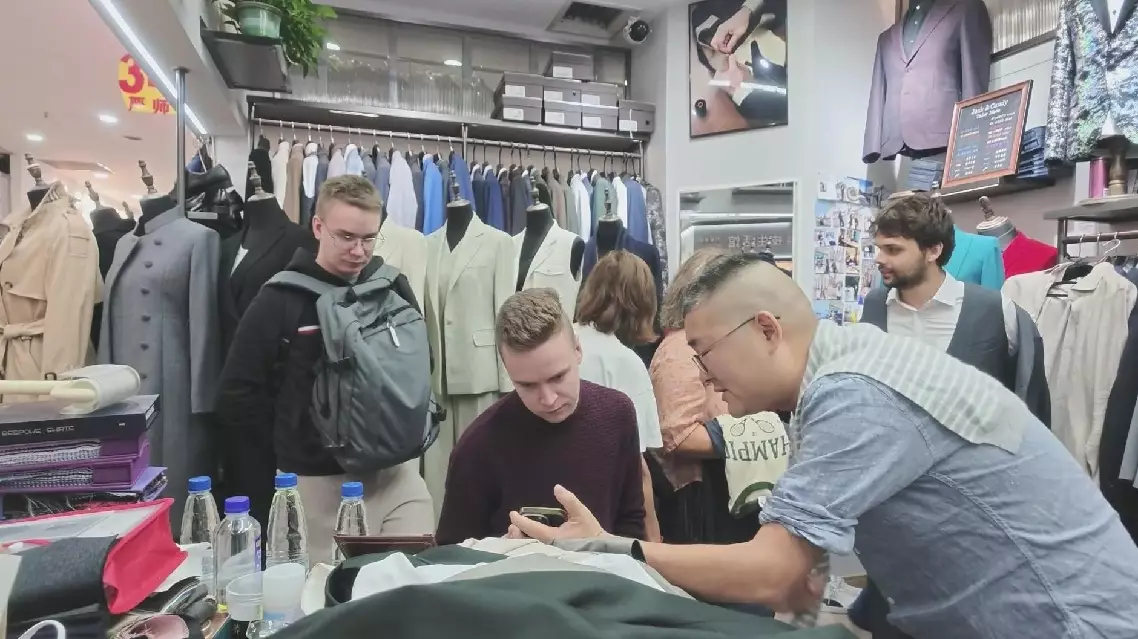
Tailor-made experiences draw foreign tourists to China's traditional markets