Digital intelligence technologies, such as digital twin and AI agents, will reshape the high-quality development of China's manned space program, said a prominent Chinese expert on the sidelines of the two-day 7th Manned Space Symposium, which concluded in Beijing on Sunday.
During an interview with China Central Television (CCTV), Wang Xiang, deputy chief designer of China's manned space program and chief designer of the lunar exploration program, said the digital blueprint of China's manned space program is already in place.
When the Tiangong space station was designed, it was given an online "twin brother" -- a digital space station, according to Wang.
"You can think of it as a twin model of the actual space station. This model was not only used on the ground during the development phase, but continues to work while the station flies in orbit. Before each mission, we run a simulation on the digital model to preview the task. After the crew executes the mission in space, we use the same model to review and analyze what happened. Digitalization is now something we use relatively maturely," he said.
With a solid digital foundation in place, AI now has room to perform, and several attempts tailored to space scenarios, such as AI agents, are moving forward, according to Wang.
"For example, could we have an intelligent agent built specifically for astronauts, something that assists them with work in orbit, acts as a working partner, and even helps with coding, testing, and companionship? We are exploring all of these possibilities," he said.
The symposium drew more than 800 experts and scholars to explore how digital and intelligent technologies can advance human spaceflight.
This year's event focused on cutting-edge technologies, engineering practices, and development needs in the field of human spaceflight, aiming to exchange the latest research results and deepen academic discussion.
It featured 15 sub-forums under three themes -- common technologies for human spaceflight, the low-Earth-orbit crewed space station, and lunar exploration missions.
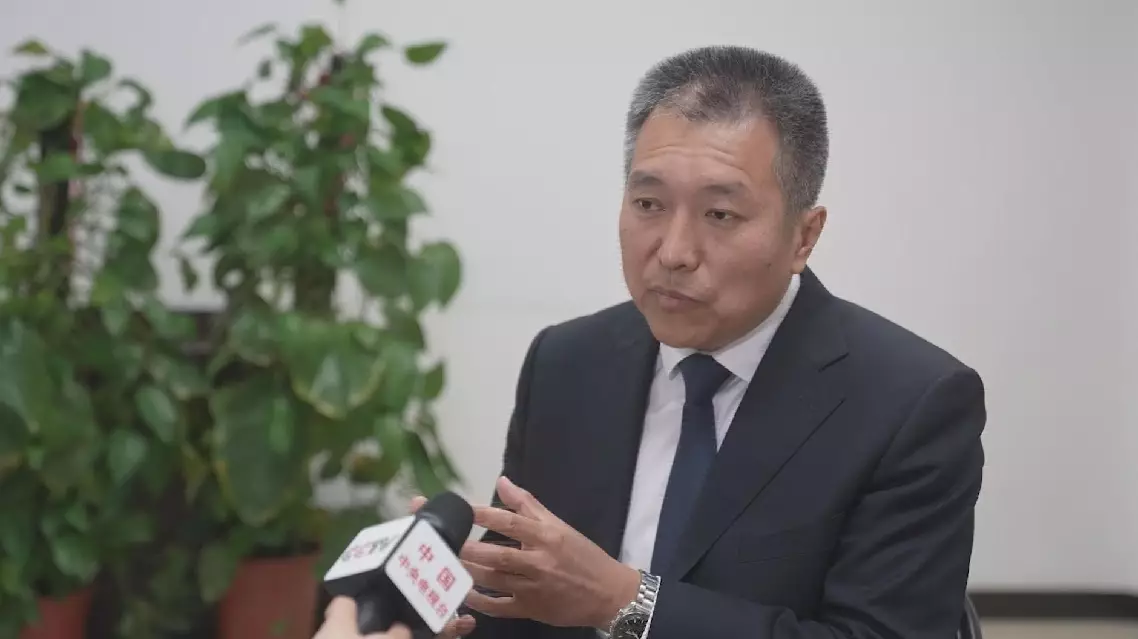
Digital intelligence to reshape China's space program: expert
Through a decade of technical iteration and independent breakthroughs, China's J-20 stealth fighter has continued to upgrade since its 2016 debut, advancing from imported powerplants to fully domestically built engines, and from single-seat air superiority to two-seat intelligent coordination.
The J-20 made its maiden flight in 2011 and was first shown to the public at the 11th Airshow China in Zhuhai, south China's Guangdong Province, in November 2016.
A milestone in the decade-long upgrade effort was the debut of J-20 fighters equipped with domestically built engines at Airshow China 2021 in Zhuhai.
"The engine is the heart of an aircraft. With the domestic engine, the J-20 has more powerful thrust. It can fly faster, cruise at supersonic speed for longer, maneuver at higher g-loads, carry a larger payload and fly farther. It gives us independent control over our own power, and it also lays the foundation for developing the next generation of even more advanced fighters," said military observer Wang Mingliang.
The engine swap solved the "heart" problem, while the development of the two-seat J-20S variant has expanded the combat paradigm of traditional fifth-generation fighters.
As the world's only publicly unveiled two-seat stealth fifth-generation aircraft, the J-20S transcends the mission limits of single-seat fighters.
The front-seat pilot focuses on air combat and tactical maneuvering, while the rear-seat operator handles unmanned formation command, situational coordination, intelligent collaboration, and ground and maritime mission planning -- a configuration better suited to the intelligent, unmanned and system-based air combat scenarios of the future.
"This means the J-20 is no longer a purely traditional air-superiority fighter. It may take on the role of a system hub or a system controller. In other words, the rear-seat systems controller, beyond operating the aircraft's own weapons, sensors and communications systems, is also responsible for providing intelligence and target cueing to other aircraft, assigning combat tasks and coordinating their operations in networked combat. Clearly, it can be described as a commander of a new type of airborne combat system," Wang said.
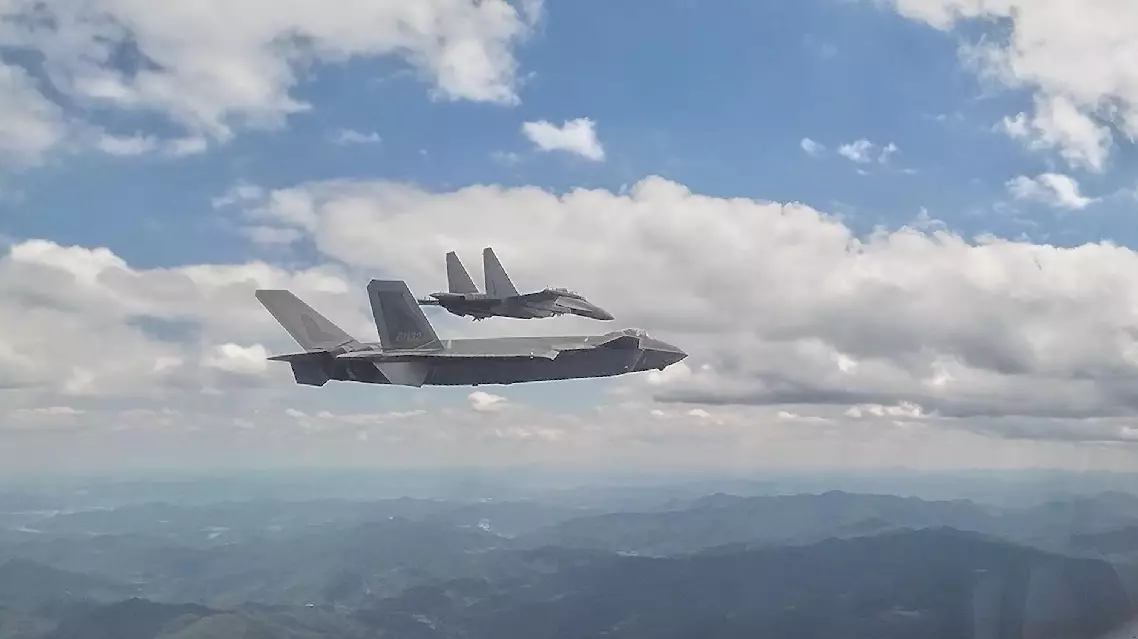
China's J-20 stealth fighters show improved capabilities through continuous upgrading