From autonomous shuttle buses to unmanned retail vehicles, China's smart driving technologies are ready to serve the 2026 World Internet Conference (WIC) Wuzhen Summit, to be held from November 2 to 5.
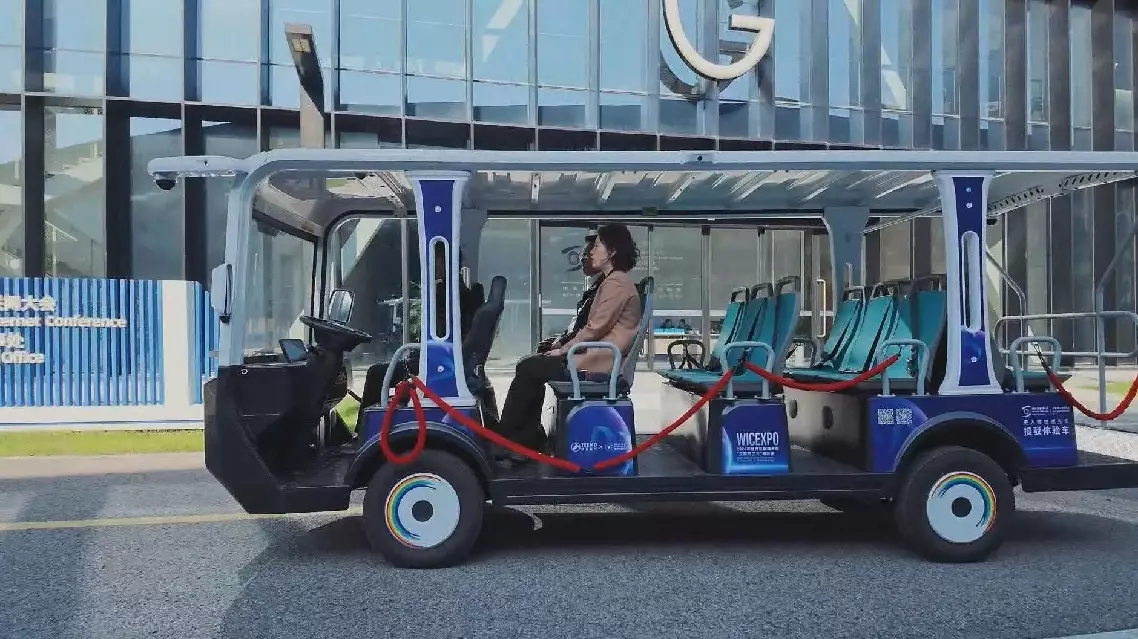
A fleet of locally-developed self-driving shuttle buses will be put into operation to provide transport services between venues at the summit in Wuzhen, east China's Zhejiang Province.
Each vehicle is amounted with a main radar in the black cylinder on its body, and two blind-filling radars at the front and rear. It is equipped with 13 cameras on the body, responsible for operational monitoring and smart driving identification.
Tang Kaiqiang, vice president of TEEMO, the vehicle's operator, said the vehicle can apply the brakes in the blink of an eye.
"In an emergency, it can complete a braking maneuver in 80 milliseconds," he said.
In addition to autonomous shuttle buses, unmanned retail vehicles are going to be put into service during the event. They are set to drive between venues at a walking pace, and stop for customers at their request.
To ensure transport safety, TEEMO has set up a 1.33-hectare testing facility where 20 such vehicles undergo round-the-clock testing.
"Before any new vehicle model is launched, it must drive 50,000 kilometers at testing ground. At a rate of 300 kilometers per day, this process takes five to six months to complete. Furthermore, this 50,000-kilometer distance is not driven on smooth, flat pavement. Our testing ground features 18 different types of road conditions, including cobblestone surfaces, water-crossing sections, S-curves, and undulating, sloped terrain," said Tang.
In recent years, hosting the WIC has promoted the rapid development of a cluster of enterprises across the electric and intelligent vehicle industry chain in Wuzhen.
Freetch, which specializes in smart driving system solutions, is going to showcase a new generation of 4D imaging millimeter-wave radar at the upcoming summit.
This technology enables autonomous vehicles to detect low-lying road hazards, stationary obstacles, and overhead road signs, while maintaining stable performance even in adverse conditions such as rain, fog, or dust.
"In the past, a radar would essentially provide a two-dimensional view. Today’s radar, however, captures a truly three-dimensional perspective and incorporates velocity data. It remains unaffected by rain, wind, or fog. It can even penetrate certain types of obstacles. Furthermore, with the advent of 4D technology and higher resolution, radar has evolved from merely detecting rough outlines to enabling the precise perception of individual objects," said Zhang Lin, chairman and CEO of Freetch.
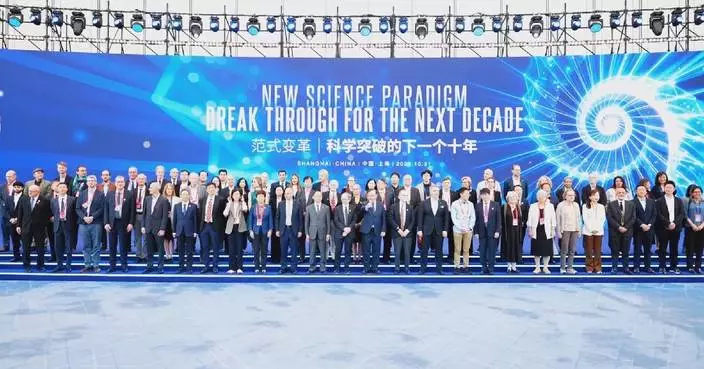
The 2026 WIC Wuzhen Summit will draw Chinese and international participants for discussions on innovation, security governance, cultural exchanges and international cooperation.
A dialogue at the main forum will gather executives from leading technology companies and developers of open-source large models to discuss how to build a global open-source AI ecosystem.
The summit will feature 27 sub-forums, with topics including trust, connectivity and interoperability among AI agents, as well as robotics, embodied AI and spatiotemporal intelligence. Cyberspace cooperation under the Global Governance Initiative will also feature in the discussions.
The focus on open-source cooperation follows broader Chinese efforts to promote international collaboration in AI.
Self-driving shuttle, retail vehicles to serve upcoming WIC Wuzhen Summit