Recovery operations are ramping up in Baqen County, southwest China's Xizang Autonomous Region, following the recent 7.0-magnitude earthquake.
The earthquake struck Baqen County in Nagqu City, Xizang, at 22:33 on Oct 22. The quake has left 16 people dead and 76 others injured, according to local authorities.
On Sunday, the setup of all prefabricated houses in Maru Township and Gangqie Township, the areas worst hit by the 7.0-magnitude earthquake in Baqen County, had been completed, and all affected residents requiring relocation and resettlement had moved in.
At the same time, the first batch of 589 teachers and students from Maru Township Primary School and Gangqie Township Primary School set off from here for a middle school in Lhasa City on Sunday morning to resume classes.
In addition, nearly 1,000 more teachers and students will travel to Lhasa in batches over the next two days to resume classes.
"The two schools' buildings were severely damaged and reconstruction will take a long time. Also, existing schools in Nagqu cannot fully accommodate all the teachers and students from the two schools. We are drawing on Nagqu's resource advantage of running schools in Lhasa to relocate the teachers and students to Nagqu Complete Middle School in Lhasa, so as to create a safe and comfortable learning environment for them as quickly as possible," said Pasang Norbu, deputy director of the Nagqu Municipal Education Bureau.
Before the transfer, the command center made careful arrangements, and staff carried out multiple preparatory tasks, including information registration, parental confirmation, safety inspections, teacher deployment and logistical support for the journey.
The first batch of 23 transfer vehicles set off with escorts throughout the trip and are arriving in Lhasa on Sunday evening.
"In terms of personnel, all the teachers traveling with the students are people the students know very well from daily life. Our class teachers also contacted each parent one by one to learn about the students' health conditions and prepared motion sickness patches for them. We also packed snacks the children really like on the buses, including bread and milk," said Norbu Wangmo, a teacher at Maru Township Primary School.
As of now, online classes have resumed at 12 primary and secondary schools in Baqen County, 14 in Sog County and 13 in Nyainrong County, according to the education department in Xizang Autonomous Region.
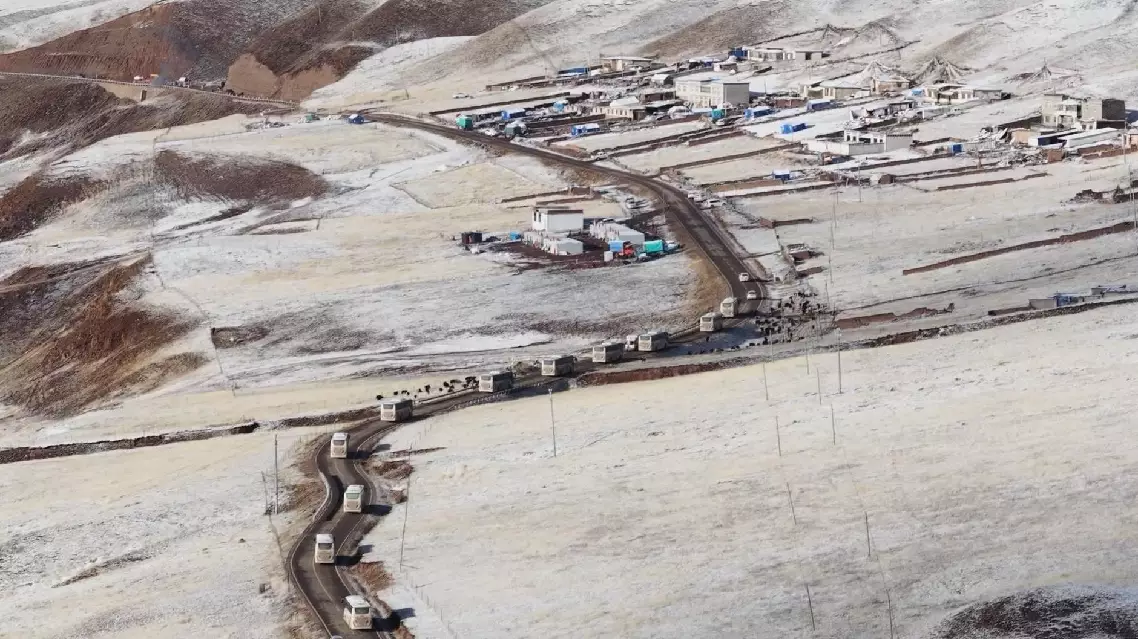
Xizang quake recovery ramps up as resettlement efforts completed
"China Haul" -- a trend of foreign tourists opening their suitcases on social media to show off the Chinese goods they bought during trips to China -- has recently gone viral overseas.
Some joke that "China Haul" sounds like "China good" in Chinese, a fitting description for leisure trips to the country, since tourists often arrive with empty suitcases and leave with them fully stuffed, proving that made-in-China products are indeed good.
Opening a suitcase to show off purchases made in China is one of the most popular ways German tourists share their trips. Alexander Haase has traveled to Beijing four times over the past year, and buying Chinese tech products has been a must every time. His suitcase reads like a continuously updated list of Chinese tech products.
"In the past 12 months alone, I've been to China four times. What I bought are mostly high-tech products. For example, I bought a Huawei laptop, and AI glasses. In short, all the latest high-tech products," said Haase.
Haase's shopping list directly reflects the popularity of Chinese tech products among German tourists. Having visited China many times over more than two decades, he has witnessed not only the iteration of products but also the overall upgrading of the urban environment and digital infrastructure.
For him, buying tech products in China is no longer a side activity but an indispensable part of the trip. This change is also appearing among more German tourists.
German travel industry insiders have also observed that China's appeal to young people has moved beyond traditional sightseeing of historic sites; experiencing cutting-edge technologies such as artificial intelligence and robots up close is becoming a new reason to visit China.
"The development of China's high and new technologies is a very important element attracting young people from abroad. For example, robots spark their greater interest in learning more about China. Thanks to the visa-free policy, young German tour groups can travel to China at any time, just as they please," said Tang Huiying, general manager of a German youth travel agency.
According to German travel industry insiders, German tourists visiting China in 2026 are expected to reach between 500,000 to 600,000. For frequent travelers like Wolfgang Bednarek, who has visited China many times, China's charm is not one-dimensional but a comprehensive appeal formed by the combination of multiple experiences.
"I have traveled all over the world, but I have to say that in my heart, China is the most impressive country. China not only has a unique culture and diverse geographical features, but the people there are also a highlight -- an absolute highlight," said Bednarek.
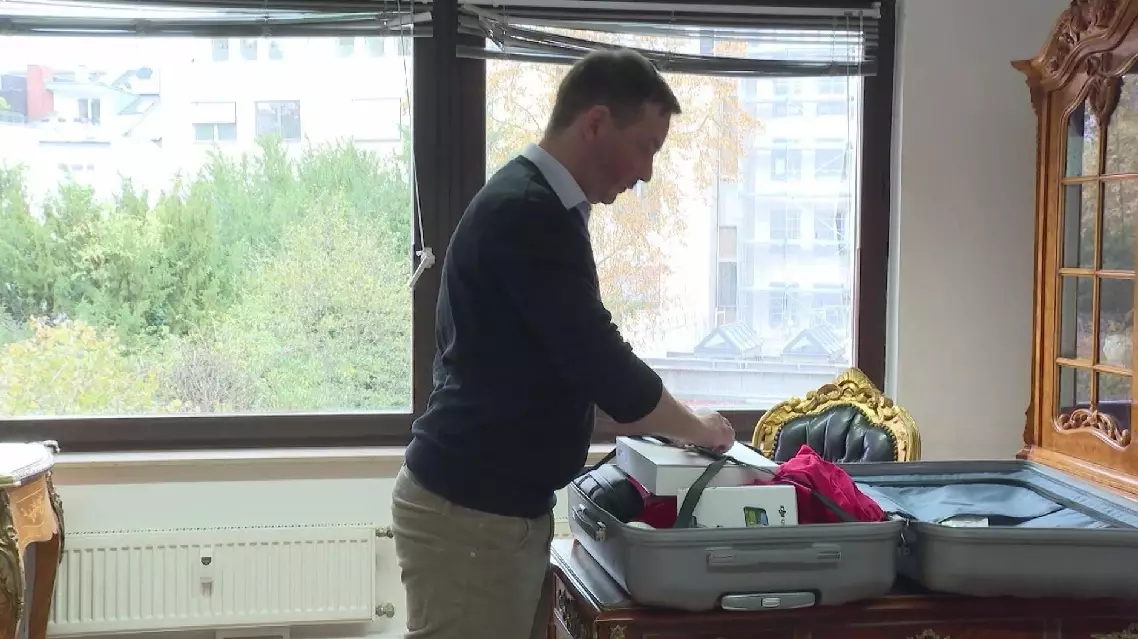
German tourists embrace Chinese high-tech goods, fueling "China Haul" trend online