The third phase of the 140th China Import and Export Fair is showcasing how artificial intelligence is helping China's traditional light-industry sectors upgrade and expand overseas markets, with a wave of smart, green and low-carbon products on display.
Running through Wednesday, the third phase spans 515,000 square meters, with 25,000 booths across 21 exhibition zones covering five major categories, from toys and baby products to fashion, home textiles, stationery, and health and leisure.
This year's edition brings together more than 12,000 companies, with innovation emerging as the common thread. Some 190 new-product launch events are planned across the five days, and the number of new products unveiled is up 15 percent.
In the men's and women's wear section, two large screens embedded with AI agents stood out from the crowd. The smart system demonstrated by an exhibitor links global trend analysis, garment design and fabric recommendations, generating multiple ready-to-wear design proposals in just a few minutes and quickly turning buyers' ideas into visual styles.
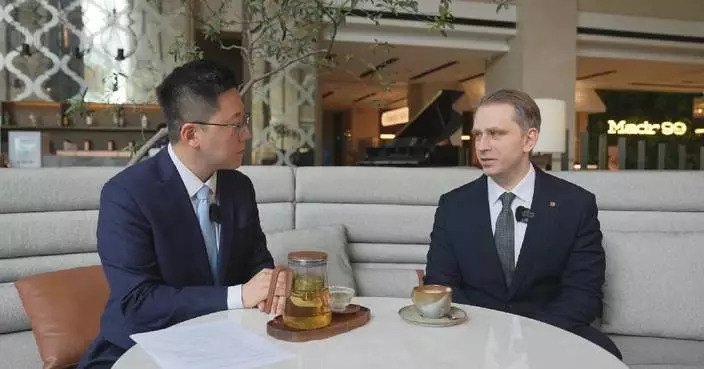
German buyer Anastasia Bayeva, who is preparing her ready-to-wear product line for next year's autumn and winter seasons, watched several design proposals appear on screen with the exhibitor's guidance.
"In my opinion, China is a leading country when it comes to the supply [chain]. That's why I think that a lot of people come here to China to source. Suppliers are trying to keep in touch with their customers and not just like staying in the phase when like, 'OK, we just produce, and this is all that we do.' It's like a step forward and a move forward from that. We know that there is a new technology, and we also want to be part of this new technology. And this is really great to see this kind of development," said Bayeva.
Beyond clothing, artificial intelligence is reshaping everyday consumer goods elsewhere on the fair floor.
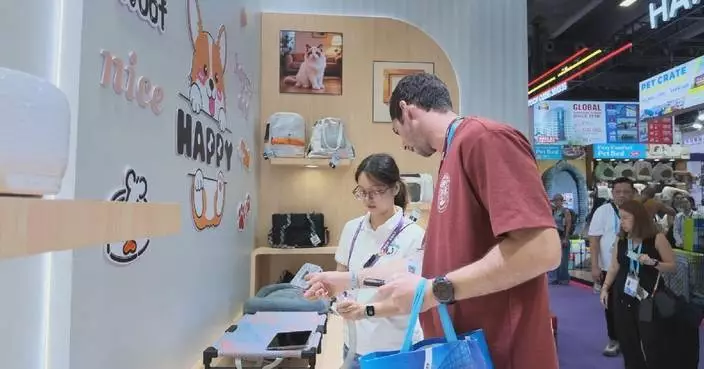
In the toys section, crowds gathered around an AI-powered companion plush toy that can hold a conversation, change its facial expressions in response to what is said and offer emotional feedback, a companion designed to sit on a desk, hang from a backpack or serve as an electronic pet
Over in the office supplies section, a printer equipped with AI modules can generate images and text on demand and print them with a single click, serving needs ranging from cultural learning and artistic creation to everyday office work.
Nearby, smart writing pens with built-in AI large language models combine voice transcription, multilingual translation and automatic summarization, acting as portable assistants for work and study.
Together, such products point to a broader shift, as more companies in traditional industries apply new technologies to break free from product homogenization, turning their long-established trades into new growth areas and opening up fresh space in overseas markets.
Portuguese buyer Pedro Correia said he was impressed by the pace of innovation he saw across the exhibition halls.
"I saw some developments related with AI and so on. There are always new designs, new features for products. It is clear that many people are developing the product itself. And so normally there are different ideas and different concepts that we can bring with us and develop our own market with those products," said Correia.
Better known as the Canton Fair, the event runs in three phases from Oct. 15 to Nov. 4 in Guangzhou, south China's Guangdong Province. Over the past 70 years, it has grown into China's largest and longest-running international trade event, featuring the broadest product range, largest buyer turnout and highest transaction volume, and it remains a key barometer of the country's foreign trade, drawing buyers from around the world each spring and autumn.
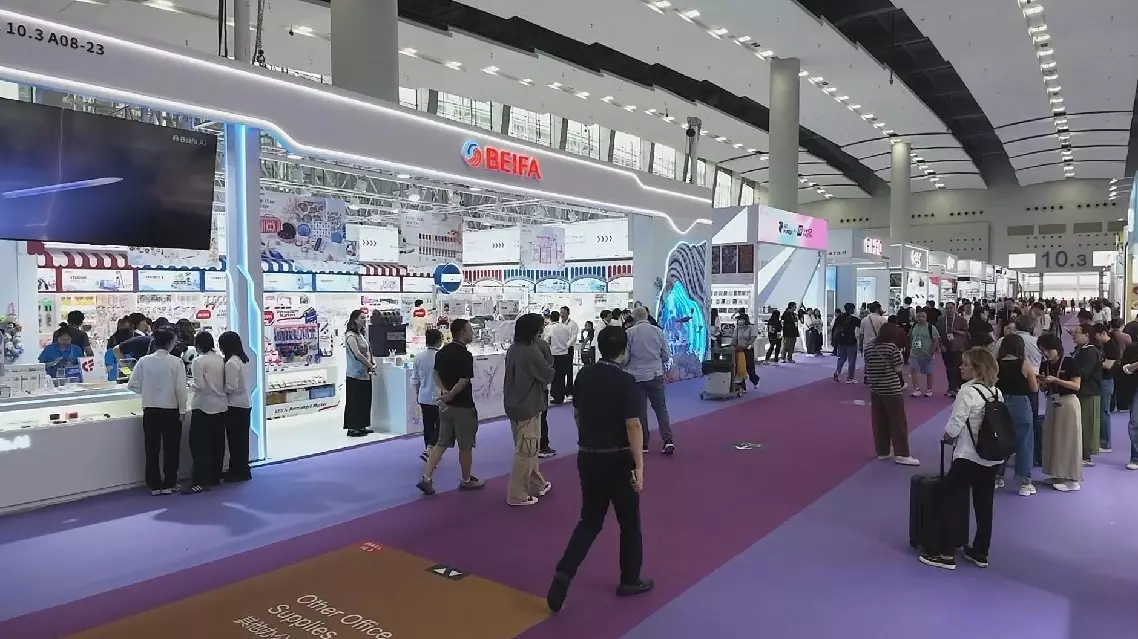
AI applications empower traditional industries to upgrade, expand overseas markets at 14th Canton Fair