Skip to Content Facebook Feature Image

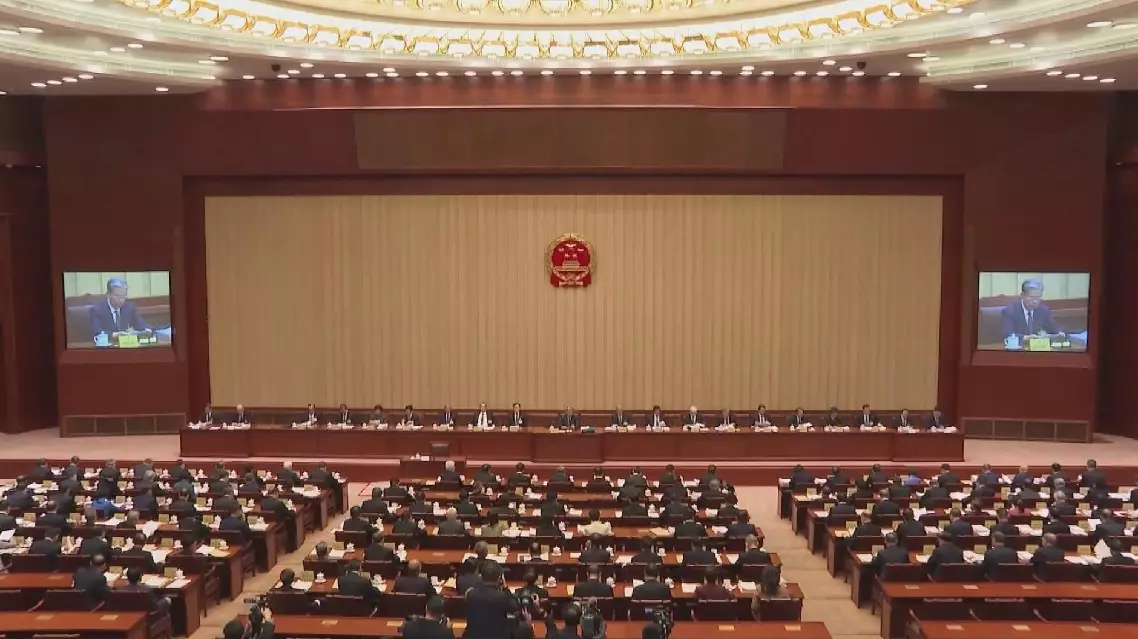
China's top legislature convenes standing committee session

China

China

China

China's top legislature convenes standing committee session

2026-11-03 00:03 Last Updated At:01:27

China's top legislature has convened its latest standing committee session in Beijing from November 2 to 6 to review a series of draft laws and amendment bills addressing issues including procuratorial public interest litigation, state-owned assets, Antarctic protection, and combating cross-border corruption.

The second draft of the cross-border anti-corruption bill anchors legislation in a holistic approach to national security, and stresses strict rule of law, due process and human rights protection.

According to Zhou Guangquan, Vice Chairman of the Constitution and Law Committee of the 14th National People's Congress, the draft sets out provisions for authorities to use information technology in cross-border anti-corruption work.

He also noted that members of the public have called for tighter safeguards for state secrets, work secrets, trade secrets, personal information and privacy.

Separately, some Standing Committee members and experts said enterprises with cross-border operations should factor in company size, business scope and risk prevention needs when establishing integrity compliance units or appointing dedicated anti-corrruption staff. Following deliberation, the suggestion was put forward for adoption.

The session will also review the second reading of the draft financial law.

The latest draft aims to boost consumer and investor protection, unify asset management rules, regulate online financial marketing, and tighten oversight of cross-border financial activities.

Xin Chunying, Chairperson of the Constitution and Law Committee of the 14th National People's Congress, said the committee proposed adding a rule that prevents overseas institutions or individuals providing financial products and services within Chinese territory without approval.

She also stated that entities legally providing such products and services in China must comply with laws, administrative regulations and the provisions of the State Council's financial regulatory authorities.

The draft Antarctic Activities and Environmental Protection Law entered its third reading at the session with updated clauses outlining China's participation in global Antarctic governance, improving the national expedition management system, and protecting Chinese citizens' lawful rights in Antarctica.

Several other draft law revisions are being tabled for first deliberation at this session, including amendments to the Criminal Procedure Law to refine the foreign-related criminal litigation system, a revised Renewable Energy Law to tighten regulations and boost industrial development, and several updates to the Ecology and Environment Code that took effect in August.

Lawmakers will also review a State Council proposal to ratify the Agreement on the Establishment of the World Artificial Intelligence Cooperation Organization.
China's top legislature convenes standing committee session

China's top legislature convenes standing committee session

A new China-Austria international innovation center will be set up in Ningbo, east China's Zhejiang Province, to bridge Austrian technology firms with China's advanced manufacturing sector.

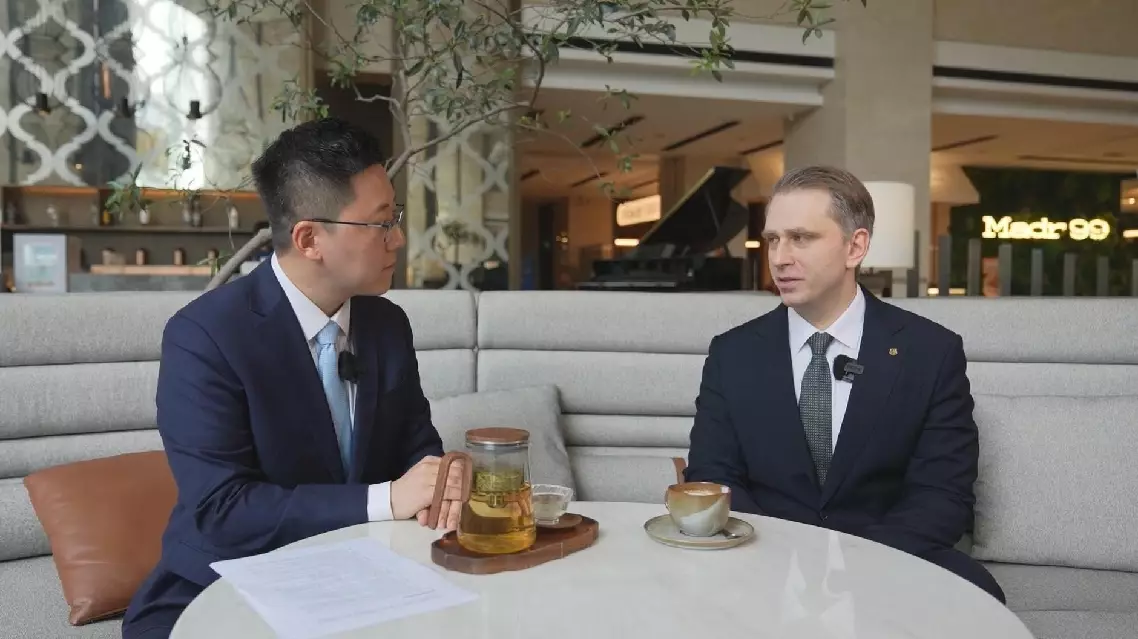
The proposed China-Austria (Ningbo) International Innovation Center aims to connect Austria's strengths in research and specialized technologies with Ningbo's advanced manufacturing capabilities and established industrial supply chains, according to Sebastian Kovacs, president of the Austrian Technology and Entrepreneurship Association (ATEA) and a representative of Vienna Neustadt.

Speaking on the sidelines of the 2026 Global Mayors Dialogue held from Monday to Thursday in Ningbo, Kovacs said the initiative would help Austrian technology companies gain easier access to the Chinese market, including through investment support and local operational assistance.

"I mean since I'm coming here, and based on my background in Austria, I'm always working with technology companies, right? And as you can imagine, when it's a good technology, it needs to grow, right? And it needs maybe capital from outside stakeholders, investors. Usually they go to the West, they go to the United Kingdom or to go to the United States, because the barrier for entrance is lower than maybe go to China. And I want to solve this. I want to give the Austrian tech companies the opportunity to go into China, much easier, much faster. And this is where we support with people and teams on the ground, but also with capital to invest into," said Kovacs in an interview with China Global Television Network (CGTN).

Ningbo's industrial strengths could also offer Austrian businesses, particularly small and medium-sized enterprises, opportunities to expand their operations and develop partnerships in China. The city is home to a major international port and well-established manufacturing clusters, including in the automotive and battery sectors.

Kovacs told CGTN that these industries also align with areas of expertise in Austria, creating opportunities for the two sides to build on their complementary strengths.

"You have the biggest regarding transaction volume port in the world. Logistically, geographically, you're very perfectly situated. As you mentioned, you have a lot of manufacturing hubs here in Ningbo, especially in automotive and battery. This is also one of our strengths in Austria. So we naturally have an overlap. We are aiming to use this more into the future," he noted.

China, Austria seek closer technology, manufacturing cooperation through new innovation center

China, Austria seek closer technology, manufacturing cooperation through new innovation center

Recommended Articles