China's top diplomat Wang Yi met with Ali Bagheri Kani, deputy secretary of Iran's Supreme National Security Council (SNSC) in Beijing on Monday, to discuss the situation in the Middle East and relations between China and Iran.
Wang, a member of the Political Bureau of the Communist Party of China Central Committee and director of the Office of the Central Commission for Foreign Affairs, said that China will follow the initiatives and propositions put forward by President Xi Jinping on easing the situation in the Middle East and work together with all other parties continuously to restore regional peace.
Wang said that despite the turbulent and ever-changing international landscape, China-Iran relations have consistently maintained steady development. This serves the fundamental interests of both peoples and aligns with the aspirations of Global South nations for unity and cooperation.
China supports Iran in safeguarding its sovereignty and security, and stands ready to work with the Iranian side to further advance China-Iran relations, Wang said.
For his part, Bagheri outlined Iran's perspectives and positions regarding the regional situation, stating that Iran will firmly safeguard its own security, sovereignty, and territorial integrity against the pressures and threats posed by powerful actors.
Bagheri noted that Iran remains open to engagement and negotiation with all other parties, and is actively committed to achieving peace and stability in the region.
Iran appreciates the initiatives proposed by President Xi Jinping, as well as China's consistent stance in upholding multilateralism, and looks forward to China playing an even greater role in fostering international and regional peace, said Bagheri.
Iran is keen to promote steady development of Iran-China relations and to strengthen cooperation with China within international and multilateral frameworks, said Bagheri.

China's top diplomat meets deputy secretary of Iran's Supreme National Security Council
China's top legislature has convened its latest standing committee session in Beijing from November 2 to 6 to review a series of draft laws and amendment bills addressing issues including procuratorial public interest litigation, state-owned assets, Antarctic protection, and combating cross-border corruption.
The second draft of the cross-border anti-corruption bill anchors legislation in a holistic approach to national security, and stresses strict rule of law, due process and human rights protection.
According to Zhou Guangquan, Vice Chairman of the Constitution and Law Committee of the 14th National People's Congress, the draft sets out provisions for authorities to use information technology in cross-border anti-corruption work.
He also noted that members of the public have called for tighter safeguards for state secrets, work secrets, trade secrets, personal information and privacy.
Separately, some Standing Committee members and experts said enterprises with cross-border operations should factor in company size, business scope and risk prevention needs when establishing integrity compliance units or appointing dedicated anti-corrruption staff. Following deliberation, the suggestion was put forward for adoption.
The session will also review the second reading of the draft financial law.
The latest draft aims to boost consumer and investor protection, unify asset management rules, regulate online financial marketing, and tighten oversight of cross-border financial activities.
Xin Chunying, Chairperson of the Constitution and Law Committee of the 14th National People's Congress, said the committee proposed adding a rule that prevents overseas institutions or individuals providing financial products and services within Chinese territory without approval.
She also stated that entities legally providing such products and services in China must comply with laws, administrative regulations and the provisions of the State Council's financial regulatory authorities.
The draft Antarctic Activities and Environmental Protection Law entered its third reading at the session with updated clauses outlining China's participation in global Antarctic governance, improving the national expedition management system, and protecting Chinese citizens' lawful rights in Antarctica.
Several other draft law revisions are being tabled for first deliberation at this session, including amendments to the Criminal Procedure Law to refine the foreign-related criminal litigation system, a revised Renewable Energy Law to tighten regulations and boost industrial development, and several updates to the Ecology and Environment Code that took effect in August.
Lawmakers will also review a State Council proposal to ratify the Agreement on the Establishment of the World Artificial Intelligence Cooperation Organization.
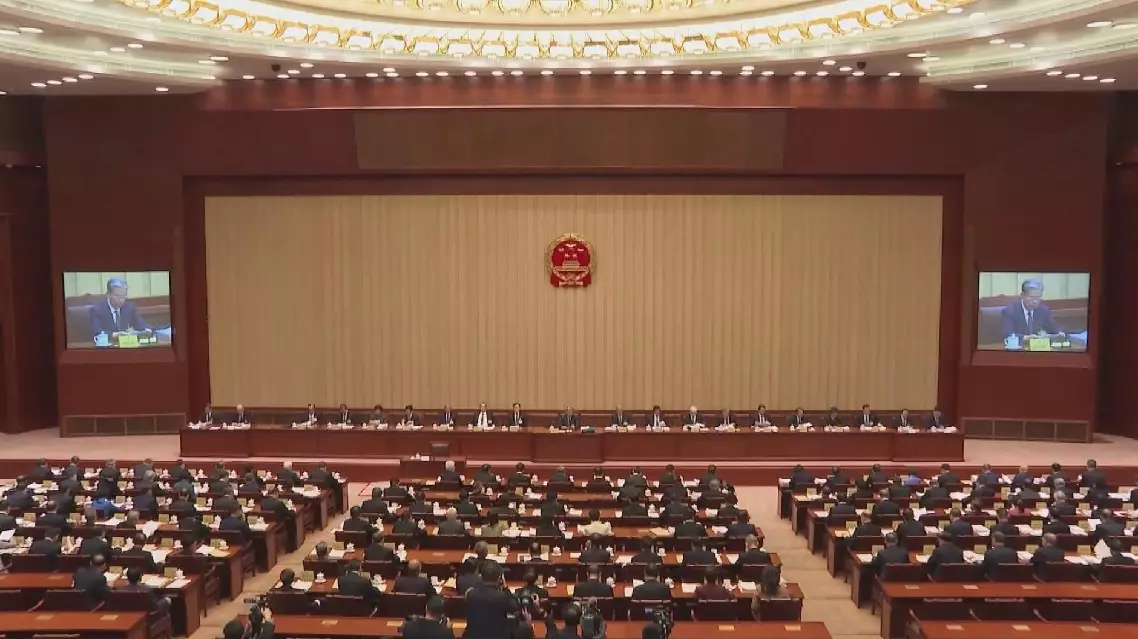
China's top legislature convenes standing committee session