The 17th meeting of the Conference of the Parties to the Convention on Biological Diversity (COP17) concluded in Armenian capital Yerevan on Saturday, with participants urging all parties to pace up the implementation of the Kunming-Montreal Global Biodiversity Framework.
The conference adopted decisions and the meeting report on issues such as the first global collective review of progress in implementing the framework and resource mobilization.
Adopted in 2022, the framework sets out 23 action-oriented global targets for 2030, including bringing at least 30 percent of degraded terrestrial, inland water, and marine and coastal ecosystems under effective restoration by 2030.
The conference assessed gaps in the implementation of these targets and explored pathways to accelerate progress toward achieving them.
Armenian Environment Minister and COP17 President Hambardzum Matevosyan said, despite a difficult negotiation process, the final outcomes of the conference were beyond expectations.
"The executive secretary is telling me that we have adopted about 50 items, which is great, which is very good," he said.
"We have started attacking the bigger economic questions, not focusing only on the targets that we all know, 30 by 30, and species, etc., but we have looked at the upstream issues," said Astrid Schomaker, executive secretary of the secretariat of the Convention on Biological Diversity (CBD).
Regarding whether the 2030 global biodiversity targets can be met on schedule, Schomaker said she remained cautiously optimistic, describing it as a challenging but achievable goal.
"I would also say that the decisions that we have taken here have the potential, if they were implemented, to bring us back on track to 2030. So, we've always said that 2030 targets are ambitious, but they remain feasible," she said.
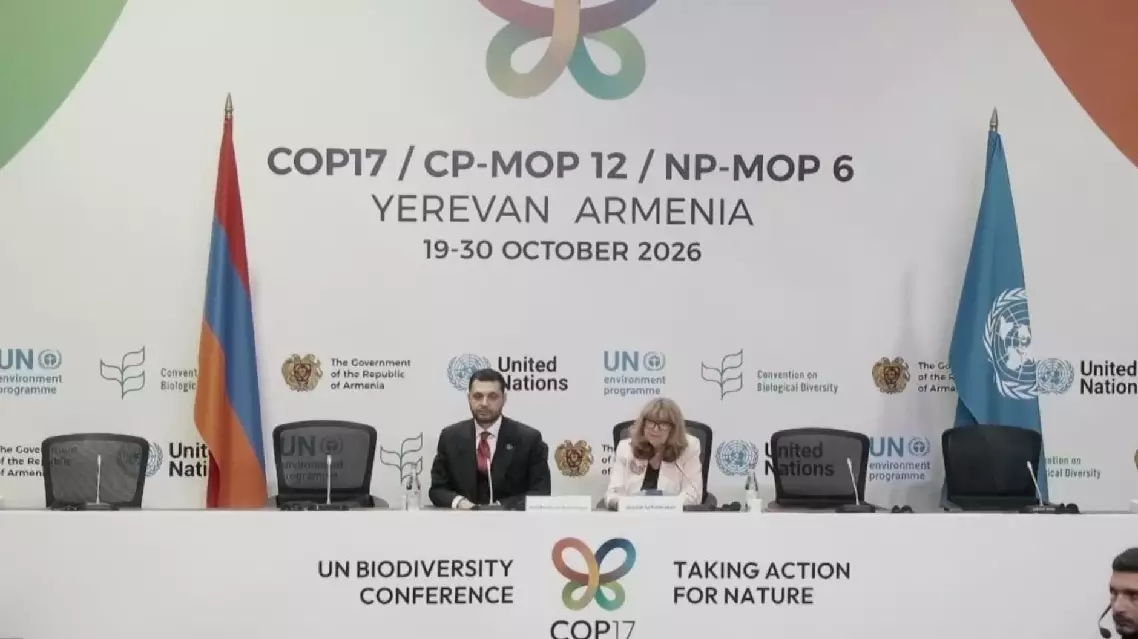
COP 17 urges implementation of Kunming-Montreal framework