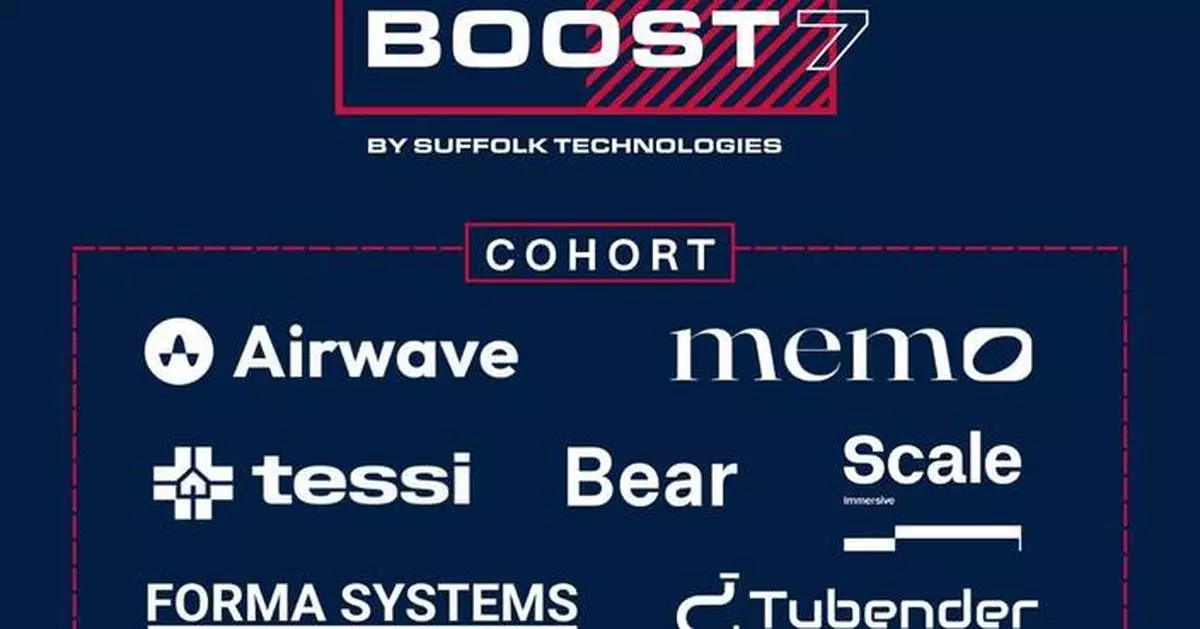
BOSTON--(BUSINESS WIRE)--Sep 14, 2026--
Suffolk Technologies today announced the seven startups selected to participate in BOOST 7, its seventh annual accelerator program for early-stage companies transforming the built environment. The 2026 cohort brings together founders working across construction operations, AI and data, design and engineering, robotics, safety, sustainability, and resilience.
This press release features multimedia. View the full release here: https://www.businesswire.com/news/home/20260914625450/en/
BOOST 7 saw a nearly 50% year-over-year increase in applications, creating the largest and most competitive applicant pool in the program’s history. From this group, the selected teams stood out for the strength and diversity of their backgrounds, as well as the clarity of their thinking about the industry’s most complex challenges. Each brings a distinct perspective, a willingness to challenge conventional approaches, and the right questions to engage deeply with BOOST’s Operating Partners and broader network, making them especially well positioned to maximize the program and build transformational technology for construction, real estate, and infrastructure.
BOOST 7 also marks the next phase of the program’s evolution with Jennifer Davis joining as its first Executive Director. Davis brings five years of experience leading Techstars Boston and will help guide BOOST’s programming, founder experience, and engagement with its Operating Partner network.
“We are excited to welcome our BOOST 7 cohort! Each founder is tackling a critical challenge in the built environment and developing bold new solutions for the future,” said Davis. “Together with our Operating Partner network, we’re thrilled to work alongside these exceptional founders to help bring their emerging technologies to real-world adoption and accelerate progress toward a more efficient, resilient, and sustainable future. We are proud to be part of their journey and excited to see how these companies will reshape the way we design, build, and manage our physical world.”
The BOOST 7 companies will participate in an eight-week program that combines founder programming, direct engagement with Suffolk Technologies’ growing network of more than 60 Operating Partners, access to Suffolk expertise, and opportunities to explore pilots and customer relationships. The program will culminate at the BOOST 7 Demo Day, hosted at Suffolk’s Headquarters in Boston during the third annual Boston Built Week on November 18, 2026.
The BOOST 7 Cohort
Airwave: Smart safety glasses for physical work that offer hands-free video and photos, voice Q&A, and automated inspection and safety documentation.
Bear: A code-first AI construction and BIM modeling platform that turns project data into executable models for visualization, takeoffs, engineering, and procurement.
Forma Systems: A structural optimization platform that automates preliminary engineering to create code-compliant, fabrication-ready designs that reduce material use and cost, starting with precast concrete.
Memo: A voice interface for construction teams that connects to existing jobsite radios, allowing field workers to talk to their device and turn everyday voice communications into actions, alerts, and project updates.
Scale Immersive: A visualization platform that allows real estate, architecture, and construction teams to click, tap, or walk through a building before it’s built, helping stakeholders experience spaces and make decisions earlier.
Tessi: An AI-native disaster recovery platform that guides homeowners through assessments, recovery plans, funding, vetted provider matching, and restoration.
Tubender: A portable, automatic conduit-bending machine for commercial electricians that bends EMT and rigid conduit from ½-inch to 2-inch trade sizes.
Since its launch in 2020, BOOST has supported 38 companies and helped alumni founders build relationships across the built environment. BOOST alumni have raised more than $730 million, with 85% raising within 18 months after completion of the program, and have launched more than 80 pilots with industry partners.
About Suffolk Technologies
Suffolk Technologies is a venture capital platform funding the next generation of companies solving built environment challenges. Led by Managing Partners Wan Li Zhu, Jit Kee Chin, and Puneet Mahajan, Suffolk Technologies invests in early and growth-stage startups transforming the built world across real estate and development, architecture, engineering and construction, property management, infrastructure, and smart cities. Leveraging Suffolk’s expertise and broad network of industry leaders, Suffolk Technologies partners with visionary founders to accelerate industry-wide adoption of breakthrough innovations. For more information, visit SuffolkTech.com.
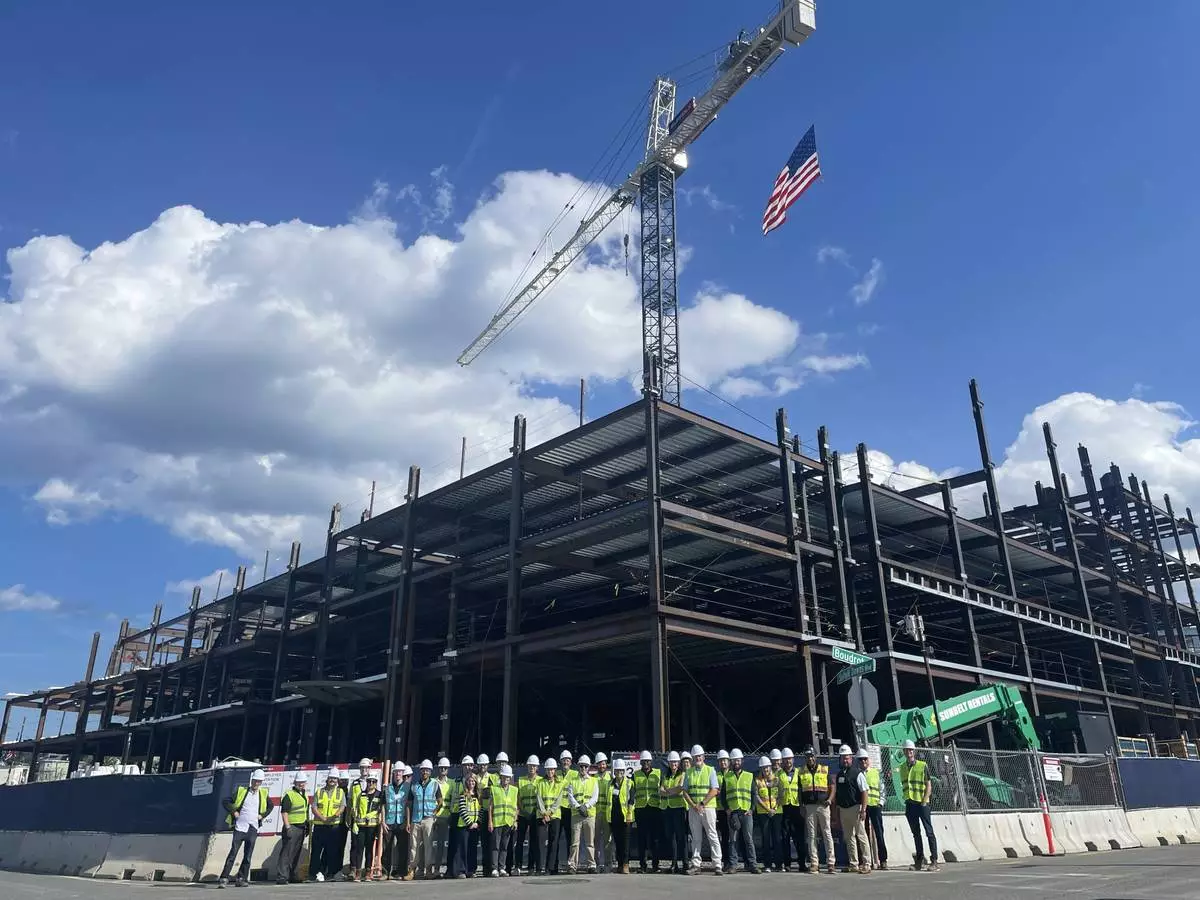
The seven BOOST 7 startups gathered in Boston for a Pre-Launch Program to meet with the BOOST team, set program goals, and engage with Suffolk experts and Operating Partners, including a visit to an active Suffolk jobsite.
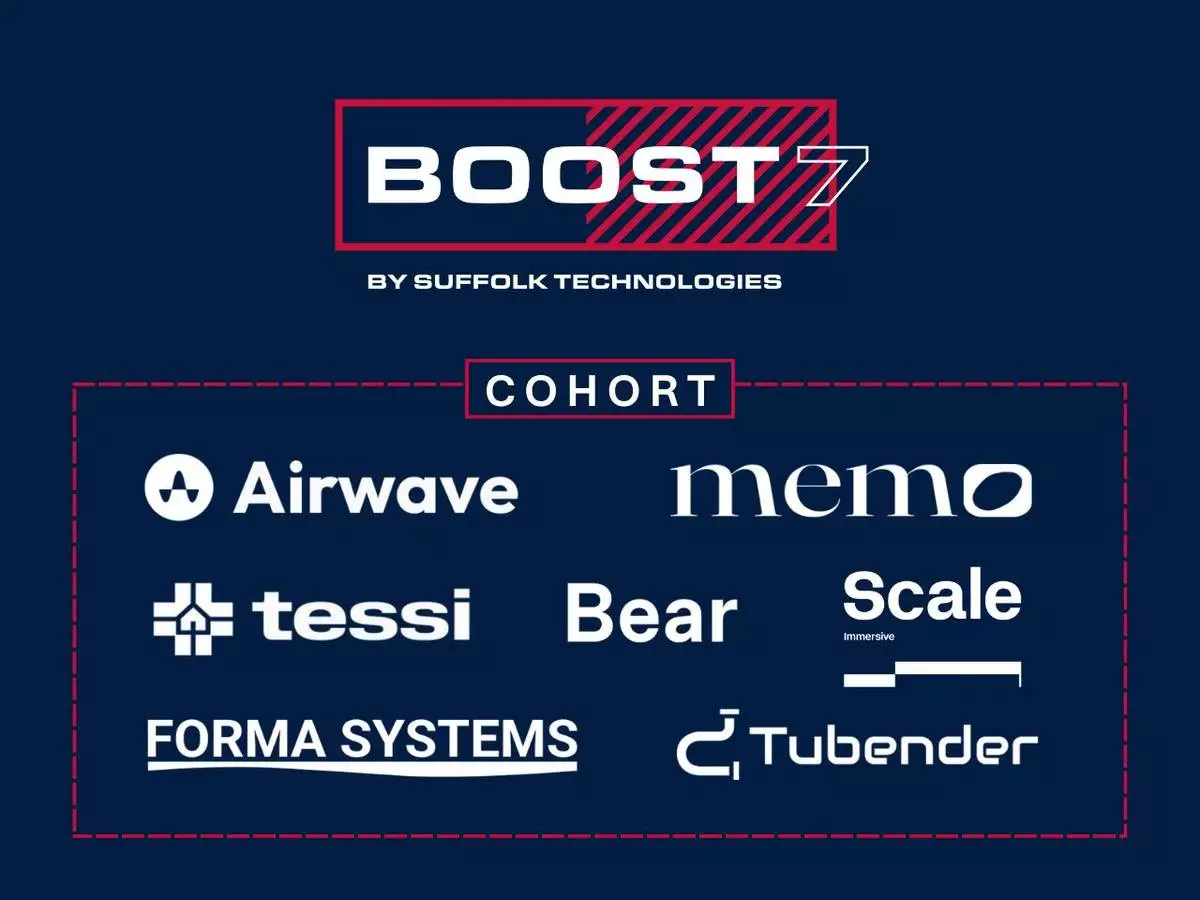
Suffolk Technologies selected seven startups for BOOST 7, its seventh annual accelerator program for early-stage companies in construction, real estate, and infrastructure. The cohort includes Airwave, Bear, Forma Systems, Memo, Scale Immersive, Tessi, and Tubender. The program culminates at Demo Day on November 18, 2026, in Boston.
NEW YORK (AP) — A surprise return for Jensen Huang, the charismatic backer of the entire artificial intelligence industry, to Nvidia as its CEO is launching the U.S. stock market higher on Monday. It’s recovering much of its brutal loss from last week, which was one of its worst since the 2008 financial crisis.
The S&P 500 jumped 4.1% and was on track for one of its best days of the last five years. The rallies for AI stocks had the Nasdaq composite up a market-leading 6%, as of 9:35 a.m. Eastern time, while the Dow Jones Industrial Average was up 1,005 points, or 2.1%.
Even before Wall Street opened for trading, trading in the futures markets suggested U.S. stocks were set to halt their seven-day losing streak and jump by more than 2% at the open. Then came the bombshell about Huang returning to Nvidia, even though its board is still investigating whether he was the target of a foreign spy.
The stock of the chip company that became the face of the frenzy around AI stocks surged 27.8% after plunging nearly 23% last week.
Stocks that are closely tied to Nvidia likewise rocketed higher. CoreWeave, a company that buys Nvidia chips and then rents out access to them over the cloud, surged 26.7%.
Other stocks in far-flung industries that have benefited from the AI boom likewise recovered some of their losses. GE Vernova, which is helping to power AI data centers, rose 8.7% following last week’s drop of nearly 13%. Caterpillar, which has seen big demand for its equipment because of the construction boom around AI, climbed 6% after sinking 15% last week.
How AI-related stocks do matters incredibly for the broader market because Nvidia and other chip stocks have grown into some of Wall Street’s largest and most influential. Coming into the day, a 1% swing for Nvidia’s stock carried more of an effect on the S&P 500 than a 1% move for all but two of the 500 companies in the index.
To be sure, AI stocks and the broader U.S. market have been prone to extreme reversals since the summer, not only week to week but even hour to hour. Monday’s strength could easily give way to more losses because of the long list of worries dogging the industry.
Beyond general concerns that AI stock prices shot too high and entered into a bubble, worries are also high that a Democratic-controlled Congress and statehouses across the country could increase regulations on the AI industry. High interest rates in the bond market are also raising the possibility that companies will not be able to borrow as much money to pay for the AI build out.
But on the upside for the market, big U.S. companies continue to deliver big growth in profits, at least for the moment. Businesses in the S&P 500 are on track to report an overall jump of nearly 33% in earnings for the summer from a year earlier, according to FactSet.
That would be the third straight quarter of growth better than 25%, and stock prices tend to follow the path of corporate profits over the long term.
The risks facing the AI industry could certainly weaken that growth, but analysts at Barclays Capital suggest they should only “make the build out slower and more selective rather than derail it.”
“Markets have been badly bruised by the turmoil of recent weeks, but we do not think the underlying cycle is broken,” Barclays’ Ajay Rajadhyaksha and Amrut Nashikkar wrote in a research report. “Earnings remain strong, global growth is holding up and even if the AI build out slows a little, it is not collapsing. The risks are real, but for now we think they are manageable.”
Oracle rose 15.6% after making a pre-emptive announcement that it had put in place all the funding needed to fulfill its deal to provide computing power to OpenAI, the company behind ChatGPT.
“Any further private discussions with vendors are just additional options,” it said in a statement. “Our ability to deliver on our OpenAI contract does not depend on those discussions. Any media reports that will come out and say the contrary are incorrect and wrong.”
In stock markets abroad, European indexes rallied following a weaker finish in Asia. South Korea’s Kospi fell 3.3% due to drops for its big stocks tied to the AI economy, but those moves came ahead of Huang’s return to Nvidia.
In the bond market, the yield on the 10-year Treasury rose to 4.96% from 4.92% late Friday as investors felt less need to herd into investments seen as safer bets.
AP Business Writers Michelle Chapman, Elaine Kurtenbach and Chan Ho-him contributed to this report.
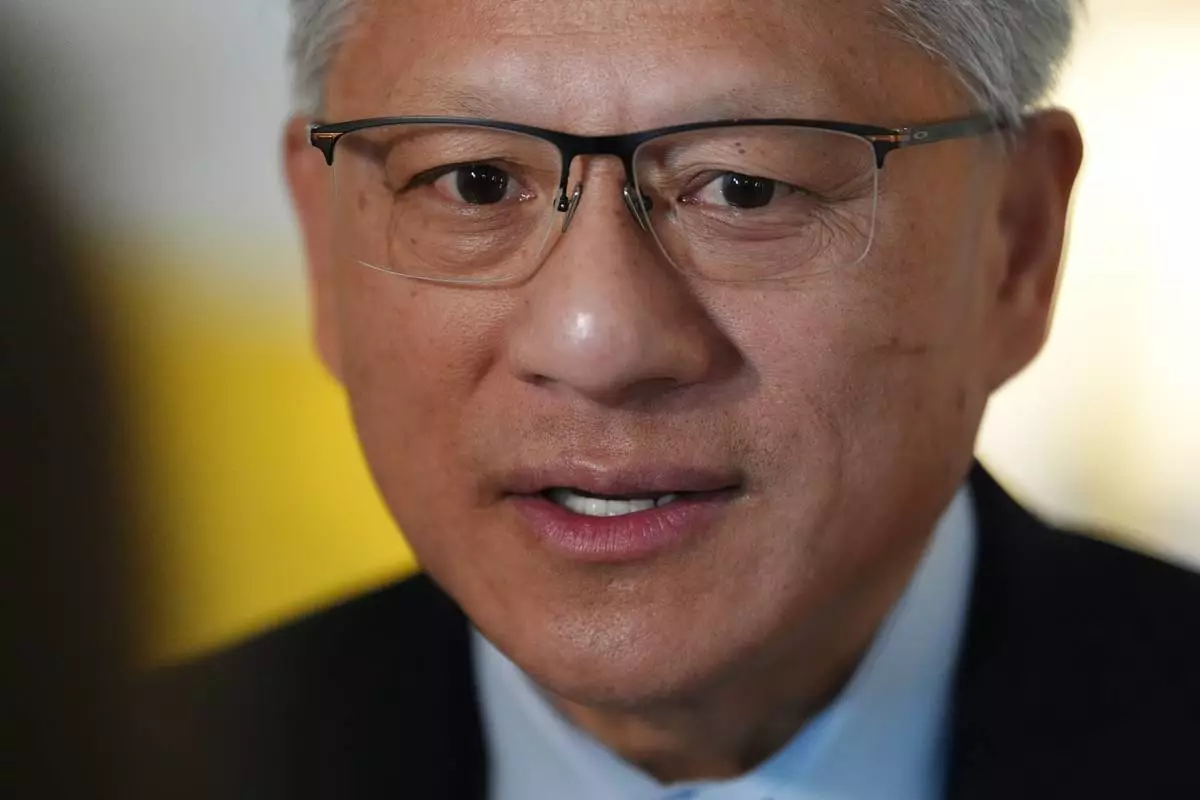
FILE - Nvidia chief executive Jensen Huang records a pool interview ahead of a meeting hosted by King Charles III for leaders from the AI sector, Government, and thought leaders to discuss how AI can be developed and deployed in ways that benefit society, at Dumfries House in Cumnock, Scotland, Thursday Sept. 17, 2026. (Jonathan Brady/PA via AP, Pool, File)
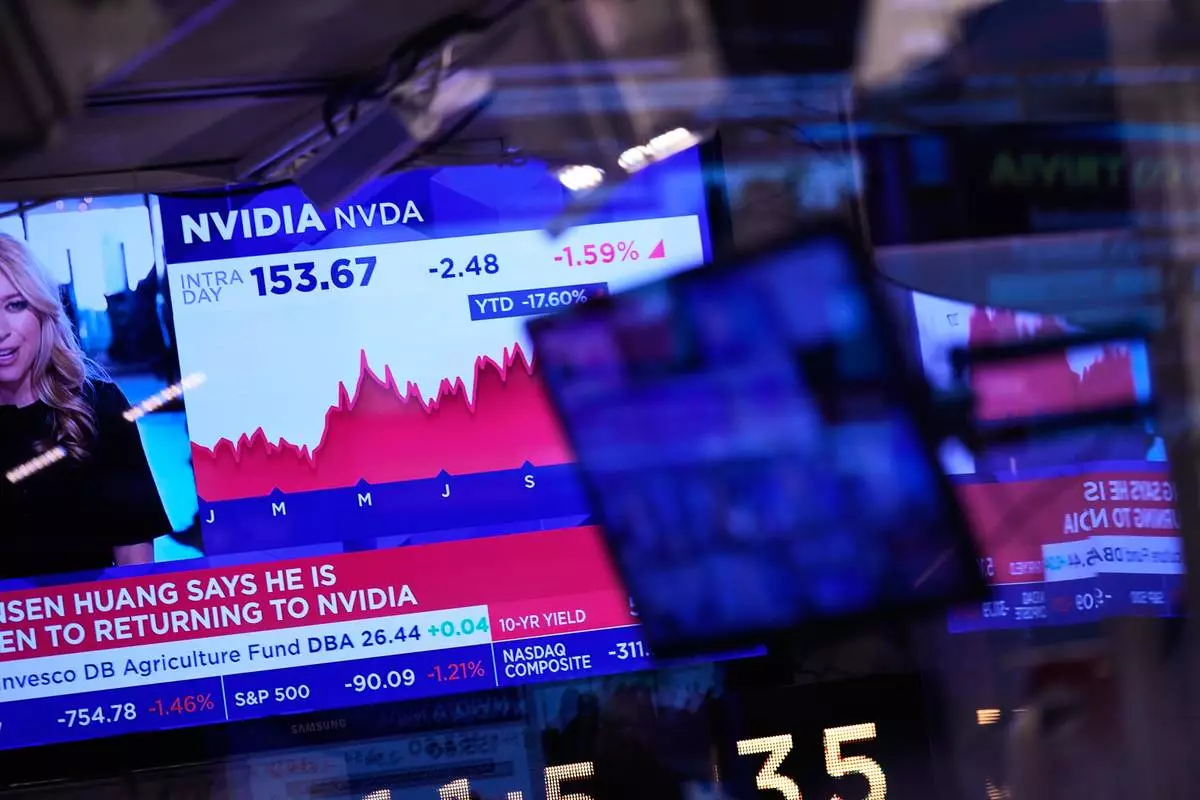
Screens display financial information and news on the floor of the New York Stock Exchange in New York, Tuesday, Nov. 17, 2026. (AP Photo/Seth Wenig)

People work on the floor at the New York Stock Exchange in New York, Tuesday, Nov. 17, 2026. (AP Photo/Seth Wenig)
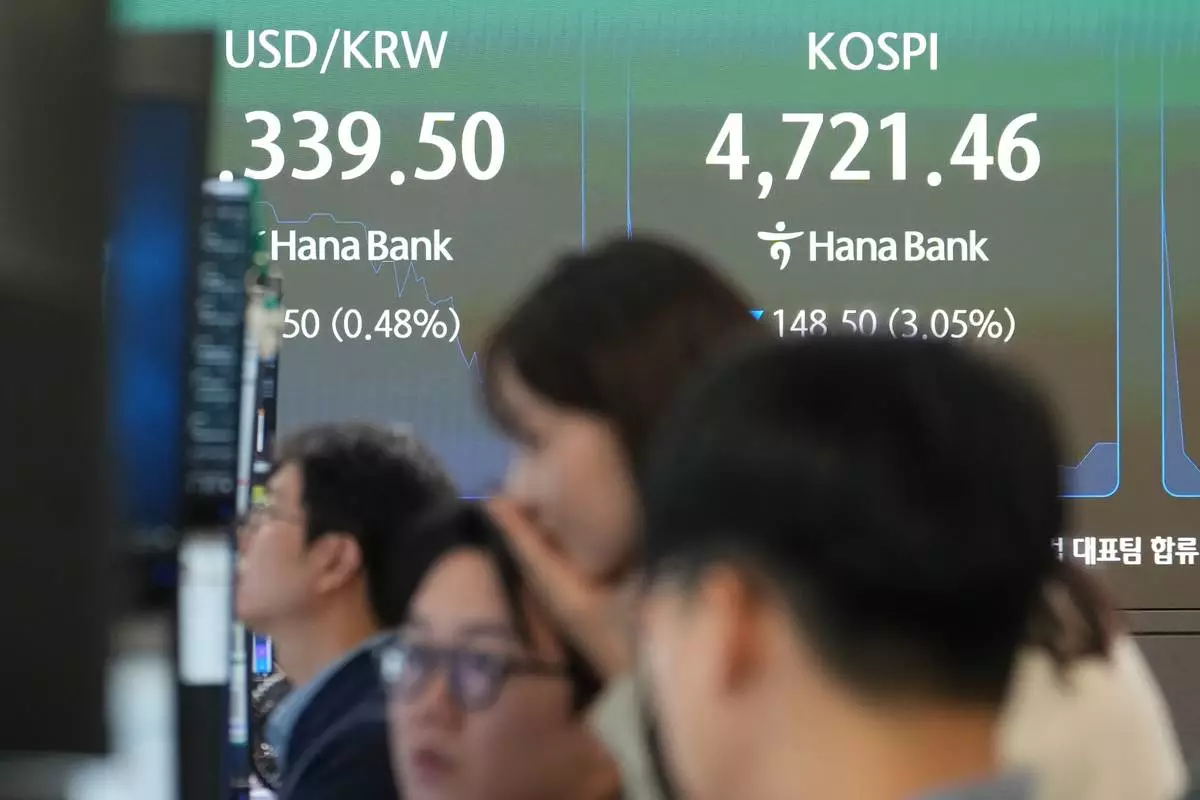
Dealers watch computer monitors near the screens showing the Korea Composite Stock Price Index (KOSPI), right, and the foreign exchange rate between U.S. dollar and South Korean won at a dealing room of Hana Bank in Seoul, South Korea, Monday, Nov. 23, 2026. (AP Photo/Lee Jin-man)
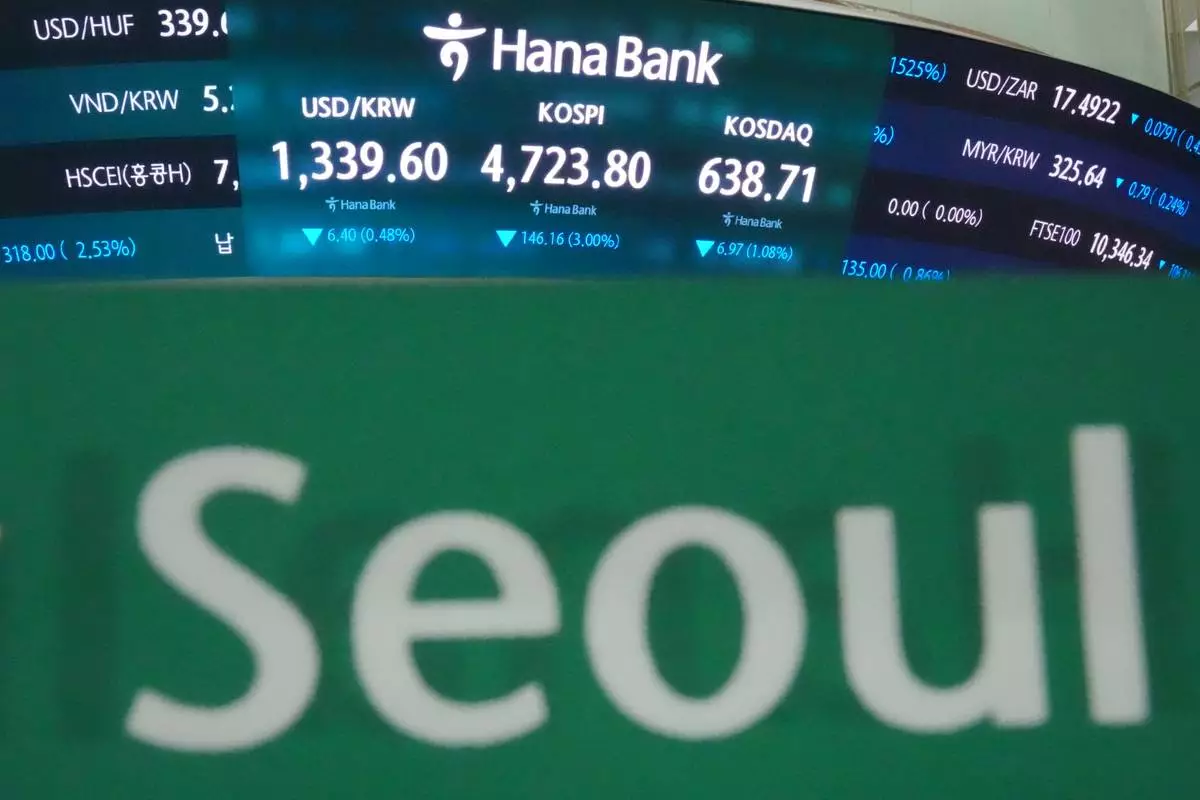
The screens showing the Korea Composite Stock Price Index (KOSPI), the foreign exchange rate between U.S. dollar and South Korean won and the Korea Securities Dealers Automated Quotations (KOSDAQ) are seen at a dealing room of Hana Bank in Seoul, South Korea, Monday, Nov. 23, 2026. (AP Photo/Lee Jin-man)
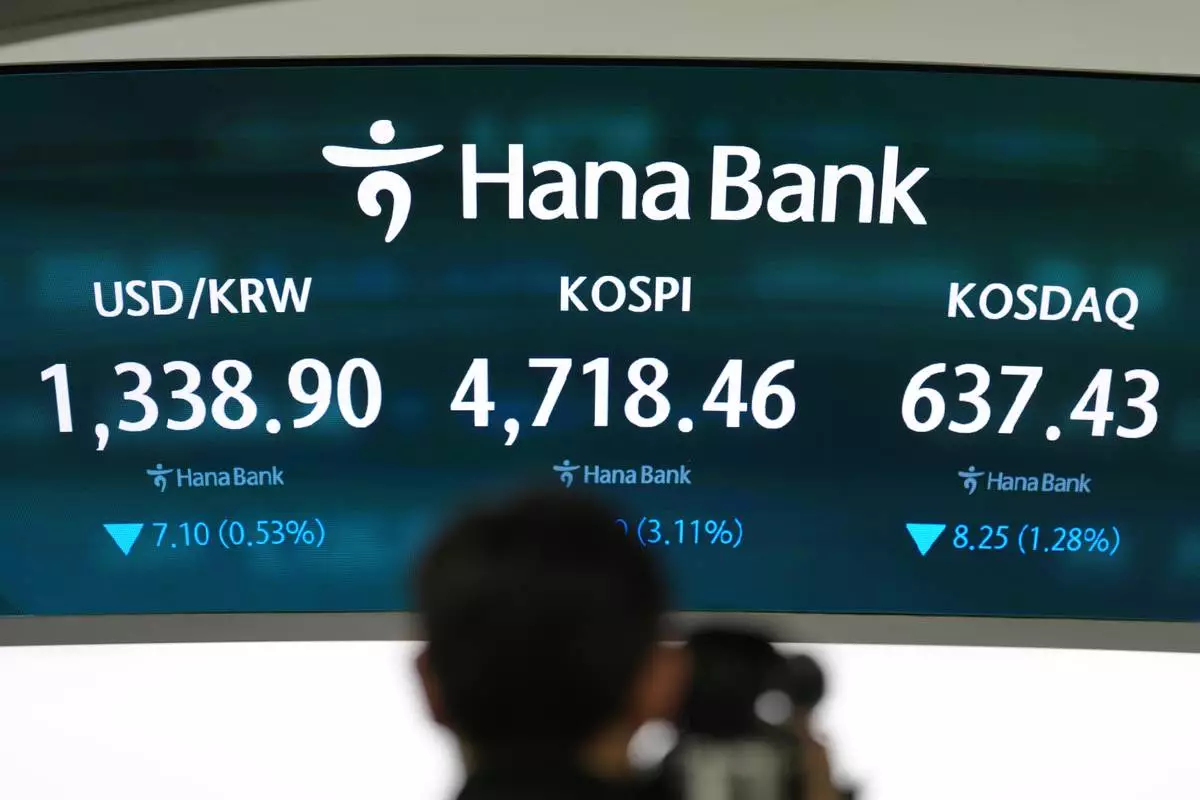
A TV cameraman films the screens showing the Korea Composite Stock Price Index (KOSPI), the foreign exchange rate between U.S. dollar and South Korean won and the Korea Securities Dealers Automated Quotations (KOSDAQ) at a dealing room of Hana Bank in Seoul, South Korea, Monday, Nov. 23, 2026. (AP Photo/Lee Jin-man)
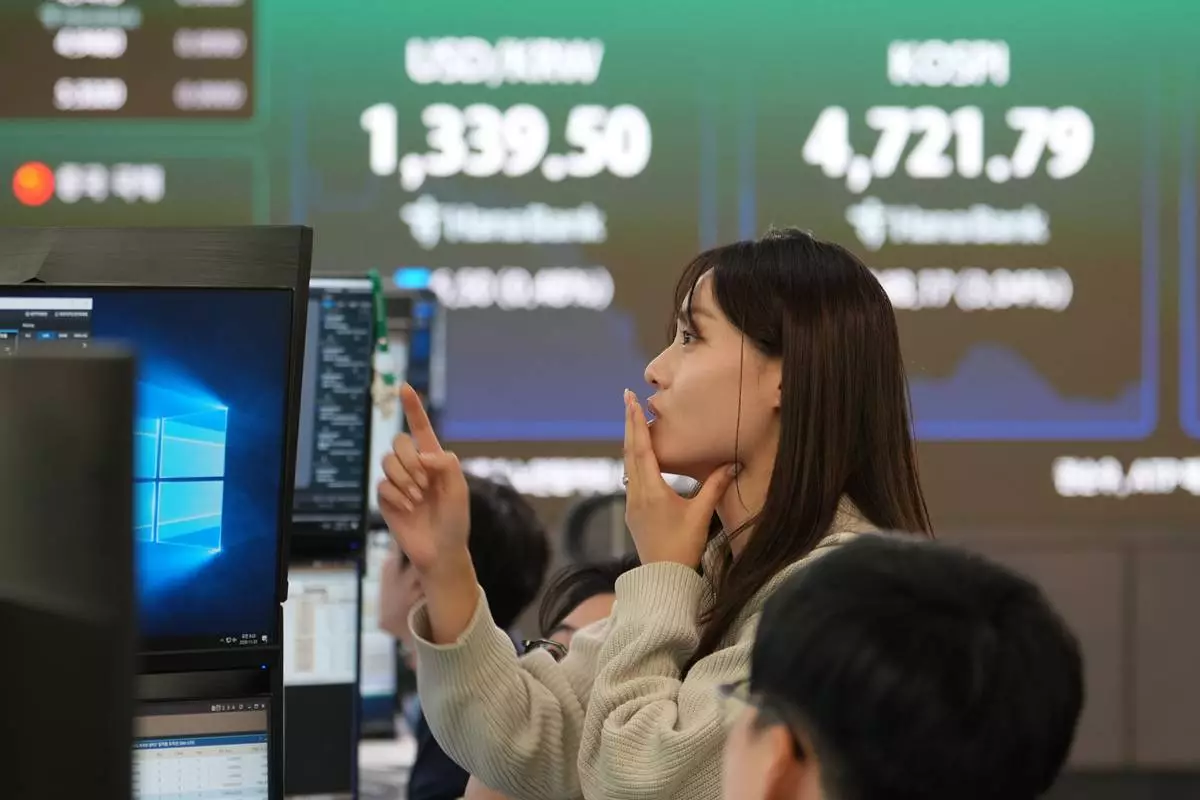
A dealer watches computer monitors near the screens showing the Korea Composite Stock Price Index (KOSPI) and the foreign exchange rate between U.S. dollar and South Korean won at a dealing room of Hana Bank in Seoul, South Korea, Monday, Nov. 23, 2026. (AP Photo/Lee Jin-man)
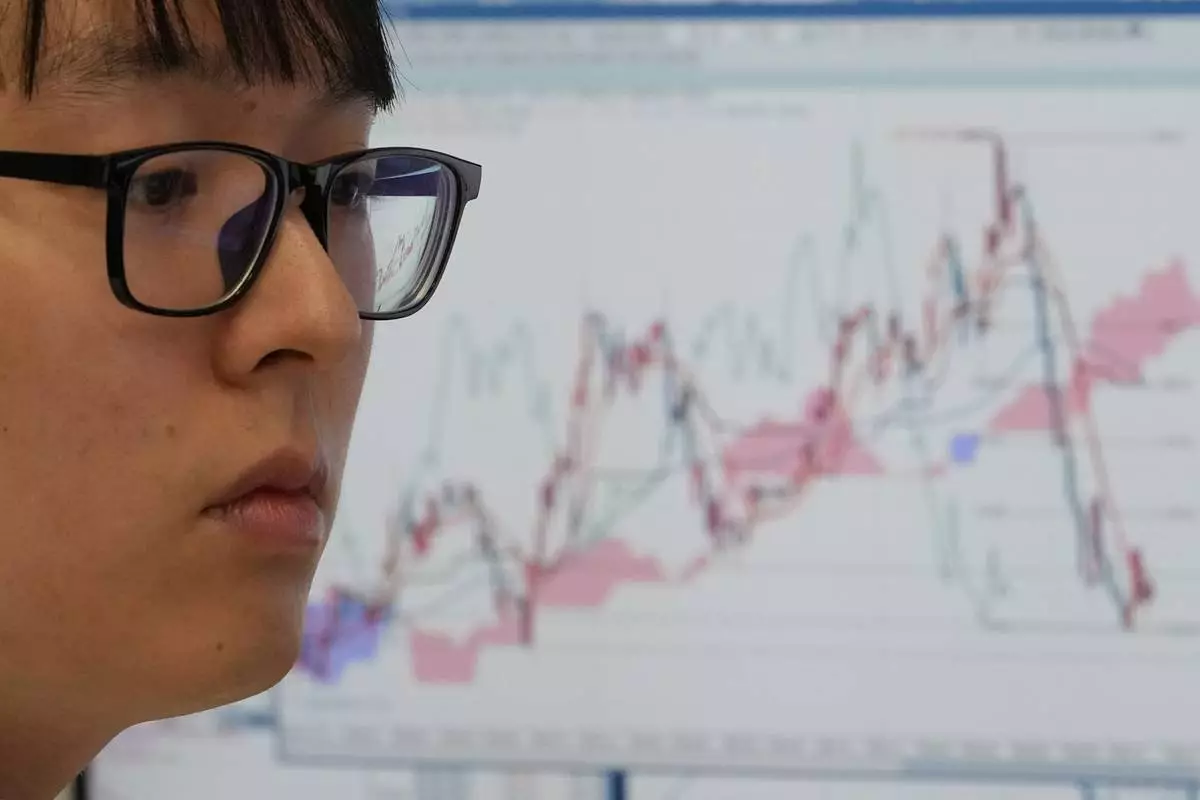
A dealer watches computer monitors at a dealing room of Hana Bank in Seoul, South Korea, Monday, Nov. 23, 2026. (AP Photo/Lee Jin-man)