NEW YORK (AP) — You could call it catching lightning in a bottle or being in the right place at the right time. Or you could call it what it really was: powering up the family computer and unexpectedly transforming music media.
The year was 1996. In Minneapolis, a teenage music obsessive named Ryan Schreiber had an idea. Why not launch an online music zine published for and by enthusiasts with a strong point of view? Why not eventually call it something sharp, like Pitchfork?
He had no need for the neutrality of other early 'net adopters, like AllMusic, or legacy media like Rolling Stone's nascent online offerings. He wanted to differentiate his site through snark and smarts — and he had the youthful boldness to make it happen.
Or, to borrow a phrase from his memoir out Dec. 1, he understood that, “If you don't do it, someone else will. So why shouldn't it be you?”
“I wanted it to be tougher than other critics, in part because it was a white space that I could see was available,” Schreiber says of Pitchfork's early ethos.
He calls it “unfiltered honesty,” the kind that naturally allows readers to trust the judgments of the writer. “Recommendations mean that much more,” he says, when they come from a place of “fearless criticism.”
In “Weird Era: How Pitchfork Changed Music Forever,” Schreiber chronicles Pitchfork's evolution from bedroom passion project to consequential music publication, one with the power to launch an indie music career from obscurity to real fame. He also tells the story of his own life, from precocious and confused teenager in the Midwest to editor-in-chief and CEO of an influential publication in New York.
Simultaneously, he traces the trajectory of indie rock, once Pitchfork's primary musical focus: the technological developments that created musical movements, as well as the artists and writers who made it all possible.
Pitchfork began in the era of CDs and — with discerning tastes and unrivaled curation — shepherded voracious music fans into the MP3 and peer-to-peer file-sharing age of Napster and then into the streaming era beyond. While it continues to publish some of the internet's most incisive music writing, Schreiber stepped away from the site in 2019, a few years after it was acquired by media conglomerate Condé Nast.
Shortly thereafter, he started to organize his thoughts and what would eventually become “Weird Era.”
Pitchfork “was my identity since I was 19 years old,” he says. Figuring out “what would this story look like?” was no easy task, amplified by the fact that he stopped writing for the site around 2005. But, he says, part of him always knew he'd need to tell Pitchfork's story and, as a result, he kept a robust personal archive.
“I did actually obsessively save everything the entire time,” he says. “AOL Instant Messenger chats and all my emails and photos, I mean, all the old reviews ... everything that’s not still online or is very old, like original interviews ... I have all of that on hard drives.”
It meant not guessing which contributor he initially asked to review a record or who came up with what idea. Debates over the site's infamous decimal score rating — from 0.0 to 10 — were all there on the drives. He had the proof.
It also meant facing the site's missteps with real detail. Those in the book include an early confrontational interview with Lana Del Rey, a too-high score for the ska band Save Ferris and an infamously fawning review of Radiohead's “Kid A.”
There are also the triumphs: the artists it supported from day one (think Arcade Fire, Bon Iver, Mac DeMarco, Grimes) and the rationale behind the albums that received perfect 10 scores, like Wilco's “Yankee Hotel Foxtrot” and Kanye West's “My Beautiful Dark Twisted Fantasy.”
“Weird Era” is ripe with anecdotes from each stage of the publication's trajectory, from its DIY origins to “the Kanye and Beyoncé era” of the 2010s, as Schreiber describes the moment indie rock and the site itself began to be co-signed by pop and hip-hop's most influential innovators.
It's also a peek behind the curtain, exposing some of the site's day-to-day operations: how Schreiber created its “Best New Music” model, how scores are determined and discussed internally, how its voice moved from sardonic to incisive (often both at once) and how the scope of Pitchfork's independent editorial coverage adapted to meet the current moment — all while maintaining its reputation as “the most trusted voice in music,” as its tagline reads.
And, of course, it concludes with Condé Nast, which Schreiber sold Pitchfork to in 2015. The decision — eulogized online as the end of the site by fans and foes alike, for going corporate — was for survival.
“Many of the advertisers that had supported Pitchfork were jumping ship and doing social media marketing. ... It was dramatic, how quickly it happened,” he says. “At the same time, we had also just taken on a lot of new ventures to kind of help keep Pitchfork growing, expanding.”
The subscription model hadn't fully taken hold of the internet, and the site was at a crossroads. Joining Condé Nast, even with its “outrageous promises that didn't necessarily seem outrageous at the moment,” he says, felt like their only opportunity to “help secure the future of Pitchfork in the long term and give us access to new resources.”
“It was a decision that, at the time, felt like we had better do this or else,” he says.
Then came a gut punch: In 2024, Condé Nast announced Pitchfork would be folded into GQ, a men’s fashion and style magazine.
“Music is so much more than a ‘men’s interest’ or leisure pursuit,” The Guardian’s deputy music editor Laura Snapes told The Associated Press at the time. “Pitchfork paid close, longform critical attention to so many different types of music, and so many different niches. I’m not sure how that will live alongside ecommerce pieces on stick vacuums.”
Schreiber says that in 2026, Pitchfork “may not have necessarily the impact that it once had,” but it remains critically “important to a lot of people and it still has a huge and very loyal readership.”
Schreiber continues to work as a journalist, media strategist and public speaker. But now, a few years removed from the site he founded, and in the exercise of writing a memoir, he's able to theorize why Pitchfork became a cultural force.
“In-depth, insightful criticism,” he says, is its primary legacy — along with being “the big torchbearer for music criticism, both in terms of the music press’ role as a tastemaker and its responsibility of bringing artists to light who might not have other channels through which to gain an audience.”
That influence is still felt. “There was a period of time where if Pitchfork said something was good, I thought it was good. And if they panned something, I probably wouldn’t bother listening to it,” says Gareth Paisey, singer of the Welsh indie band Los Campesinos! “I think that speaks to its power — how it was able to push the needle and single-handedly make something seem relevant.”

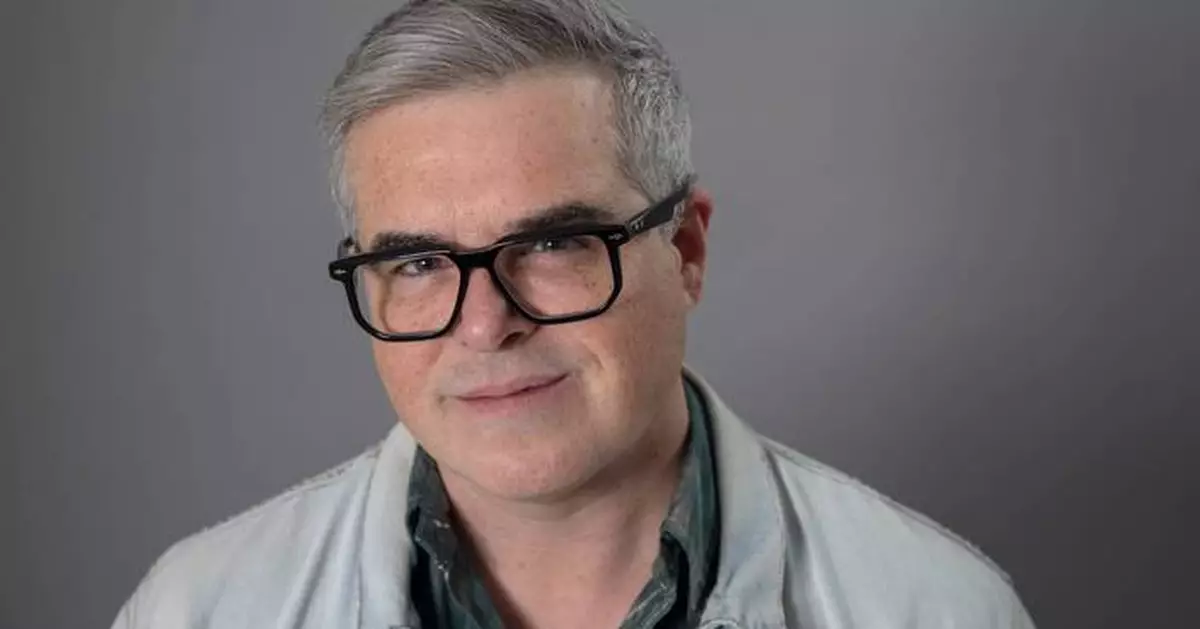
Ryan Schreiber poses for a portrait in New York on Nov. 10, 2026. (Photo by Andy Kropa/Invision/AP)

Ryan Schreiber poses for a portrait in New York on Nov. 10, 2026. (Photo by Andy Kropa/Invision/AP)

Ryan Schreiber poses for a portrait in New York on Nov. 10, 2026. (Photo by Andy Kropa/Invision/AP)