Skip to Content Facebook Feature Image

LINC CLASS ACTION NOTICE: Faruqi & Faruqi, LLP Reminds Lincoln Educational Services Investors of Securities Class Action Lawsuit Deadline on November 10, 2026

Business

LINC CLASS ACTION NOTICE: Faruqi & Faruqi, LLP Reminds Lincoln Educational Services Investors of Securities Class Action Lawsuit Deadline on November 10, 2026
Business

Business

LINC CLASS ACTION NOTICE: Faruqi & Faruqi, LLP Reminds Lincoln Educational Services Investors of Securities Class Action Lawsuit Deadline on November 10, 2026

2026-09-15 02:17 Last Updated At:02:30

NEW YORK--(BUSINESS WIRE)--Sep 14, 2026--

Faruqi & Faruqi, LLP, a leading national securities law firm, is investigating potential claims against Lincoln Educational Services Corporation ("“Lincoln” or the “Company”) (NASDAQ: LINC) and reminds investors of the November 10, 2026 deadline to seek the role of lead plaintiff in a federal securities class action that has been filed against the Company.

This press release features multimedia. View the full release here: https://www.businesswire.com/news/home/20260914553418/en/

Faruqi & Faruqi is a leading national securities law firm with offices in New York, Pennsylvania, California and Georgia. The firm has recovered hundreds of millions of dollars for investors since its founding in 1995. See www.faruqilaw.com.

As detailed below, the complaint alleges that the Company and its executives violated federal securities laws by making false and/or misleading statements and/or failing to disclose that: (1) that the Company's admissions process was not effectively converting students from enrollment to start; (2) that, as a result, the Company was experiencing a significant drop in student starts relative to enrollment; and (3) that, as a result of the foregoing, Defendants' positive statements about the Company's business, operations, and prospects were materially misleading and/or lacked a reasonable basis.

On August 10, 2026, before the market opened, Lincoln reported earnings for the second quarter of 2026, disclosing that student starts increased by only 1% year over year despite enrollment growing 9%,"as fewer enrolled students than expected attended the first day of class," and that "during the quarter, we observed changes in the student decision-making process that affected conversion from enrollment to start." On this news, Lincoln's stock price fell $10.22, or 24.93%, to close at $30.77 per share on August 10, 2026, on unusually heavy trading volume.

The court-appointed lead plaintiff is the investor with the largest financial interest in the relief sought by the class who is adequate and typical of class members who directs and oversees the litigation on behalf of the putative class. Any member of the putative class may move the Court to serve as lead plaintiff through counsel of their choice, or may choose to do nothing and remain an absent class member. Your ability to share in any recovery is not affected by the decision to serve as a lead plaintiff or not.

Faruqi & Faruqi, LLP also encourages anyone with information regarding Lincoln’s conduct to contact the firm, including whistleblowers, former employees, shareholders and others.

To learn more about the Lincoln class action, go to www.faruqilaw.com/LINC or call Faruqi & Faruqi partner Josh Wilson directly at 877-247-4292 or 212-983-9330 (Ext. 1310).

Follow us for updates on LinkedIn, on X, or on Facebook.

Frequently Asked Questions (FAQ) for Investors Regarding the Lincoln Securities Class Action Lawsuit:

What is the Lincoln securities fraud lawsuit about?

The lawsuit alleges that Lincoln Educational Services Corporation and certain of its officers and directors made materially misleading statements and/or statements that lacked a reasonable basis during the Class Period from May 11, 2026 through August 9, 2026. Specifically, the complaint alleges that Defendants knew or recklessly disregarded that the Company's admissions process was not effectively converting enrolled students into actual student starts, and that the Company was allegedly experiencing a significant and undisclosed decline in that conversion rate. On August 10, 2026, before the market opened, Lincoln reported second-quarter 2026 earnings disclosing that student starts increased by only 1% year over year despite enrollment growing 9%, attributing the shortfall to fewer enrolled students than expected attending the first day of class and to observed changes in student decision-making that affected conversion from enrollment to start. Following this disclosure, Lincoln's stock price allegedly fell $10.22 per share, or approximately 24.93%, to close at $30.77 on unusually heavy trading volume, which the lawsuit alleges reflects losses caused by the prior misstatements.

Who may be eligible to participate in the lawsuit?

Investors who purchased or otherwise acquired shares of Lincoln Educational Services Corporation (NASDAQ: LINC) on the open market between May 11, 2026 and August 9, 2026, inclusive, may potentially be eligible to participate in this lawsuit as class members. Eligibility is not limited to investors who seek appointment as lead plaintiff; any investor who purchased Lincoln stock during the Class Period and suffered a loss may be entitled to share in any recovery that may be obtained. Investors are encouraged to review their brokerage records to determine whether their purchases fall within the Class Period. Because class membership and potential eligibility to recover do not depend on taking an active role in the litigation, affected investors may participate without filing any individual motion.

What is a lead plaintiff, and how can I seek appointment?

A lead plaintiff is a court-appointed class member who serves as the representative party on behalf of all class members in a securities class action, working closely with counsel to direct the litigation in the interests of the class as a whole. Under the Private Securities Litigation Reform Act of 1995, any class member who wishes to be considered for appointment as lead plaintiff must file a motion with the court no later than November 10, 2026. The court typically appoints as lead plaintiff the movant who demonstrates the largest financial interest in the relief sought and who otherwise satisfies the requirements of Rule 23 of the Federal Rules of Civil Procedure. Importantly, investors are not required to seek appointment as lead plaintiff in order to be eligible to share in any recovery that may result from the lawsuit; the vast majority of class members participate without serving in that role.

Why should investors contact Faruqi & Faruqi, LLP?

Faruqi & Faruqi, LLP has represented investors in securities litigation for decades and has recovered hundreds of millions of dollars for shareholders. Investors who purchased Lincoln securities during the Class Period may contact the firm to discuss their legal rights, potential claims, and the lead plaintiff process at no cost or obligation.

Attorney Advertising. The law firm responsible for this advertisement is Faruqi & Faruqi, LLP ( www.faruqilaw.com ). Prior results do not guarantee or predict a similar outcome with respect to any future matter. We welcome the opportunity to discuss your particular case. All communications will be treated in a confidential manner.

LINC CLASS ACTION NOTICE: Faruqi & Faruqi, LLP Reminds Lincoln Educational Services Investors of Securities Class Action Lawsuit Deadline on November 10, 2026

LINC CLASS ACTION NOTICE: Faruqi & Faruqi, LLP Reminds Lincoln Educational Services Investors of Securities Class Action Lawsuit Deadline on November 10, 2026
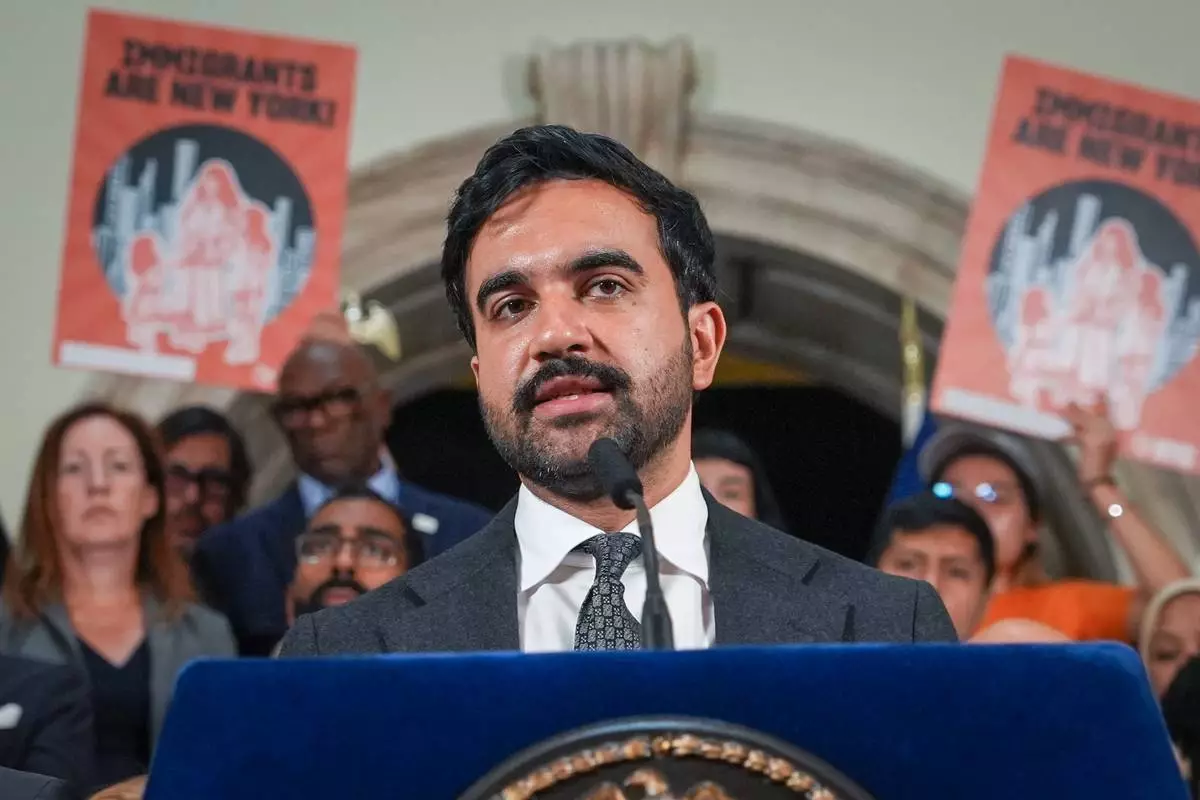
NEW YORK (AP) — Democratic-led states and cities filed lawsuits Monday challenging a federal rule set to begin Friday that they say gives President Donald Trump’s administration broad discretion to deny green cards to immigrants who rely on public assistance for food, healthcare, housing and other basic needs.

The lawsuits challenge the U.S. Department of Homeland Security’s plan to revive a “public charge” rule the Republican originally imposed during his first term, only to have it reversed under his successor, Democratic President Joe Biden.

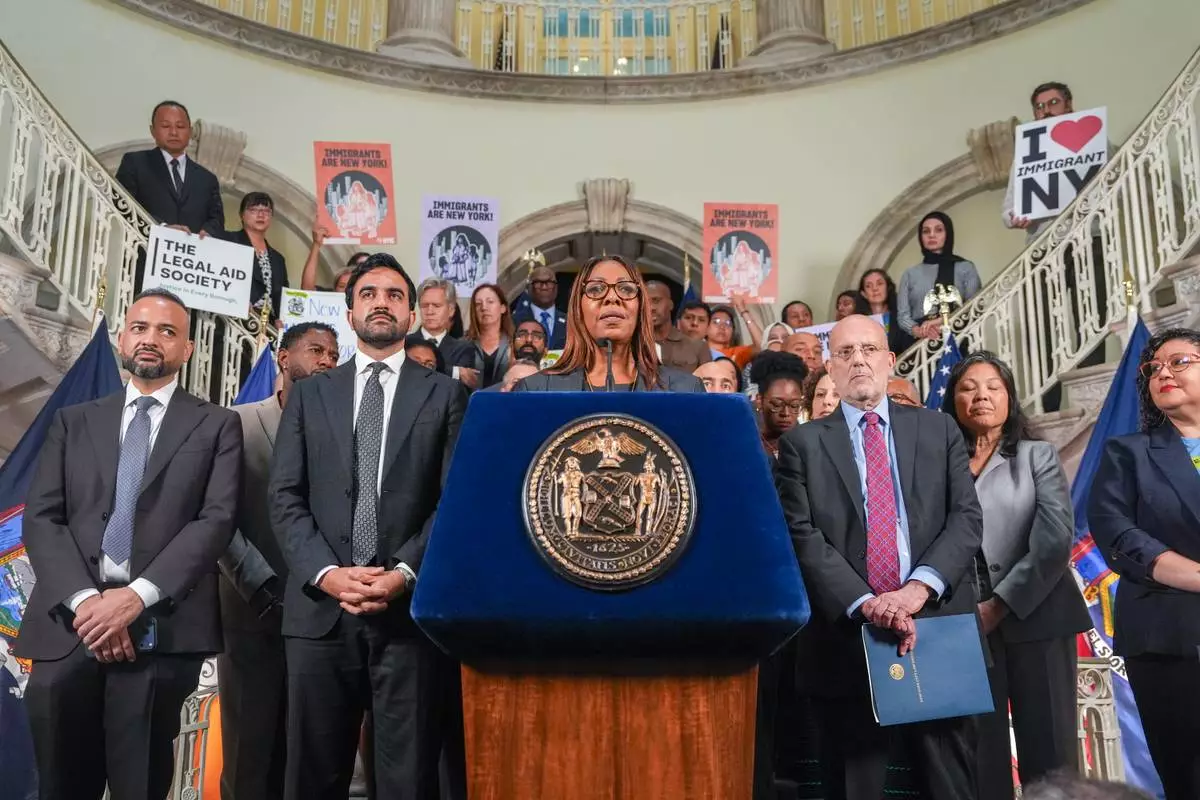
New York Attorney General Letitia James, who is leading a coalition of 21 other states in one of the suits, said the rule would force needy immigrant families to choose between seeking assistance and seeking legal status in the country.

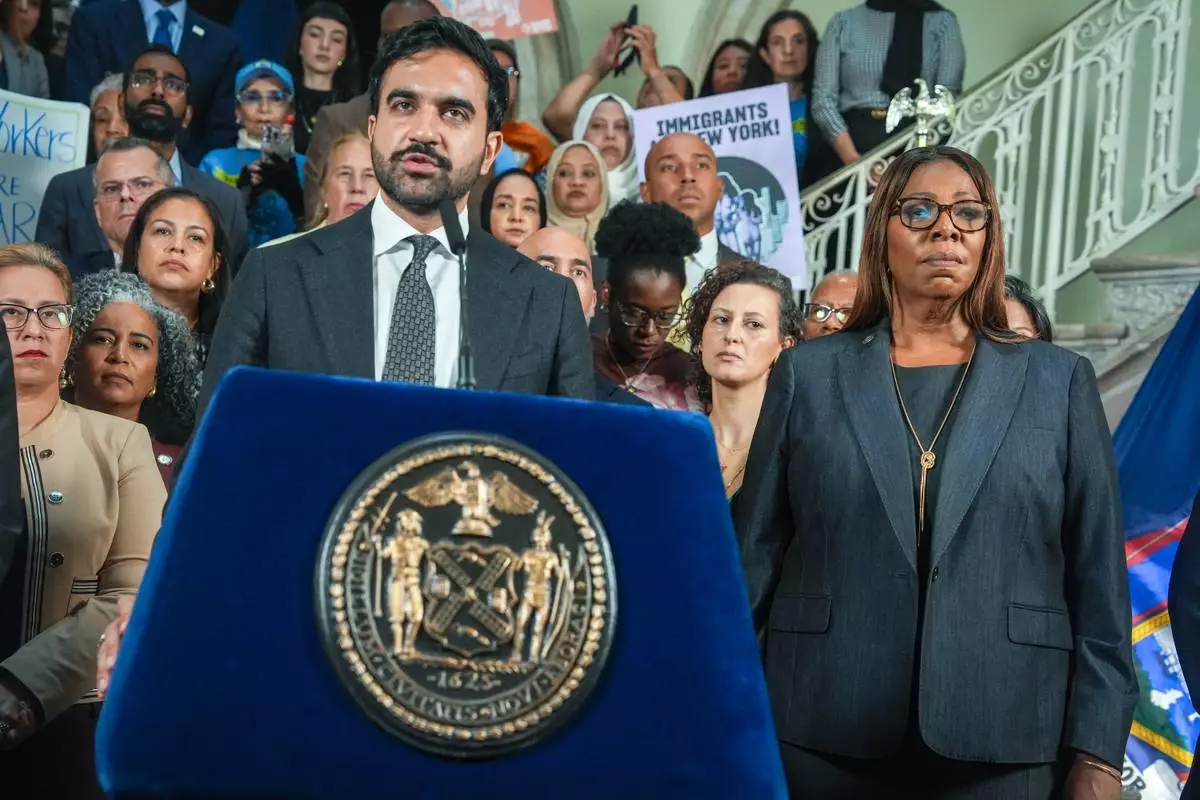
“This rule preys on that fear and counts on families forfeiting the food assistance, health care coverage, and other public benefits to which they are legally entitled,” she said Monday at a news conference in City Hall alongside New York City Mayor Zohran Mamdani and immigrant advocates.

California, Colorado, Hawaii, Massachusetts, Michigan, Nevada, New Mexico and Wisconsin are among the states involved in the legal challenge.

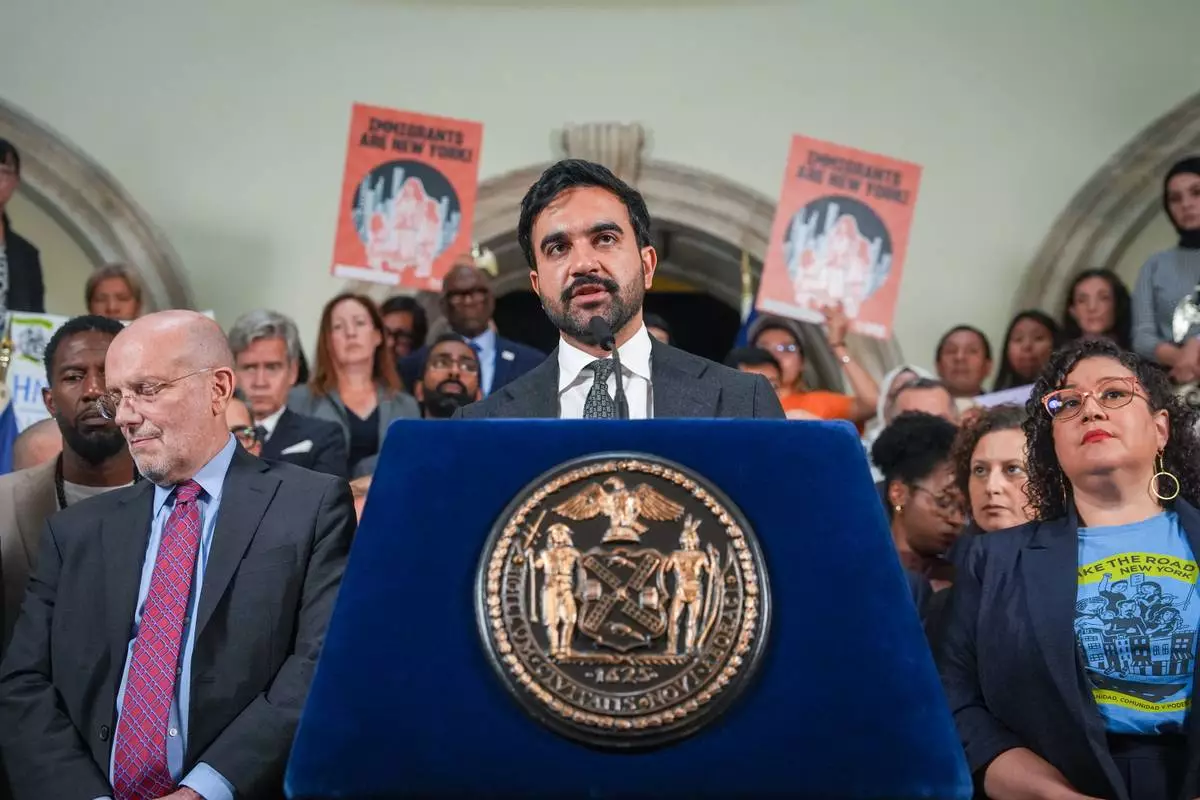
Mamdani filed a separate suit with leaders of other U.S. cities, including Chicago, San Francisco and Seattle. He said the rule would have a “chilling effect” not just on immigrants seeking legal status but other residents of the nation’s largest city.

“The new public charge rule seeks to push immigrant families away from the programs that have kept people fed and healthy for decades,” the mayor said. “New Yorkers will be afraid to see a doctor or ask for help they are legally entitled to. That fear will not stop at the families that the federal government is targeting.”

The Homeland Security Department, which is named in the lawsuits, dismissed the dire warnings.

“Let’s get this straight, sanctuary states are terrified they will lose federal funds because hundreds of thousands of illegals and noncitizens might remove themselves from American welfare programs,” the agency said in a statement. “We’re shaking in our boots over this supposedly terrible outcome.”

The lawsuits, which were both filed in federal court in Manhattan, argue the forthcoming rule is “arbitrary and capricious,” exceeds the Department of Homeland Security’s statutory authority, and departs from the longstanding meaning of the federal government’s public charge provision.

Specifically, James said, the rule unlawfully gives immigration officials broad discretion to consider a wide range of public benefits when making their decisions on immigrants seeking legal status in the country.

She said the rule lets immigration officers count nearly any public benefit, used for any length of time, against a green card applicant -- even if it’s a U.S. citizen family member who is taking advantage of the benefit.

That means a parent’s green card application could be at risk simply because their U.S. citizen child used state-provided health insurance or participated in a school’s free lunch program, James said.

“This new rule sweeps away more than a century of settled law to unlawfully broaden the definition of ‘public charge’ in a way that Congress never intended,” added Steve Banks, the city’s corporation counsel.

California Attorney General Rob Bonta called the forthcoming rule a “cruel policy.”

Federal law already requires those seeking permanent residency or legal status to demonstrate that they will not become a public charge.

The Trump administration’s new rule does not describe or specify by name the benefits and programs that could be considered a public charge.

It simply says officers, “using good judgment and discretion,” will make “individualized, fact-specific public charge inadmissible determinations, based on a totality of the alien’s circumstances.”

__

Associated Press reporters Sophie Austin in Sacramento, Calif. and Cybele Mayes-Osterman in Chicago contributed to this story.

Follow Philip Marcelo at https://x.com/philmarcelo

New York City Mayor Zohran Mamdani speaks during an announcement of a lawsuit filed by New York and 21 other states challenging the federal government's new public charge rule, on Monday, Sept. 14, 2026, in New York. (AP Photo/Ryan Murphy)

New York City Mayor Zohran Mamdani speaks during an announcement of a lawsuit filed by New York and 21 other states challenging the federal government's new public charge rule, on Monday, Sept. 14, 2026, in New York. (AP Photo/Ryan Murphy)

New York City Mayor Zohran Mamdani speaks during an announcement of a lawsuit filed by New York and 21 other states challenging the federal government's new public charge rule, on Monday, Sept. 14, 2026, in New York. (AP Photo/Ryan Murphy)

New York City Mayor Zohran Mamdani speaks during an announcement of a lawsuit filed by New York and 21 other states challenging the federal government's new public charge rule, on Monday, Sept. 14, 2026, in New York. (AP Photo/Ryan Murphy)

New York City Mayor Zohran Mamdani and New York Attorney General Letitia James announce a lawsuit filed by New York and 21 other states challenging the federal government's new public charge rule, on Monday, Sept. 14, 2026, in New York. (AP Photo/Ryan Murphy)

New York City Mayor Zohran Mamdani and New York Attorney General Letitia James announce a lawsuit filed by New York and 21 other states challenging the federal government's new public charge rule, on Monday, Sept. 14, 2026, in New York. (AP Photo/Ryan Murphy)

New York Attorney General Letitia James speaks during an announcement of a lawsuit filed by New York and 21 other states challenging the federal government's new public charge rule, on Monday, Sept. 14, 2026, in New York. (AP Photo/Ryan Murphy)

New York Attorney General Letitia James speaks during an announcement of a lawsuit filed by New York and 21 other states challenging the federal government's new public charge rule, on Monday, Sept. 14, 2026, in New York. (AP Photo/Ryan Murphy)

New York Attorney General Letitia James speaks during an announcement of a lawsuit filed by New York and 21 other states challenging the federal government's new public charge rule, on Monday, Sept. 14, 2026, in New York. (AP Photo/Ryan Murphy)

New York Attorney General Letitia James speaks during an announcement of a lawsuit filed by New York and 21 other states challenging the federal government's new public charge rule, on Monday, Sept. 14, 2026, in New York. (AP Photo/Ryan Murphy)

Recommended Articles