Skip to Content Facebook Feature Image

China's yuan loans increase by 10.44 trln yuan in Jan-Aug period

China

China

China

China's yuan loans increase by 10.44 trln yuan in Jan-Aug period

2026-09-15 00:33 Last Updated At:09:47

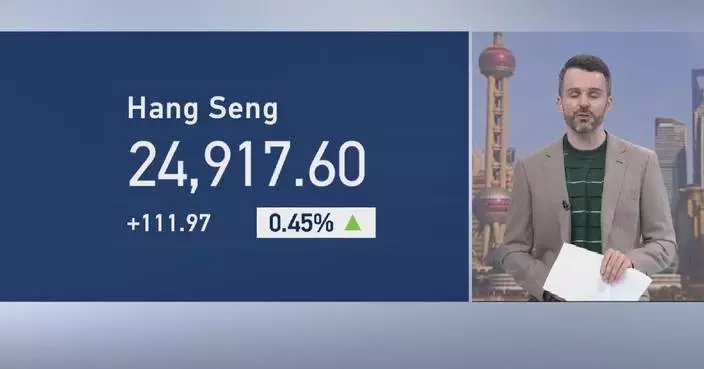
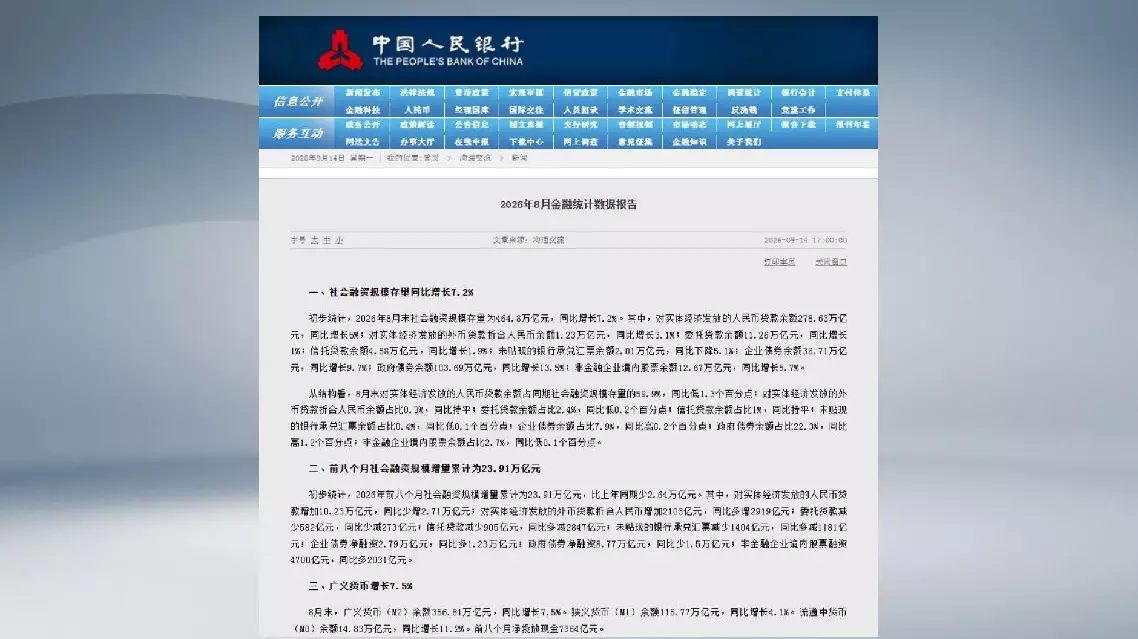
China's yuan-denominated loans rose by 10.44 trillion yuan (about 1.54 trillion U.S. dollars) in the first eight months of 2026, central bank data showed on Monday.

At the end of August, outstanding yuan loans stood at 282.35 trillion yuan (about 42 trillion U.S. dollars), up 4.9 percent year on year, according to the People's Bank of China.

M2, a broad measure of money supply that covers cash in circulation and all deposits, had increased by 7.5 percent year on year to 356.81 trillion yuan (about 53.2 trillion U.S. dollars) at the end of August.

M1, which covers currency in circulation, corporate demand deposits, personal demand deposits and provisions received by non-bank payment institutions, reached 115.77 trillion yuan (about 17.3 trillion U.S. dollars) at the end of August, a rise of 4.1 percent from a year earlier.

China's outstanding aggregate financing to the real economy stood at 464.8 trillion yuan (about 69.3 trillion U.S. dollars) at the end of August, up 7.2 percent year on year, the central bank noted.

Loans in five major areas - technology finance, green finance, inclusive finance, pension finance and digital finance - have continued to grow at double-digit rates, accounting for over 70 percent of the total increase in all loans, as more credit is channeled towards new growth drivers such as technological innovation and green transition.

Loan interest rates remain at historically low levels. In August, the weighted average interest rate on newly issued business loans was slightly below 3 percent, about 0.2 percentage points lower than the same period last year.
China's yuan loans increase by 10.44 trln yuan in Jan-Aug period

China's yuan loans increase by 10.44 trln yuan in Jan-Aug period

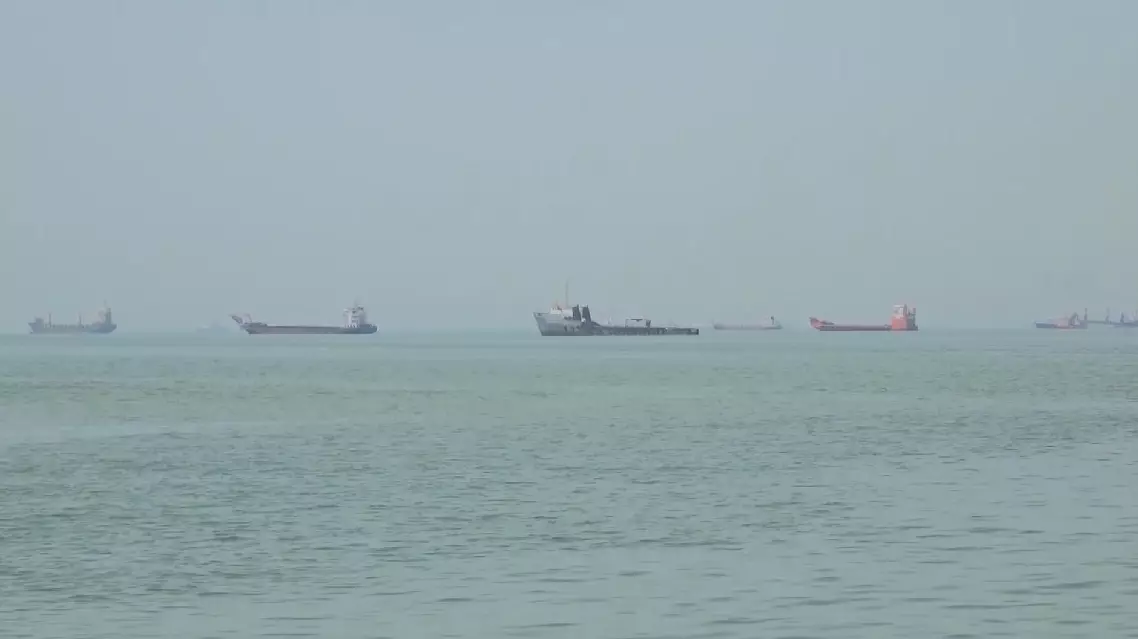
Iran's Islamic Revolution Guard Corps (IRGC) said in a statement on Monday that a super oil tanker, which was trying to cross the Strait of Hormuz via the "forbidden" route to the south of the strait, exploded after hitting naval mines.

Warnings about the dangers of this route had been issued previously, according to the statement published on the IRGC's official news outlet Sepah News.

In the statement, the IRGC Navy said that the Strait of Hormuz has been blocked and remains under Iran's "smart control".

Following U.S.-Israeli strikes on Iran on Feb. 28, Tehran restricted passage through the strategic waterway, while U.S. forces imposed a naval blockade targeting vessels traveling to or from Iranian ports.

Ship-tracking data showed that the daily number of vessels transiting through the strait dropped to single digits over the weekend, falling below the recent 10-day average of 14 vessels per day.

Four vessels, including a gas carrier, exited the strait over the weekend, while 10 cargo ships entered the waterway.

However, these figures do not include vessels that pass through the strait with their Automatic Identification System (AIS) switched off.

The Strait of Hormuz handles roughly 20 percent of the world's seaborne oil flows and significant shipments of liquefied natural gas (LNG) and fertilizers.

Before the U.S.-Israeli strikes, around 125 large commercial vessels would pass through the strait every day, including oil tankers, gas carriers, bulk carriers, and container ships.

Iran says oil tanker explodes after hitting naval mines in Hormuz Strait

Iran says oil tanker explodes after hitting naval mines in Hormuz Strait

Recommended Articles