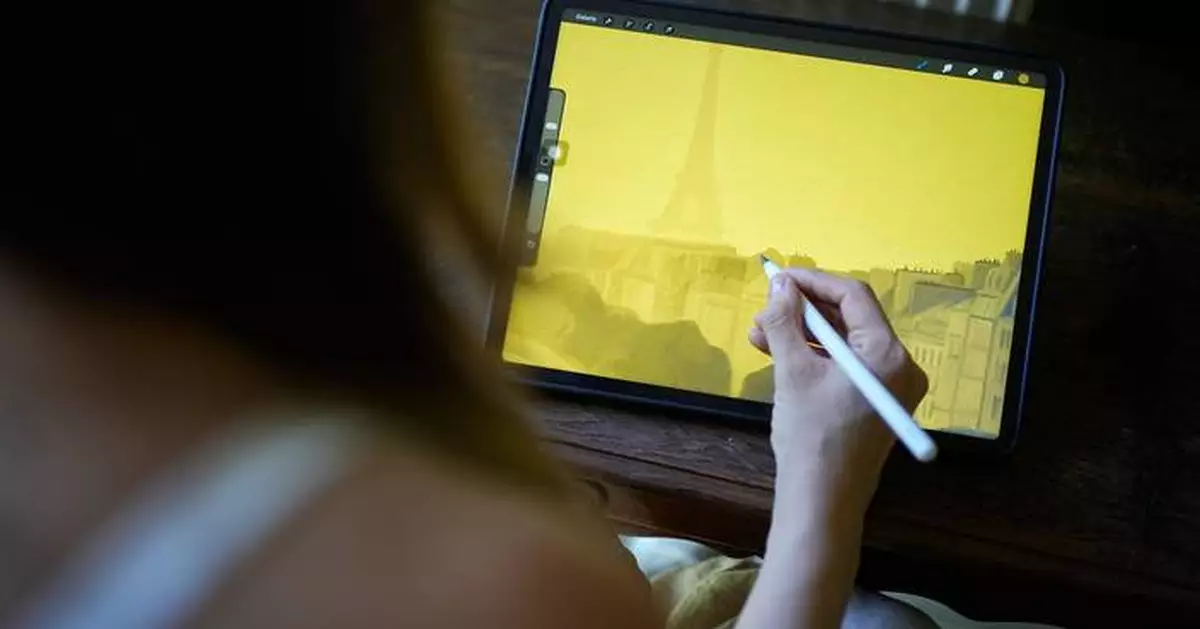
PARIS (AP) — As Paris emerges from months of oppressive heat, cooler autumn temperatures are welcomed back like a long-lost friend. But images of France's hottest summer remain etched in memories — and in the artwork of illustrator Marina Antonova.
Paris is admired worldwide for aesthetic beauty, but the city kept hitting the news for another reason in recent months as record-breaking highs climbed beyond 40 C (104 F) on the roasting streets.
Click to Gallery
Illustrator Marina Antonova works on a drawing for her series called "Chronicles of a Heating Planet" in Beaumont-les-Valence, southern France, on Sept. 12, 2026. (AP Photo/Laurent Cipriani)
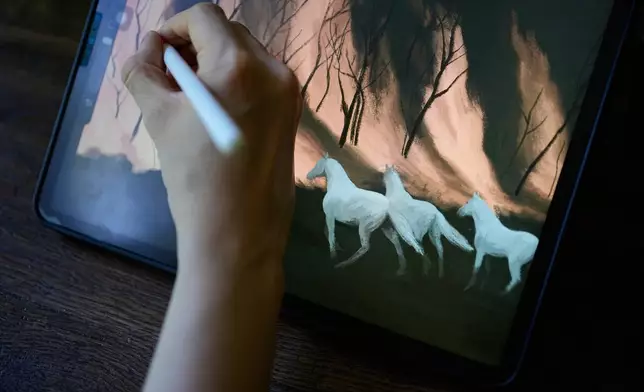
Illustrator Marina Antonova works on a drawing for her series called "Chronicles of a Heating Planet" in Beaumont-les-Valence, southern France, on Sept. 12, 2026. (AP Photo/Laurent Cipriani)
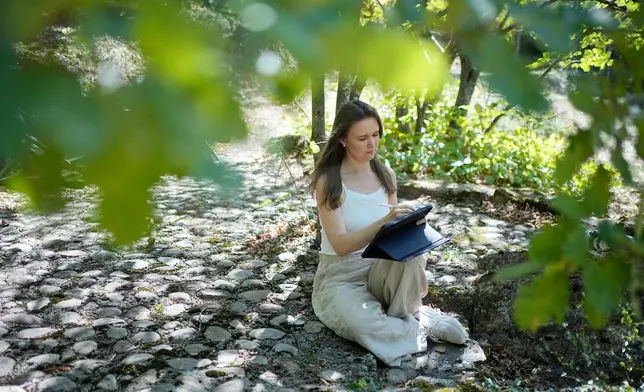
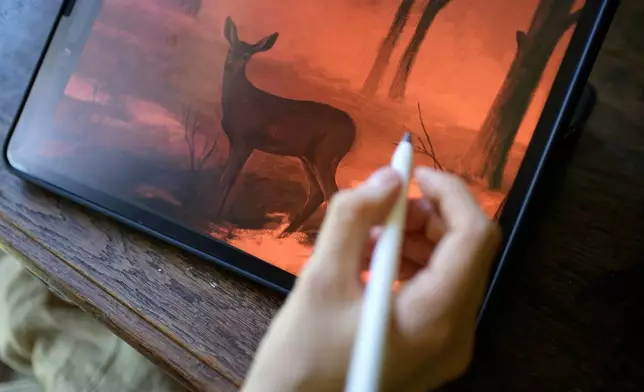
Illustrator Marina Antonova works on a drawing for her series called "Chronicles of a Heating Planet" in Beaumont-les-Valence, southern France, on Sept. 12, 2026. (AP Photo/Laurent Cipriani)
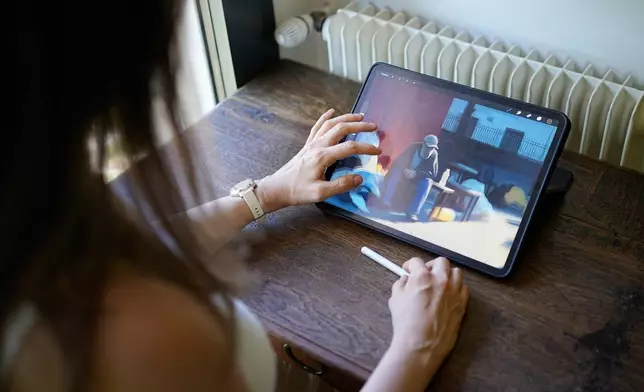
Illustrator Marina Antonova works on a drawing for her series called "Chronicles of a Heating Planet" in Beaumont-les-Valence, southern France, on Sept. 12, 2026. (AP Photo/Laurent Cipriani)
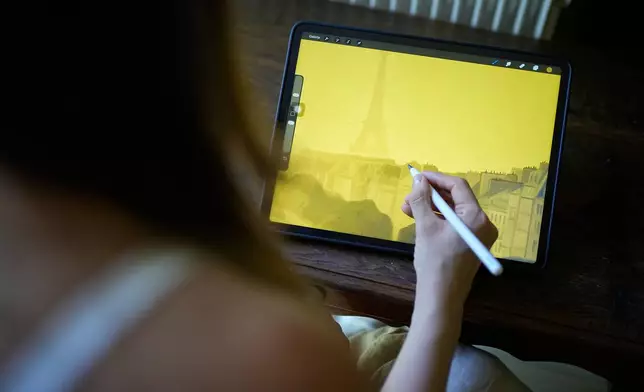
Illustrator Marina Antonova works on a drawing for her series called "Chronicles of a Heating Planet" in Beaumont-les-Valence, southern France, on Sept. 12, 2026. (AP Photo/Laurent Cipriani)
In a series of drawings called “Chronicles of a Heating Planet," Antonova has captured a city under intense heat stress, and how this impacted the homeless in particular.
“The heat wave made it so much worse," Antonova told The Associated Press in a recent interview at the Paris apartment where she drew much of her work. "Usually winter is the hardest part for homeless people; now we have a situation where both winter and summer are horrific.”
Her drawings show homeless people clinging to their knees, hunched forward in despair, or curled up on pavements in apparent defeat.
“It was such a contrast, people working in posh air-conditioned offices and homeless people sleeping in front of those offices," Antonova, 37, said. “I cannot imagine how people survived.”
Antonova has had to keep moving from temporary accommodations since arriving in France four years ago from Russia. Although friends helped, she was often coping with living under bad conditions, with mental stress and little money.
The acute suffering of the homeless resonated with her, and she felt anguish at not being able to help them more.
In winter, blankets can at least add warmth, but how do you remove heat when the body suffers all day and night-time temperatures are excruciatingly high? “You bring them water and ice but it never stops," said Antonova, who captured the bullying behavior of an “overpowering sun" through her choice of color.
“In my images there is a lot of yellow, an acid color," Antonova said. "Usually you associate the sun with something nice, this year it was very different for everyone. It felt very aggressive and dangerous, there were also fires around the country.”
Some of her other drawings show animals disorientated in burning forests. Deer even run toward fire because, whichever way they go, there is no escape. Nature is thus upheaved.
“What happens to beauty when the landscape itself turns hostile?” Antonova asks. “Wildfires burned across southern Europe and then — in a place long thought safe from them — at the edge of Paris itself. In July, fire swept through the forest of Fontainebleau.”
A historic fire devoured forests near Bordeaux with legions of people forced from their homes. Italy, Spain and other European countries experienced extreme temperatures in the world’s fastest-warming continent.
France recorded at least 7,200 more deaths than usual during successive heat waves this year, according to the national public health agency, based on statistical modeling using data from previous years.
“Chronicles of a Heating Planet" asks what everyday life looks like when climate change is no longer a prediction but a permanent condition.
“These paintings are not illustrations of a single event," added Antonova, who began drawing as a child. "They are observations of a future that has already arrived.”
Because of the heat wave's dramatic effect on everyday life, Paris became a tough place to walk around in the sunshine.
“I have an artist friend who still lives in Russia. When I sent her my new drawings of Paris, she said ‘Oh thank you, I will never go to Paris after this,’" Antonova said. “We called this series ‘anti-postcards.' The kind of postcards where you don't want to go to the place. It's a kind of sad joke."
Could future heat waves, for example, dissuade people from queuing at the city's ever-popular tourist destinations? "In five or 10 years Paris could get so hot people might not want to go here, not in summer, anyway,” Antonova suggested.
“My series about the heat wave gave me the opportunity to look at very familiar places with a new angle," she added. "To rethink the tourist attractions in a more sinister and dangerous atmosphere.”
Antonova drew on an iPad, often from photos taken on her phone in different parts of the city.
"Since I became an immigrant it was difficult to organize studios every time I moved, so I started working more with digital illustration," she explained.
“Usually I wouldn’t do drawings about something on the news because I would need a longer time to process and create the painting. Ipad gives you the immediacy because it’s so much faster.”
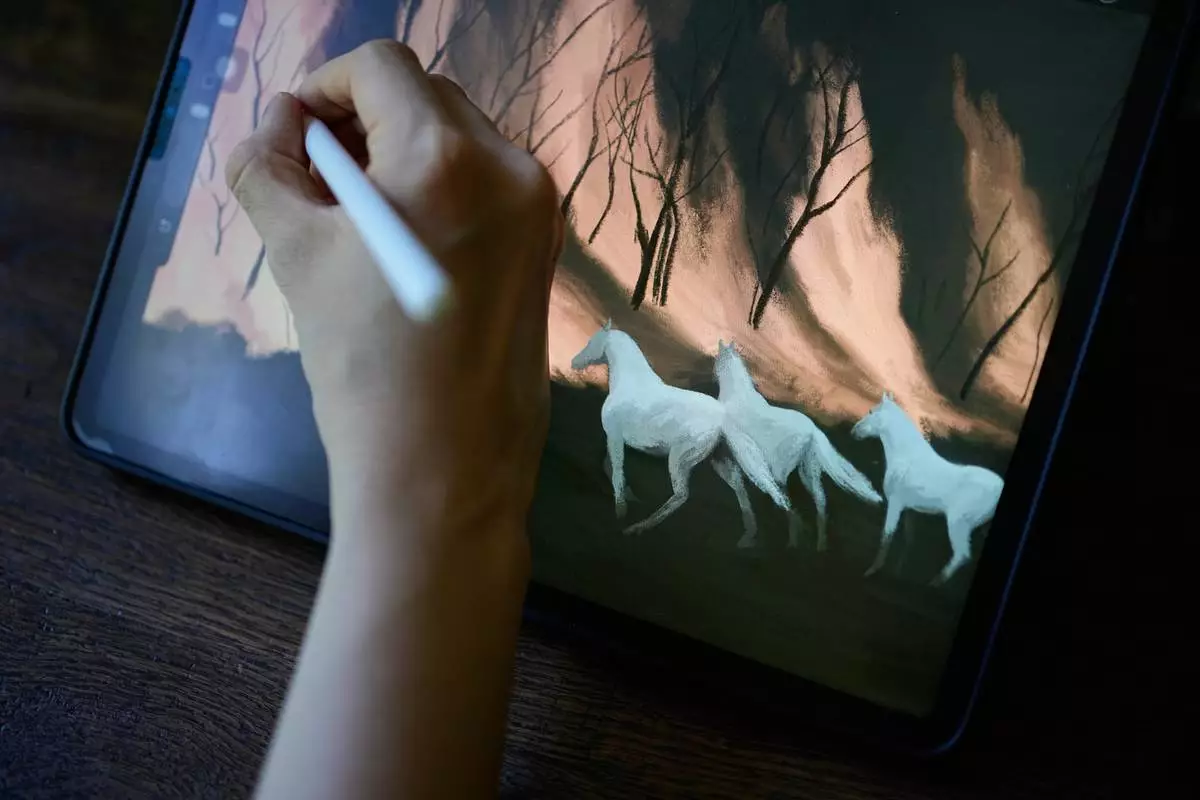
Illustrator Marina Antonova works on a drawing for her series called "Chronicles of a Heating Planet" in Beaumont-les-Valence, southern France, on Sept. 12, 2026. (AP Photo/Laurent Cipriani)
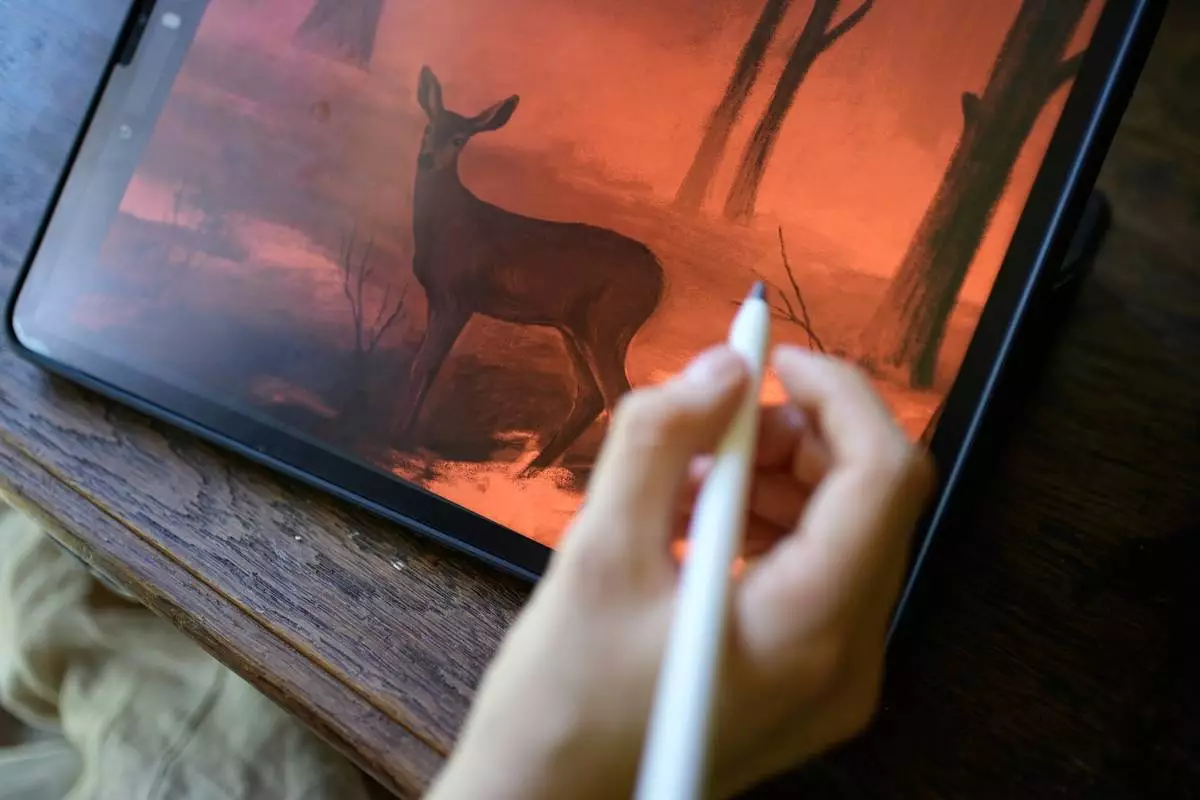
Illustrator Marina Antonova works on a drawing for her series called "Chronicles of a Heating Planet" in Beaumont-les-Valence, southern France, on Sept. 12, 2026. (AP Photo/Laurent Cipriani)
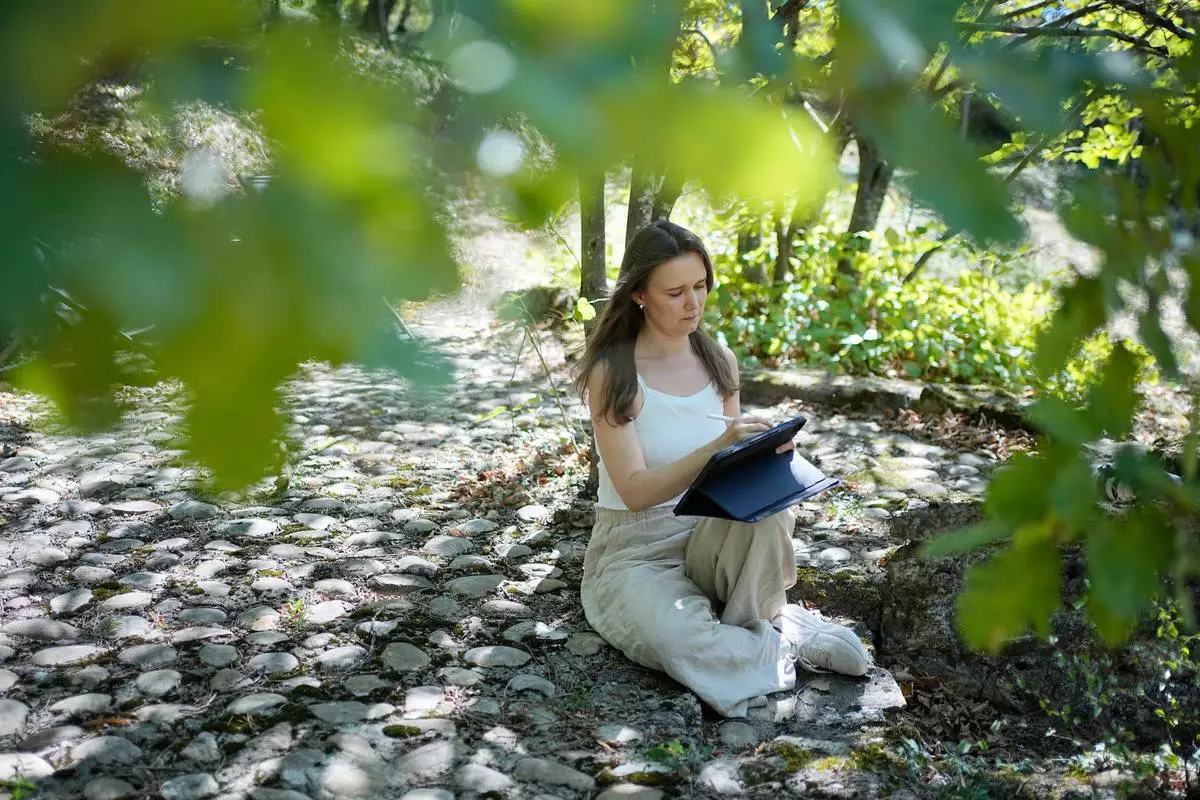
Illustrator Marina Antonova works on a drawing for her series called "Chronicles of a Heating Planet" in Beaumont-les-Valence, southern France, on Sept. 12, 2026. (AP Photo/Laurent Cipriani)
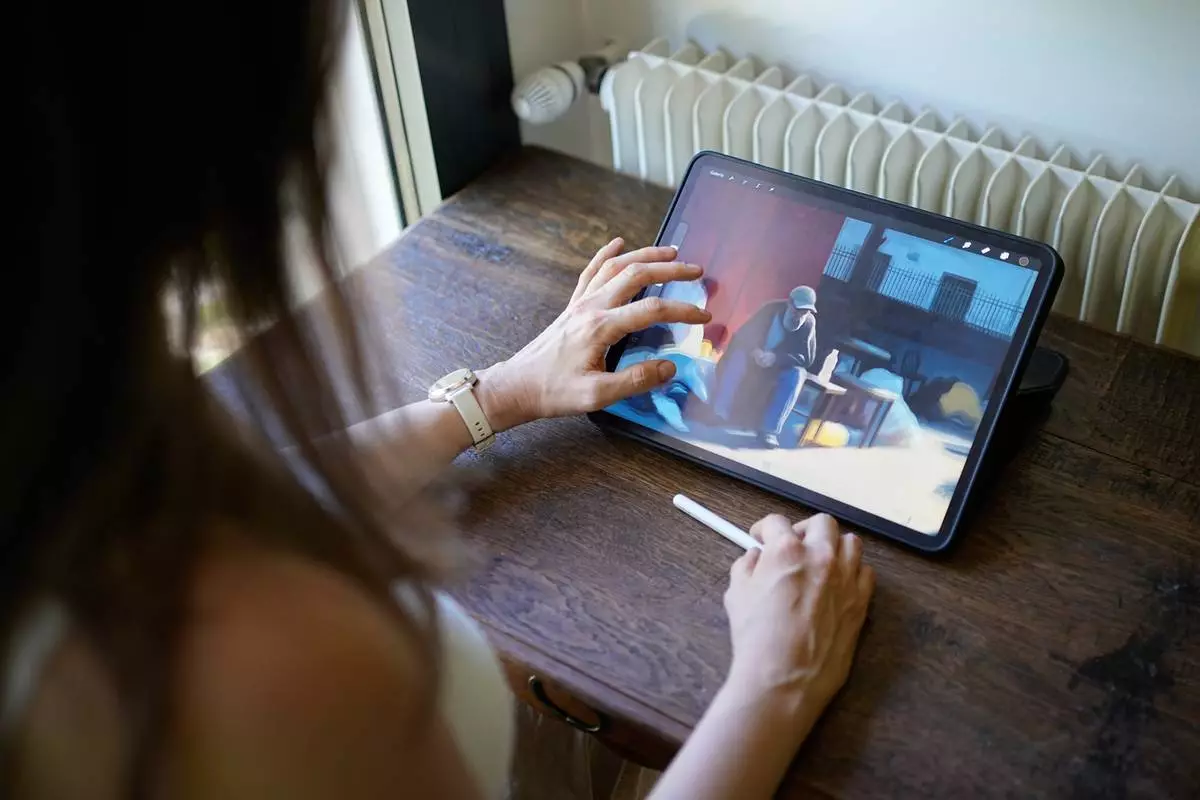
Illustrator Marina Antonova works on a drawing for her series called "Chronicles of a Heating Planet" in Beaumont-les-Valence, southern France, on Sept. 12, 2026. (AP Photo/Laurent Cipriani)
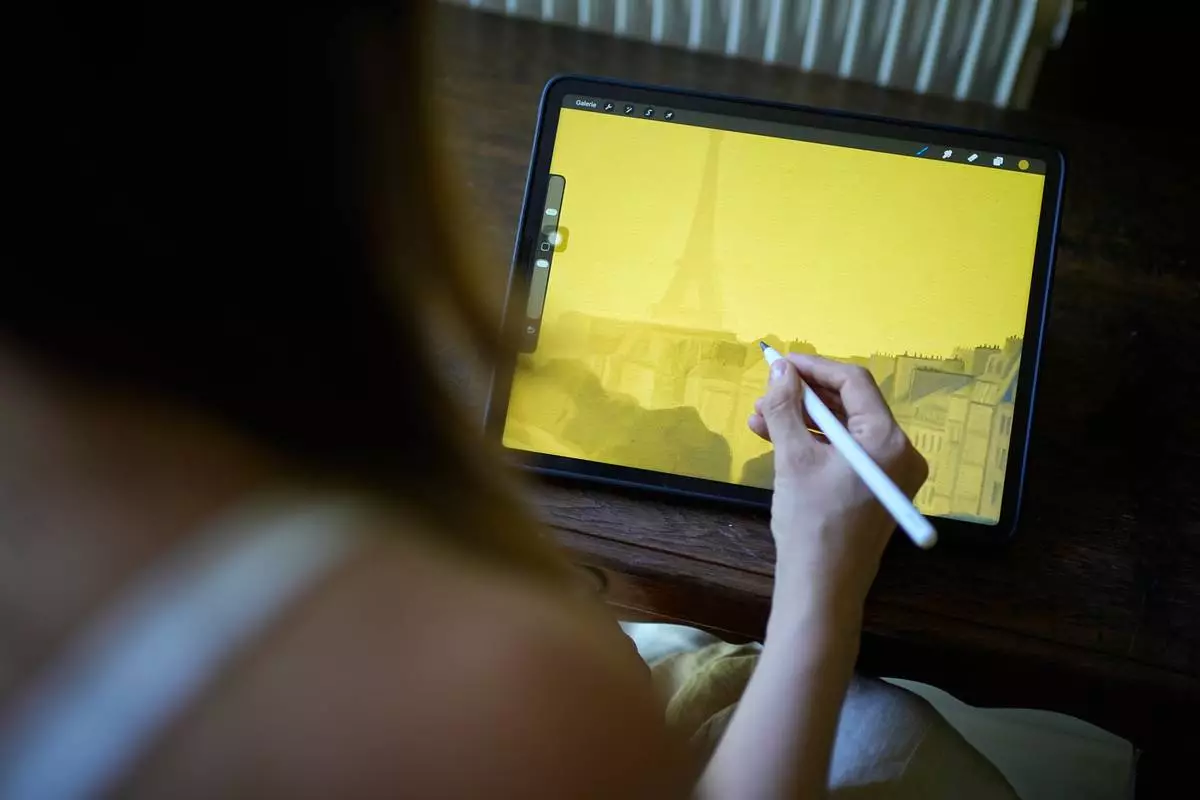
Illustrator Marina Antonova works on a drawing for her series called "Chronicles of a Heating Planet" in Beaumont-les-Valence, southern France, on Sept. 12, 2026. (AP Photo/Laurent Cipriani)