
In its seventh year, AV-Comparatives' EPR Test measures resilience against AI-built attack tooling
INNSBRUCK, Austria, Sept. 15, 2026 /PRNewswire/ -- In September 2025, Anthropic disrupted a state-linked group that had used its own Claude Code AI model to automate up to 90 percent of a multi-stage espionage campaign against roughly 30 organisations, including several government agencies. Independent breach research puts the average enterprise breach lifecycle, from intrusion to containment, at around 241 days. Reports like these keep multiplying. AV-Comparatives' Endpoint Prevention and Response (EPR) Test, now in its seventh year, is an established enterprise reference that evolves with attackers and defenders. This year's testing began in May 2026, evaluating 14 leading enterprise security products against 50 multi-stage attack scenarios, several built using AI-assisted development techniques.
In brief:
- 11 of 14 tested products earned Certified Leader status, AV-Comparatives' highest distinction.
- Since AV-Comparatives introduced the EPR Test, the certification bar has risen from 90 percent to 92 percent.
- All 11 Certified Leaders delivered strong, reliable protection, clearing AV-Comparatives' toughest EPR bar yet.
What did the test actually simulate?
Each scenario ran a full attack chain the way a real intruder would operate: phishing entry, privilege escalation, lateral movement and data theft. AV-Comparatives built the underlying attack tooling using AI-assisted development techniques, modelled on the MITRE ATT&CK Matrix for Enterprise, an independent industry reference for real attacker behaviour.
Which vendors achieved Certified Leader status?
Bitdefender, Broadcom, Check Point, Elastic, ESET, Fortinet, G Data, Palo Alto Networks, TrendAI, VIPRE and WithSecure all met the 92 percent combined threshold. The three that fell short are not named individually, according to AV-Comparatives' methodology.
"Attackers are now catching up on something defenders have used for far longer," said Andreas Clementi, CEO of AV-Comparatives. "Machine learning has shaped endpoint protection for two decades, long before today's AI wave. Our EPR Test reflects that: we used AI-assisted techniques to build this year's attack tooling and drew on current threat intelligence. All 11 Certified Leaders show that strong protection against attacks utilizing AI-born tooling already exists."
Is this based on an established framework? Yes. The pass/fail mechanics are AV-Comparatives' own methodology, but the underlying attack scenarios follow the MITRE ATT&CK Matrix for Enterprise.
The full report, including the CyberRisk Quadrant and per-product breakdowns, are available at
https://av-comparatives.org/endpoint-prevention-response-epr-test-2026/
About AV-Comparatives
AV-Comparatives is the leading independent cybersecurity testing organization, evaluating security solutions that have evolved far beyond traditional antivirus software. Our systematic testing assesses modern endpoint protection, threat detection, and mobile security across PC, Mac, Android, and IoT devices. Using one of the world's most relevant and sophisticated threat collections, we create real-world testing environments for comprehensive evaluation. Test results are freely accessible worldwide, and AV-Comparatives certification provides a globally recognized seal of approval for proven cybersecurity performance.
** This press release is distributed by PR Newswire through automated distribution system, for which the client assumes full responsibility. **
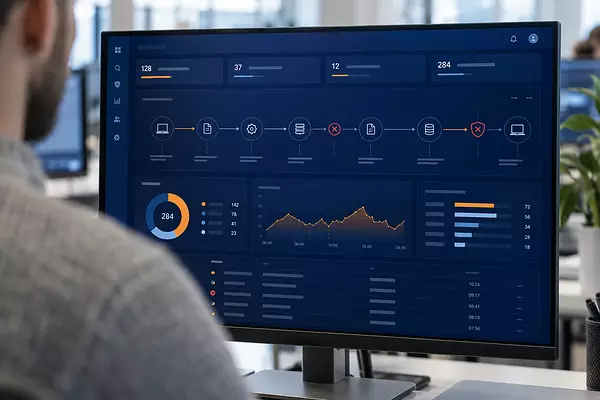
Toughest Test Yet: 11 of 14 Pass AV-Comparatives EPR Test 2026