DH and NMPA co-organise seminar on "GBA Medical Device Regulations and Registration Process Training" in Hong Kong again
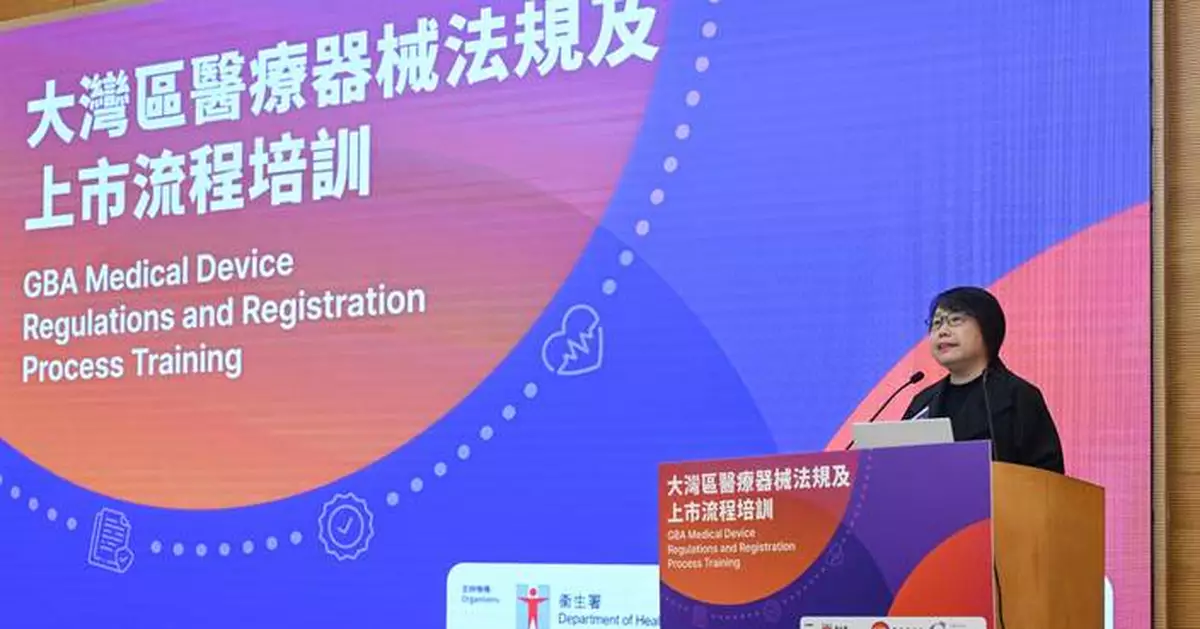
The Department of Health (DH), in collaboration with the Guangdong-Hong Kong-Macao Greater Bay Area Center for Medical Device Evaluation and Inspection (GBA Center) of the National Medical Products Administration (NMPA), today (September 15) co-organised the "GBA Medical Device Regulations and Registration Process Training" seminar in Hong Kong. The seminar aims to assist the local trade in tapping into the Chinese Mainland market and to further deepen exchanges and co-operation between the two places in medical device regulation and industry development.
This was the second seminar of its kind co-organised by the DH and the GBA Center since last May. The Deputy Director of the GBA Center, Mr Xu Liang, and a number of reviewers travelled to Hong Kong to serve as speakers, sharing updates on the GBA Center's latest work and giving an in-depth briefing on the regulatory framework, registration procedures, key market-entry requirements and major review considerations for medical devices in the Chinese Mainland. The seminar helped the trade to gain a comprehensive understanding of the latest trends and market access requirements in the Chinese Mainland.
The seminar attracted approximately 300 representatives from the local medical device trade, including manufacturers, traders, research and development (R&D) professionals, and regulatory affairs consultants. The participants noted that the training content was substantive and tailored to the industry's practical needs, helping them gain a thorough understanding of the current regulatory regime and the details of the submission arrangements in the Chinese Mainland.
The DH expresses its gratitude to the NMPA for its support. As the Mainland China is an important global market and R&D hub for medical devices, the DH will continue to organise similar activities to deepen professional exchanges and collaboration. Leveraging Hong Kong's role as a "super connector" and "super value-adder", the DH is committed to promoting healthcare innovation and high-quality development of the industry.
At the same time, in line with the nation's strategic initiatives to accelerate the development of "Healthy China" and prioritise health in development, the DH will work toward building "Healthy Hong Kong". Promoting innovation in cross-boundary medical co-operation will not only help Hong Kong integrate into the "Healthy GBA", but will also allow Hong Kong's internationally recognised healthcare system to contribute to elevating national medical standards to the global stage, thereby underscoring Hong Kong's unique advantages and value in integrating into and serving the nation's overall development.
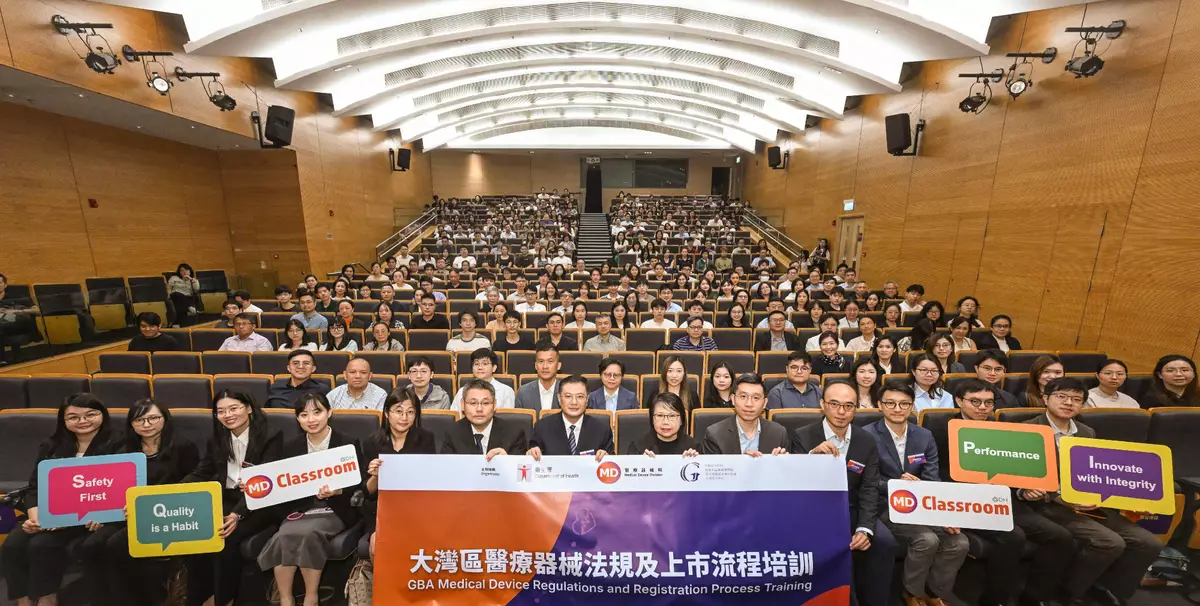
DH and NMPA co-organise seminar on "GBA Medical Device Regulations and Registration Process Training" in Hong Kong again Source: HKSAR Government Press Releases
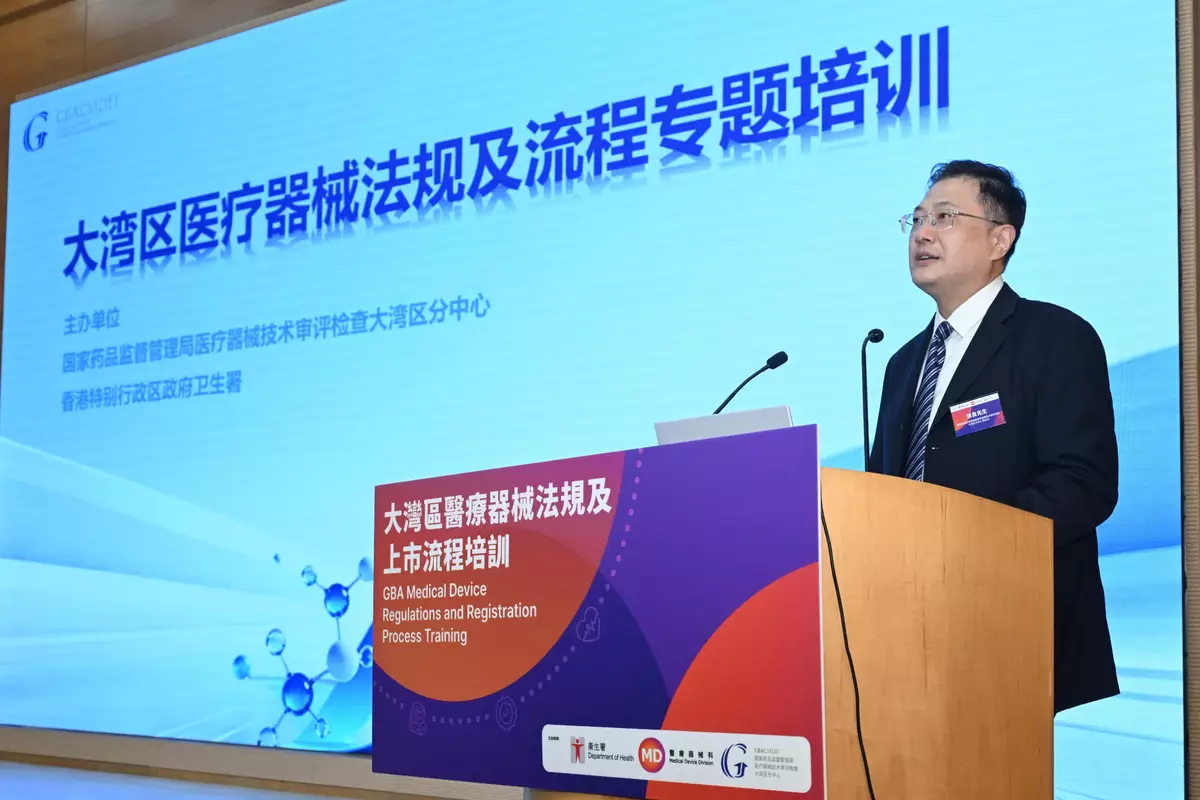
DH and NMPA co-organise seminar on "GBA Medical Device Regulations and Registration Process Training" in Hong Kong again Source: HKSAR Government Press Releases
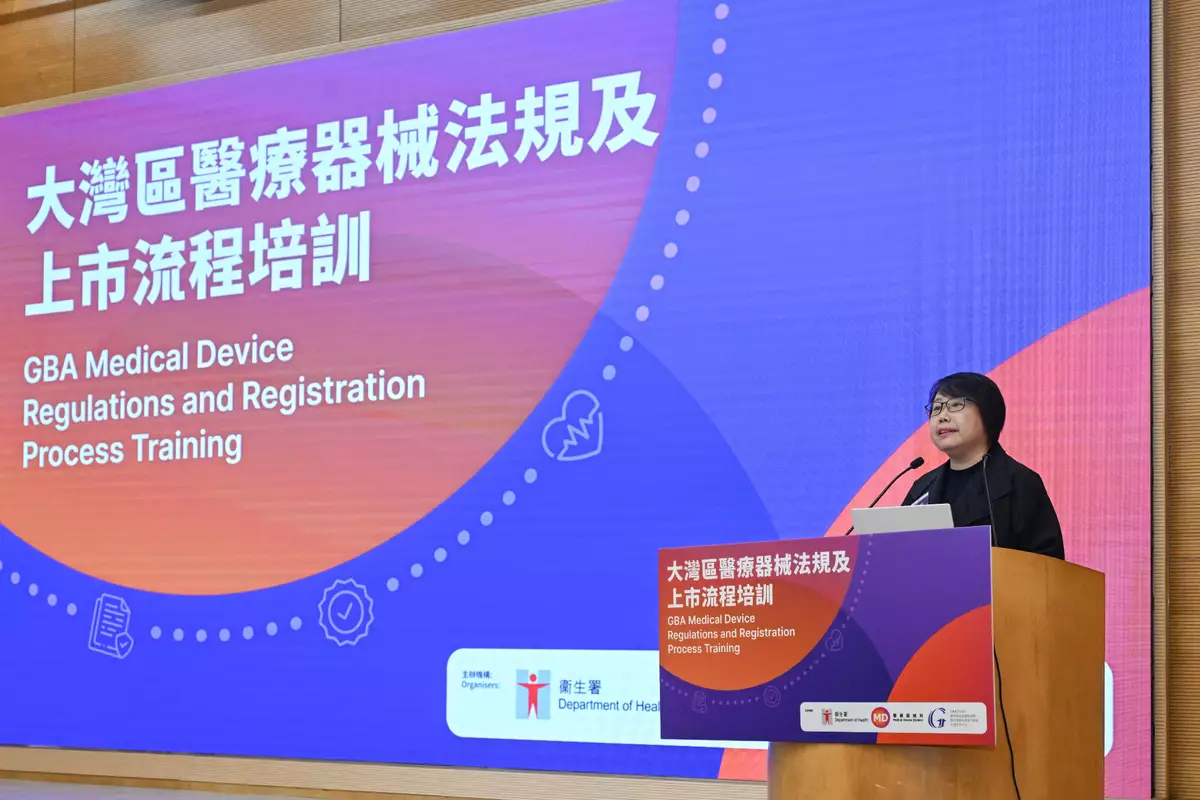
DH and NMPA co-organise seminar on "GBA Medical Device Regulations and Registration Process Training" in Hong Kong again Source: HKSAR Government Press Releases
Drug abuse and drug situation in Hong Kong in first half of 2026
The Action Committee Against Narcotics (ACAN) convened a meeting chaired by the Chairman of ACAN, Dr Donald Li, today (September 15). Members noted the figures of the Central Registry of Drug Abuse (CRDA) and other drug-related figures for the first half of 2026 at the meeting. ACAN noticed that the total number of reported drug abusers in the first half of 2026 was lower than that of 2025.
Figures from the CRDA revealed that the total number of reported drug abusers in the first half of 2026 decreased by 9 per cent (from 2 955 to 2 688) when compared with that of 2025. The most common reported type of drug abused in the first half of 2026 was heroin, followed by methamphetamine (commonly known as "Ice") and cocaine.
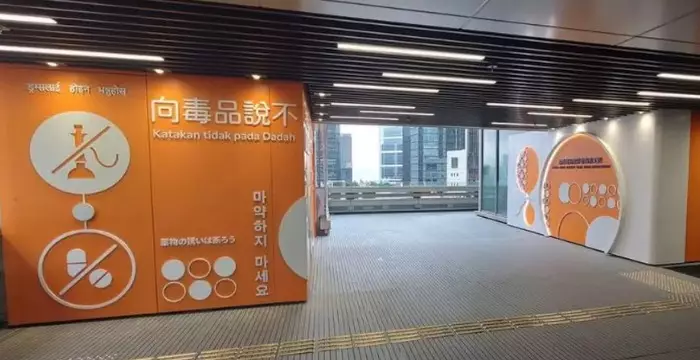
"Say no to drugs," Photo source: reference image
The number of reported young drug abusers aged under 21 in the first half of 2026 decreased from 458 to 404 when compared with that of 2026. In this age group, etomidate continues to be the most common type of drugs abused, followed by cannabis and cocaine.
Dr Li, said, "Prevention programmes for communities, schools and families can ensure that the younger generation grow up healthy and remain free from the influence of drugs throughout their lives. ACAN supports the Government's latest strategy to advance preventive education and reach out to children on anti-drug awareness. ACAN will closely monitor the situation in the remaining quarters of 2026 and continue its anti-drug efforts."
A spokesperson for the Narcotics Division (ND) of the Security Bureau said, "The ND has launched a range of community engagement activities targeting kindergarten and primary school students as well as young parents starting this year. Unlike a conventional deterrence approach that explains the severe consequence of abusing dangerous drugs, the relevant community engagement activities help children learn anti-drug knowledge in a relaxed and fun atmosphere.
"In the lead-up to World Drug Day on June 26, the ND organised a two-day pop-up anti-drug game booth on June 26 and 27 at a shopping mall in San Po Kong to promote anti-drug knowledge and the importance of developing healthy lifestyle habits to the public through simple games, attracting nearly 3 000 participants. In addition, the ND publicised a rehabilitee couple interview video 'Making it through to a new life: Walking the Road to Recovery Together' on World Drug Day, generating a viewership of over 512 000 across different social media platforms. A 30-minute TV infotainment programme 'Listen to Me: Let's Stand Firm. Knock Drugs Out!' was also aired on June 27, focusing on the Government's targeted efforts to combat etomidate. The infotainment successfully reached a viewership of nearly 1 million.
"As for the thematic booth called 'Anti-drug Ambassadors Express' set up during the Hong Kong Book Fair this July, it attracted nearly 17 000 visitors. Led by the anti-drug ambassadors Agent Don't and Agent Hope, the booth invited families to complete a series of interactive anti-drug missions - including a 'Drug-taking Facial Filter' which simulates the physical toll of drug abuse, and edutainment games. The public response has been enthusiastic, fully demonstrating that parent-child interactive games are effective in nurturing positive values and establishing a drug-free lifestyle for children from an early age."
According to statistical figures from law enforcement agencies, the number of persons arrested for drug offences in the first half of 2026 decreased by 10 per cent (from 1 938 to 1 749) when compared with that of 2025. The number of young arrestees aged under 21 also decreased by 3 per cent (from 307 to 298). Etomidate, cocaine and cannabis were the main drugs involved in these arrests.
According to court cases concluded in the same period, the conviction rate of persons being prosecuted for drug offences was as high as 87 per cent. As for young offenders aged under 21 who were sentenced to imprisonment for drug trafficking, more than half of them were sentenced to over five years in prison, with the longest imprisonment being 28 years.
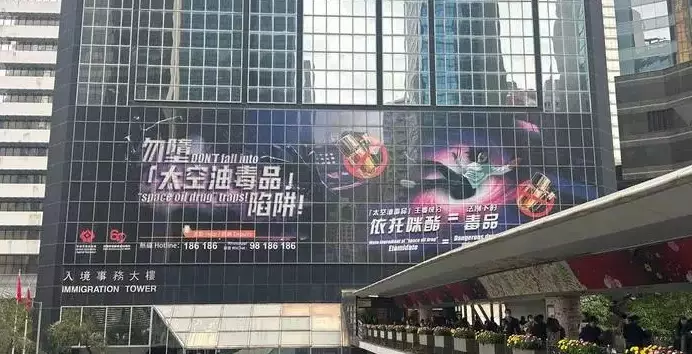
"Say no to drugs," Photo source: reference image
The statistical figures of the CRDA for the first half of 2026 are available on the website of the ND (www.nd.gov.hk/en/crda_main_charts_and_tables.html). The ND's website (www.nd.gov.hk) contains detailed information about drugs, including frequently asked questions about etomidate, cocaine and cannabis, for the public's reference. The public can also visit the ND's social media accounts (narcotics.divisionhk) on Facebook and Instagram for more information.
If members of the public encounter any drug problems, they can send messages to 98 186 186 on instant messaging applications WhatsApp and WeChat, or call the 24-hour hotline 186 186 to seek information or assistance from professional social workers. The Police also operates a 24-hour etomidate reporting hotline (number: 6629 2966). Members of the public can also file reports via instant messaging applications WhatsApp (number: 6629 2966) or WeChat (account: eto-report).