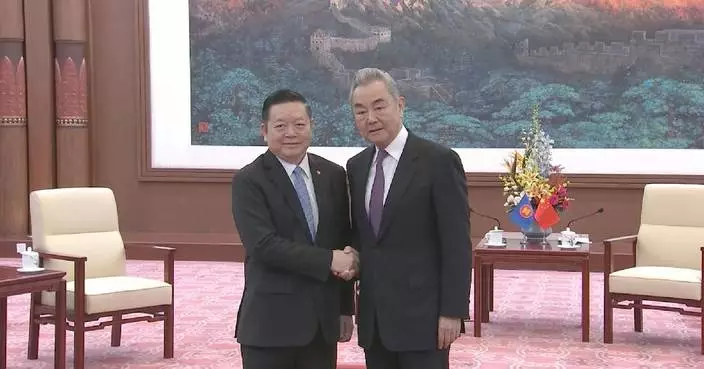
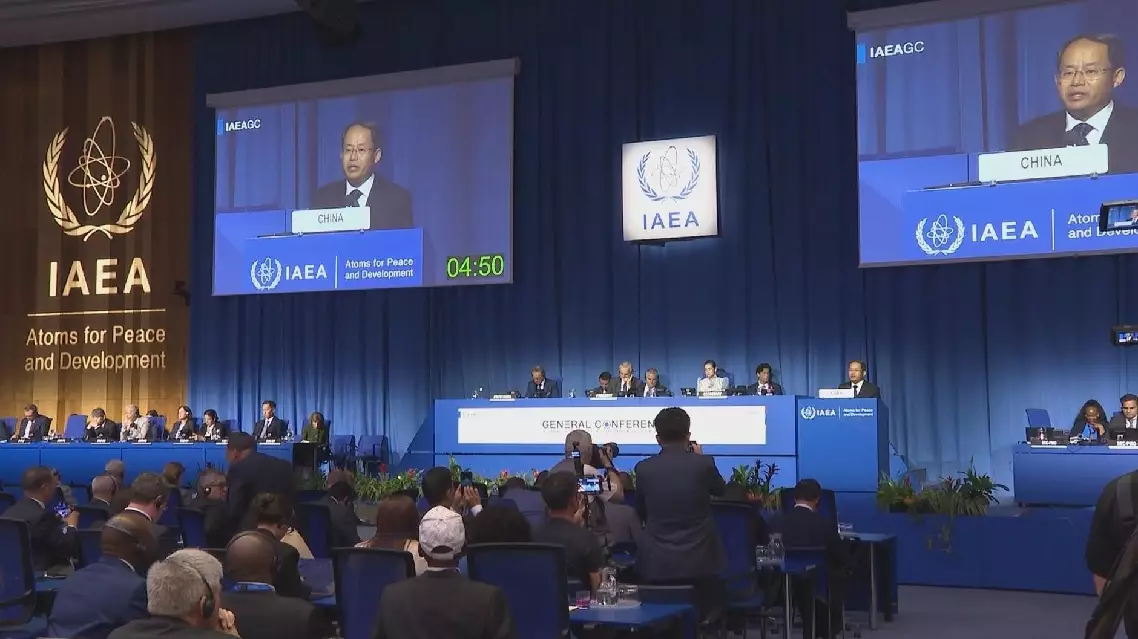
International Atomic Energy Agency (IAEA) members must uphold multilateralism and enhance cooperation in the peaceful use of atomic energy for the well-being of all humanity, Shan Zhongde, director of China Atomic Energy Authority (CAEA), said in a speech at the IAEA's 70th General Conference in Vienna, Austria on Monday.
"All parties need to keep pace with the trends of history, shoulder the responsibility of our times, and take the people-centered and action-oriented approach to jointly advocate an equal and orderly multipolar world, make global governance more just and equitable, and build a community with a shared future for humanity," Shan said.
Shan said that China pursues a robust, safe and orderly development of nuclear power.
Going forward, China will work to expand nuclear energy cooperation and promote global nuclear security, ensure nuclear technology serves the public good, and implement the global initiatives proposed by China, namely the the Global Development Initiative, the Global Security Initiative, the Global Civilization Initiative, and the Global Governance Initiative, to improve the global governance system, Shan said.
On the sidelines of the conference, the CAEA also hosted a nuclear-themed exhibition and held a series of seminars.
The 70th Regular Session of the IAEA General Conference, running through Sept 18, has drawn nearly 4,000 senior officials and representatives from IAEA member states, and delegations of international organizations and non-governmental organizations.
Held annually since the IAEA was founded in 1957, the General Conference considers a wide range of issues related to the peaceful uses of nuclear technology, from energy production and cancer care to food security, water management, nuclear safety and security, and safeguards.
China calls for upholding multilateralism in peaceful use of atomic energy
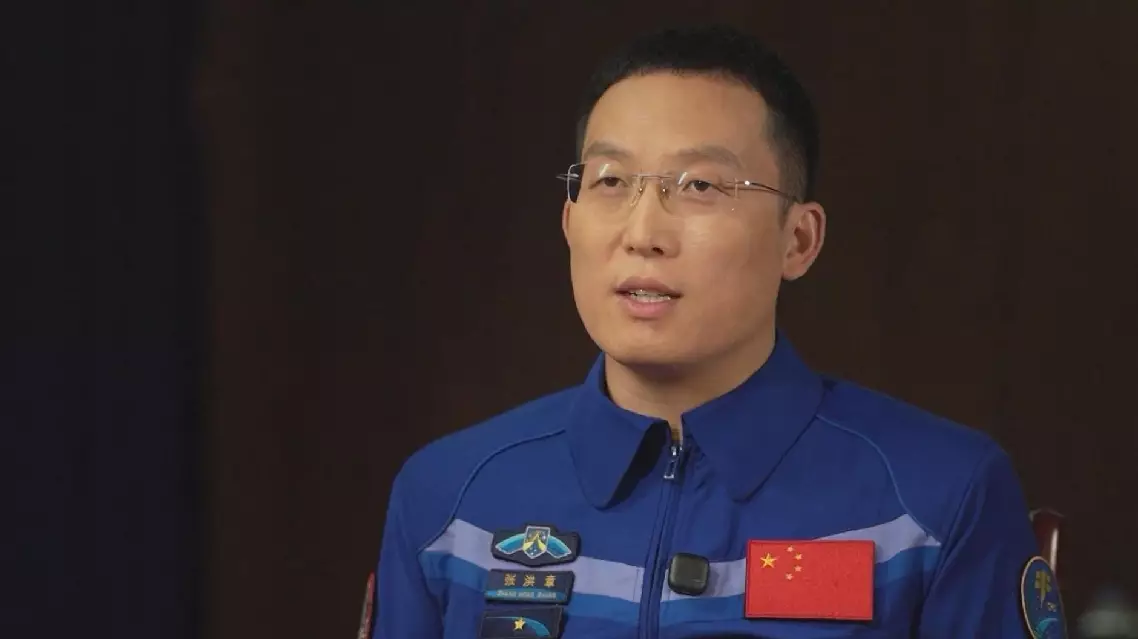
Zhang Hongzhang, a 40-year-old researcher turned astronaut, became China’s second payload expert to reach space aboard Shenzhou-21 on October 31, 2025. He conducted groundbreaking studies on lithium-ion batteries for space applications and looks forward to further experimental projects in space again.
He recently shared his experiences in space, insights into his selection, and future expectation during an interview with China Central Television (CCTV) in Beijing.
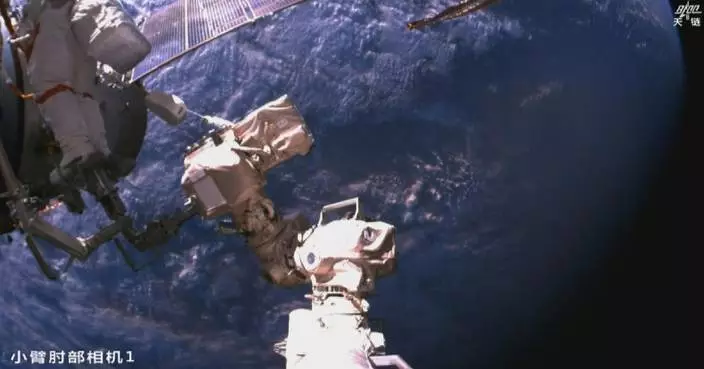
As one of four payload specialists in China's third batch of astronauts, Zhang and his crew spent 210 days in orbit, from their launch on October 31, 2025, to their return on May 29, 2026, setting a new record for the longest single crew stay by Chinese astronauts.
During their mission, they completed three spacewalks and conducted extensive space science experiments, notably witnessing and participating in the first-ever in-orbit emergency rescue operation in the history of China's manned space program.
Before joining the astronaut corps, Zhang was a researcher at the Chinese Academy of Sciences (CAS), focusing on key materials and technologies for large-scale energy storage batteries. The study on lithium-ion battery electrochemistry for space applications was developed collaboratively by the Dalian Institute of Chemical Physics, CAS, and the China Astronaut Research and Training Center.
During his mission, Zhang performed in-situ optical observations of lithium-ion batteries under microgravity conditions, capturing full-process images of lithium dendrite growth and adjusting experimental procedures, monitoring experimental conditions in real time, and identifying and recording key scientific phenomena.
"The purpose of this experiment is, first, to verify my experimental equipment — the first time an electrochemical experiment has been conducted in orbit — and that it can proceed smoothly. Second, I hope to be able to observe in orbit the experimental phenomena I want to observe and obtain the data I can get. After analyzing the experimental data, we can then improve the battery's performance, and after improvement, conduct another verification on the space station. This may form a complete closed loop. At present, this is still the first step. If we can analyze this problem clearly, it will serve as a very good reference for other batteries beyond lithium-ion batteries," he said.
Zhang considers himself fortunate to have pursued new energy and energy storage.
"Because this direction is very important for the future of our Earth. We need to reduce uncontrolled carbon dioxide emissions, reduce the greenhouse effect, and reduce the consumption of fossil fuels. Because these fossil fuels, including coal, oil, and natural gas, cannot have unlimited reserves on Earth. So we develop new energy and green energy. I think choosing this direction back then was indeed fortunate," he said.
Zhang graduated from the School of Chemistry and Chemical Engineering at Shandong University. In 2018, at age 32, he had begun to stand out in scientific research, leading multiple major projects. That same year, China opened the astronaut selection process to researchers and engineering technicians for the first time, and Zhang signed up.
In September 2020, Zhang became one of China's third batch of astronauts. After a comprehensive evaluation, he was selected for the Shenzhou-21 flight mission. This marked the second time China assigned a crew composed of spacecraft pilots, flight engineers, and payload experts to carry out a mission.
"Because I had been engaged in research work at the Dalian Institute of Chemical Physics for more than 10 years, I am very familiar with and understand what ground-based researchers want to obtain through these experiments, what they care about, and what they may not notice.I may be able to assist with these experiments, ensuring their smooth completion while potentially yielding additional unexpected results and better solving some issues that may arise beyond the initial plan," he said.
Reflecting on his time in space, Zhang said: "One overarching impression is that space is immensely profound. People — including every one of us — and the even Earth seems very small. Indeed, Reflecting on my extended time in space, it truly feels as if it all happened in a dream."
Zhang also expressed his desire to return to space again.
"I look forward to it. I also hope there can be more experimental projects, and that more scientists can conduct experiments in orbit, or at least send their experiments to the space station, so that in this unique environment, we can make greater contributions to exploring and utilizing space," he said.
China's second payload specialist eyes further space experiments months after return