Least-developed countries would bear the heaviest losses if the multilateral trading system weakens, with their GDP projected to fall by more than 25 percent in the scenario -- far exceeding the 10 percent global average -- the World Trade Organization's (WTO) annual flagship report has warned.
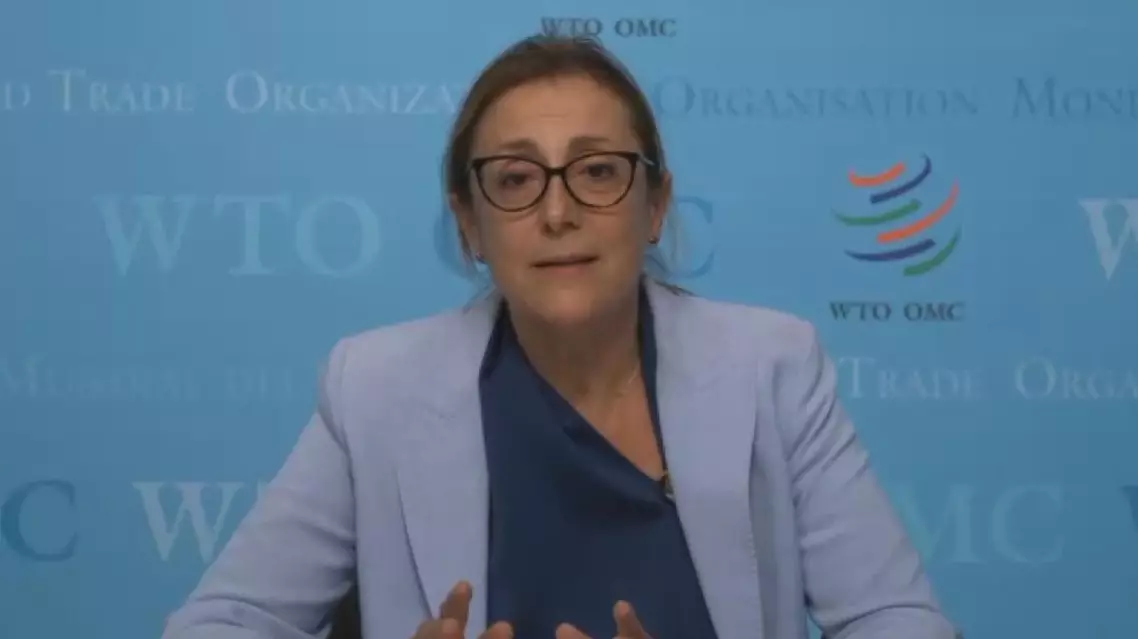
Roberta Piermartini, chief of trade costs analysis at the WTO and coordinator of the organization's World Trade Report 2026, said the uneven impact projected in the report stems from the outsized role trade plays in the poorest economies.
"In our scenario, we obtain larger gains for the poor countries and economies in the positive scenario and larger losses in the negative scenarios. To give you an example, for least-developed countries, rather than a 10-percent GDP loss, we predict about over 25 percent GDP loss. And this is because trade matters much more for these economies," she said.
The WTO released the publication, subtitled A Critical Juncture for the World Trading System, on Tuesday, warning that failure to modernize the global trading system could leave global GDP as much as 10 percent lower than under a strengthened multilateral system.
The report models three possible futures for the global trading system.
Under a strengthened multilateral framework, global GDP could rise 2.9 percent and exports 17.9 percent by 2050 compared with the baseline trajectory.
The other two scenarios envision an erosion of multilateral trade rules. In a "geo-fragmented world," where trade cooperation is organized around geopolitical blocs, global GDP could fall 5.1 percent and exports 18.6 percent, while in a world where multilateral cooperation is replaced by a network of free trade agreements, GDP could fall 6.9 percent and exports 26.9 percent.
Piermartini also stressed that artificial intelligence (AI) and digital technologies have raised both the potential gains from cooperation and the difficulty of achieving it.
"Certainly, the AI and digital technologies are potentially a big source of gains and clearly increase the stake of what is to do and what are the gains from cooperation. That's increasing the incentive to cooperate. We just need to find ways to cooperate. And what we argue in the report certainly is not that there is less need of cooperation. Actually, as you mentioned, mixed cooperation. These changes make cooperation more important and make it also more difficult, because the way countries regulate these technologies with national domestic policies make it, actually, difficult. It's somehow more difficult to cooperate behind the border measure than tariffs that we have worked on. But we need to find a way forward," she said.
Least-developed members to be hit hardest in weakened trade system: WTO report coordinator