Just weeks after unveiling competing versions of the world's first nuclear clocks, scientists from China and Austria have joined forces to build a third, combining their respective technological breakthroughs in a collaboration that moved faster than either team's original effort.
Conventional atomic clocks, which have been around for almost 80 years, rely on an atom's outer shell. Nuclear clocks instead use the atomic nucleus itself, in this case thorium atoms embedded in specially designed crystals, promising significantly greater stability, environmental resilience and a level of precision that far surpasses traditional timekeeping.
Thorsten Schumm, a physicist at the Vienna Center for Quantum Science and Technology and the driving force behind Austria's research, welcomes the cooperation, while making clear that the friendly rivalry between the two teams will keep pushing the boundaries of time measurement.
"We were slightly better when we submitted, but then the Chinese team improved their system a bit, and then they were better. I don't really care who has the best clock at which time. It's about the concepts and how far we can push this," said Schumm.
The partnership works because each team brings a distinct strength to the table, with Vienna's clock relying on thorium crystals of a higher concentration while the Chinese researchers have developed a particularly powerful laser.
That third clock pairs Austrian-made thorium crystals with laser expertise from Tsinghua University in Beijing, and the pairing took only a fraction of the time needed to develop the original clocks.
"If you have somebody that gives you a crystal, somebody that has the laser technology, can you build a clock essentially immediately? They proved they can do this in a few weeks," said Schumm.
For now, Vienna's nuclear clock fills an entire room, but researchers hope to shrink it first to the size of a shoebox and eventually, perhaps, to that of a wristwatch.
"These clocks have the opportunity or the prospect of actually leaving the lab environment for day-to-day applications. And the next thing will be like a shoe box. And if we get it to a centimeter scale, that's a large question, but the system is able to do that because the crystal approach is very much prone to miniaturization, and integration," said Schumm.
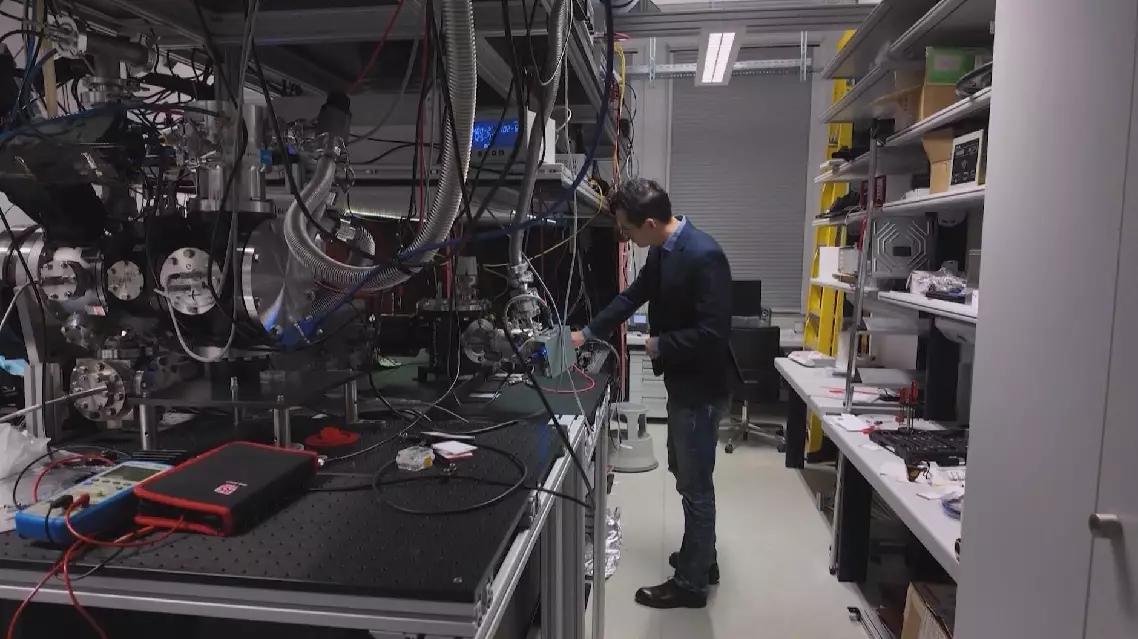
China, Austria join forces to create more precise nuclear clock
Chinese President Xi Jinping's keynote speech on Wednesday at the Asia-Pacific Economic Cooperation (APEC) CEO Summit 2026 points the way forward for promoting shared prosperity in the Asia-Pacific region, said attendees.
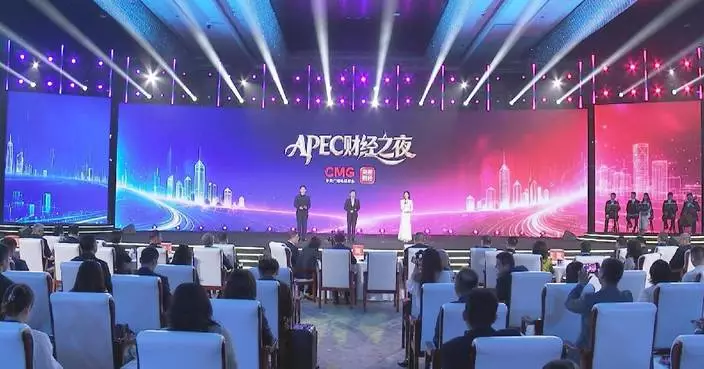
The APEC CEO Summit 2026 opened Tuesday in Shenzhen City of south China's Guangdong Province, bringing together business and political leaders from across the Asia-Pacific and beyond to discuss regional economic cooperation and future development.
Under the theme "To Prosper and Win the Future Together," the two-day event has attracted more than 2,000 representatives from 21 APEC economies and 13 non-APEC economies, including Britain, France, Germany and Switzerland.
When interviewed by the China Media Group (CMG), attendees noted that Xi's speech sends a clear signal that China is willing to work with all parties to forge ahead and jointly build an Asia-Pacific community to prosper together.
"President Xi Jinping's keynote speech issued a powerful call of the times -- to build an Asia-Pacific community to prosper together -- while sending a clear signal that China's development is opening up new opportunities for the Asia-Pacific region and the world. Moving forward, we will thoroughly implement the spirit of President Xi's keynote speech, translate the vision of building an Asia-Pacific community into concrete and practical actions, and work to turn this grand blueprint into a beautiful reality," said Ren Hongbin, chairman of the China Council for the Promotion of International Trade and chair of the APEC CEO Summit 2026.
"President Xi Jinping's keynote speech at the summit has greatly bolstered the confidence and resolve of the business community to uphold multilateralism and free trade," said Xi Guohua, chairman of the CITIC Group.
Jeffrey Sachs, a professor from Columbia University, noted that Xi's speech highlighted peaceful coexistence and use of innovations to address global challenges.
"This is the main message, and President Xi was very, very clear about that: We can live together peacefully, we can use innovations, we can prosper together, we can address environmental needs. There's no reason for conflict or instability. China now is the innovation leader across the green technologies, across most of the digital technologies, across the robotics of course. And this is the direction that we need in the world for solving critical problems, for solving energy problems, for solving food sustainability problems, for shared functioning of government and public services," he said.
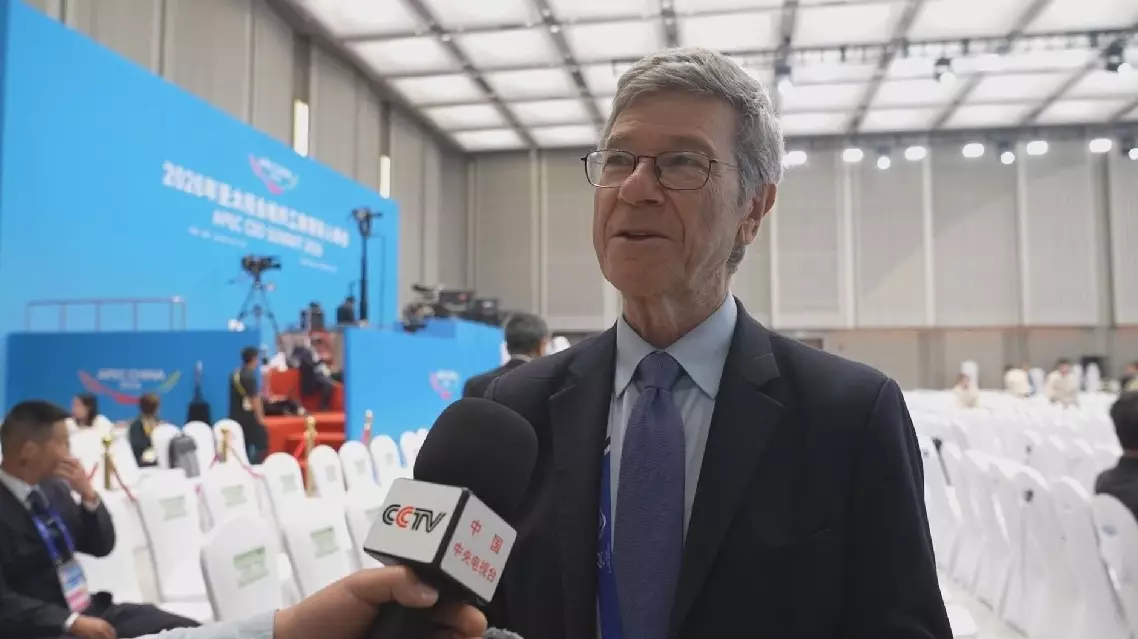
Xi's speech at APEC CEO Summit points to prosperity for all: attendees