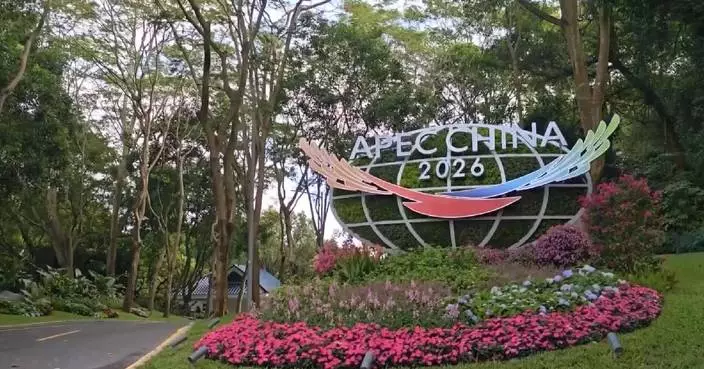
More than 10,000 foreign buyers have been flooding into Shenzhen's Huaqiangbei electronics district on an average day since Oct. 15, a roughly 50 percent jump from a year earlier, as the southern Chinese city hosts this week's Asia-Pacific Economic Cooperation (APEC) Economic Leaders' Meeting.
The district, a dense cluster of wholesale and retail markets selling electronic components and consumer gadgets, has lately been filling its aisles with visitors from APEC member economies browsing the stalls for gifts to take home. Foreign trade now accounts for more than 70 percent of merchants' sales, while exports to APEC economies have grown 45 percent, according to district data.
"God, I wish I could buy everything. So I got a bunch of stuff today, like battery packs. I got a little massage thingy for less than 10 U.S. dollars. And then I also got a translator and then a couple of gifts for my friends," an American tourist said.
An Australian tourist shopping for his grandsons showed off an electronics kit and a drone as he listed his purchases.
"Artificial intelligent glasses. For my grandson, an e-kit set. And also this for another grandson," he said
Some visitors had set aside far more than an afternoon for the markets. Asked how long the shopping trip would last, another American tourist replied, "Three days, just shopping."
For others, Huaqiangbei was a stop on a wider itinerary, like an Indonesian student on a school visit who was preparing to buy a Pocket camera at a DJI store.
"I'm actually going to buy this camera today. A school trip, so fun, so exciting," said a student.
The crowds are part of a broader rise in travel through Shenzhen. Border authorities recorded more than 1.3 million entries and exits by foreign nationals from APEC member economies at the city's airport between the start of the year and Nov. 13, up nearly 30 percent year on year, with more than 70 percent of those trips made for business or leisure.
Back in Huaqiangbei, merchants said the bigger crowds have also brought new business contacts.
"There have been so many foreign visitors lately, especially from Russia and Peru, and recently more from Japan. We've been doing a lot of business with them, too. Just look around -- it's packed," said Yihe Lasi, a Huaqiangbei merchant.
Another merchant, Zhang Wang, pointed to one of the most visible signs of the shoppers' spending, noting that some buy suitcases at the market simply to carry their purchases home.
"They usually buy 20-inch or 28-inch suitcases, fill them with purchases and take them home. They have considerable spending power," said Zhang.
Eligible overseas shoppers can also claim departure tax refunds without leaving the district, thanks to self-service kiosks in Huaqiangbei. Shoppers upload their identification, receipts and refund forms, then choose a bank card or digital wallet to receive the money, with the fastest applications processed in two minutes.
"Nine percent. They are very helpful and make my shopping much easier," said an Australian tourist of the refund service.
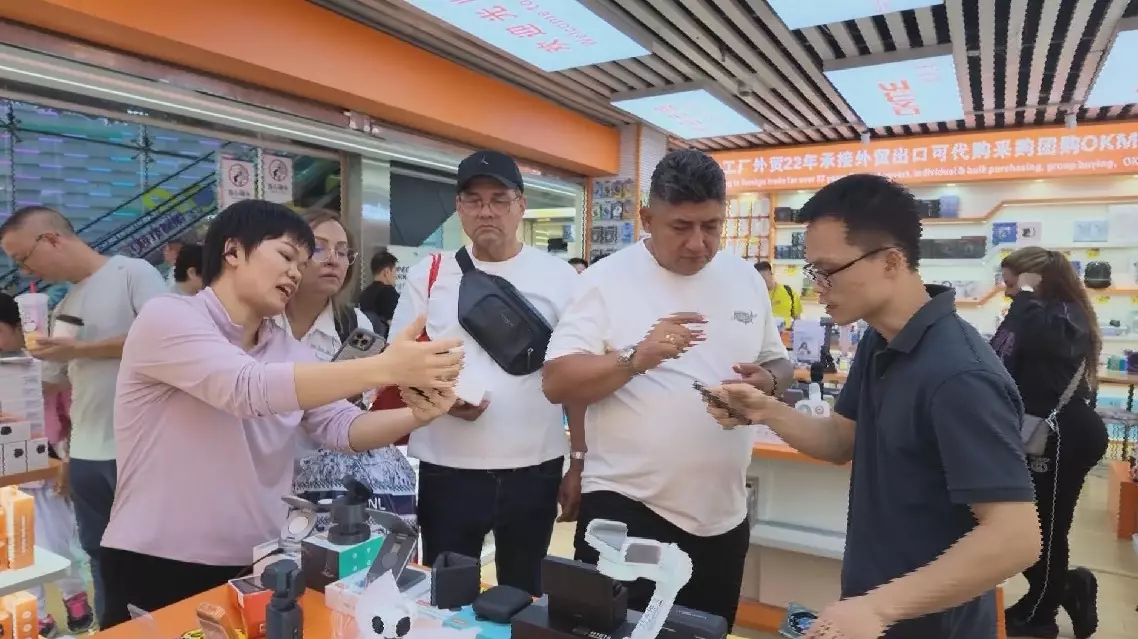
Shenzhen electronics hub draws over 10,000 foreign buyers daily as APEC leaders meet
Shenzhen electronics hub draws over 10,000 foreign buyers daily as APEC leaders meet