South China's Guangdong Province is turning its ability to produce carbon fiber at lower cost and on a large scale into an export advantage, in the meanwhile supporting a broader industrial transformation across the Asia-Pacific region.
From electric vehicles to greener shipping, industries in the region are finding new uses for carbon fiber, a material once used mainly in aerospace. Guangdong is seeking to turn the rising demand into a bigger industrial opportunity, leveraging its strong petrochemical sector and manufacturing capacity to move up the value chain.
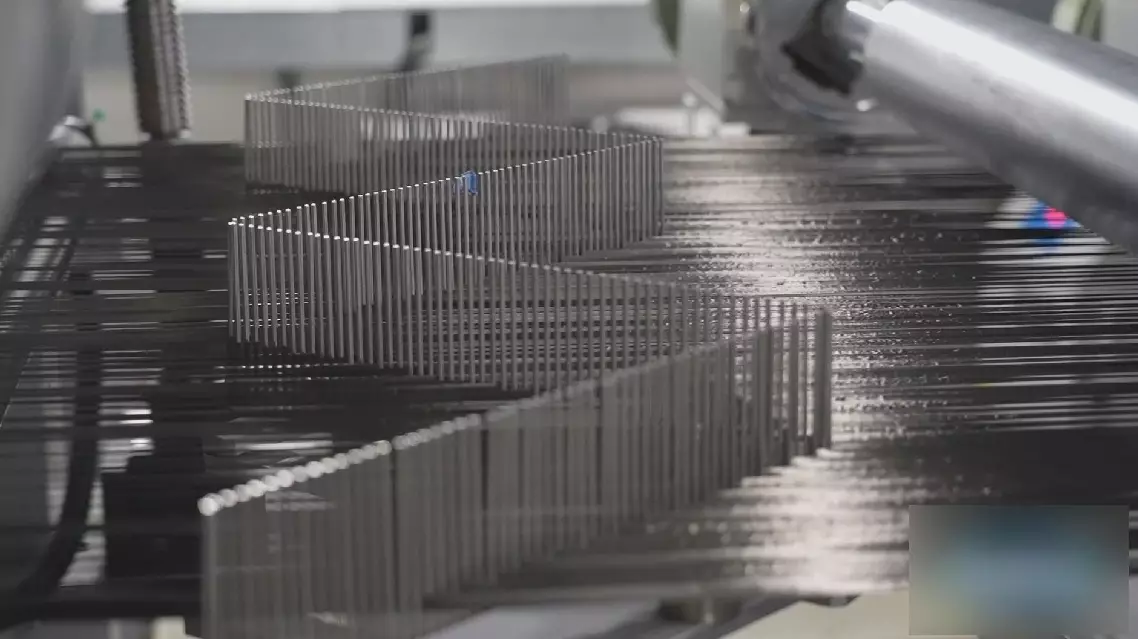
For decades, the material's high cost kept it largely confined to aerospace sector. In 2000, China paid as much as 560 U.S. dollars per kilogram for imported carbon fiber. By 2025, domestic factories had mastered mass production, raising output by nearly 50 percent to 90,000 tons. The breakthrough slashed prices by 98 percent, with local manufacturers now supplying 86 percent of the market.
Guangdong accounts for roughly a third of China's carbon fiber consumption, and its factories have excelled at making finished products. However, local research labs have lagged in developing the raw fibers themselves.
"Guangdong's raw material research used to lag behind. So we are pairing factories directly with university labs, letting real-world product demand guide our science," said Zhu Caizhen, a professor from the College of Chemistry and Environmental Engineering, Shenzhen University.
Just 1.5 kilometers from Shenzhen University is Yuehai, a nationally renowned high-tech industry cluster home to more than 2,000 high-tech companies and 100 publicly listed firms.
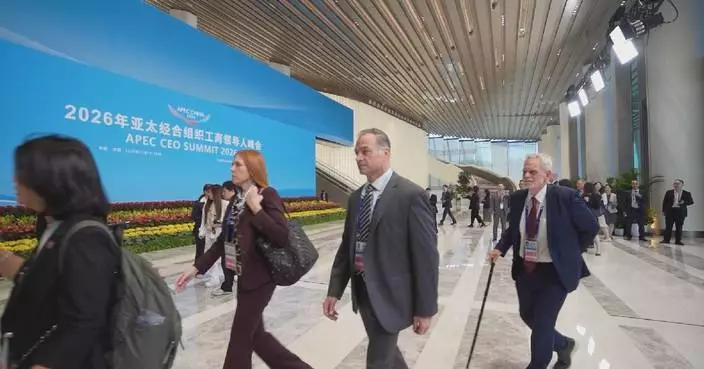
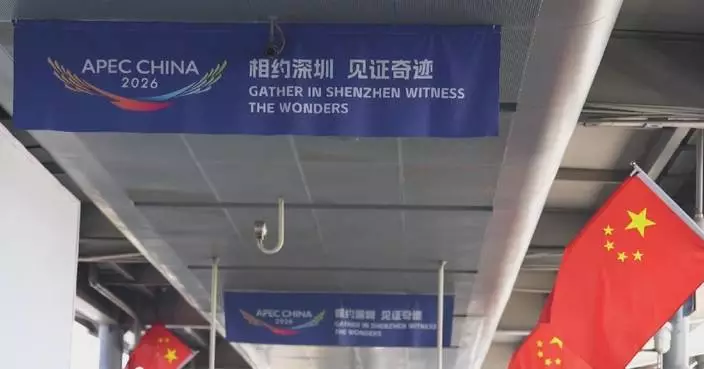
Carbon fiber is a key material for many of these businesses, which hope the 33rd Asia-Pacific Economic Cooperation (APEC) Economic Leaders' Meeting, scheduled for Wednesday and Thursday in Shenzhen City, will help expand regional trade in the material.
"We aren't just exporting raw fiber; we are building it directly into finished goods like smartphones, laptops and electronics tailored to local markets. That's Guangdong's real edge. And with the APEC summit spotlighting regional trade, it's a huge opportunity for our companies to go global," said Zhu.
Its use is also spreading into larger-scale applications, including shipbuilding.
"That means better vessel performance and energy efficiency. They are also corrosion-resistant and offer better noise reduction, helping lower maintenance and fuel costs," said Liang Xiaofeng, assistant general manager of Guangdong Sinoway Composite Materials.
The demand is growing beyond China, as ports across the Asia-Pacific region seek cleaner and more efficient vessels.
"Our main export markets right now are Hong Kong and Singapore. we'll also be exporting to Europe and the Middle East," said Liang.
As Singapore has rolled out a policy to subsidize the construction of all-electric boats, Liang believes the market there will open up soon.
Guangdong leverages its carbon fiber edge to deepen Asia-Pacific cooperation