Skip to Content Facebook Feature Image

Zip Forward 2026: Zip Expands AI Risk Orchestration to Make Procurement the Enterprise’s First Line of Defense Against AI Vendor Risk

Business

Zip Forward 2026: Zip Expands AI Risk Orchestration to Make Procurement the Enterprise’s First Line of Defense Against AI Vendor Risk
Business

Business

Zip Forward 2026: Zip Expands AI Risk Orchestration to Make Procurement the Enterprise’s First Line of Defense Against AI Vendor Risk

2026-09-16 23:02 Last Updated At:23:10

SAN FRANCISCO & NEW YORK--(BUSINESS WIRE)--Sep 16, 2026--

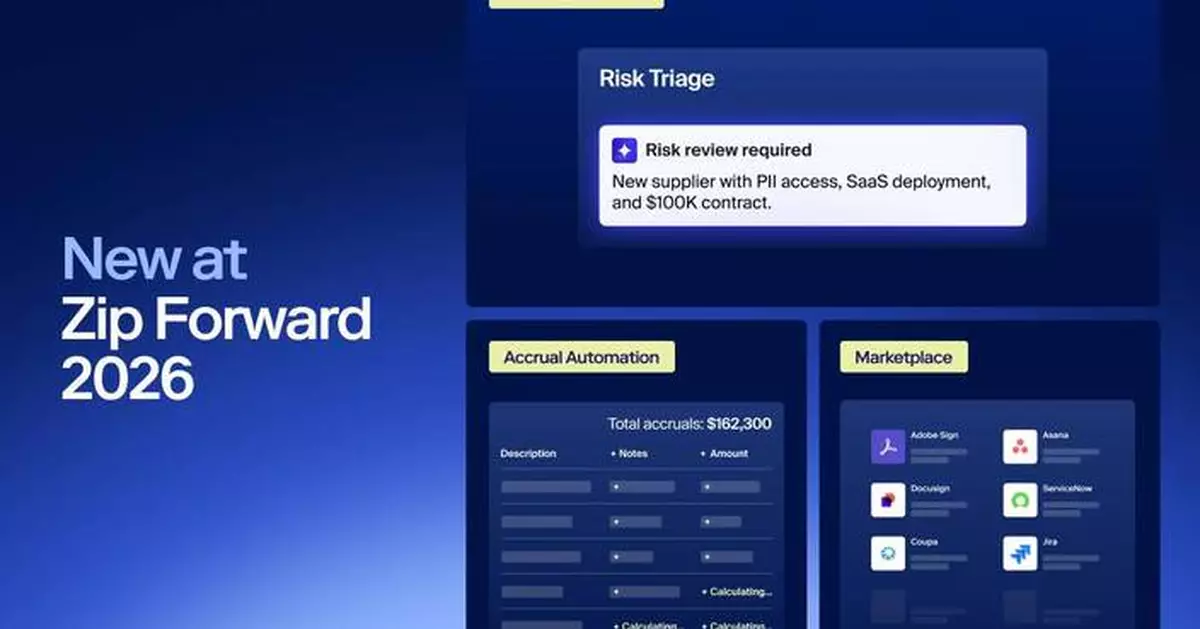
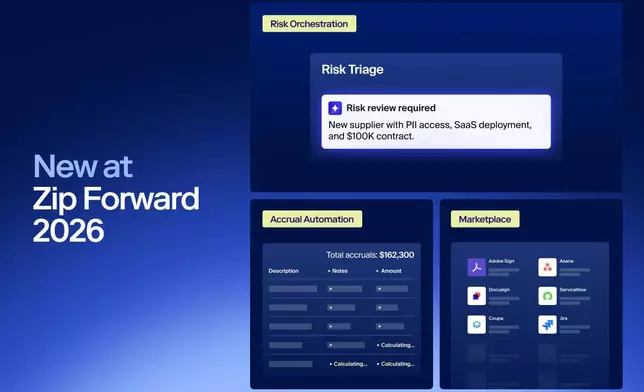
Zip, the AI platform for enterprise procurement, today expanded its AI Risk Orchestration offering into a full third-party risk management (TPRM) solution, covering supplier risk end-to-end within the platform where purchasing decisions are already made. The company unveiled the new AI capabilities at Zip Forward, its flagship conference, alongside a Sourcing and PO Superagent, expanded AI data partnerships, an app marketplace, and accrual accounting automation. Together, the launches advance Zip’s vision for AI-powered procurement: giving AI agents the context, connectivity, and controls to perform real enterprise work.

More Images
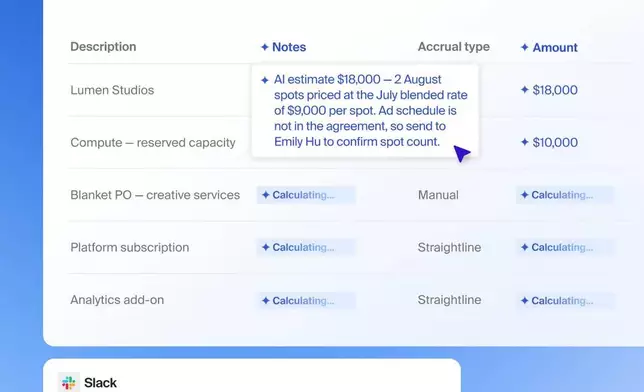
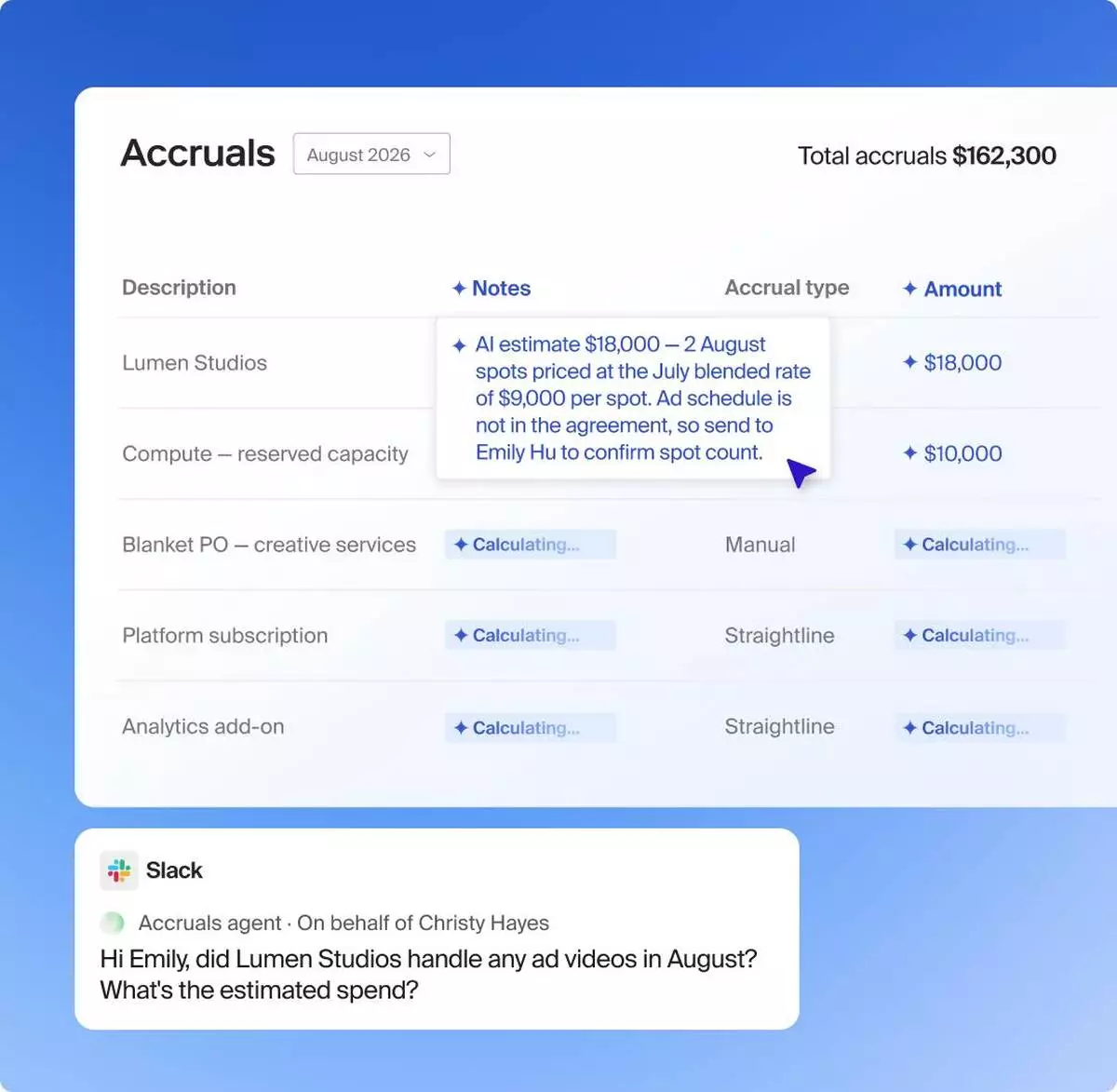
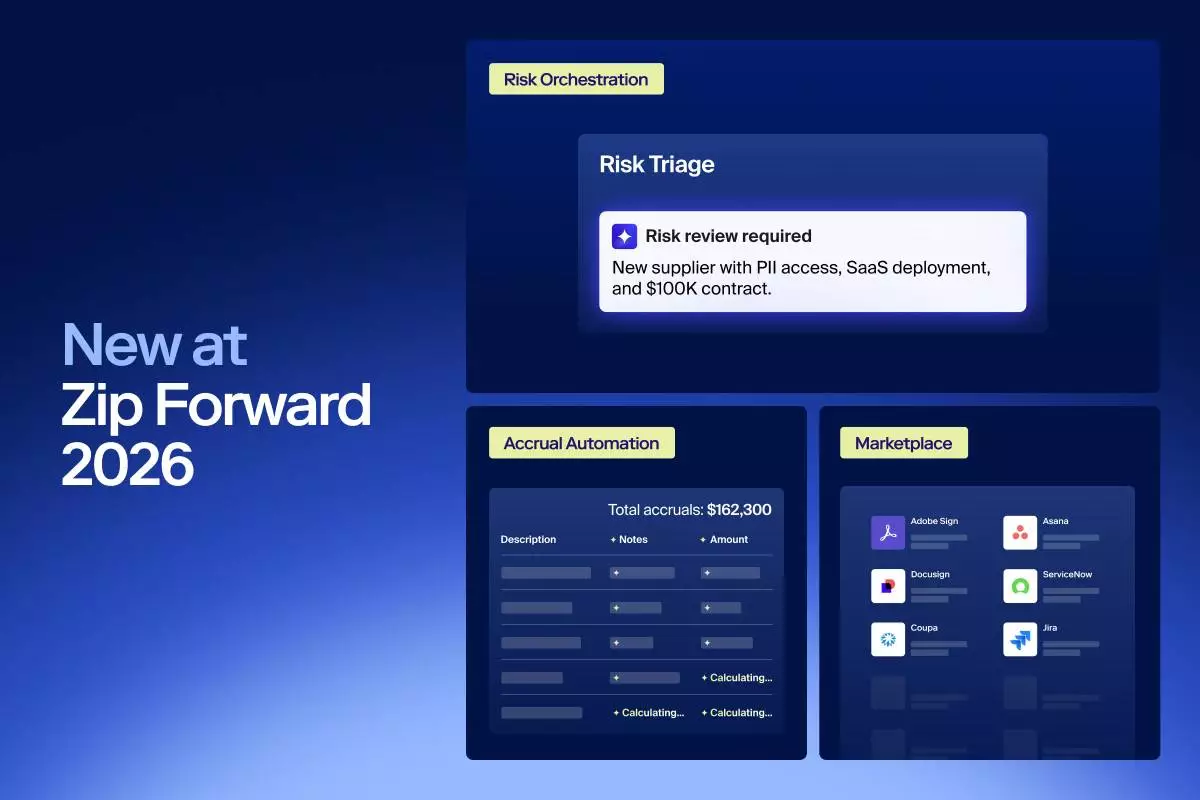
Included as part of Zip’s Procure-to-Pay solution, accrual automation uses purchasing and spend data already in Zip to calculate accruals through a deterministic, reproducible engine. AI gathers missing estimates and reduces manual follow-up, while accountants retain full traceability into each calculation and final control over what gets posted. It supports PO-backed spend, virtual card spend, and recurring non-PO costs in one place.
Included as part of Zip’s Procure-to-Pay solution, accrual automation uses purchasing and spend data already in Zip to calculate accruals through a deterministic, reproducible engine. AI gathers missing estimates and reduces manual follow-up, while accountants retain full traceability into each calculation and final control over what gets posted. It supports PO-backed spend, virtual card spend, and recurring non-PO costs in one place.

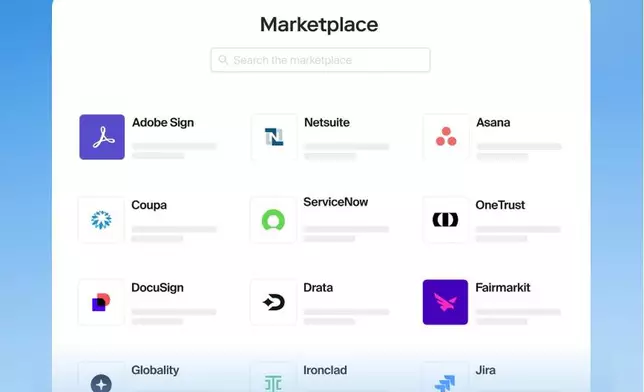
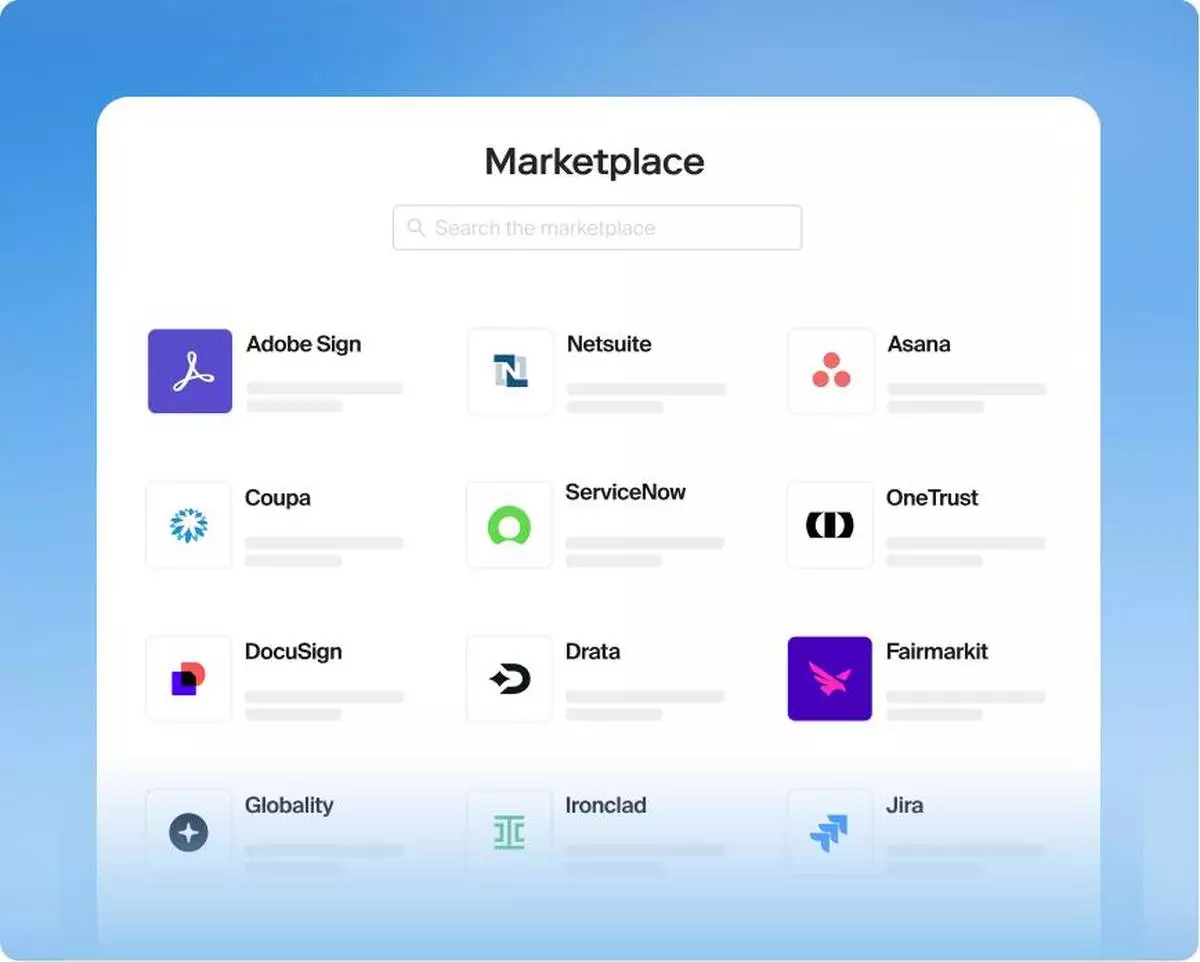
Zip’s new app marketplace makes it easier for procurement and IT teams to connect Zip to the systems their business relies on. Teams can discover Zip's integrations and install integration templates through a self-service experience, with simple one-click upgrades to stay current as new integration features become available. It streamlines procurement workflows and expands the enterprise context available to AI agents.
Zip’s new app marketplace makes it easier for procurement and IT teams to connect Zip to the systems their business relies on. Teams can discover Zip's integrations and install integration templates through a self-service experience, with simple one-click upgrades to stay current as new integration features become available. It streamlines procurement workflows and expands the enterprise context available to AI agents.

Since launching in 2025, AI Risk Orchestration customers — including companies like Mutual of Omaha, Stripe, Affirm, Rivian, Metro Bank, and Checkout.com — have been able to achieve 85% faster cycle times, 98% portal completion rates, and 2x supplier risk coverage, while also cutting manual review work by up to 90%.
Since launching in 2025, AI Risk Orchestration customers — including companies like Mutual of Omaha, Stripe, Affirm, Rivian, Metro Bank, and Checkout.com — have been able to achieve 85% faster cycle times, 98% portal completion rates, and 2x supplier risk coverage, while also cutting manual review work by up to 90%.

Zip Forward 2026: Zip Expands AI Risk Orchestration to Make Procurement the Enterprise’s First Line of Defense Against AI Vendor Risk

Zip Forward 2026: Zip Expands AI Risk Orchestration to Make Procurement the Enterprise’s First Line of Defense Against AI Vendor Risk

This press release features multimedia. View the full release here: https://www.businesswire.com/news/home/20260916561823/en/

Zip first introduced AI Risk Orchestration in April 2025 to bring vendor risk reviews directly into the purchasing workflow. Since then, the company has worked with enterprises including Mutual of Omaha, Stripe, Affirm, Rivian, Metro Bank, and Checkout.com to build out a dedicated solution that manages risk across the supplier lifecycle while preserving that core principle: risk should shape the purchasing decision, not sit in a separate process beside it. Since launching in 2025, AI Risk Orchestration customers have been able to achieve 85% faster cycle times, 98% portal completion rates, and 2x supplier risk coverage, while also cutting manual review work by up to 90%.

“Risk management has traditionally lived beside procurement, even though the purchasing process is where companies decide which vendors they’re willing to trust,” said Rujul Zaparde, co-founder and CEO of Zip. “We started by bringing risk into that decision. Now we’ve built the full, AI-powered, third-party risk management experience around it, so companies can move faster without separating risk from the work itself.”

Using AI to orchestrate risk reviews to manage third-party risk

As enterprises adopt more vendors – particularly AI providers handling sensitive data and business-critical workflows – third-party risk has become harder to manage through disconnected questionnaires, inboxes, and point solutions. Security, legal, compliance, finance, and procurement teams often assess the same vendor independently, creating duplicate work and fragmented decision trails. Reviews can become bottlenecks or get bypassed entirely when business teams are under pressure to move quickly. That’s where much of the risk comes in.

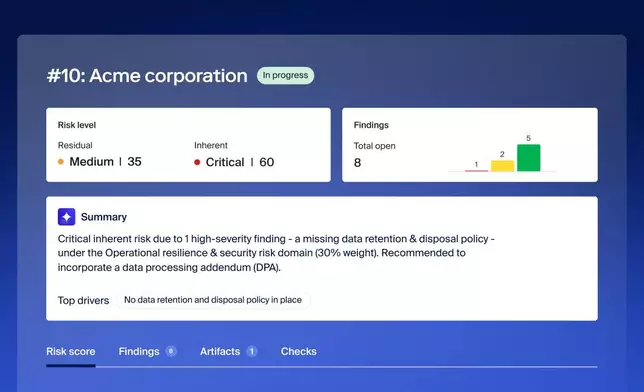
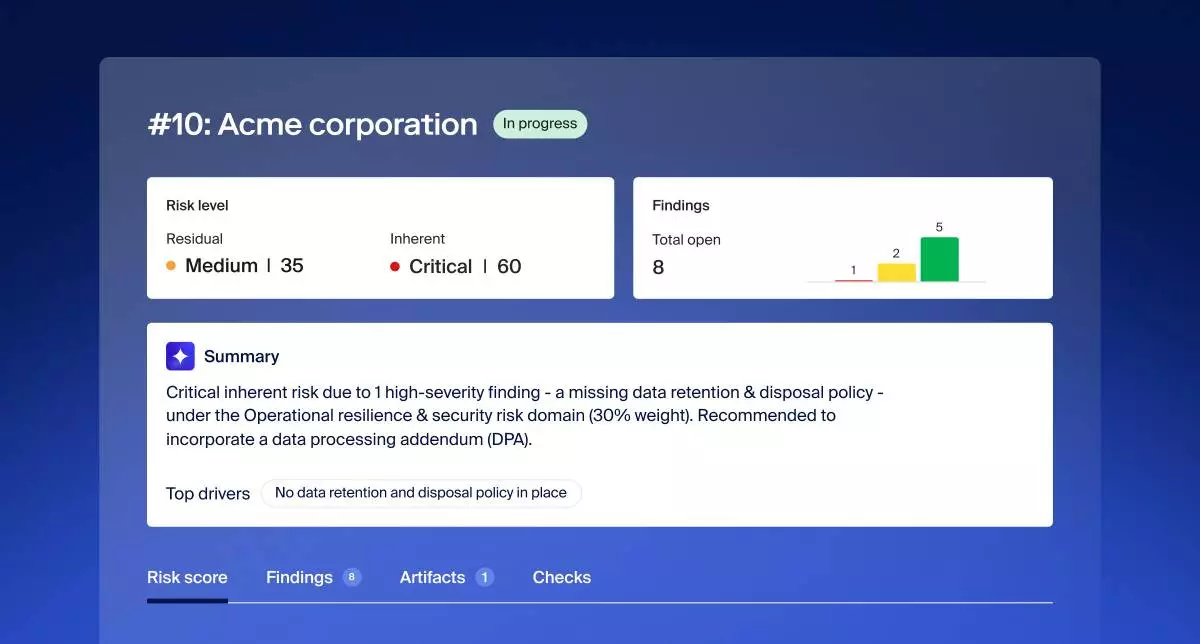
AI Risk Orchestration brings these activities into one connected process by triaging incoming requests, determining when an assessment is needed, and pre-filling questionnaires using the supplier information already in Zip. From there, it scores suppliers against the company’s own risk methodology and surfaces findings from survey responses, documents, and other sources. Each finding is tracked to resolution, whether that means accepting the risk or requesting additional evidence from the supplier, all before the purchase is approved. Reassessments run automatically on the cadence the company’s policy defines, and continuous monitoring alerts the right team members when critical risk factors change so they can act.

The expanded AI solution gives enterprises a more consistent way to assess, monitor, and manage vendor risk without separating risk management from procurement. For AI vendors in particular, companies can evaluate emerging concerns around data privacy, security, model access, and the handling of sensitive company information before commitments are made.

“Zip’s AI Risk Orchestration, in combination with its agents, has changed how we do vendor management,” said Kate Hiykel, Mutual of Omaha’s Manager of the Vendor Management Program. “With the automated scoring, we are able to consistently apply our framework and methodology to all vendor reviews, both at intake and monitoring, which is something we haven’t been able to get ‘just right’ before. We are beyond excited to continue this maturation with the next iteration of AI Risk Orchestration and Zip’s Superagents.”

Zip also announced five additional major capabilities at Zip Forward:

About Zip

Zip is the leading AI platform for enterprise procurement. Through one platform, Zip unifies how companies purchase – replacing fragmented tools and manual processes with intelligent orchestration and governed AI agents that procurement teams and employees actually want to use. Zip is the only procurement orchestration platform with full intake-to-pay capabilities and the most widely deployed, fully governed AI agents in enterprise procurement. Zip has delivered billions in customer savings and powers modern procurement for hundreds of global enterprises, including Anthropic, AMD, Discover, Dollar Tree, OpenAI, T-Mobile, and more. To learn more, visit zip.com.
Included as part of Zip’s Procure-to-Pay solution, accrual automation uses purchasing and spend data already in Zip to calculate accruals through a deterministic, reproducible engine. AI gathers missing estimates and reduces manual follow-up, while accountants retain full traceability into each calculation and final control over what gets posted. It supports PO-backed spend, virtual card spend, and recurring non-PO costs in one place.
Included as part of Zip’s Procure-to-Pay solution, accrual automation uses purchasing and spend data already in Zip to calculate accruals through a deterministic, reproducible engine. AI gathers missing estimates and reduces manual follow-up, while accountants retain full traceability into each calculation and final control over what gets posted. It supports PO-backed spend, virtual card spend, and recurring non-PO costs in one place.

Zip’s new app marketplace makes it easier for procurement and IT teams to connect Zip to the systems their business relies on. Teams can discover Zip's integrations and install integration templates through a self-service experience, with simple one-click upgrades to stay current as new integration features become available. It streamlines procurement workflows and expands the enterprise context available to AI agents.
Zip’s new app marketplace makes it easier for procurement and IT teams to connect Zip to the systems their business relies on. Teams can discover Zip's integrations and install integration templates through a self-service experience, with simple one-click upgrades to stay current as new integration features become available. It streamlines procurement workflows and expands the enterprise context available to AI agents.

Since launching in 2025, AI Risk Orchestration customers — including companies like Mutual of Omaha, Stripe, Affirm, Rivian, Metro Bank, and Checkout.com — have been able to achieve 85% faster cycle times, 98% portal completion rates, and 2x supplier risk coverage, while also cutting manual review work by up to 90%.
Since launching in 2025, AI Risk Orchestration customers — including companies like Mutual of Omaha, Stripe, Affirm, Rivian, Metro Bank, and Checkout.com — have been able to achieve 85% faster cycle times, 98% portal completion rates, and 2x supplier risk coverage, while also cutting manual review work by up to 90%.

Zip Forward 2026: Zip Expands AI Risk Orchestration to Make Procurement the Enterprise’s First Line of Defense Against AI Vendor Risk

Zip Forward 2026: Zip Expands AI Risk Orchestration to Make Procurement the Enterprise’s First Line of Defense Against AI Vendor Risk

NEW YORK (AP) — Wall Street is holding steady Wednesday as it waits to hear from the Federal Reserve, which traders expect will announce a hike to interest rates later in the day to help get the nation’s high inflation under control.

The S&P 500 rose 0.4% was on track for just its second gain in the last eight days. The Dow Jones Industrial Average was down 34 points, or 0.1%, as of 11 a.m. Eastern time, and the Nasdaq composite was 0.8% higher.

Stocks got help from some easing for oil prices and pressure from the bond market. The price for a barrel of Brent crude, the international standard, fell 2.5% to $106.07. had gotten to nearly $110 early this week on worries that the war with Iran will continue to clog the global flow of oil. .

That helped send the yield on the 10-year Treasury, which is the centerpiece of the bond market and dictates where rates for mortgages and other loans go, down to 4.95% from 5.00% late Tuesday. Earlier this week was the first time since 2023 that the 10-year yield topped 5%.

Even with Wednesday’s easing, the pressure remains high. Brent oil is still well above its $72 price from before the war with Iran, when the 10-year yield was at just 3.97%. Worries are so strong about inflation staying high that Wall Street sees it as a near certainty that Fed officials will announce their first hike to interest rates since 2023 later in the day.

That’s the typical move for the Fed to combat inflation, and it works by making it more expensive for everyone to borrow money, which slows the overall economy and hopefully removes fuel for prices to rise further. It also tends to undercut prices for stocks and other investments, though President Donald Trump has been lobbying for lower interest rates instead of higher.

Inflation is a worldwide problem, and the European Central Bank hiked rates across the Atlantic last week to help diminish it.

Traders are still betting on a slight chance the Fed may hold off on raising rates. If it does, the market could swing because investors may see it as a sign that the Fed is less committed to getting inflation lower.

Fed officials will also release forecasts for where they see interest rates heading in upcoming years, providing another opportunity to inject uncertainty into the market.

A report on Wednesday morning showing that shoppers spent much more at U.S. retailers last month than economists expected could embolden the Fed. It could offer a signal that the economy remains strong enough to withstand higher rates.

On Wall Street, stocks in the artificial-intelligence industry held steadier following their worldwide slide earlier in the week, after leaders of the AI industry called for a slowdown in development to address safety issues for humanity.

Nvidia rose 1.6%, and Advanced Micro Devices climbed 3.7%.

They helped offset a drop of 13.1% for J.B. Hunt Transport Services. Its chief financial officer told a conference of analysts late Wednesday that it’s facing higher costs and expects its earnings to drop 5% to 10% from the second quarter to the third.

In stock markets abroad, indexes rose across much of Europe and Asia. South Korea’s Kospi climbed 1.4% for one of the world’s biggest gains.

AP Business Writers Chan Ho-him and Michelle Chapman contributed to this report.

Michael Pistillo works on the floor at the New York Stock Exchange in New York, Monday, Sept. 14, 2026. (AP Photo/Seth Wenig)

Michael Pistillo works on the floor at the New York Stock Exchange in New York, Monday, Sept. 14, 2026. (AP Photo/Seth Wenig)

Michael Gallucchi Traders works on the floor at the New York Stock Exchange in New York, Monday, Sept. 14, 2026. (AP Photo/Seth Wenig)

Michael Gallucchi Traders works on the floor at the New York Stock Exchange in New York, Monday, Sept. 14, 2026. (AP Photo/Seth Wenig)

A dealer walks past near the screens showing the Korea Composite Stock Price Index (KOSPI) and the foreign exchange rate between U.S. dollar and South Korean won at a dealing room of Hana Bank in Seoul, South Korea, Wednesday, Sept. 16, 2026. (AP Photo/Lee Jin-man)

A dealer walks past near the screens showing the Korea Composite Stock Price Index (KOSPI) and the foreign exchange rate between U.S. dollar and South Korean won at a dealing room of Hana Bank in Seoul, South Korea, Wednesday, Sept. 16, 2026. (AP Photo/Lee Jin-man)

Members of media shoot the screens showing the Korea Composite Stock Price Index (KOSPI), the Korean Securities Dealers Automated Quotations (KOSDAQ) and the foreign exchange rate between U.S. dollar and South Korean won at a dealing room of Hana Bank in Seoul, South Korea, Wednesday, Sept. 16, 2026. (AP Photo/Lee Jin-man)

Members of media shoot the screens showing the Korea Composite Stock Price Index (KOSPI), the Korean Securities Dealers Automated Quotations (KOSDAQ) and the foreign exchange rate between U.S. dollar and South Korean won at a dealing room of Hana Bank in Seoul, South Korea, Wednesday, Sept. 16, 2026. (AP Photo/Lee Jin-man)

A dealer walks past the screen showing the Korea Composite Stock Price Index (KOSPI) at a dealing room of Hana Bank in Seoul, South Korea, Wednesday, Sept. 16, 2026. (AP Photo/Lee Jin-man)

A dealer walks past the screen showing the Korea Composite Stock Price Index (KOSPI) at a dealing room of Hana Bank in Seoul, South Korea, Wednesday, Sept. 16, 2026. (AP Photo/Lee Jin-man)

The screens showing the foreign exchange rates are displayed at a dealing room of Hana Bank in Seoul, South Korea, Wednesday, Sept. 16, 2026. (AP Photo/Lee Jin-man)

The screens showing the foreign exchange rates are displayed at a dealing room of Hana Bank in Seoul, South Korea, Wednesday, Sept. 16, 2026. (AP Photo/Lee Jin-man)

Recommended Articles