The Trump administration has cut or frozen up to $177 billion in federal grants since the president took office for his second term, according to a tracking tool released Wednesday by a pro-democracy nonprofit and a group of researchers and scientists.
The cuts affected all 50 states and the District of Columbia, with health, nutrition, the environment and disaster relief making up the largest share of cuts, the States United Democracy Center and Grant Witness organization found.
Among the grants that were eliminated, frozen or delayed were ones related to maternal health in Michigan, education research in Mississippi and assistance to minority farmers in Iowa, the researchers found. California, Texas, New York, Illinois and North Carolina saw the highest amounts of interrupted grant money. The tracking tool is called Lost Funds.
“By bringing thousands of funding disruptions from the Trump administration together in a publicly accessible, verified database, Lost Funds puts the magnitude of their impact on full display,” Scott Delaney, co-founder of Grant Witness, said in a statement.
The $177 billion finding represents nearly 10% of federal discretionary spending, the groups said.
The tracker’s organizers said the disrupted grants were beyond the kind of cuts that typically happen when administrations change.
“Lost Funds shows the extraordinary scale and real human impact of these disruptions, and how states are once again on the front lines protecting their residents,” said Kelly Rader, States United Democracy Center’s research director.
In some cases, courts have ruled against the administration’s grant funding cuts.
The new tool, which is being made available for public use, relies on data from USASpending.gov, an open data source of federal spending information, according to the groups’ methodology. They said the tracker would be updated regularly as the administration takes new action and lawsuits move through the courts.
States United bills itself as a nonpartisan group dedicated to the rule of law and free, fair, secure elections. It was cofounded by Norm Eisen, an attorney who has been involved in prominent lawsuits against the Trump administration, including over the Kennedy Center.
Grant Witness is a group of scientists, researchers and attorneys who document how funding is changing under President Donald Trump's administration.
A message seeking comment on the analysis was sent to the White House.
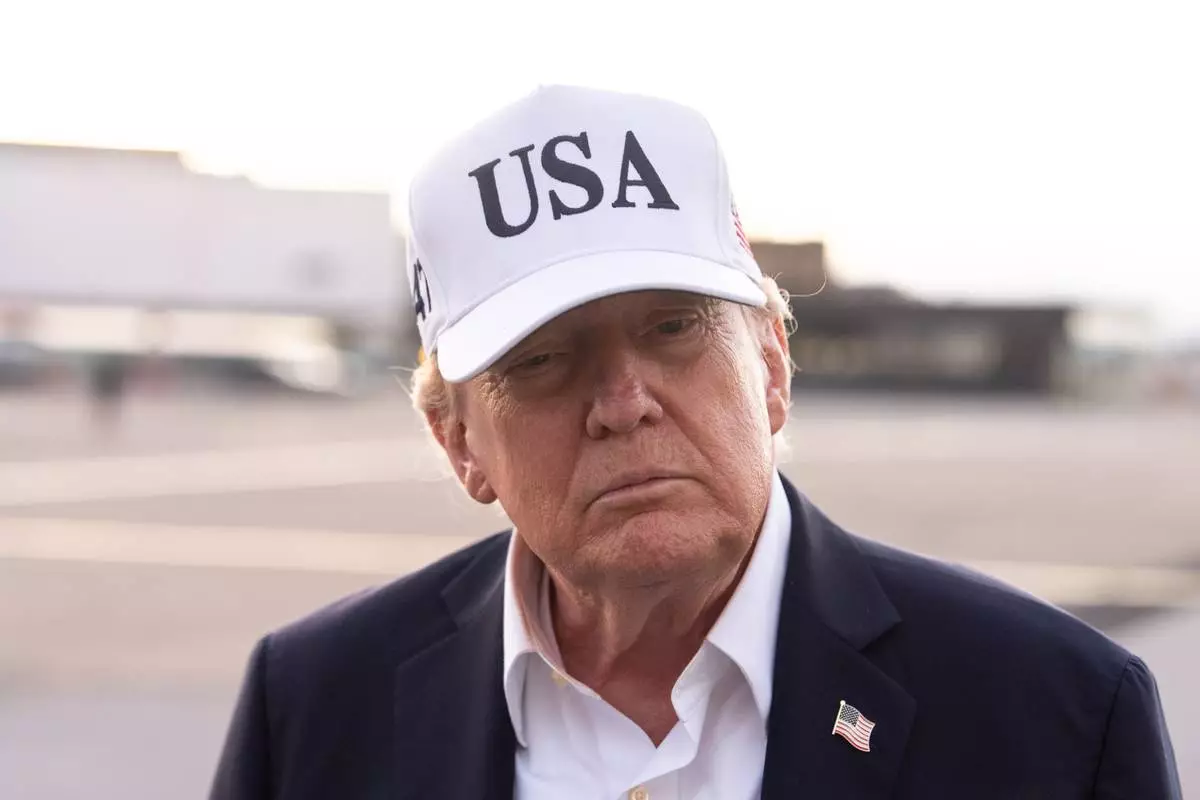
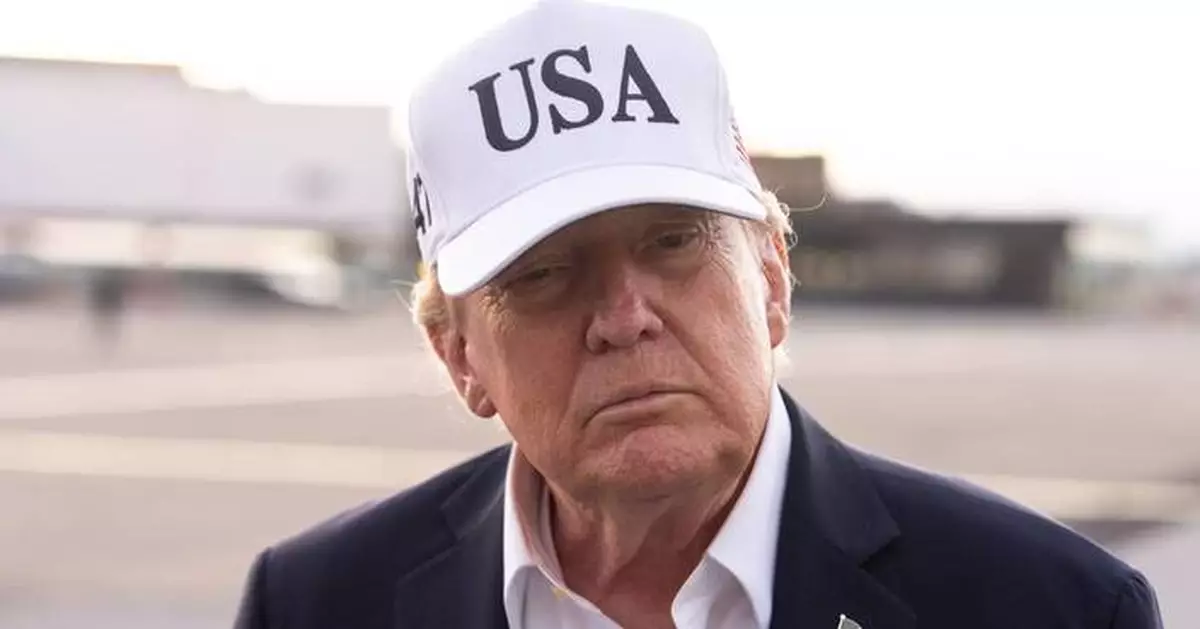
President Donald Trump speaks with reporters before boarding Air Force One at Shannon Airport, Sunday, Sept. 13, 2026, in Shannon, Ireland. (AP Photo/Julia Demaree Nikhinson)
THE HAGUE, Netherlands (AP) — Former Philippine President Rodrigo Duterte attended a hearing Wednesday at the International Criminal Court, where he's facing charges of crimes against humanity, smiling and waving to supporters during his first public appearance in over a year.
The ex-leader is accused of murder and attempted murder for his alleged involvement in dozens of killings as part of his so-called war on drugs during his time in office. He denies the charges against him.
Dressed a black suit and a crisp white shirt, the 81-year-old joined a pretrial hearing that focused largely on scheduling concerns ahead of the trial's official start, expected in November.
Duterte was arrested in the Philippines in March 2025 and sent to The Hague. He made his initial appearance via video link from the court's detention center and had not attended another session until Wednesday.
His legal team had attempted to get the case thrown out on medical grounds, but judges denied a request for him to be released from custody and ultimately ruled earlier this year that he was healthy enough to stand trial.
The ICC has been looking into mass killings in crackdowns overseen by Duterte, first when he served as mayor of the southern Philippine city of Davao and later as president.
Estimates of the death toll during Duterte’s presidential term vary, from the more than 6,000 reported by the national police to up to 30,000 claimed by human rights groups.
According to the prosecutors, police and government hit squads carried out dozens of killings at Duterte’s orders, motivated by the promise of money or to avoid becoming targets themselves.
In June, the presiding judge in his case told Duterte’s lawyers that she wanted the ex-leader to turn up. “We would expect Mr. Duterte to be here unless there’s some medical issue,” Judge Joanna Korner said.
Earlier this week, his counsel requested additional medical evaluations.
Relatives of those killed in the drug crackdowns held a group watch in Manila, chanting “Justice for all victims of the killings!”
A small group of protesters also gathered outside the ICC ahead of the hearing to voice their support for the proceedings.
A month after the court in February 2018 announced a preliminary investigation into the violent drug crackdowns, Duterte said the Philippines would withdraw from the ICC.
Last year, judges rejected a request from Duterte’s legal team to throw out the case because of the Philippine withdrawal. They said that countries cannot “abuse” their right to withdraw from the court’s foundational Rome Statute “by shielding persons from justice in relation to alleged crimes that are already under consideration.”
Earlier this year, an attempt by authorities to arrest another man wanted by the ICC in connection with the drug killings dissolved into gunfire in the Philippine Senate in May. No one was hurt. The court had unsealed an arrest warrant for Ronald Marapon dela Rosa, who served as national police chief under Duterte. Dela Rosa went into hiding following the Senate standoff and remains on the run.
In July, the Philippine Senate, acting as an impeachment court, opened a trial of Duterte’s daughter, Vice President Sara Duterte. If convicted of her charges, which include amassing unexplained wealth and publicly threatening the family of the current president, Ferdinand Marcos Jr., she may be permanently disqualified from holding public office. She denies the charges.
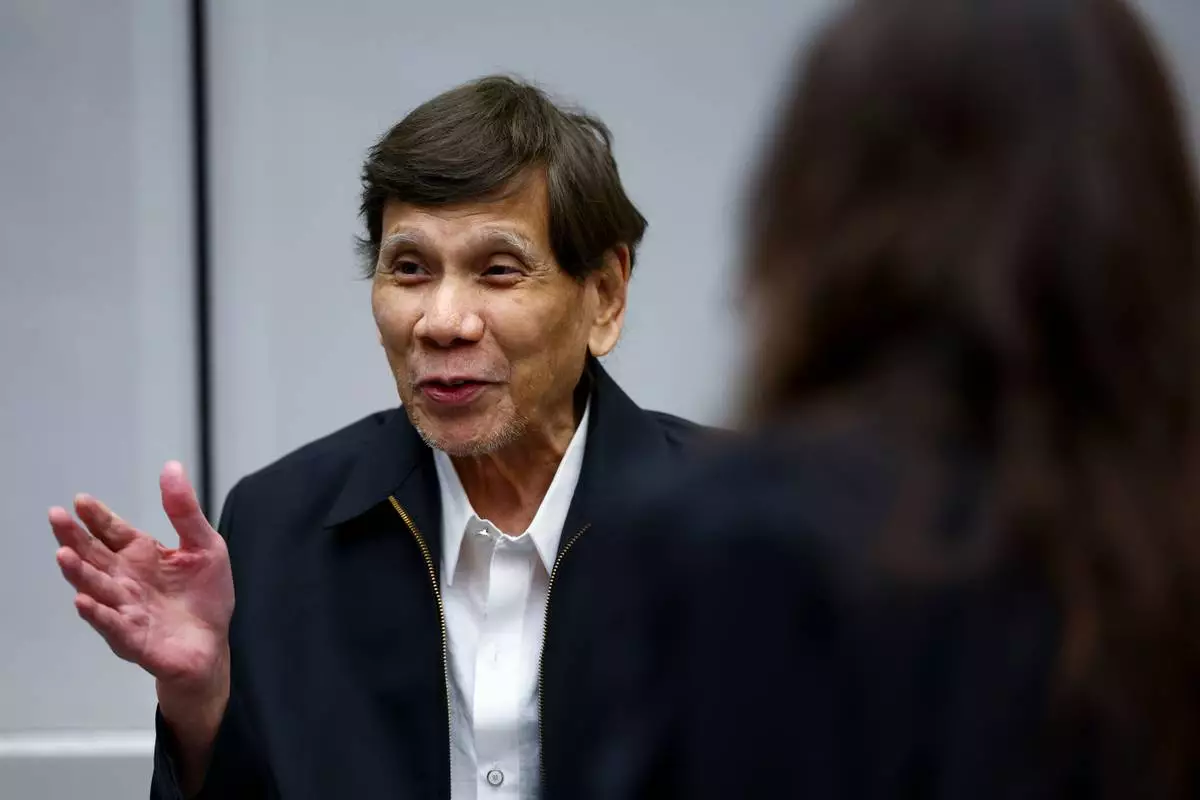
Former Philippine President Rodrigo Duterte appears before the International Criminal Court in The Hague, Netherlands, Wednesday, Sept. 16, 2026. (Piroschka van de Wouw/Pool Photo via AP)
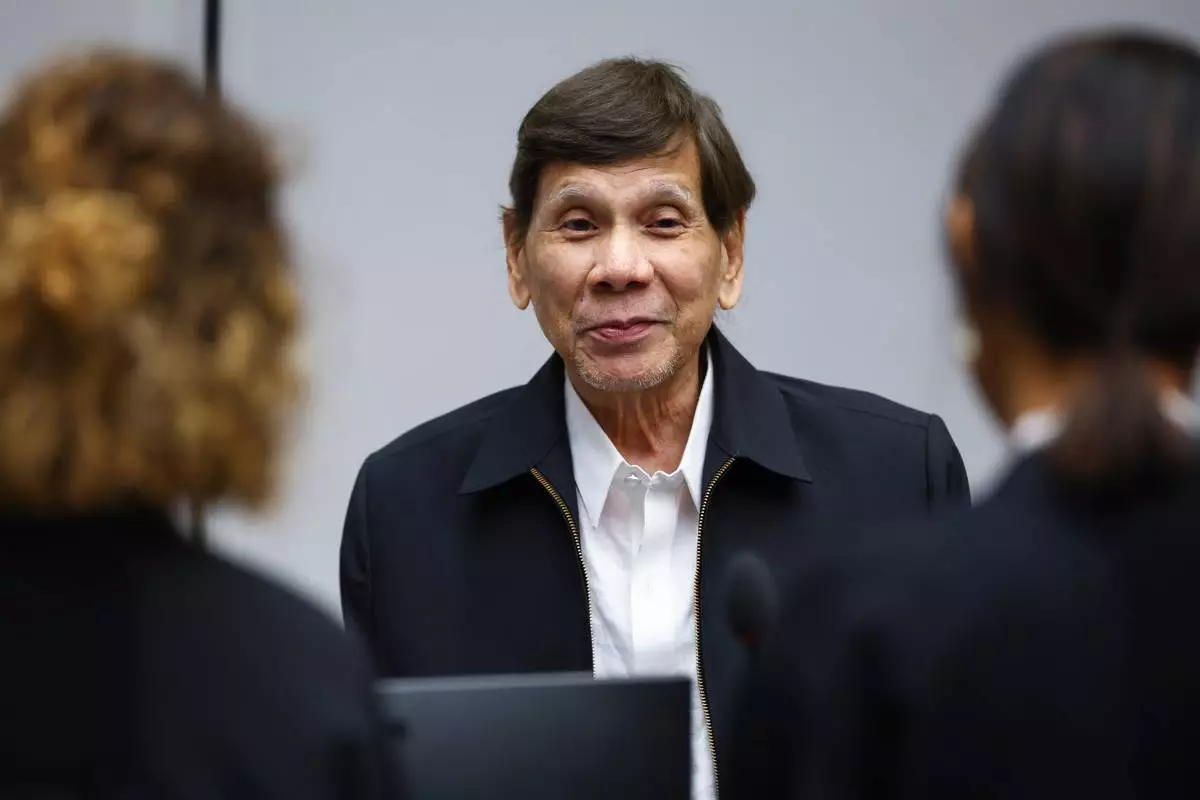
Former Philippine President Rodrigo Duterte appears before the International Criminal Court in The Hague, Netherlands, Wednesday, Sept. 16, 2026. (Piroschka van de Wouw/Pool Photo via AP)
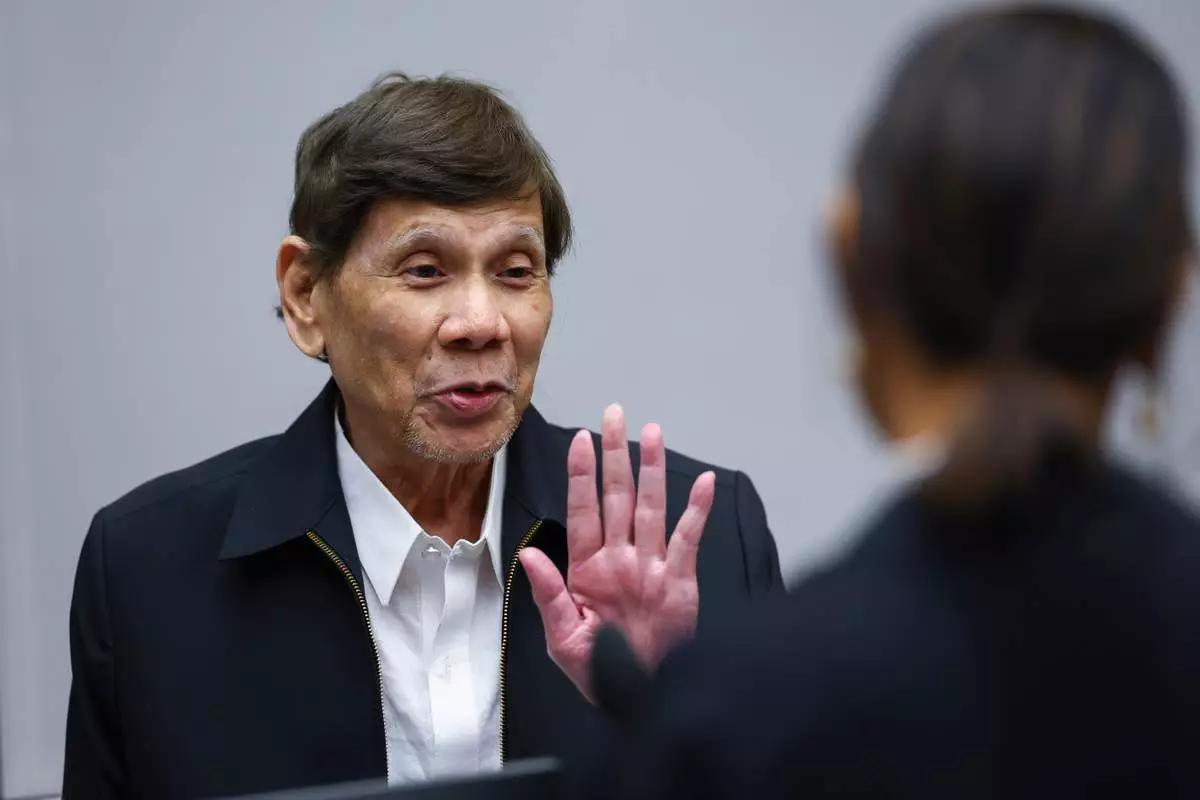
Former Philippine President Rodrigo Duterte appears before the International Criminal Court in The Hague, Netherlands, Wednesday, Sept. 16, 2026. (Piroschka van de Wouw/Pool Photo via AP)
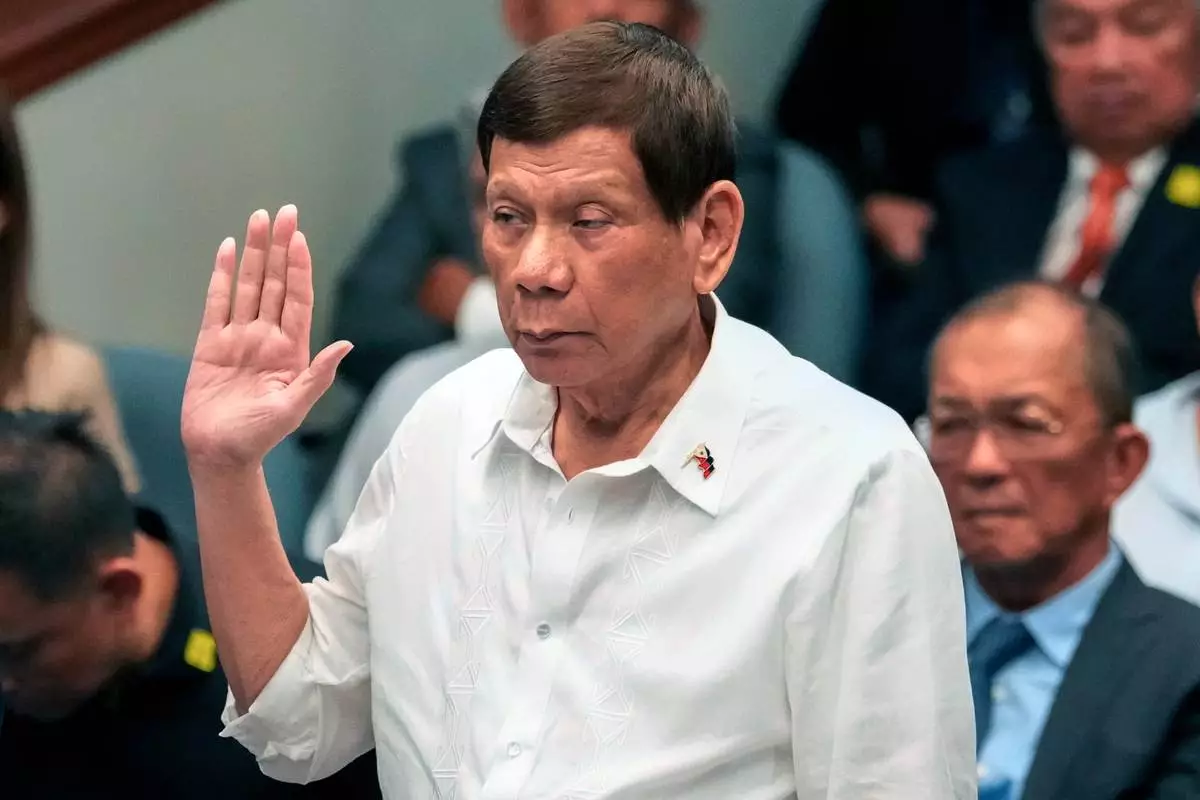
FILE - Former Philippine President Rodrigo Duterte takes oath during a senate inquiry on the so-called war on drugs during his administration at the Philippine Senate, on Oct. 28, 2024, in Manila, Philippines. (AP Photo/Aaron Favila, File)