Skip to Content Facebook Feature Image

AP exclusive: Change in human trafficking reporting alarms advocates for migrant children

News

AP exclusive: Change in human trafficking reporting alarms advocates for migrant children
News

News

AP exclusive: Change in human trafficking reporting alarms advocates for migrant children

2026-09-17 00:45 Last Updated At:00:50

The Trump administration has ordered caregivers for migrant children to stop reporting human trafficking concerns directly to the office created to help victims, a change that critics say could make some vulnerable minors easier to deport.

The directive, in a Sept. 10 memo reviewed by The Associated Press, could mean that some victims would be denied services and face tougher odds of obtaining asylum and visas allowing them to stay in the United States.

“This is going to harm children,” said Jean Bruggeman, co-executive director of Freedom Network USA, a coalition that advocates for human trafficking survivors. "This makes it more likely they will be deported before they get the services they need and put back into harm's way."

The order added another plank to the Trump administration's hard-line immigration agenda that has forged the most restrictive policies toward immigrants in more than a generation. Some of those efforts have been stopped by courts but many others have taken root.

The memo said the change would “streamline the reporting, tracking and referral of trafficking-related concerns.” An administration statement said the change was an effort to reduce the high number of claims that did not rise to the level of criminal human trafficking but nonetheless triggered the award of benefits and relief.

But Democratic Sen. Ron Wyden of Oregon said the change requires children and their advocates to report human trafficking to the same agency that is holding them in custody. “This move to sideline human trafficking experts is more evidence that the Trump administration will deport kids to score political points rather than actually protect them,” he said.

The change applies to 1,800 children who are in federal custody after arriving in the United States without parents or being arrested with parents who were not legally present, and others who have been released but remain under supervision.

Under longstanding policy, caregivers are required to conduct an initial screening of unaccompanied children for potential labor or sex trafficking within five days of admission to a facility or shelter. If they suspect the child is a victim, they have been required within 24 hours to notify the Office of Trafficking in Persons, which was created in 2015 to prevent human trafficking and protect victims.

If the office certifies the claim, the minors become eligible for a program that gives them greater freedom by allowing them to move out of short-term housing, placing them in foster care and allowing them to attend public school. It does not protect them from deportation immediately, but they can use the determination to pursue visas for victims of trafficking or asylum claims. It also grants eligibility for nutrition, housing and other public benefits once they are released from federal custody.

Thousands of unaccompanied minors have benefited from the office's determinations. They are particularly susceptible to labor and sex trafficking, including in their home countries, on their way to the U.S. and after they arrive, and that's why Congress has given them protections, Bruggeman said.

Under the change ordered last week by the administration, federal employees and care providers were told to no longer report labor and sex trafficking claims involving the minors to the Office on Trafficking in Persons.

Instead, the memo said those claims should be submitted only to the Office of Refugee Resettlement, which oversees the housing of unaccompanied minors. That office will now investigate the claims and decide which ones should be forwarded to the Office on Trafficking in Persons for further review, the memo said, warning that providers “must respond promptly to requests for information.”

In a statement, the Office of Refugee Resettlement said the change was driven by a review last year that found 95% of more than 9,000 reports “were determined not to be viable trafficking leads" for criminal investigators.

“The vast majority of the reports detailed instances of alleged abuse or neglect, not forced labor or commercial sex as defined in human trafficking statutes,” the statement said.

Even so, 58% of reports from shelter employees and case managers qualified for trafficking-related benefits. The change in reporting will “strengthen integrity, reduce improper referrals, reduce fraud, and ensure that children who may have experienced trafficking receive immediate support,” the statement said.

Jen Smyers, who served as deputy director of the Office of Refugee Resettlement during the Biden administration, said the claim that the change will streamline reporting is questionable. She said ORR already gets the human trafficking reports but has no special expertise in evaluating them, unlike the office created for that purpose.

The fear is that legitimate claims will get delayed or missed during the new layer of review, and career employees will face political pressure to refer fewer cases, she said.

“It’s the opposite of streamlining,” Smyers said.

Smyers noted the change comes after what she called an “ onslaught ” of Trump administration policies that have undermined the ability of unaccompanied minors to gain legal status, including making it harder to leave federal custody, arresting sponsors in the middle of the release process, and cutting their legal representation.

“What they are trying to do is deport as many as possible. What interferes with deporting children is if they are eligible for protections Congress has given them,” she said.
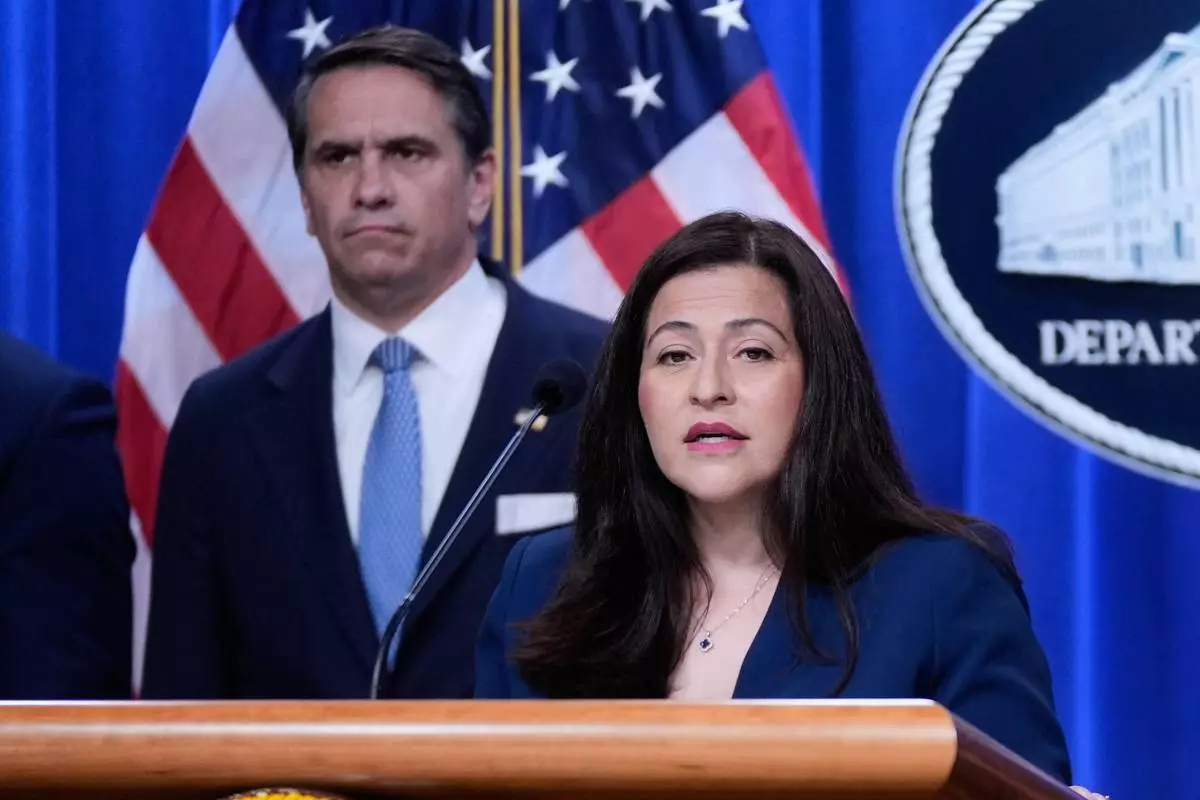
FILE - Acting Attorney General Todd Blanche listens as Angie Salazar, acting director of the Administration for Children and Families in the Office of Refugee Resettlement, speaks during a news conference on unaccompanied children at the Justice Department, June 11, 2026, in Washington. (AP Photo/Manuel Balce Ceneta, File)
FILE - Acting Attorney General Todd Blanche listens as Angie Salazar, acting director of the Administration for Children and Families in the Office of Refugee Resettlement, speaks during a news conference on unaccompanied children at the Justice Department, June 11, 2026, in Washington. (AP Photo/Manuel Balce Ceneta, File)

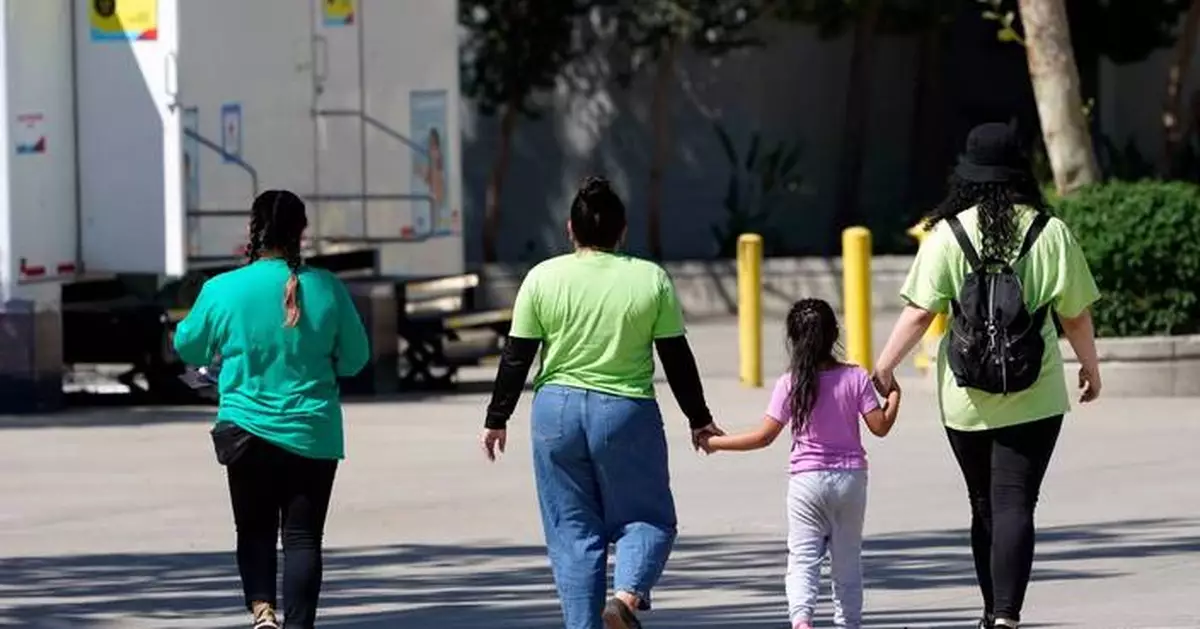
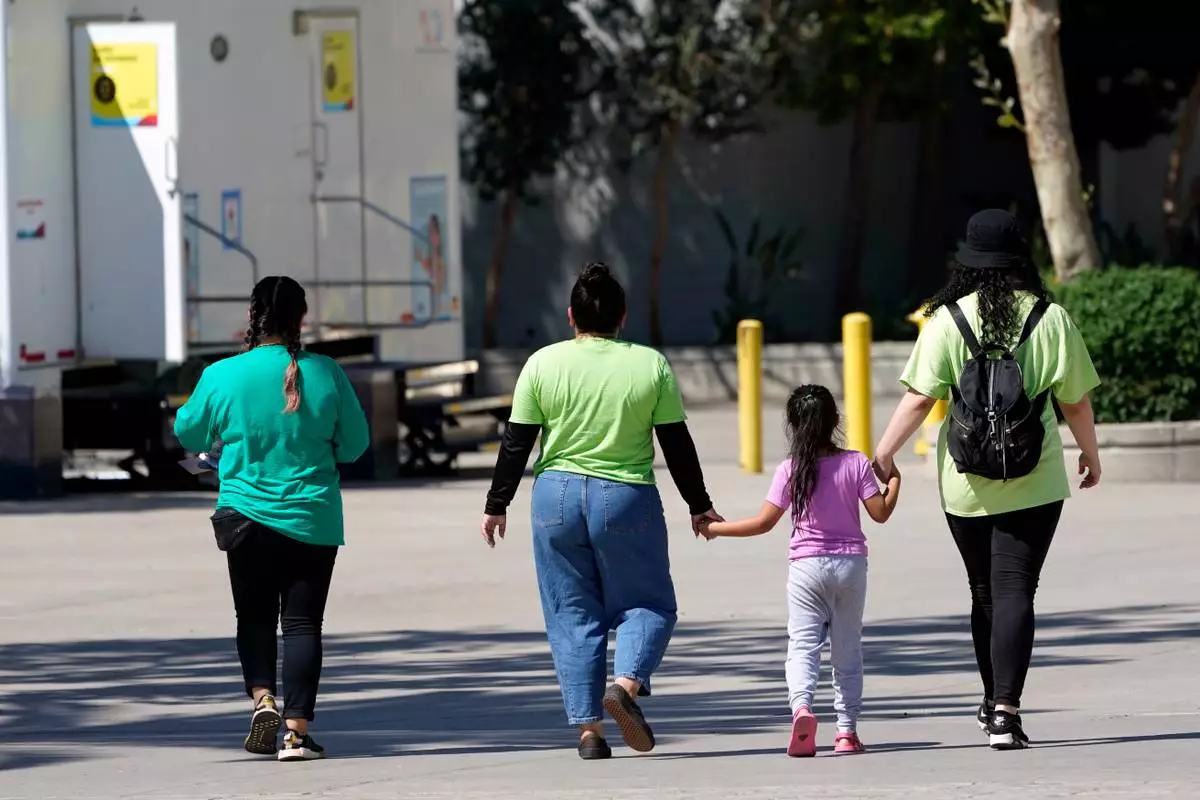
FILE - A child holds hands with workers at an emergency shelter for migrant children, July 2, 2021, in Pomona, Calif. (AP Photo/Marcio Jose Sanchez, Pool, File)

FILE - A child holds hands with workers at an emergency shelter for migrant children, July 2, 2021, in Pomona, Calif. (AP Photo/Marcio Jose Sanchez, Pool, File)
NEW YORK (AP) — Wall Street is holding steady Wednesday as it waits to hear from the Federal Reserve, which traders expect will announce a hike to interest rates later in the day to help get the nation’s high inflation under control.

The S&P 500 rose 0.4% was on track for just its second gain in the last eight days. The Dow Jones Industrial Average was down 26 points, or 0.1%, as of 12:31 p.m. Eastern time, and the Nasdaq composite was 0.7% higher.

Stocks got help from some easing for oil prices and pressure from the bond market. The price for a barrel of Brent crude, the international standard, fell 3.1% to $105.39. Oil had gotten to nearly $110 early this week on worries that the war with Iran will continue to clog the global flow of oil.

That helped send the yield on the 10-year Treasury, which is the centerpiece of the bond market and dictates where rates for mortgages and other loans go, down to 4.96% from 5.00% late Tuesday. Earlier this week was the first time since 2023 that the 10-year yield topped 5%.

Even with Wednesday’s easing, the pressure remains high. Brent oil is still well above its $72 price from before the war with Iran, when the 10-year yield was at just 3.97%. Worries are so strong about inflation staying high that Wall Street sees it as a near certainty that Fed officials will announce their first hike to interest rates since 2023 later in the day.

That’s the typical move for the Fed to combat inflation, and it works by making it more expensive for everyone to borrow money, which slows the overall economy and hopefully removes fuel for prices to rise further. It also tends to undercut prices for stocks and other investments, though President Donald Trump has been lobbying for lower interest rates instead of higher.

Inflation is a worldwide problem, and the European Central Bank hiked rates across the Atlantic last week to help diminish it.

Traders are still betting on a slight chance the Fed may hold off on raising rates. If it does, the market could swing because investors may see it as a sign that the Fed is less committed to getting inflation lower.

Fed officials will also release forecasts for where they see interest rates heading in upcoming years, providing another opportunity to inject uncertainty into the market.

A report on Wednesday morning showing that shoppers spent much more at U.S. retailers last month than economists expected could embolden the Fed. It could offer a signal that the economy remains strong enough to withstand higher rates.

On Wall Street, stocks in the artificial-intelligence industry held steadier following their worldwide slide earlier in the week, after leaders of the AI industry called for a slowdown in development to address safety issues for humanity.

Nvidia rose 1.7%, and Advanced Micro Devices climbed 3.8%.

They helped offset a drop of 12.6% for J.B. Hunt Transport Services. Its chief financial officer told a conference of analysts late Tuesday that it’s facing higher costs and expects its earnings to drop 5% to 10% from the second quarter to the third.

In stock markets abroad, indexes rose across much of Europe and Asia. South Korea’s Kospi climbed 1.4% for one of the world’s biggest gains.

AP Business Writers Chan Ho-him and Michelle Chapman contributed to this report.

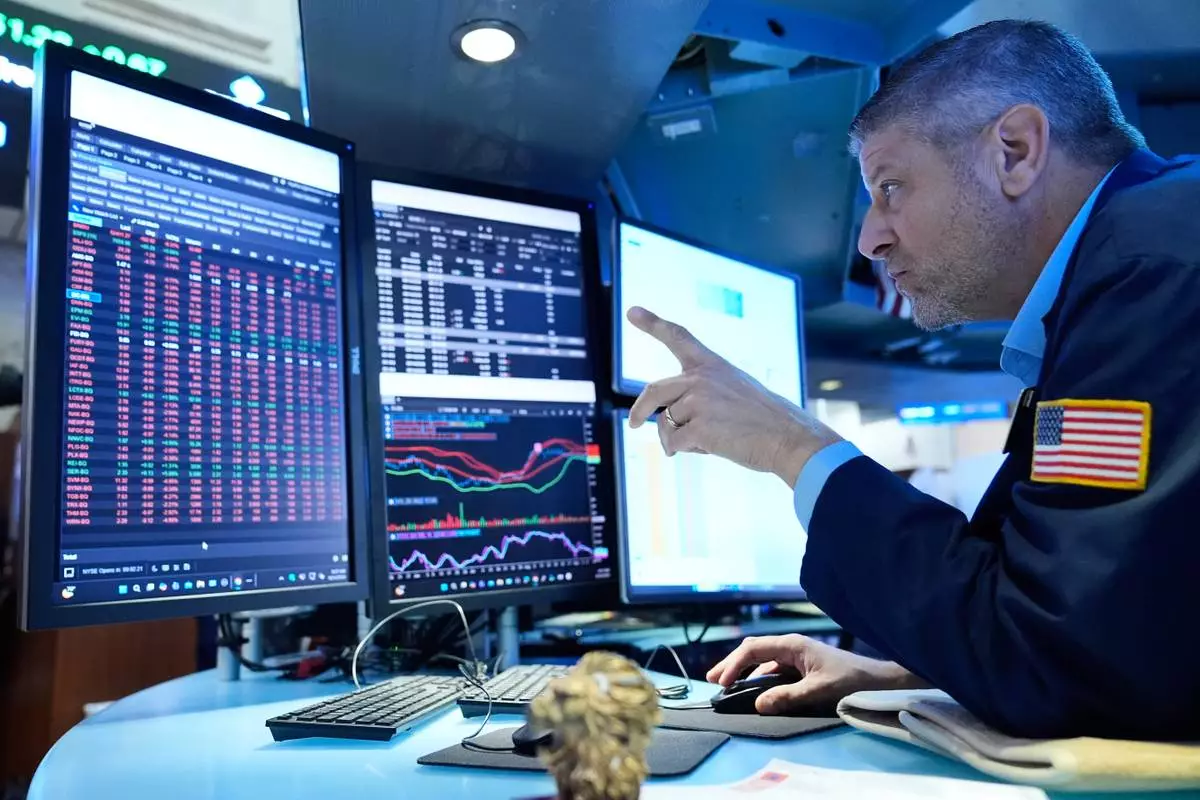
Michael Pistillo works on the floor at the New York Stock Exchange in New York, Monday, Sept. 14, 2026. (AP Photo/Seth Wenig)

Michael Pistillo works on the floor at the New York Stock Exchange in New York, Monday, Sept. 14, 2026. (AP Photo/Seth Wenig)

Michael Gallucchi Traders works on the floor at the New York Stock Exchange in New York, Monday, Sept. 14, 2026. (AP Photo/Seth Wenig)

Michael Gallucchi Traders works on the floor at the New York Stock Exchange in New York, Monday, Sept. 14, 2026. (AP Photo/Seth Wenig)

A dealer walks past near the screens showing the Korea Composite Stock Price Index (KOSPI) and the foreign exchange rate between U.S. dollar and South Korean won at a dealing room of Hana Bank in Seoul, South Korea, Wednesday, Sept. 16, 2026. (AP Photo/Lee Jin-man)

A dealer walks past near the screens showing the Korea Composite Stock Price Index (KOSPI) and the foreign exchange rate between U.S. dollar and South Korean won at a dealing room of Hana Bank in Seoul, South Korea, Wednesday, Sept. 16, 2026. (AP Photo/Lee Jin-man)

Members of media shoot the screens showing the Korea Composite Stock Price Index (KOSPI), the Korean Securities Dealers Automated Quotations (KOSDAQ) and the foreign exchange rate between U.S. dollar and South Korean won at a dealing room of Hana Bank in Seoul, South Korea, Wednesday, Sept. 16, 2026. (AP Photo/Lee Jin-man)

Members of media shoot the screens showing the Korea Composite Stock Price Index (KOSPI), the Korean Securities Dealers Automated Quotations (KOSDAQ) and the foreign exchange rate between U.S. dollar and South Korean won at a dealing room of Hana Bank in Seoul, South Korea, Wednesday, Sept. 16, 2026. (AP Photo/Lee Jin-man)

A dealer walks past the screen showing the Korea Composite Stock Price Index (KOSPI) at a dealing room of Hana Bank in Seoul, South Korea, Wednesday, Sept. 16, 2026. (AP Photo/Lee Jin-man)

A dealer walks past the screen showing the Korea Composite Stock Price Index (KOSPI) at a dealing room of Hana Bank in Seoul, South Korea, Wednesday, Sept. 16, 2026. (AP Photo/Lee Jin-man)

The screens showing the foreign exchange rates are displayed at a dealing room of Hana Bank in Seoul, South Korea, Wednesday, Sept. 16, 2026. (AP Photo/Lee Jin-man)

The screens showing the foreign exchange rates are displayed at a dealing room of Hana Bank in Seoul, South Korea, Wednesday, Sept. 16, 2026. (AP Photo/Lee Jin-man)

Recommended Articles