Skip to Content Facebook Feature Image

Fed rate hike likely means more expensive credit cards and mortgages, but savers may rejoice

News

Fed rate hike likely means more expensive credit cards and mortgages, but savers may rejoice
News

News

Fed rate hike likely means more expensive credit cards and mortgages, but savers may rejoice

2026-09-17 03:17 Last Updated At:03:20

WASHINGTON (AP) — The Federal Reserve just raised the cost of money — bad news for borrowers, good news for savers.

The Fed increased its benchmark interest rate Wednesday by a quarter-point, the first rate hike since the summer of 2023. The hike will likely make it even costlier to borrow for homes, autos and other purchases. But if you've been socking money away, you’ll probably earn a bit more interest on your savings.

The increase boosts the Fed's target rate to a range of 3.75% to 4.00%.

Here’s what to know:

The short answer: inflation.

Inflation has remained above the Fed's 2% target for more than five years. The Labor Department reported Friday that consumer prices rose 3.4% in August compared to a year earlier, while the monthly increase quadrupled from July to hit 0.4%.

The Fed’s goal is to slow consumer and business spending by raising the cost of borrowing, thereby reducing demand for homes, cars and other goods and services, eventually cooling the economy and reducing upward pressure on prices.

Kevin Warsh, Fed chair since May, has assured Congress that central bank policymakers “have no tolerance for persistently elevated inflation.”

Speaking to reporters Wednesday after the Fed's meeting, Warsh argued that the rate hike will benefit lower-income Americans because they are hurt most by higher prices. “The least well off are the ones that have the most to gain from stable prices,'' he said. "The decision we made today was the right decision to deliver on the remit that Congress gave us to ensure stable prices.”

Anyone borrowing money to make a sizable purchase, such as a home, car or large appliance, will likely take a hit eventually. The new rate will also increase monthly payments and costs for any consumer who is already paying interest on credit card debt.

Then again, said Matt Schulz, chief consumer finance analyst at the online loan marketplace LendingTree, “the reality is that a single quarter-point rate increase isn't really going to have a huge impact.'' But it would be different if Wednesday's hike marks the first in a series of rate increases. ”When this all becomes impactful to people is when you stack a few these on top of each other over time, and it adds up to something bigger," Schulz said.

Fed policymakers signaled Wednesday that they expect to hike the benchmark rate again this year — to 4.1%.

For now, U.S. household debt payments are relatively low overall as a percentage of after-tax income. So even if borrowing rates rise, many households might not feel a heavier debt burden immediately.

Most likely. Wednesday’s move probably means interest rates on savings accounts and certificates of deposit are headed higher. The Fed doesn’t set rates on savings accounts and CDs but it “sets the tone″ for them, the credit reporting agency Experian says. When the central bank started raising rates to combat an outbreak of inflation in March 2022, the average rate on a 1-year CD was stuck at a miserly 0.15%, according to FDIC data published by the Federal Reserve Bank of St. Louis. The rate shot up to 1.88% by September 2024 and has remained above 1.5% ever since. It was 1.71% last month.

Online banks and others that offer high-yield savings accounts typically compete aggressively for depositors. (The catch: They sometimes require significantly larger deposits.)

Mortgage rates don’t necessarily follow what the Fed does. At least not directly. They tend to track the yield on 10-year Treasury notes instead. Unfortunately for home shoppers, 10-year yields have been surging. On Monday they topped 5% for the first time since 2023 due to unease over surging energy prices and massive government debt that continues to grow. Treasury yields have continued to rise despite an intervention from the Treasury after Secretary Scott Bessent ordered the U.S. to buy back government bonds in a bid to push yields down.

The rate on the benchmark 30-year fixed-rate mortgage rose to 6.76% last week, the highest in more than 14 months, mortgage buyer Freddie Mac said.

The high cost of home loans is already taking a toll on the housing market. The Realtors association reported last week that sales of previously occupied U.S. homes dropped for the third straight month in August, growing at the slowest pace in more than a year.

Adjustable-rate mortgages could rise in order to price in a Fed hike. But many homeowners locked in low mortgage rates when COVID-19 slammed the economy and sent borrowing costs tumbling; so they are protected if mortgage rates rise in the wake of a Fed raTte hike. The National Association of Realtors reports that nearly half of mortgages outstanding are locked in at 4% or lower and almost a fifth were at 3% or lower in the first three months of 2026.

Most credit cards have variable interest rates that track the prime rate banks charge their best customers. And the prime rate responds quickly — within a month — when the Fed raises or lowers its benchmark “fed funds" rate, ”meaning that the Fed’s policy changes flow through to credit card rates rapidly,'' researchers at the Boston Fed wrote in March.

Schulz at LendingTree reckons that most credit cardholders will see their rates rise by a quarter-point over the next couple of months.

Many Americans, coping with the high cost of living, are increasingly relying on credit cards to help maintain their spending. Total credit card balances hit $1.26 trillion in the second quarter — near the record $1.28 trillion set at the end of 2025 (though the numbers are not adjusted for inflation), according to the New York Fed.

The Fed indirectly influences auto loan rates by influencing the prime rate. Cars, especially new ones, are already prohibitively expensive. The average cost of a new car rose to $50,089 last month, according to Kelley Blue Book. The average loan rate last month was 7% for a new car and 10.6% for a used car, according to Edmunds. And the average monthly payment, Experian reported, was $765 in the second quarter of 2026.

“Most Americans are generally doing OK,'' Schulz said. ”But it wouldn’t take a whole lot for them to not be doing OK. People’s financial margin for error is generally pretty small, and just the rising cost of most everything just squeezes them more and more.''
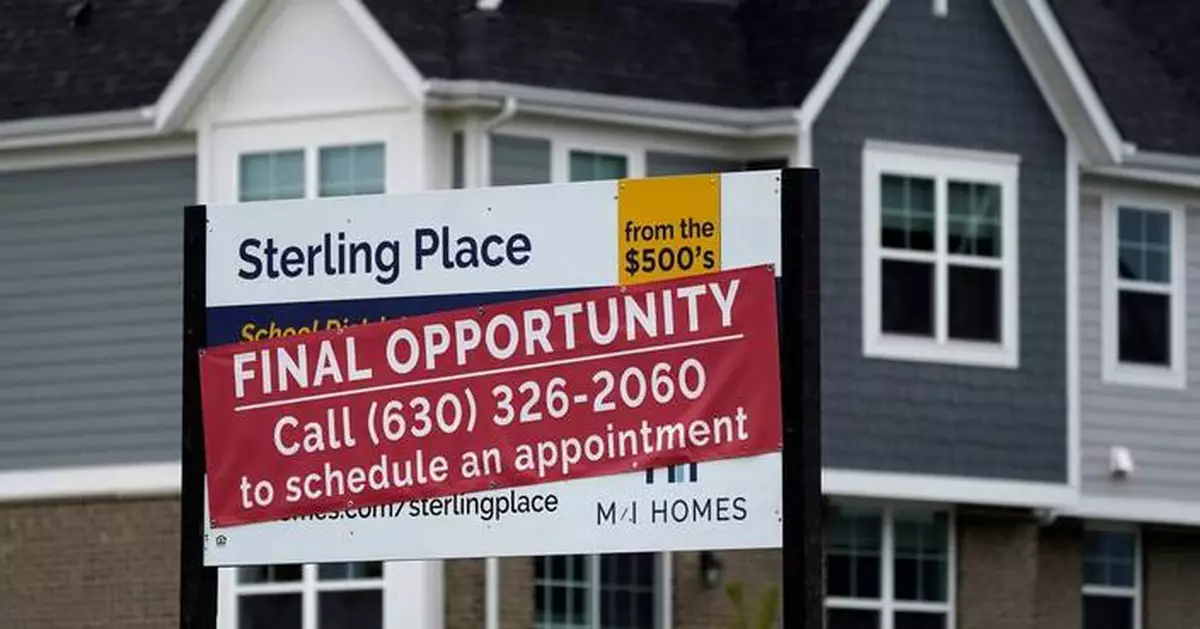
FILE - An advertising sign for building land stands in front of a new home construction site in Northbrook, Ill., on May 5, 2022. (AP Photo/Nam Y. Huh, File)

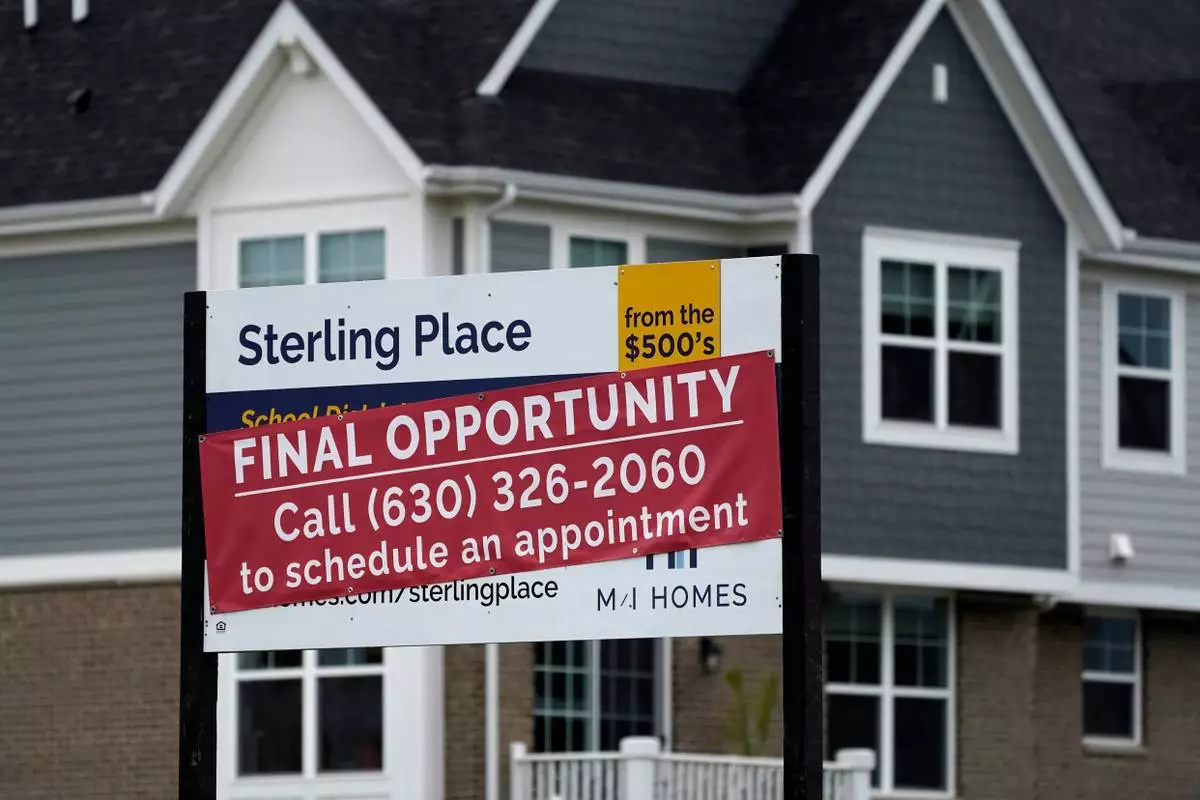
FILE - An advertising sign for building land stands in front of a new home construction site in Northbrook, Ill., on May 5, 2022. (AP Photo/Nam Y. Huh, File)
Three people were charged by federal authorities in Los Angeles on Wednesday with stealing $12 million in federal and state homelessness aid to pay for real estate, luxury trips and vintage vehicles.

It was the second such arrest of people on federal fraud charges in Southern California this week, as President Donald Trump's administration tries to emphasize a crackdown on fraud and waste in government and aid programs. On Tuesday, 12 people were charged with stealing more than $10 million in federal childcare aid.

The three defendants each worked for or ran Southern California-based nonprofit organizations, which often contracted with city, county, state or federal agencies to provide aid or money to find housing and social services for homeless people. Prosecutors allege that the defendants used funds from those contracts to pay personal expenses, accepted bribes, and billed for services that were never provided.

“Make no mistake, HUD and the Trump administration will not tolerate the theft and abuse of taxpayers in this country,” Secretary of Housing and Urban Development Scott Turner said at a news conference.

Turner used the indictments to accuse the Los Angeles Homeless Services Authority, which approved grants to these defendants, of being negligent with taxpayer dollars.

Two defendants, Lakiya Malone, 48, and Michael Young, 46, were arrested early Wednesday in Los Angeles. A third defendant charged with wire fraud, Donye Mitchell, 55, is considered a fugitive.

Young is the founder of Home At Last, a nonprofit that took in more than $118 million in public funds since 2019 for its stated mission of providing housing and aid to homeless people.

Federal prosecutors say Young instead created shell companies that he claimed were independent contractors but were, in fact, controlled by him. This alleged self-dealing allowed Young to be paid both at Home At Last and overbill federal and local authorities, prosecutors said. They say Young misused an estimated $7.5 million in taxpayer funds through fake contractors and vendors.

Young used the proceeds to take luxury trips to Tahiti, and used funds to open a nightclub in Inglewood called the Six Seven Five Lounge and other commercial real estate projects, prosecutors allege.

Mitchell is the CEO of Big Blue Umbrella, which was awarded more than $1.2 million from a federally supported nonprofit for housing and mental healthcare aid. Prosecutors say Mitchell not only misstated his organization’s ability to provide such services, but also used money from the award to pay off his credit card debts, give funds to family members, buy video games and pay legal expenses for an unrelated case.

Malone was charged with accepting more than $180,000 in bribes from another homelessness-aid nonprofit. Malone allegedly not only accepted bribes but also placed people in homeless aid programs who weren’t homeless.

Separately, federal prosecutors announced that a fourth person pleaded guilty to wire fraud and money laundering charges for stealing at least $2 million in homeless aid. Alexander Soofer, the executive director of Abundant Blessings, admitted to working with Malone to bill federal and state authorities for homelessness aid services when there were no participants in his programs.

Some 72,000 to 75,000 people live in shelters or encampments in Los Angeles and Los Angeles County, making it one of the largest homeless populations in the country. It has been a significant issue in Southern California for years, and Los Angeles Mayor Karen Bass made it a cornerstone of her 2022 election campaign.

City and county authorities spend roughly $1 billion a year trying to help the homeless population, often using LAHSA to coordinate aid. While significant funds are spent to address the issue, city and county reviews have repeatedly found that the programs lacked appropriate recordkeeping, audit trails and documentation.

Nathan Hochman, the district attorney for Los Angeles County, told reporters that the public should expect more investigations and indictments into the misuse of homeless aid funds. Hochman’s office's investigation into Soofer and Abundant Blessings led to his indictment earlier this year.

“I can assure this is the beginning of these prosecutions and we are far, far from the end,” he said, adding that his office's investigation had found that the only “abundant blessings” Soofer provided were to his friends and family.

Some of the Trump administration's efforts to go after fraud and abuse of government benefit programs have faced criticism and legal challenges. In December, Vice President JD Vance, who chairs the administration’s task force on the subject, amplified a YouTube video of a popular right-wing influencer accusing childcare providers in Minnesota, many of them immigrants from Somalia, of running scams. State authorities visited the centers and found nearly all of them operating normally.

Nonetheless, the administration launched a massive immigration crackdown in Minnesota. Officials later attempted to freeze federal funds for childcare in five Democratic-led states but were halted by a lawsuit.

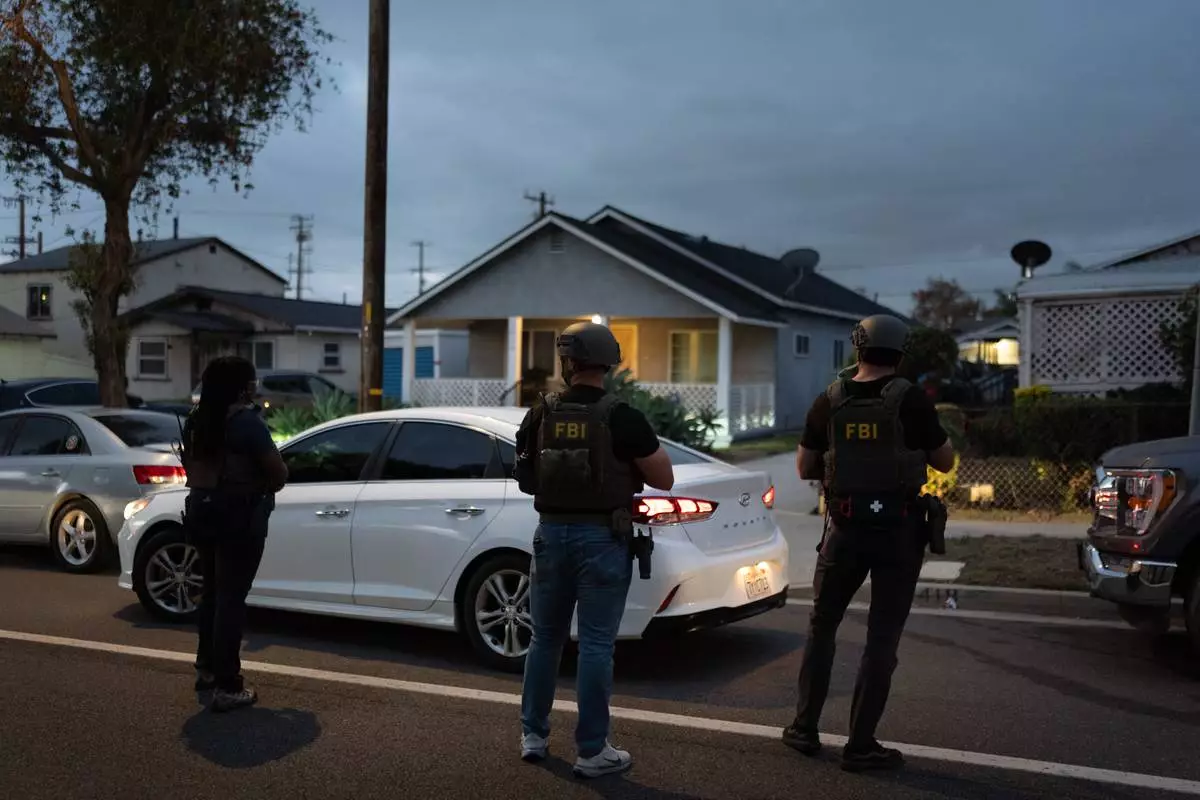
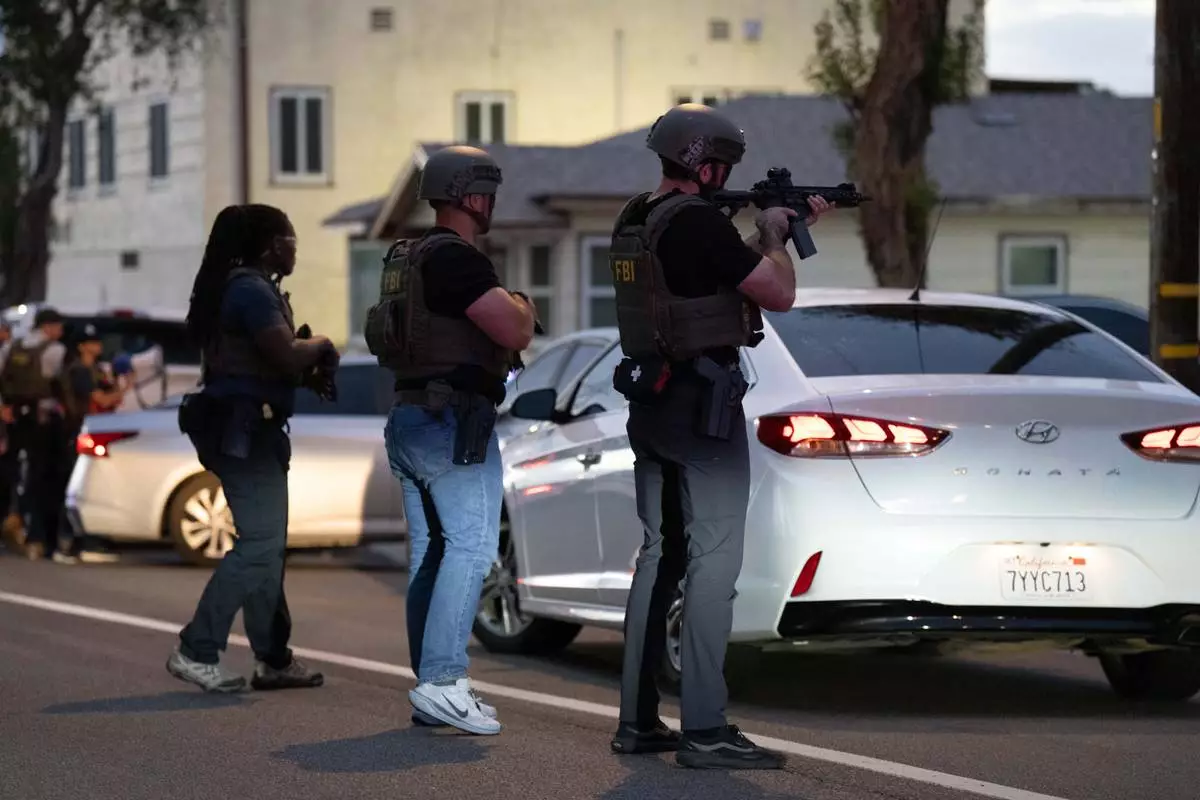
FBI agents take positions outside the home of Lakiya Malone, who is charged with fraud involving federal homelessness aid programs, in Los Angeles, Wednesday, Sept. 16, 2026. (AP Photo/Jae C. Hong)

FBI agents take positions outside the home of Lakiya Malone, who is charged with fraud involving federal homelessness aid programs, in Los Angeles, Wednesday, Sept. 16, 2026. (AP Photo/Jae C. Hong)

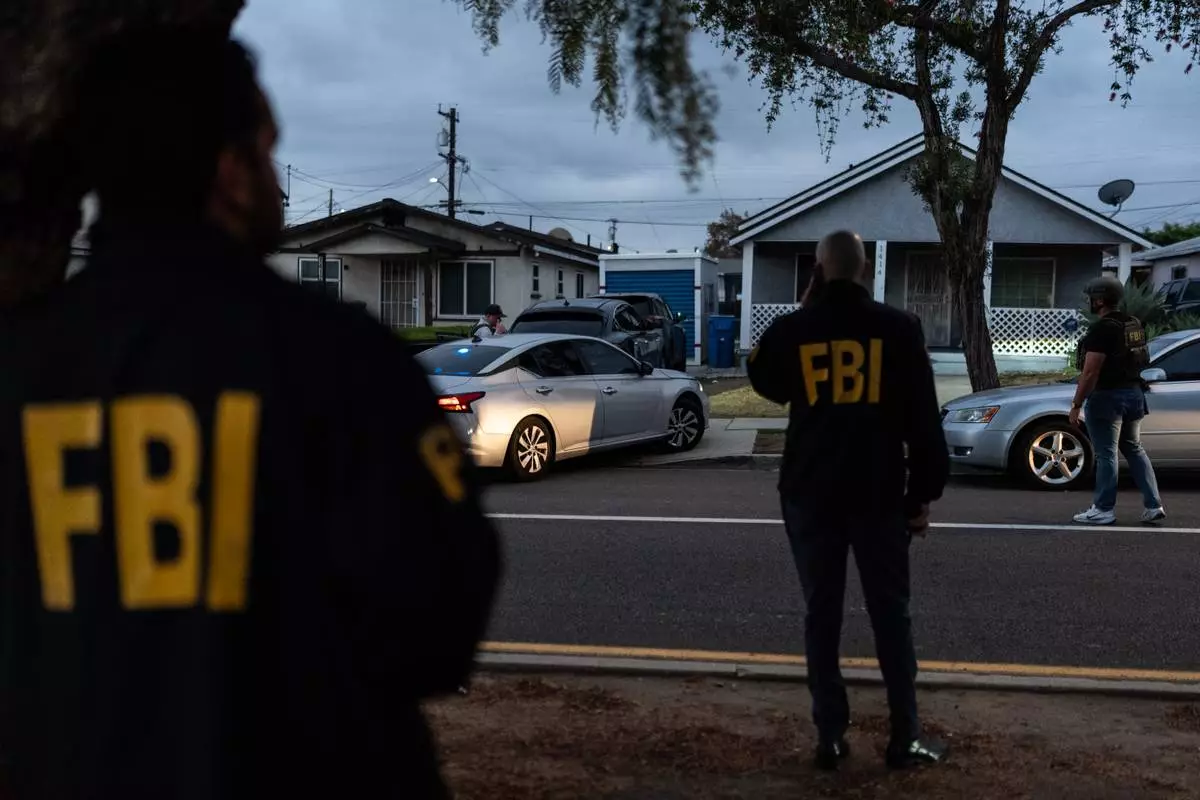
FBI agents stand outside the home of Lakiya Malone, who is charged with fraud involving federal homelessness aid programs, in Los Angeles, Wednesday, Sept. 16, 2026. (AP Photo/Jae C. Hong)

FBI agents stand outside the home of Lakiya Malone, who is charged with fraud involving federal homelessness aid programs, in Los Angeles, Wednesday, Sept. 16, 2026. (AP Photo/Jae C. Hong)

FBI agents take positions outside the home of Lakiya Malone, who is charged with fraud involving federal homelessness aid programs, in Los Angeles, Wednesday, Sept. 16, 2026. (AP Photo/Jae C. Hong)

FBI agents take positions outside the home of Lakiya Malone, who is charged with fraud involving federal homelessness aid programs, in Los Angeles, Wednesday, Sept. 16, 2026. (AP Photo/Jae C. Hong)

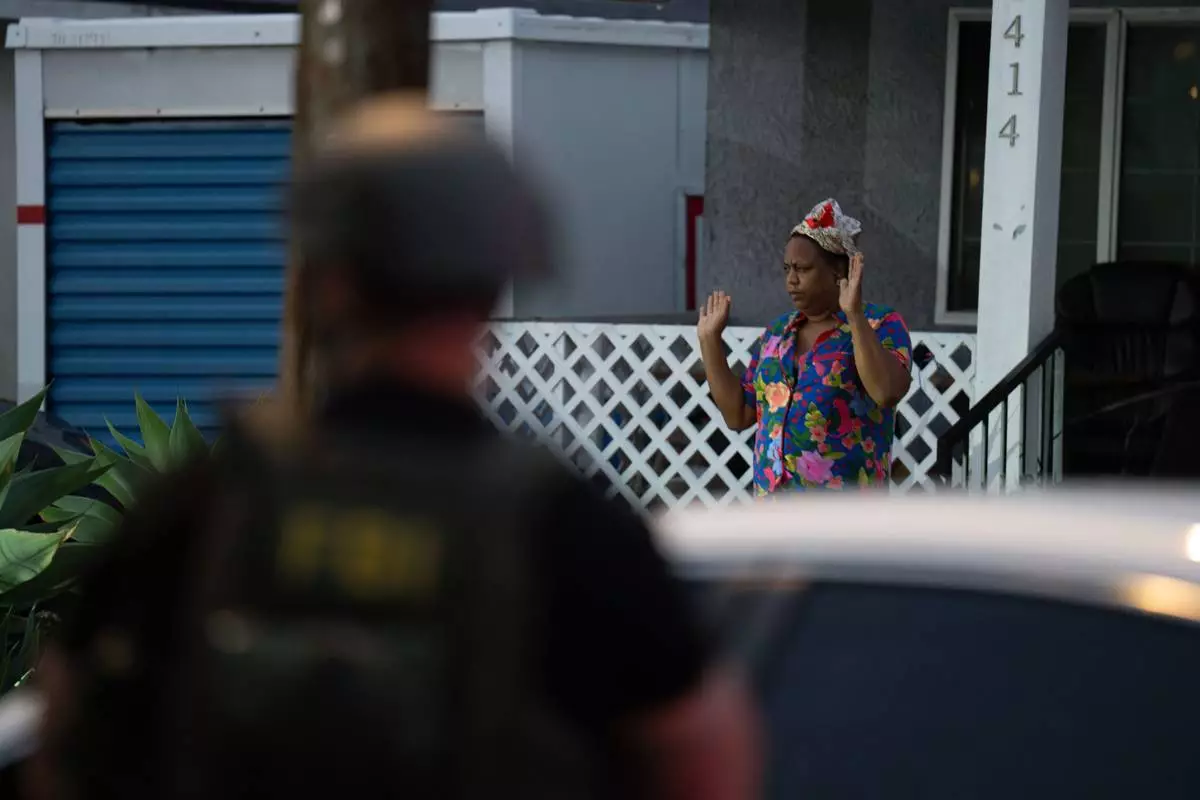
Lakiya Malone, charged with fraud involving federal homelessness aid programs, walks out of her home toward federal authorities with her hand raised in Los Angeles, Wednesday, Sept. 16, 2026. (AP Photo/Jae C. Hong)

Lakiya Malone, charged with fraud involving federal homelessness aid programs, walks out of her home toward federal authorities with her hand raised in Los Angeles, Wednesday, Sept. 16, 2026. (AP Photo/Jae C. Hong)

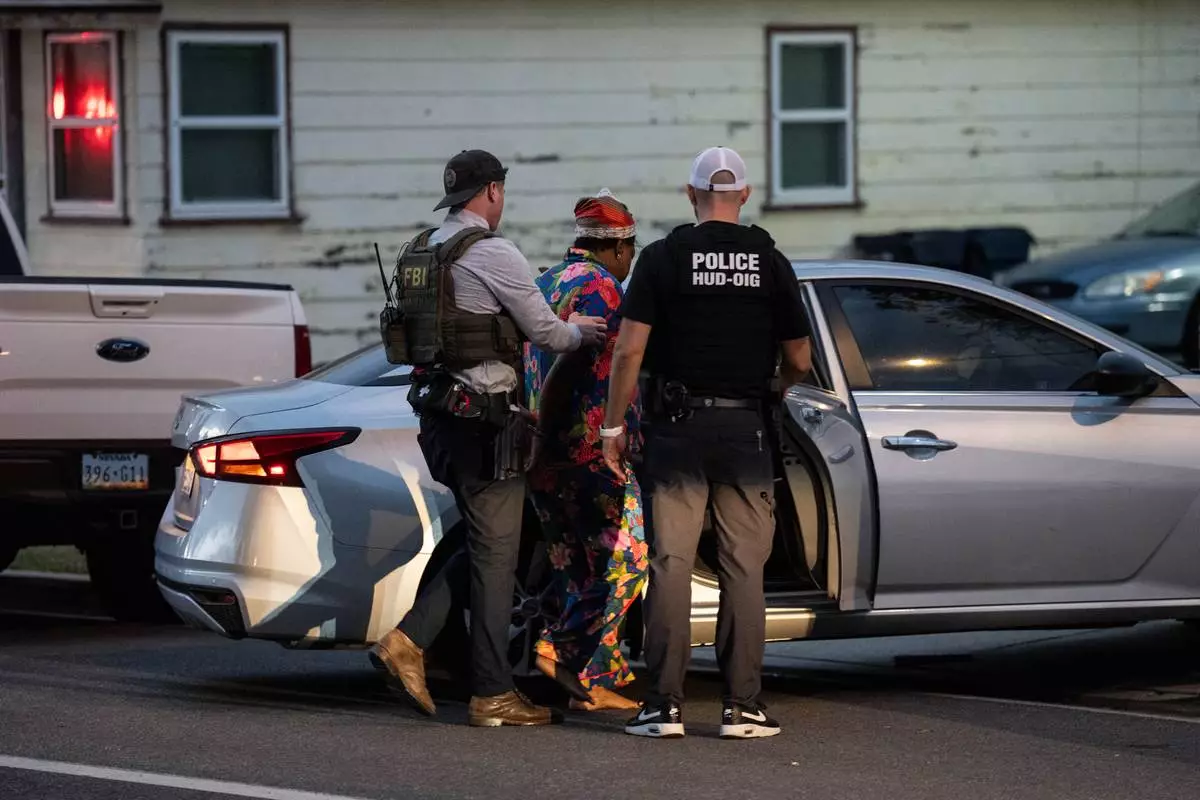
Lakiya Malone, center, charged with fraud involving federal homelessness aid programs, is arrested by federal agents in Los Angeles, Wednesday, Sept. 16, 2026. (AP Photo/Jae C. Hong)

Lakiya Malone, center, charged with fraud involving federal homelessness aid programs, is arrested by federal agents in Los Angeles, Wednesday, Sept. 16, 2026. (AP Photo/Jae C. Hong)

Recommended Articles