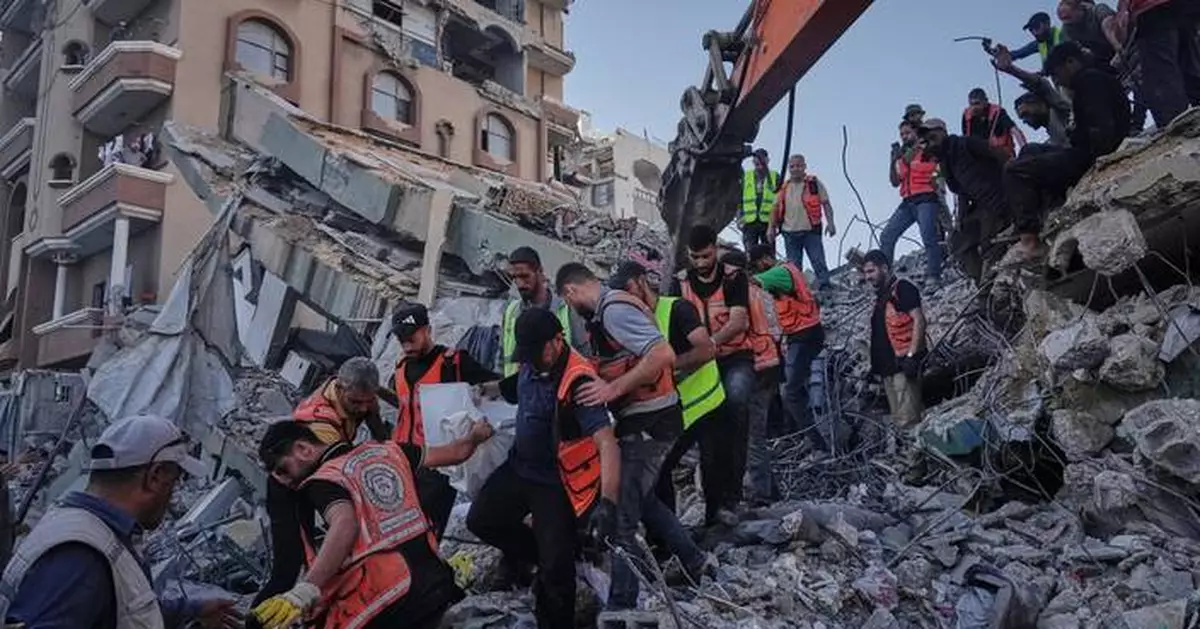
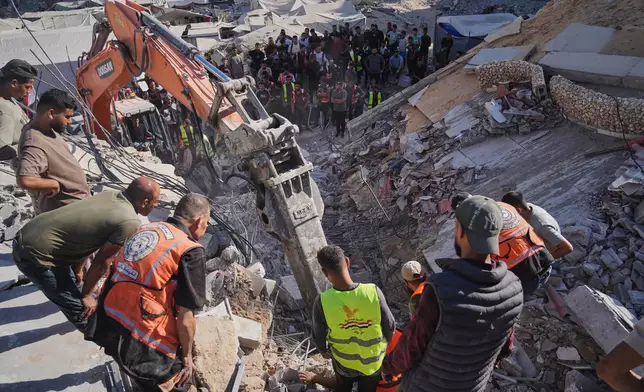
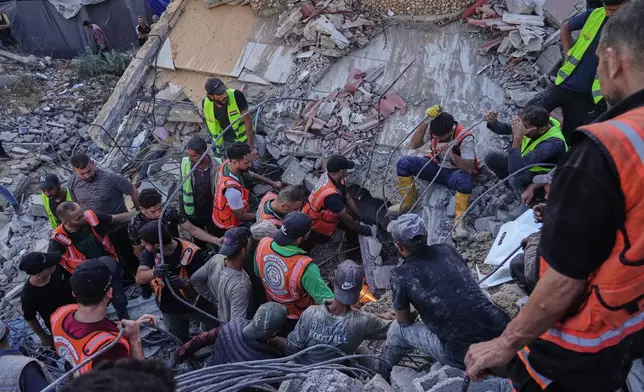
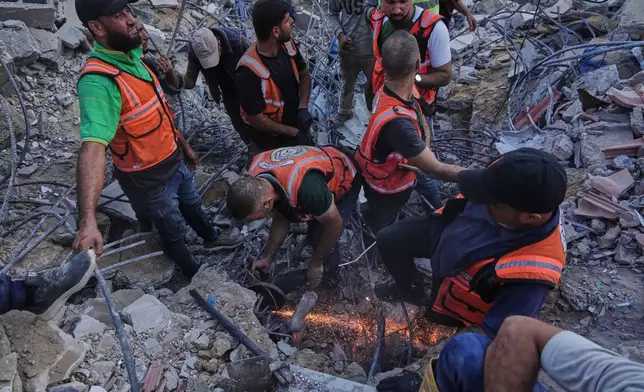
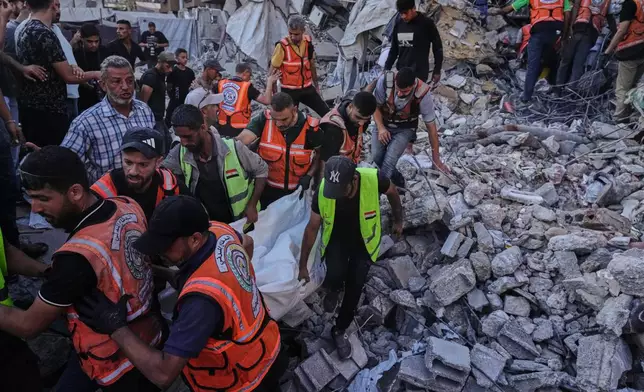
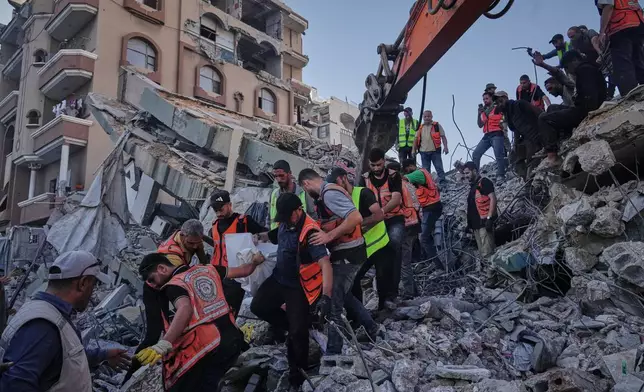
GAZA CITY, Gaza Strip (AP) — A building damaged by Israeli strikes collapsed suddenly in Gaza City early Wednesday, killing at least 21 people in their sleep, including 11 children, in a disaster that forced rescuers to dig through the rubble with bare hands.
The collapse of the building, which was known to be unstable from strikes earlier in the war, underscored how perilous living conditions have become for most of the Palestinian enclave’s population as a ceasefire deal between Israel and Hamas stalls.
Click to Gallery
Palestinian civil defense crews search for bodies and survivors in the rubble of a collapsed building that housed displaced Palestinians and was heavily damaged during the Israel-Hamas war, in Gaza City, Wednesday, Sept. 16, 2026. (AP Photo/Jehad Alshrafi)
Palestinian civil defense crews search for bodies and survivors in the rubble of a collapsed building that housed displaced Palestinians and was heavily damaged during the Israel-Hamas war, in Gaza City, Wednesday, Sept. 16, 2026. (AP Photo/Jehad Alshrafi)
Palestinian civil defense crews search for bodies and survivors in the rubble of a collapsed building that housed displaced Palestinians and was heavily damaged during the Israel-Hamas war, in Gaza City, Wednesday, Sept. 16, 2026. (AP Photo/Jehad Alshrafi)
Palestinian civil defense crews carry a body from the rubble of a collapsed building that housed displaced Palestinians and was heavily damaged during the Israel-Hamas war, in Gaza City, Wednesday, Sept. 16, 2026. (AP Photo/Jehad Alshrafi)
Palestinian civil defense crews carry a body from the rubble of a collapsed building that housed displaced Palestinians and was heavily damaged during the Israel-Hamas war, in Gaza City, Wednesday, Sept. 16, 2026. (AP Photo/Jehad Alshrafi)
No reconstruction work has happened since the ceasefire was agreed to almost a year ago. Israel has said that it will not permit any rebuilding until Hamas disarms, and only a handful of excavators have been allowed into Gaza.
Asked if it would allow in machinery to help with the collapse, COGAT, the Israeli military body charged with coordinating aid to the Gaza Strip, said the Israeli government's policy is that heavy machinery is allowed into Gaza.
As of Wednesday afternoon, the death toll included 11 children and five women, according to Zaher al-Wahidi, a spokesperson for the Gaza Health Ministry. He said at least 14 people were injured, and rescuers had finished digging.
Around six displaced Palestinian families had sheltered there, despite knowing the structure was on the brink of collapse, according to Gaza’s civil defense.
“The lack of options and alternatives left them with no other choice,” said Aboud Majdalawi, a civil defense rescuer.
Gaza’s roughly 2 million people now live in a stretch of land that makes up less than half the territory. They are dependent on aid and are surrounded by Israeli troops who carry out strikes or attacks on a near-daily basis.
In the aftermath of the collapse, people searched desperately for loved ones.
A group of men were seen carrying the headless body of a child. Others sat atop a pile of rubble, pulling desperately at flashes of color they believed could be clothing worn by a survivor. All they found were dust-caked blankets wedged in the debris.
The collapse comes as rescuers in the Gaza Strip are trying to unearth hundreds of bodies from buildings that collapsed in Israeli strikes earlier in the war. They have just a few working excavators, and their fuel supply is dwindling.
On Wednesday, the U.N. human rights chief said he worried that the bodies recovered so far are just the “tip of the iceberg.”
“It is heartbreaking that the loved ones of those missing for so long are only now having their worst fears confirmed,” he said. “Much of Gaza has been flattened by Israeli bombing or demolition and clearing by heavy machinery and explosives.”
Over one-fifth of buildings in Gaza City assessed by the Norwegian Refugee Council in March were not structurally sound, but residents inhabiting them said they had nowhere else to go.
The council leads a coalition of shelter providers in Gaza. In August, the coalition released an assessment of shelter conditions in the strip that said two-thirds of Palestinian households were living in tent camps.
Among those living in buildings, 72% of the households were in structures with minor or moderate damage.
The war was sparked after the Hamas-led attack on Oct. 7, 2023, in which militants stormed into southern Israel and killed about 1,200 people and took 251 people hostage. Many hostages recounted long-term starvation, physical and psychological abuse and, in some cases, sexual abuse.
Despite an October ceasefire that has reduced fighting in Gaza, Israel has continued to carry out strikes, killing at least 1,375 people since the agreement went into effect, according to local health officials.
The nearly three-year Israel-Hamas war has killed more than 73,789 Palestinians, according to Gaza’s Health Ministry. The ministry, part of the Hamas-run government, maintains detailed records viewed as generally reliable by U.N. agencies and international organizations. It does not distinguish between civilians and militants, but says women and children make up around half the toll.
Shurafa reported from Deir al-Balah, Gaza Strip, and Frankel reported from Jerusalem. Associated Press reporter Toqa Ezzidin in Cairo contributed to this report.
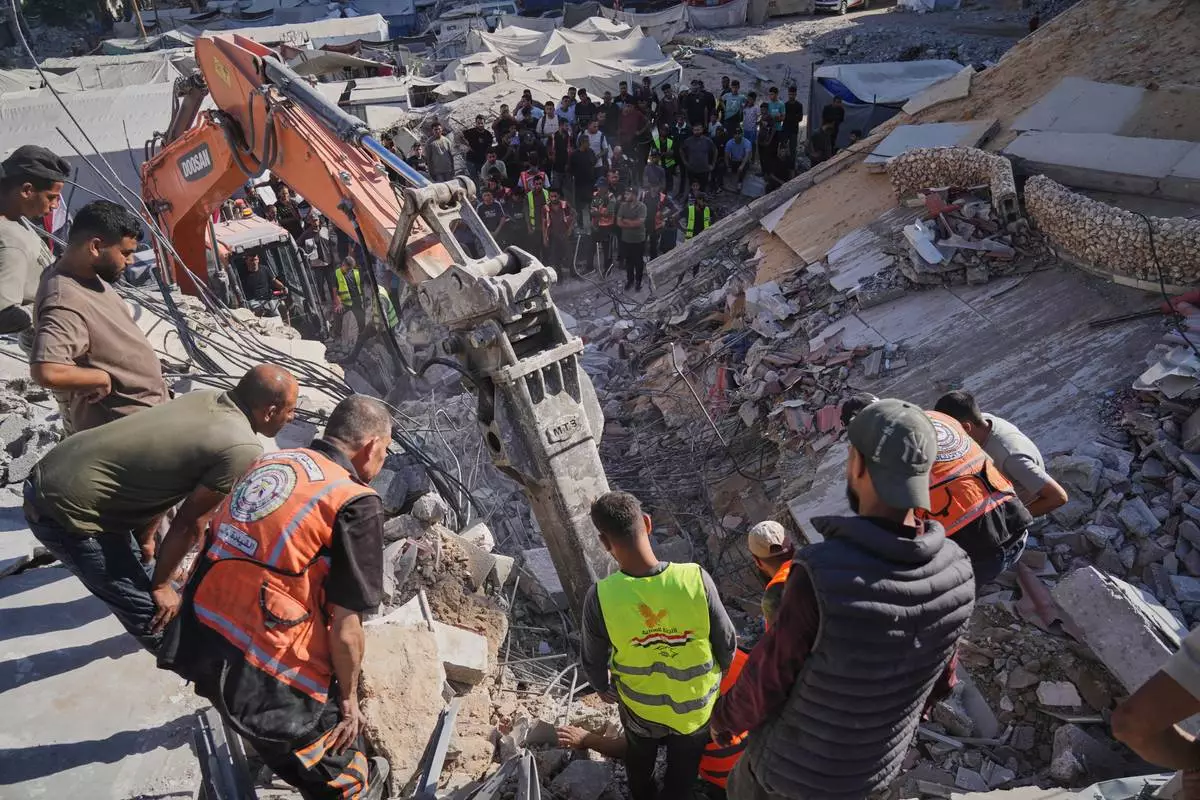
Palestinian civil defense crews search for bodies and survivors in the rubble of a collapsed building that housed displaced Palestinians and was heavily damaged during the Israel-Hamas war, in Gaza City, Wednesday, Sept. 16, 2026. (AP Photo/Jehad Alshrafi)
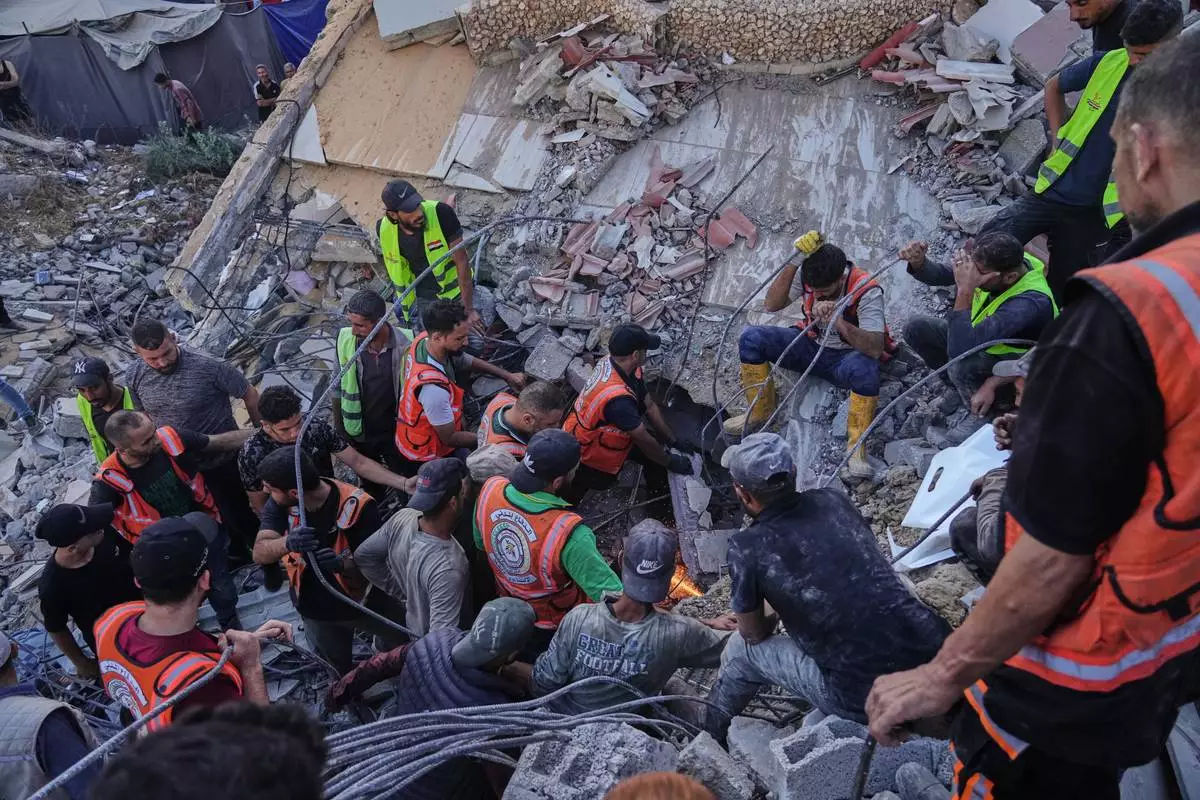
Palestinian civil defense crews search for bodies and survivors in the rubble of a collapsed building that housed displaced Palestinians and was heavily damaged during the Israel-Hamas war, in Gaza City, Wednesday, Sept. 16, 2026. (AP Photo/Jehad Alshrafi)
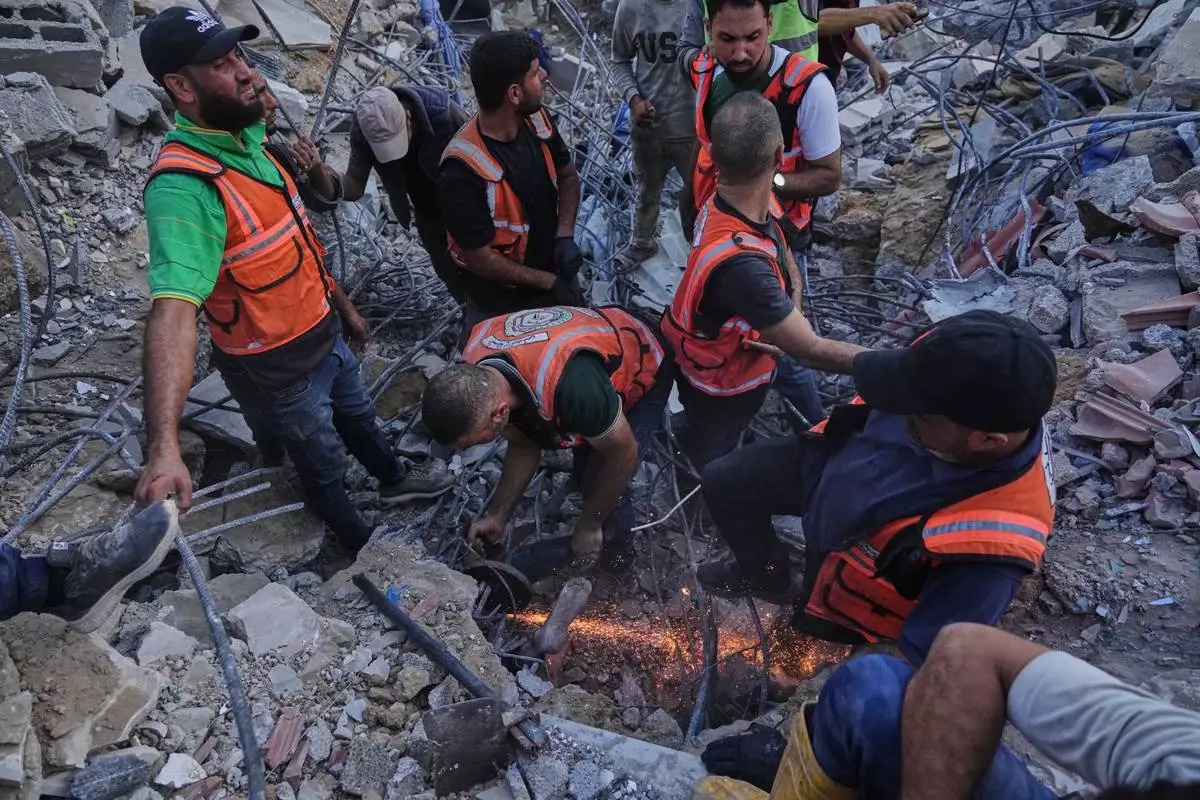
Palestinian civil defense crews search for bodies and survivors in the rubble of a collapsed building that housed displaced Palestinians and was heavily damaged during the Israel-Hamas war, in Gaza City, Wednesday, Sept. 16, 2026. (AP Photo/Jehad Alshrafi)
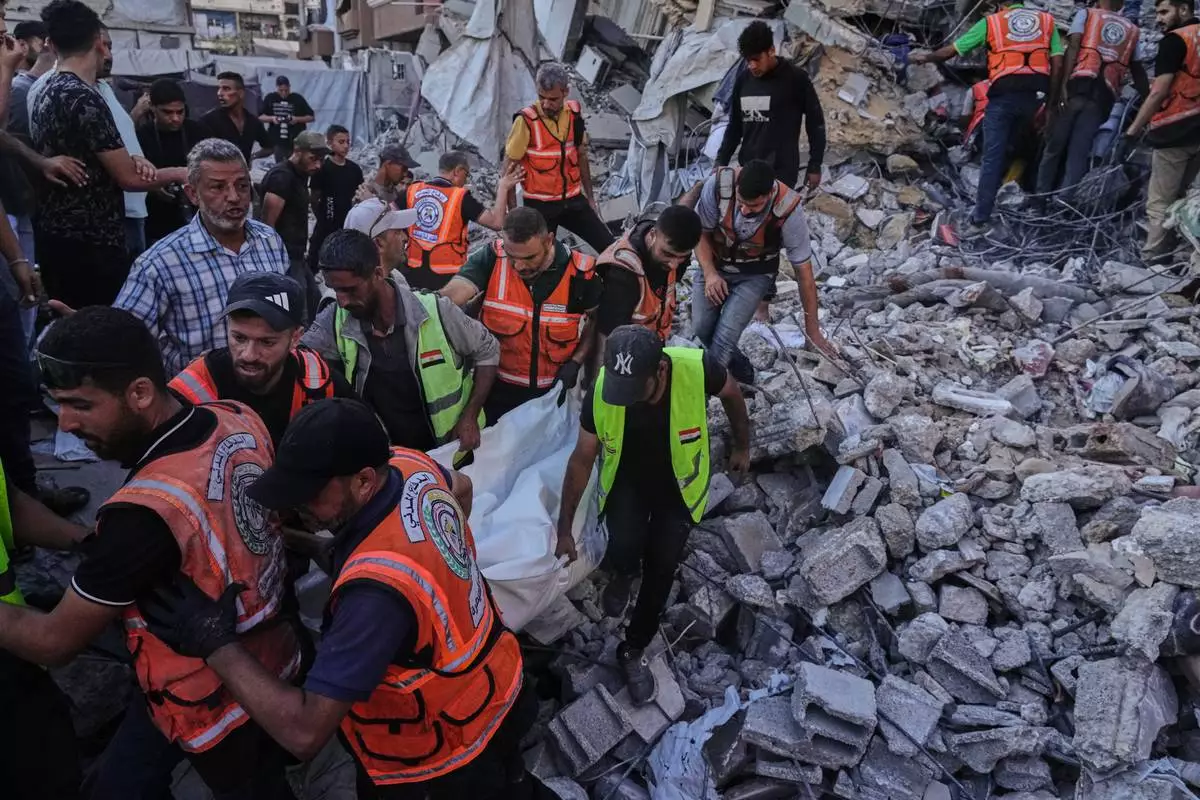
Palestinian civil defense crews carry a body from the rubble of a collapsed building that housed displaced Palestinians and was heavily damaged during the Israel-Hamas war, in Gaza City, Wednesday, Sept. 16, 2026. (AP Photo/Jehad Alshrafi)
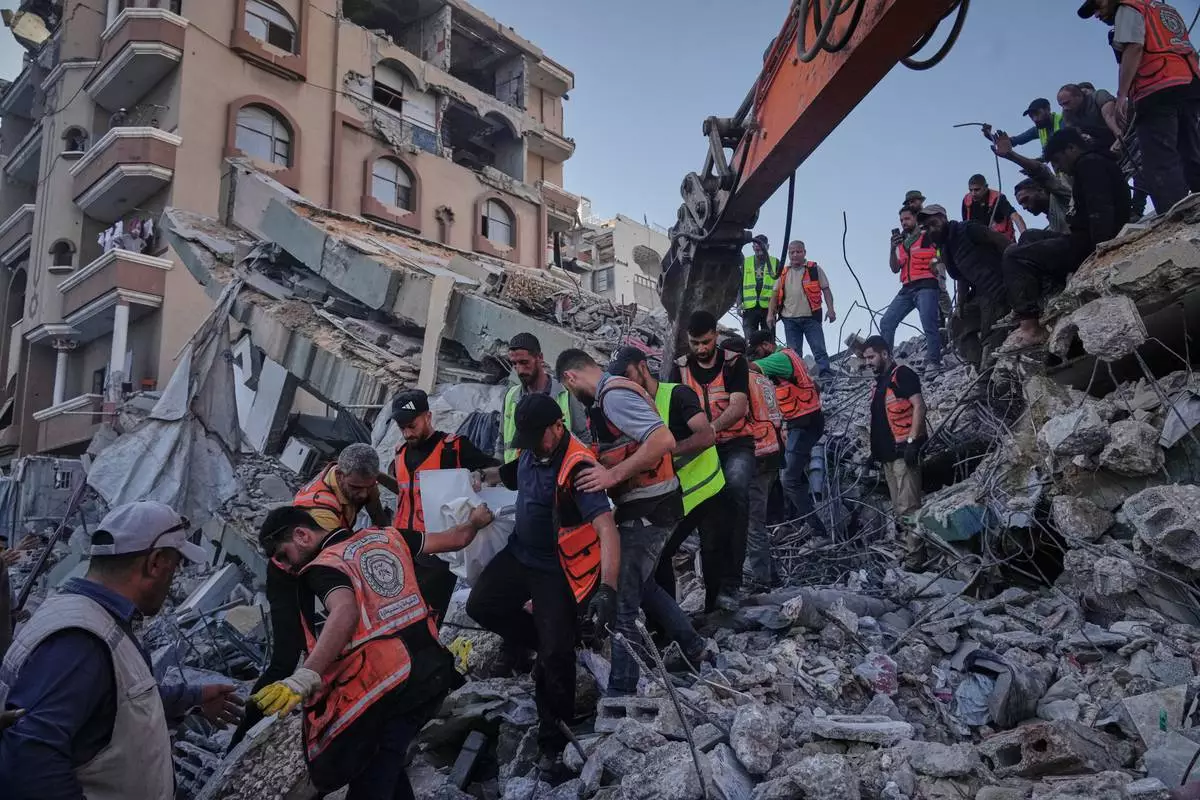
Palestinian civil defense crews carry a body from the rubble of a collapsed building that housed displaced Palestinians and was heavily damaged during the Israel-Hamas war, in Gaza City, Wednesday, Sept. 16, 2026. (AP Photo/Jehad Alshrafi)
STRASBOURG, France (AP) — European Commission President Ursula von der Leyen on Wednesday proposed making Canada the European Union’s first associate member, a striking overture as U.S. President Donald Trump’s threats drive Ottawa closer to Europe.
Speaking in Charlotte, North Carolina, Trump suggested that allowing Canada to become an associate EU member could be a “hostile act” and threatened to respond to the proposed move by imposing more tariffs on the bloc.
Trump conditioned his threat on the “intention” of European leaders, saying that, “If it’s a good intention, that’s fine. If it’s a bad intention, we’ll put very heavy tariffs on Europe.” He also suggested the U.S. could cut off trade with Europe in certain areas.
Trump called the prospect of Canada joining the EU “laughable” and called America’s neighbor a “terrible trade partner.” He also on Wednesday ratcheted up his trade war by signing an order restricting the U.S. government's purchases of Canadian goods.
Trump’s tariffs and repeated talk of making Canada the 51st state have soured the relationship between the North American neighbors. Canada is seeking to reduce its dependence on the United States, the destination for roughly 70% of its exports, and Prime Minister Mark Carney has called for a “unique alliance” with the EU.
In her annual State of the European Union address, von der Leyen said Canada and the EU would build on their existing free trade agreement, known as CETA, with a broader “Alliance for the Future” aimed at creating “a common prosperity and economic security space.”
She cast that closer relationship as rooted not just in trade but in shared democratic values.
“Above all, dear Mark, Europe and Canada believe in democracy,” von der Leyen said to Carney, who received a standing ovation at the European Parliament in Strasbourg. He is due to address the Parliament on Thursday.
A Canadian official familiar with the discussions told The Associated Press last week that Ottawa was exploring ties with the EU that could stop just short of membership. The official said Canada would seek an arrangement allowing its citizens to live and work in Europe without visas as part of a broader strategic partnership.
Jonathan Wilkinson, Canada’s ambassador-designate to the EU, said Wednesday that Ottawa had discussed associate membership with European officials before von der Leyen’s speech and “knew that that was something that was on the table.” He said Canada had talked to the EU about an “Alliance for the Future,” while European officials had raised associate membership.
Wilkinson said Canada is not seeking full EU membership because it would require surrendering some sovereignty. Instead, Ottawa wants “to get as close as we possibly can” to the bloc in a way that strengthens Canadian sovereignty rather than diminishes it, he said.
Carney’s office welcomed von der Leyen’s proposal, saying Canada was deepening ties with the EU “to strengthen our sovereignty” and supported a move beyond CETA.
Von der Leyen said the expanded partnership would cover advanced manufacturing, technology, defense production, the Arctic, energy, critical minerals, batteries, artificial intelligence, quantum computing, cybersecurity and economic security.
“This is a partnership not against anyone else, but for our common strength,” she said. “In short, we want to bring the relationship with Canada to the highest level possible.”
Because Canada joining the EU as an associate member would be a first, there is no rule book on how that would work or what it would mean in practice. It is unclear who would need to approve membership, and how long that could take.
Wilkinson said Ottawa and Brussels are deliberately focusing first on the substance of the relationship rather than what to call it. “Before you actually get to the point where you decide what you’re going to call something, you should actually know the shape,” he said.
He said the shape is likely to become clearer at the Canada-EU summit in October, when the two sides expect to make an announcement and may settle on how to describe it.
Currently, all steps toward EU membership must be approved unanimously by the 27 member countries.
The idea of associate membership has been floated in the past for Ukraine, or for post-Brexit Britain, but no concrete steps have been taken.
The relationship between Canada and the European Union has reached a point where the two sides need to move beyond rhetoric and start building something more substantive, said Tobias Cremer, a German member of the European Parliament.
“Now is the time to stop sending each other love letters and put meat on the bone,” said Cremer, from the center-left Social Democrats.
He argued that any new arrangement should be more ambitious than another trade or defense agreement, describing the goal as a more holistic strategic alliance between Canada and the EU.
Existing frameworks such as CETA could provide a foundation, Cremer said, but should be used more fully and expanded. The case for closer ties, he said, is increasingly being driven by geopolitics as much as economics.
The aim, he said, should ultimately be bigger than a bilateral arrangement — potentially positioning the EU as a convener of middle powers, an idea Carney has also raised.
Canada this year became the first non-European country to join the EU’s 150-billion-euro ($173-billion) SAFE defense program, giving Canadian companies access to joint procurement as Europe seeks to increase its defense readiness.
Iratxe García Pérez, president of the Socialists & Democrats group in the European Parliament, praised Carney for showing “great courage confronting Donald Trump” and said allies were needed to defend “sovereignty, solidarity and international law.”
Carney said Tuesday that economic integration, once viewed largely as an asset, is increasingly “being used as a weapon by certain countries.” Discussions will ramp up at the Canada-EU summit in late October, he said.
Canada has retaliated against U.S. tariffs and rejected trade terms Carney says would weaken its sovereignty.
The EU has taken a different course with Washington, reaching a trade agreement that set a 15% U.S. tariff ceiling on the vast majority of EU exports while Europe eliminated tariffs on U.S. industrial goods.
That contrast has loomed over Carney’s push for closer European ties. In a closely watched speech at the World Economic Forum in Davos in January, he urged middle powers to work together to increase their leverage in an era of great-power rivalry.
“When we only negotiate bilaterally with a hegemon, we negotiate from weakness. We accept what is offered,” Carney said.
Continuing to try to exert pressure, Trump on Wednesday signed a memorandum directing the U.S. government to remove Canadian goods from the federal procurement system, which the White House said was in retaliation for the Canadian government's “Buy Canadian” policy expressing a preference for goods from its own country.
The White House called that policy unfair, and said in a fact sheet explaining the memo that “President Trump is taking action to hold Canada accountable for its continued unreasonable and discriminatory treatment of U.S. goods, which has burdened and disadvantaged hardworking Americans.”
__
Associated Press writer Sam McNeil in Brussels and Michelle L. Price in Washington contributed to this report.
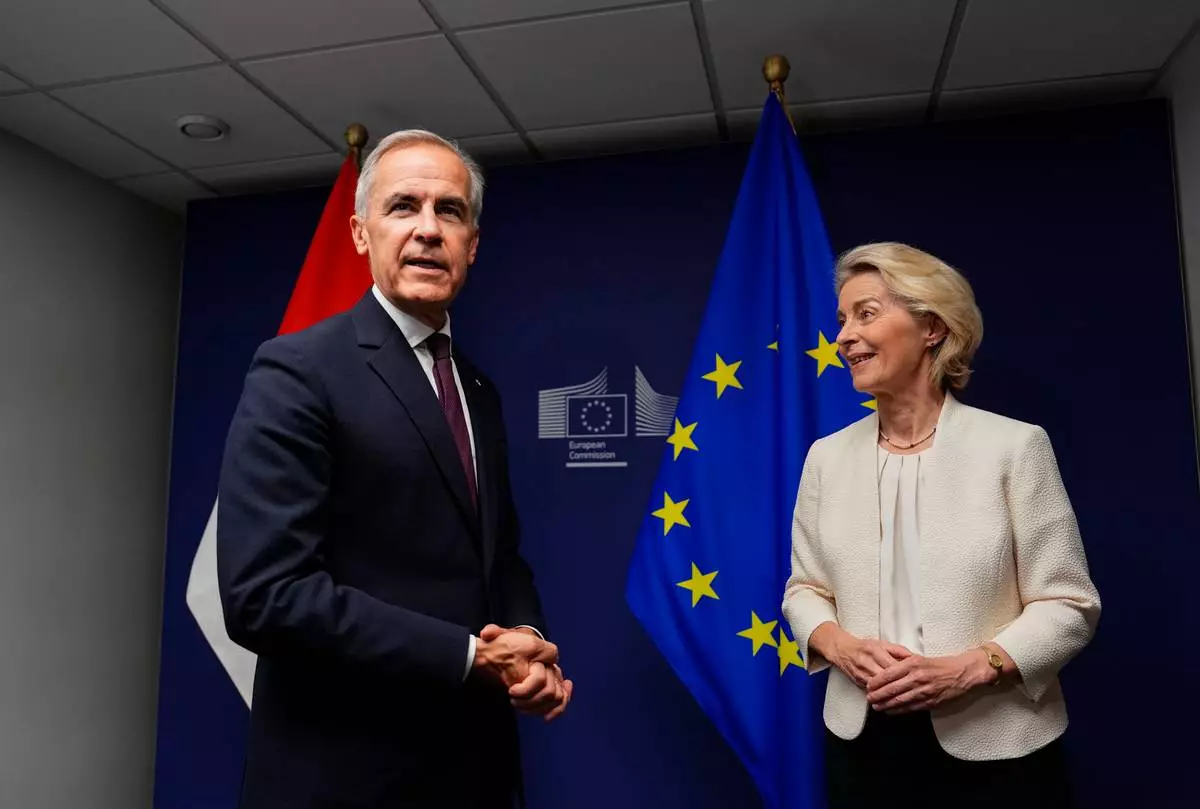
Canadian Prime Minister Mark Carney left, and European Commission President Ursula von der Leyen participate in a bilateral meetingat the European Parliament in Strasbourg, France, Wednesday, Sept. 16, 2026. (Justin Tang/The Canadian Press via AP)
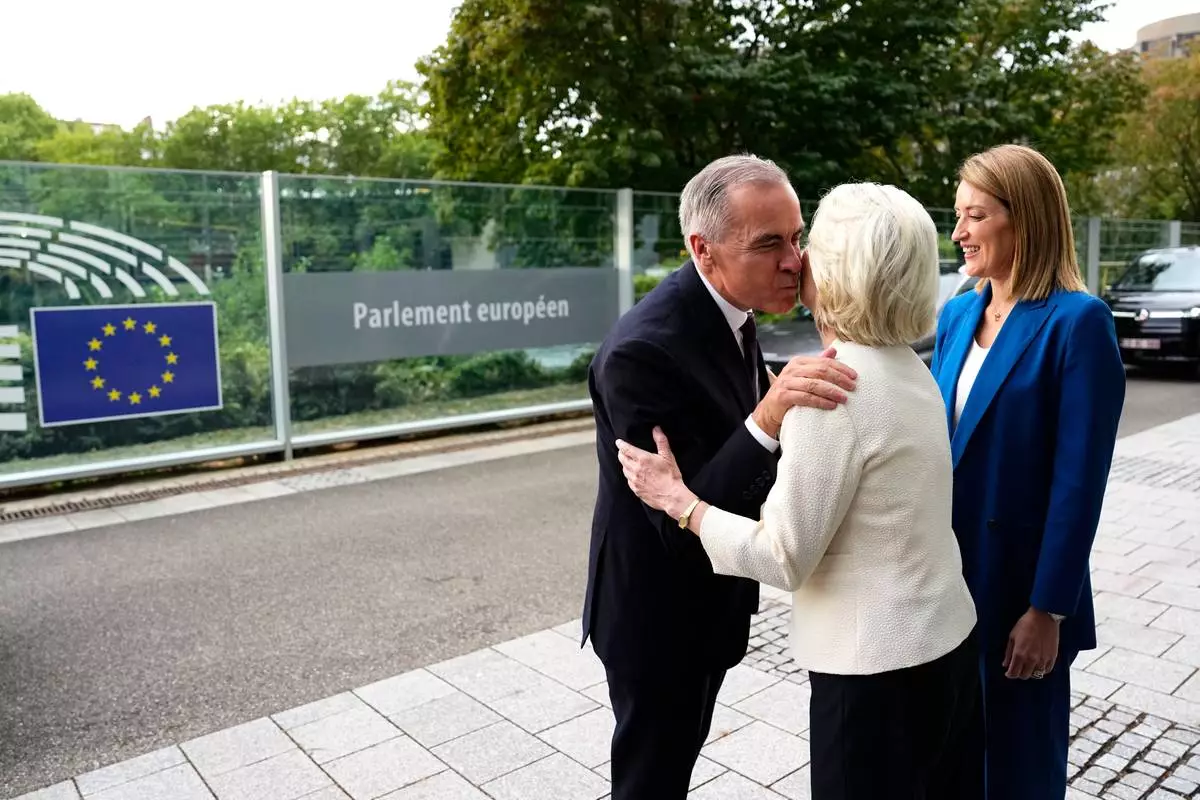
Canadian Prime Minister Mark Carney greets European Commission President Ursula von der Leyen as President of the European Parliament Roberta Metsola, right, looks on, as he arrives at the European Parliament in Strasbourg, France, Wednesday, Sept. 16, 2026. (Justin Tang/The Canadian Press via AP)
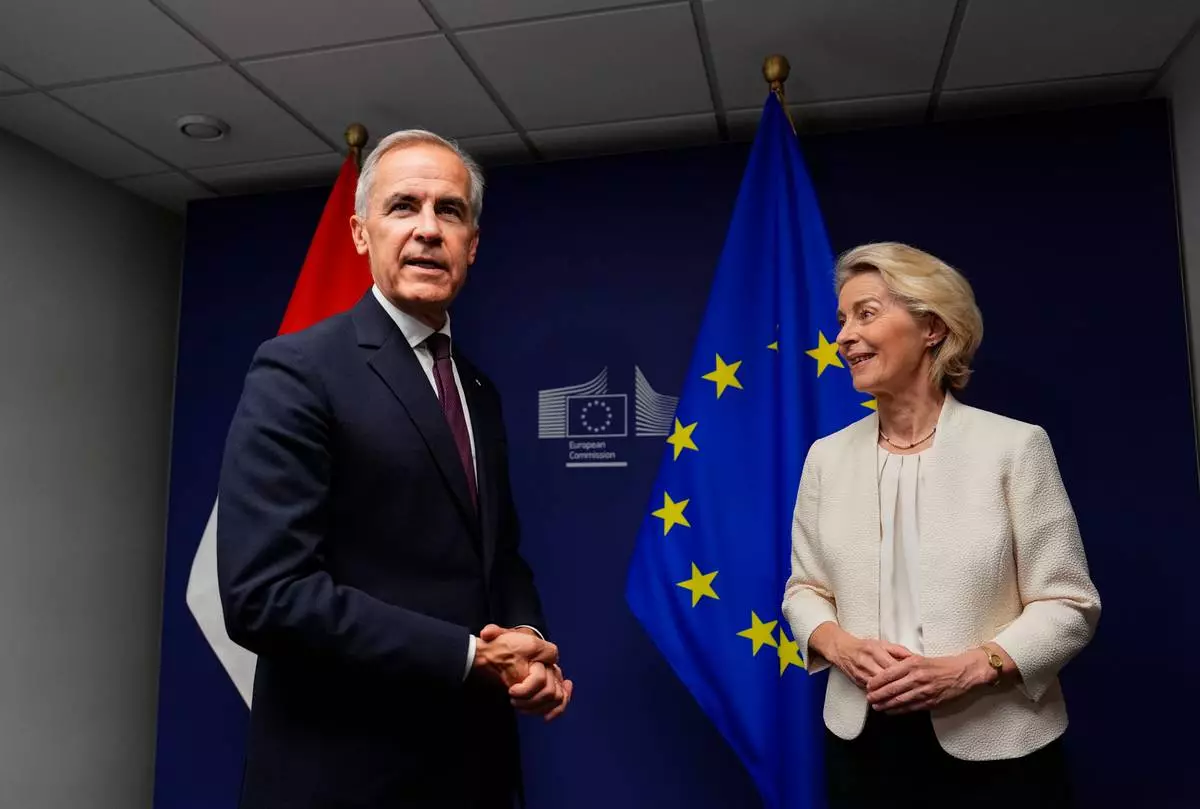
Canadian Prime Minister Mark Carney left, and European Commission President Ursula von der Leyen participate in a bilateral meetingat the European Parliament in Strasbourg, France, Wednesday, Sept. 16, 2026. (Justin Tang/The Canadian Press via AP)
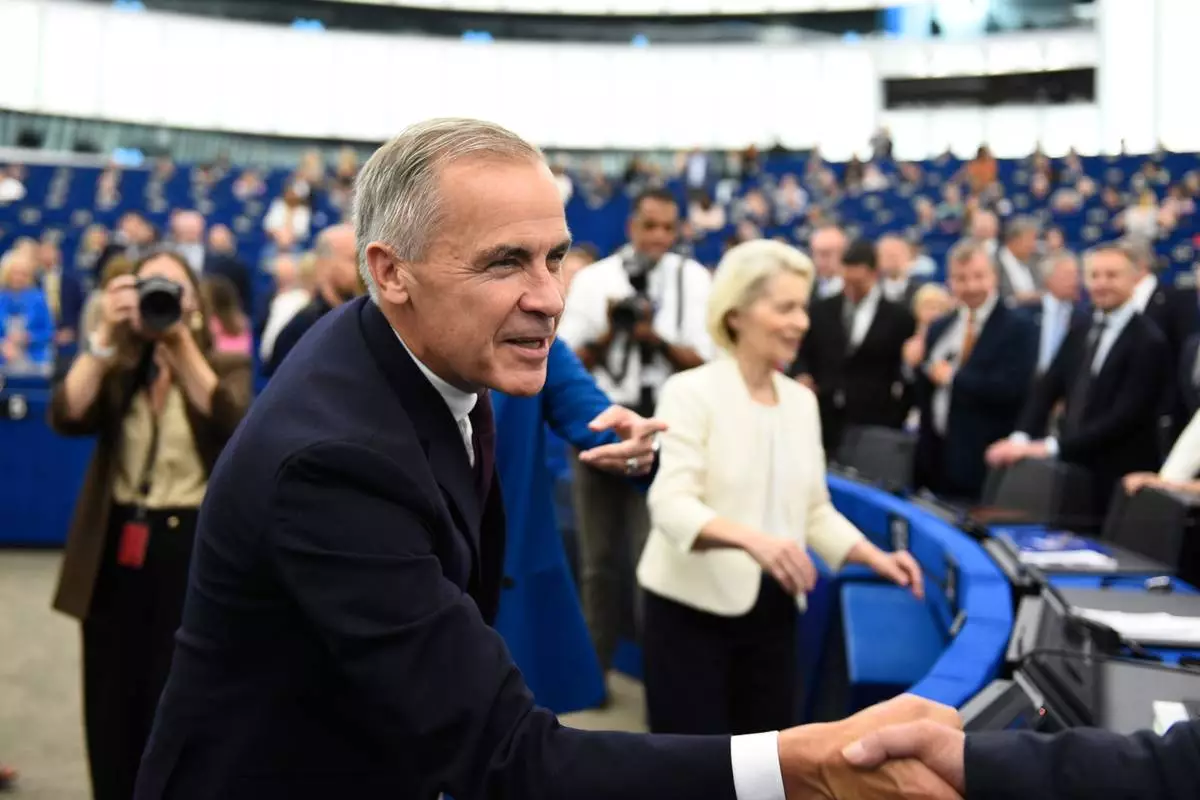
Canada's Prime Minister Mark Carney, left, and European Commission President Ursula von der Leyen arrive for the annual State of the European Union at the European Parliament in Strasbourg, eastern France, Wednesday, Sept 16, 2026. (AP Photo/Pascal Bastien)
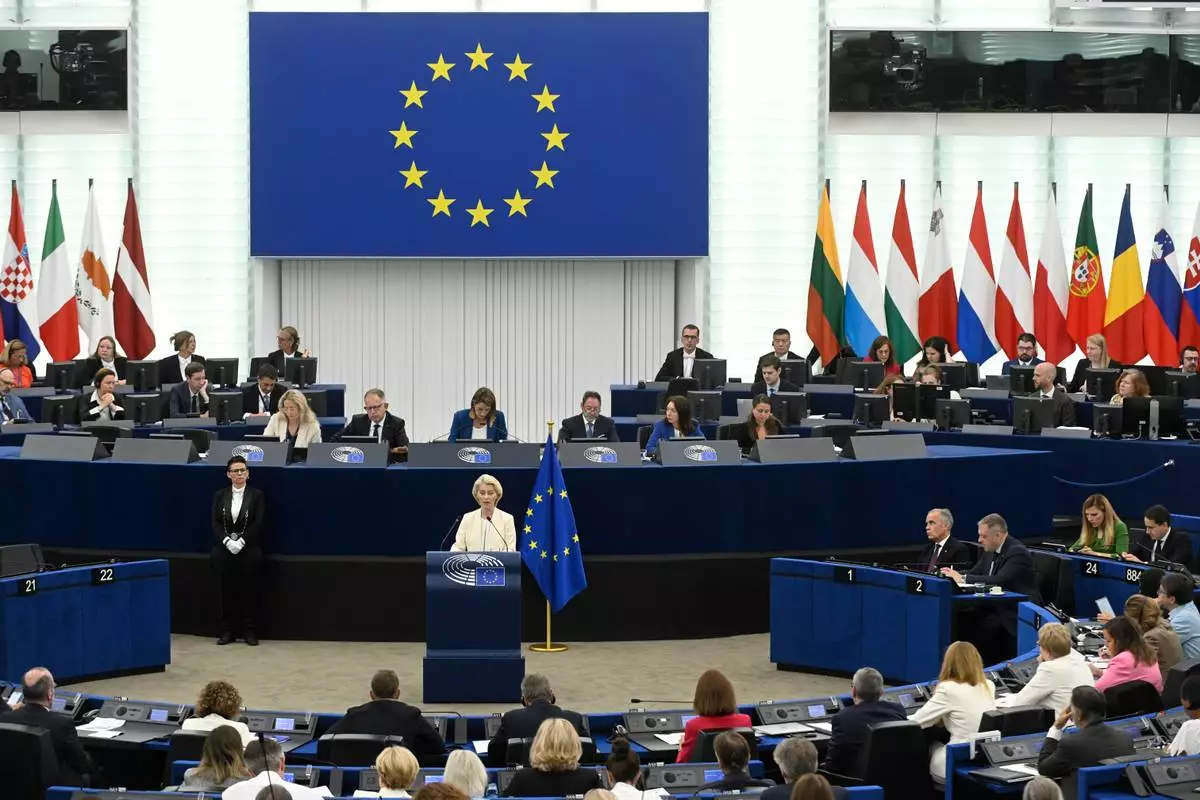
European Commission President Ursula von der Leyen delivers a speech with Canada's Prime Minister Mark Carney, right, at the annual State of the European Union at the European Parliament in Strasbourg, eastern France, Wednesday, Sept 16, 2026. (AP Photo/Pascal Bastien)
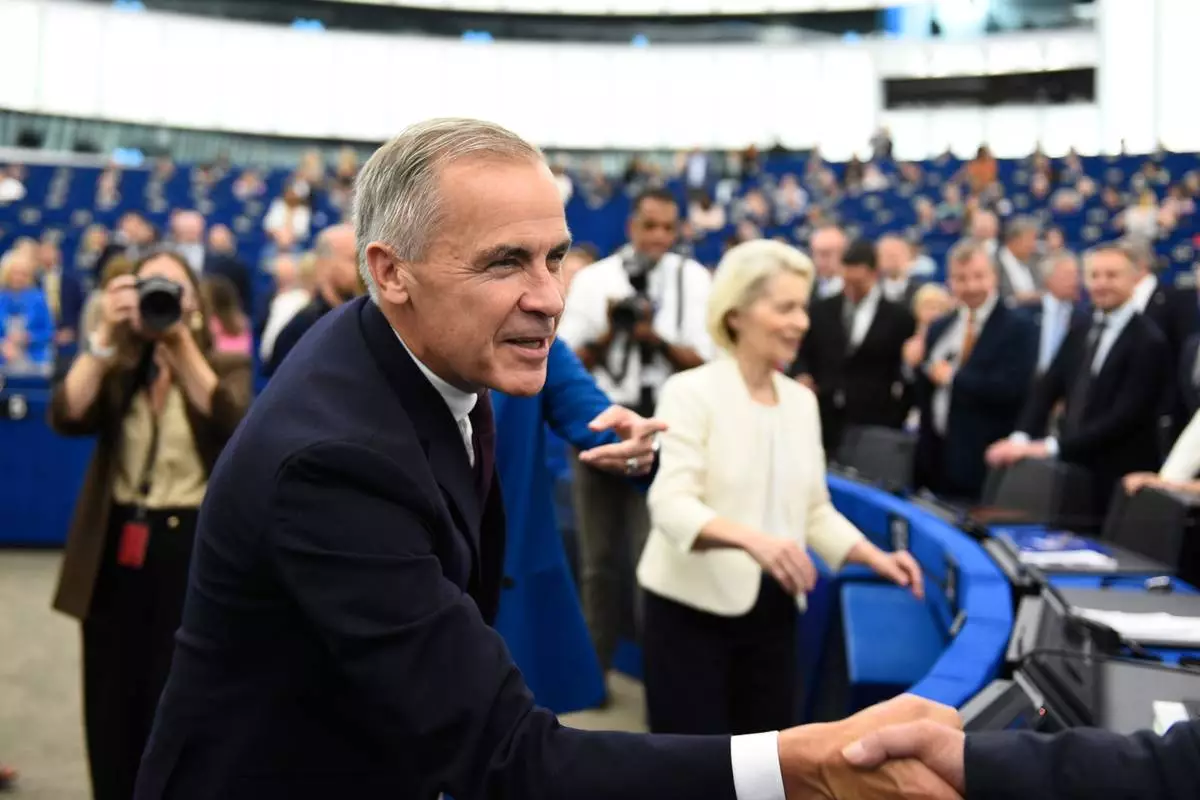
Canada's Prime Minister Mark Carney, left, and European Commission President Ursula von der Leyen arrive for the annual State of the European Union at the European Parliament in Strasbourg, eastern France, Wednesday, Sept 16, 2026. (AP Photo/Pascal Bastien)
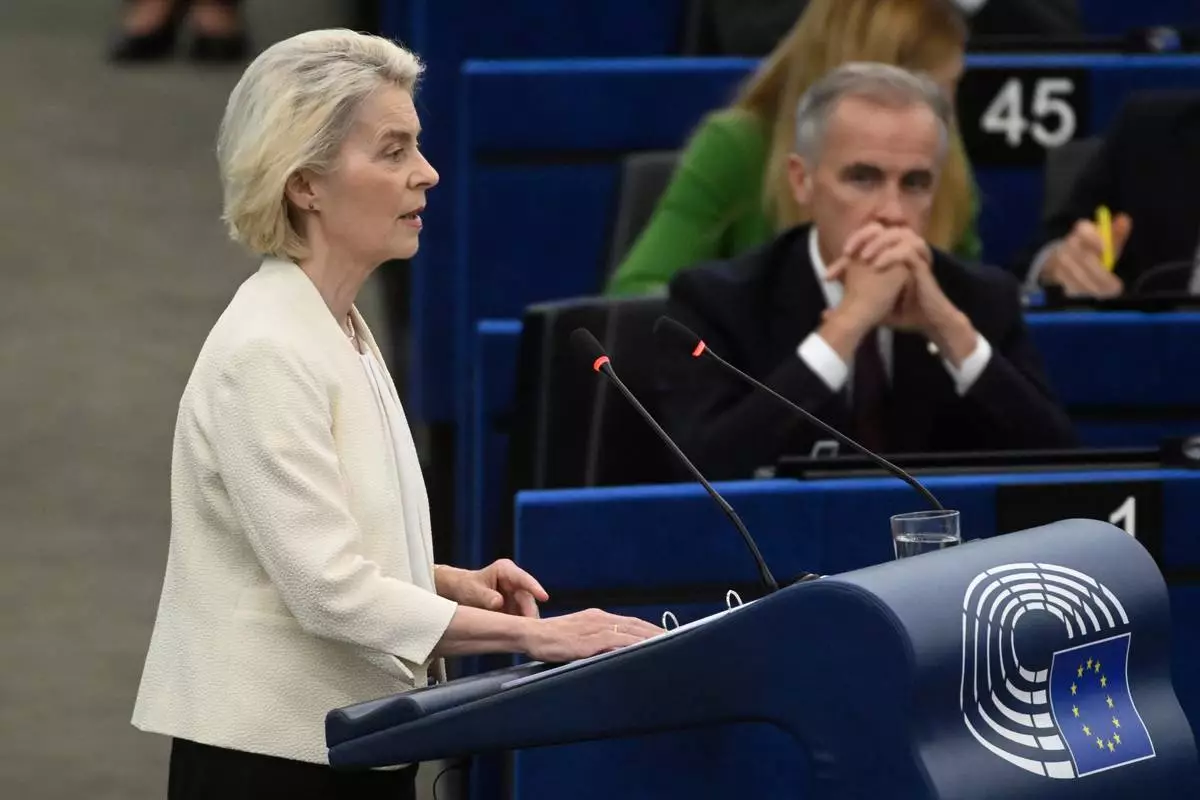
Canada's Prime Minister Mark Carney, right, listens to European Commission President Ursula von der Leyen, during the annual State of the European Union at the European Parliament in Strasbourg, eastern France, Wednesday, Sept 16, 2026. (AP Photo/Pascal Bastien)