Skip to Content Facebook Feature Image

Russia's wartime parliamentary election is set to secure the Kremlin's power

News

Russia's wartime parliamentary election is set to secure the Kremlin's power
News

News

Russia's wartime parliamentary election is set to secure the Kremlin's power

2026-09-17 12:03 Last Updated At:12:41

It's a challenging time for Russia to hold a parliamentary election, even one whose outcome is all but assured.

The economic and political climate has been seriously affected by 4½ years of full-fledged war with Ukraine. Swarms of enemy drones have inflicted massive damage on Russian oil refineries and logistical facilities. The public, which no longer sees the fighting as something distant, is increasingly nervous.

More Images
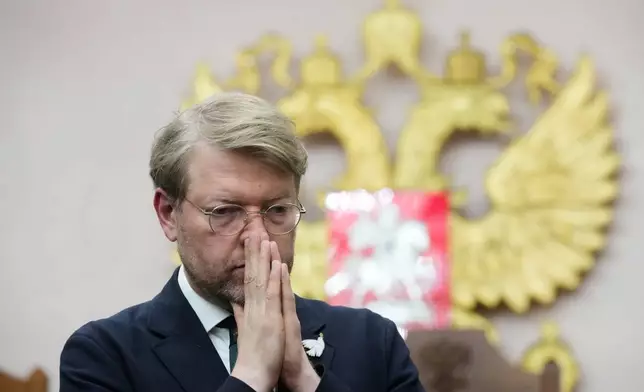
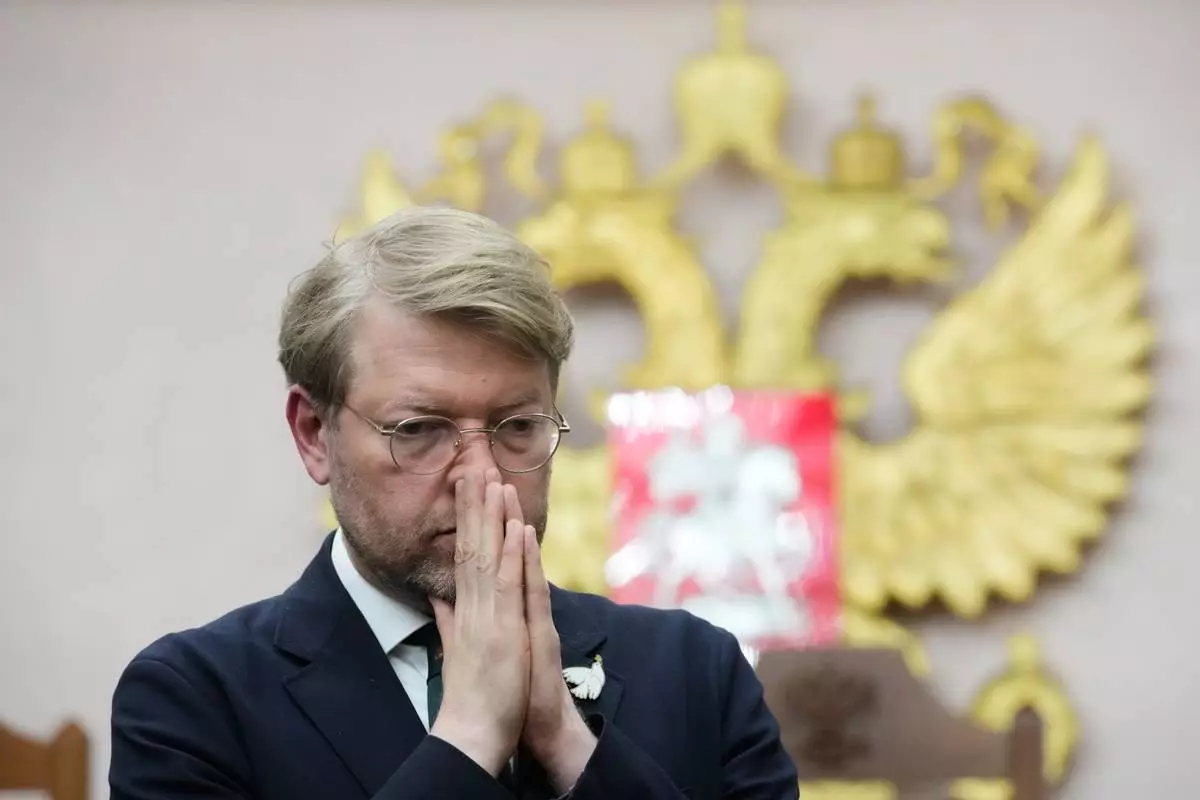
FILE - Yabloko party leader Nikolai Rybakov stands at a hearing to bar his party from the parliamentary election at Russia's Supreme Court in Moscow, Monday, Aug. 10, 2026. (AP Photo/Pavel Bednyakov, File)
FILE - Yabloko party leader Nikolai Rybakov stands at a hearing to bar his party from the parliamentary election at Russia's Supreme Court in Moscow, Monday, Aug. 10, 2026. (AP Photo/Pavel Bednyakov, File)

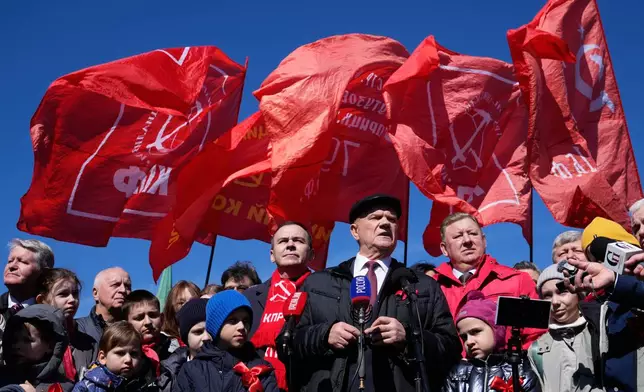
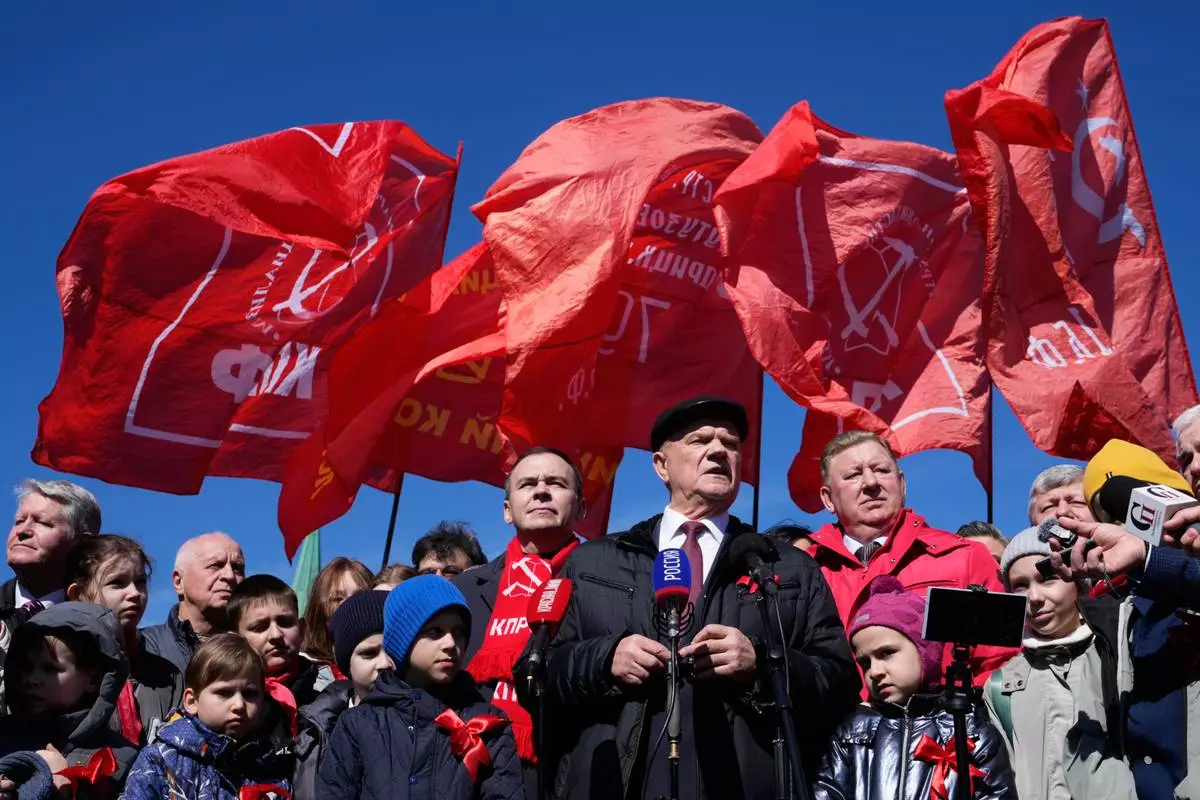
FILE - Russian Communist Party leader Gennady Zyuganov, center, speaks to journalists after laying flowers at the mausoleum of USSR founder Vladimir Lenin in Red Square, in Moscow, marking the 156th anniversary of his birth on Wednesday, April 22, 2026. (AP Photo/Pavel Bednyakov, File)
FILE - Russian Communist Party leader Gennady Zyuganov, center, speaks to journalists after laying flowers at the mausoleum of USSR founder Vladimir Lenin in Red Square, in Moscow, marking the 156th anniversary of his birth on Wednesday, April 22, 2026. (AP Photo/Pavel Bednyakov, File)

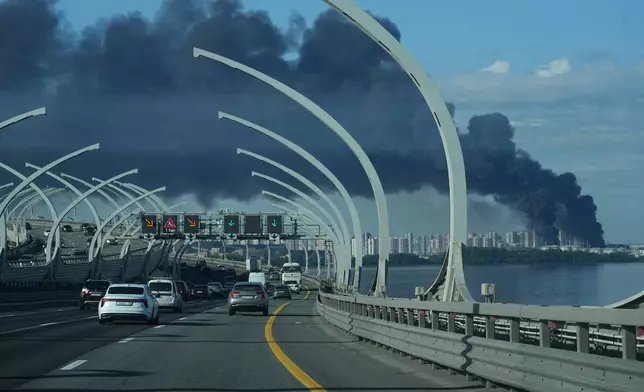
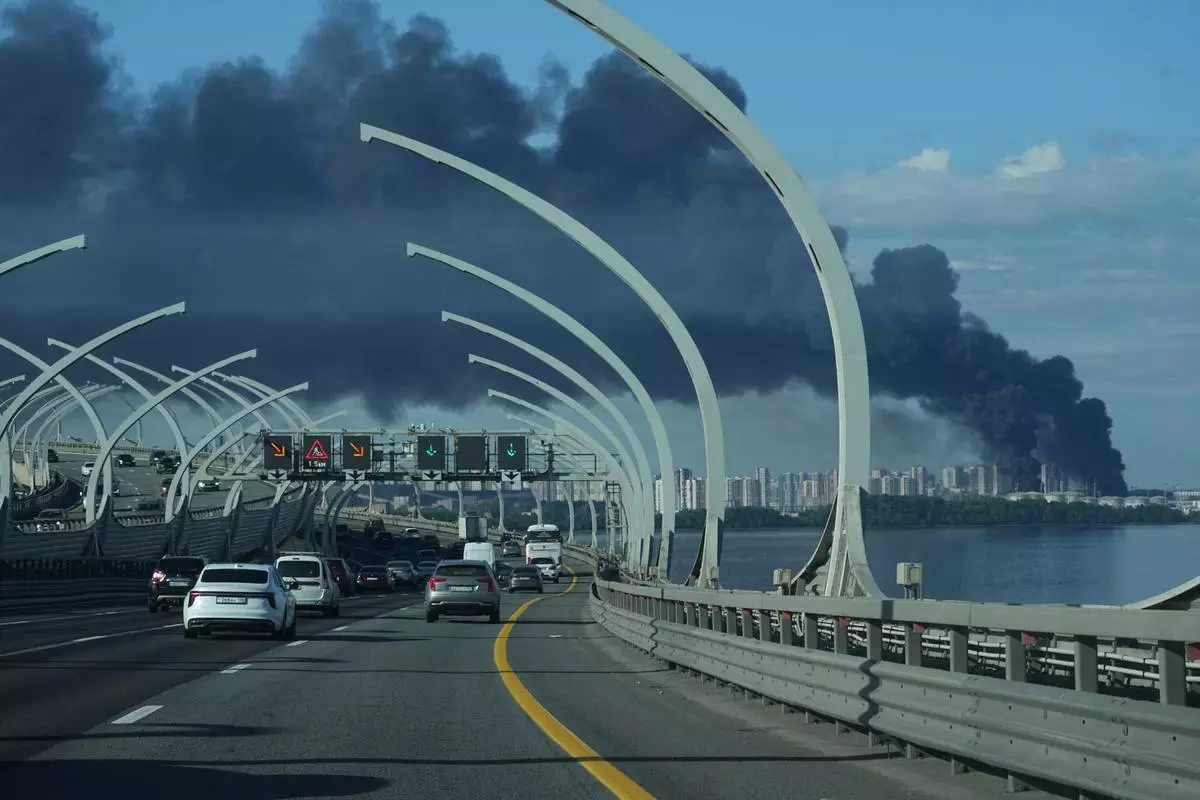
FILE - A plume of black smoke is seen over St. Petersburg, Russia, Wednesday, June 3, 2026, after a Ukrainian drone attack. (AP Photo, File)
FILE - A plume of black smoke is seen over St. Petersburg, Russia, Wednesday, June 3, 2026, after a Ukrainian drone attack. (AP Photo, File)

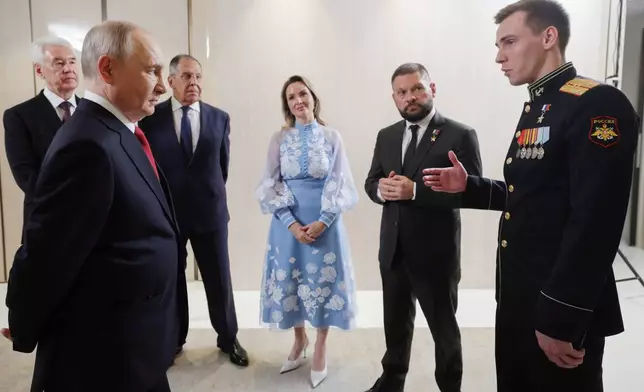
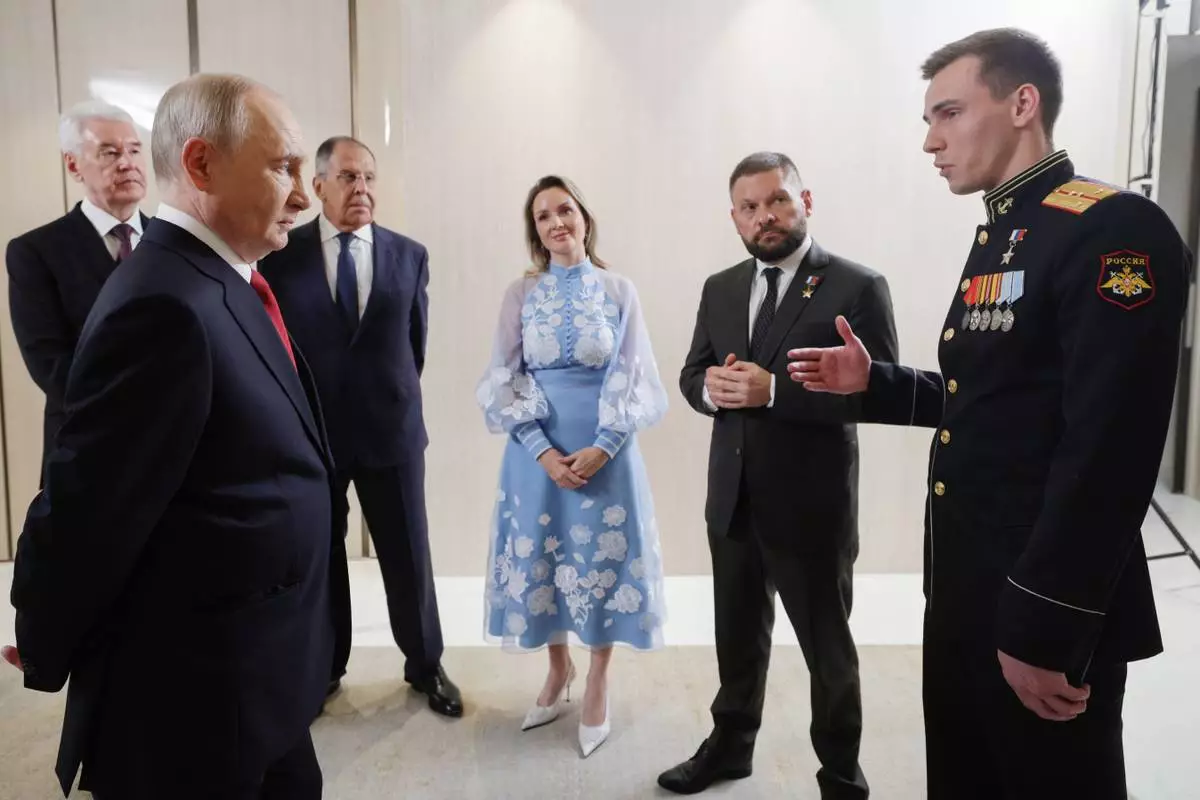
FILE - Russian President Vladimir Putin, foreground left, meets with United Russia party leaders, from left, Moscow Mayor Sergei Sobyanin; Putin; Foreign Minister Sergey Lavrov, background second right, Presidential Commissioner for Children's Rights Maria Lvova-Belova, center; war correspondent and Hero of Russia Yevgeny Poddubny, second right; and Chief of the Yunarmiya main headquarters Vladislav Golovin, in Moscow, on Saturday, Sept. 5, 2026. (Gavriil Grigorov/Sputnik, Kremlin Pool Photo via AP, File)
FILE - Russian President Vladimir Putin, foreground left, meets with United Russia party leaders, from left, Moscow Mayor Sergei Sobyanin; Putin; Foreign Minister Sergey Lavrov, background second right, Presidential Commissioner for Children's Rights Maria Lvova-Belova, center; war correspondent and Hero of Russia Yevgeny Poddubny, second right; and Chief of the Yunarmiya main headquarters Vladislav Golovin, in Moscow, on Saturday, Sept. 5, 2026. (Gavriil Grigorov/Sputnik, Kremlin Pool Photo via AP, File)

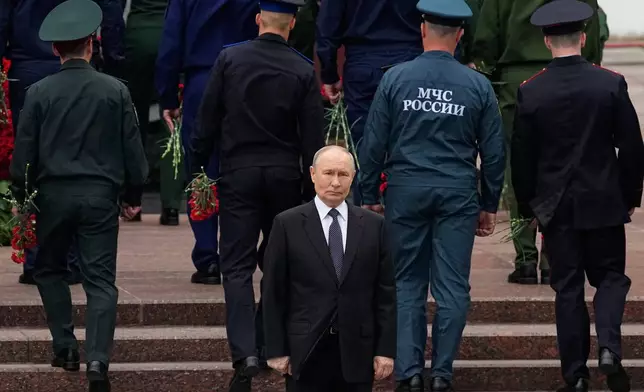
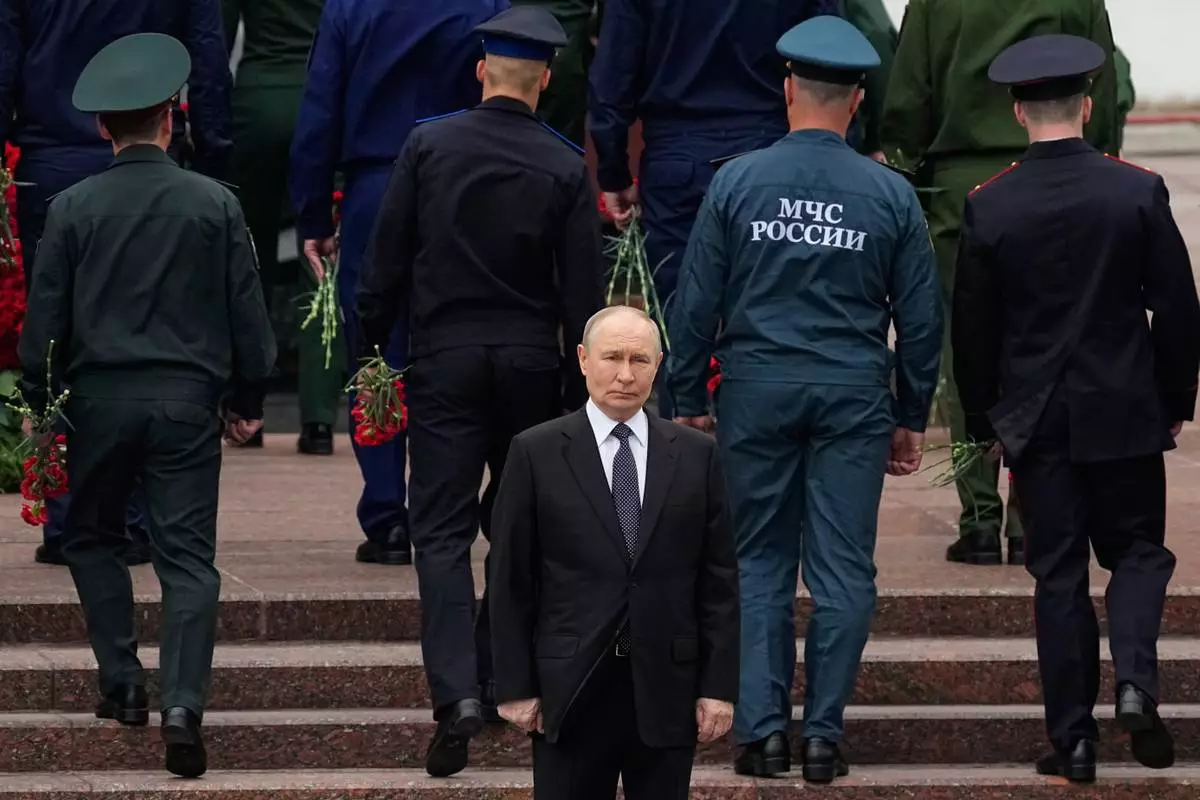
FILE - Russian President Vladimir Putin attends a wreath-laying ceremony at the Tomb of the Unknown Soldier by the Kremlin wall in Moscow on Monday, June 22, 2026, marking the 85th anniversary of the invasion of the Soviet Union by Nazi Germany in World War II. (AP Photo/Alexander Zemlianichenko, Pool, File)

FILE - Russian President Vladimir Putin attends a wreath-laying ceremony at the Tomb of the Unknown Soldier by the Kremlin wall in Moscow on Monday, June 22, 2026, marking the 85th anniversary of the invasion of the Soviet Union by Nazi Germany in World War II. (AP Photo/Alexander Zemlianichenko, Pool, File)

United Russia, the main Kremlin party, is poised to keep its overwhelming grip on the State Duma alongside a few other parties that vote in sync with President Vladimir Putin's wishes. Still, authorities have tightened control over the first wartime balloting for the lower chamber of parliament since the 2022 invasion.

The Kremlin stifled even the slightest signs of dissent before three days of voting that begin Friday. The only party that dared to criticize the war was unceremoniously removed from the ballot, and a few anti-war politicians have been imprisoned or forced to flee abroad.

With the result predetermined and Putin’s political dominance under no immediate threat, analysts say the Kremlin sees the election as a key effort to mobilize public support for the war and legitimize its action.

“Your choice and resolve will once again demonstrate that millions of people stand behind our fighters, that we are a united people, bound by shared values, historical memory, and love for the Motherland,” Putin said in an address before the vote.

A summer marked by Ukraine's long-range drone strikes brought the war home for millions of Russians for the first time.

The attacks exacerbated problems for the Russian economy, which has plunged into stagnation as the initial boost from massive military spending has waned. The government raised taxes and increased domestic borrowing to keep the growing budget deficit under control.

Strikes on Russian oil refineries sparked a severe fuel crisis that peaked in June, eased for a few weeks and then returned in August.

Adding to the pain was a series of attacks on warehouses belonging to online retailers Wildberries and Ozon. Hundreds of thousands of individual sellers lost their merchandise, sending a shock wave through the economy.

All this dampened the public mood. Polls recorded a dip in Putin’s approval ratings, even though they remained high, with the independent Levada Center showing it at 76% in August, down from 87% in September 2025.

Even some senior members of Russia’s elite openly expressed discontent.

Andrei Klepach, chief economist of the state VEB.RF bank, warned of possible internal turmoil in Russia.

“We won’t win the competition in this war of attrition,” he said at a seminar. “Our costs are mounting. I’m almost sure that we will come to face a social crisis.”

Klepach was dismissed the day after his comments were published.

Putin acknowledged the strikes on oil refineries and logistical hubs inflicted significant damage but insisted the economy can weather it. By striking such infrastructure, he said Ukraine opened a “Pandora's box,” inviting massive retaliation.

Russia intensified attacks on Kyiv and other cities with missiles and new jet-powered drones, exploiting Ukraine’s shortage of defensive interceptors. Moscow also dramatically stepped up its barrage on Odesa and other Black Sea ports, disrupting Ukrainian exports of grain and other agricultural products, a key source of revenue.

As the problems caused by Ukraine's attacks spread across Russia, fears mounted that the Kremlin was mulling a massive mobilization.

A partial mobilization of 300,000 reservists in 2022 prompted hundreds of thousands of Russians to flee the country, undermining domestic stability. Since then, the Kremlin has relied on volunteers to fight, offering comparatively high wages and other benefits. Military experts warned, however, that the flow of volunteers has ebbed while massive losses have continued.

Ukrainian President Volodymyr Zelenskyy repeatedly claims the Kremlin is considering a postelection mobilization, which Putin dismisses as “nonsense.”

At a Sept. 5 Kremlin meeting with U.S. envoys Steve Witkoff and Jared Kushner and a subsequent call with President Donald Trump, Putin said Russia holds the upper hand on the battlefield, signaling he will keep his maximalist demands for striking a peace deal.

In July, the Central Election Commission cleared 11 parties for the parliamentary ballot, including Yabloko, the only registered political party to openly criticize the war.

Weeks later, however, the country’s Supreme Court removed Yabloko from the ballot. It was acting on an appeal from the nationalist Motherland party that called liberal Yabloko’s anti-war stance akin to seeking the violation of Russia’s territorial integrity.

Kremlin-watchers described the move as an apparent sign of infighting between elements of the government who wanted a semblance of competition to increase voter turnout, and those who feared Yabloko's presence could bring open criticism of the war and political instability.

“The risks that the campaign would turn into a struggle for and against peace — that is, a dispute about the war — were quite high, and this clearly was not part of the plan,” said Tatyana Stanovaya of the Carnegie Russia Eurasia Center.

Maxim Kruglov, a deputy chairman of Yabloko and former member of Moscow's city council, was convicted in June of spreading false information about the Russian army and sentenced to seven years in prison.

Last month, a court in the Pskov region convicted Yabloko member Lev Shlosberg of speaking out against the war and sentenced him to over 11 years in prison.

Following Yabloko's removal from the ballot, authorities have methodically barred its individual members from running in most of its single-constituency races for the Duma and regional legislatures.

Liberal politician and war critic Boris Nadezhdin, who tried to challenge Putin in the 2024 presidential election, left Russia last month, fearing imprisonment after he was designated as a “foreign agent,” barred from seeking office, and fined for displaying “extremist symbols.”

United Russia, which controls over two-thirds of parliament's 450 seats, is set to maintain its dominance of the lower house despite public fatigue with the war and the worsening economy. Some Russian reports indicate the Kremlin has slightly lowered its target for United Russia but expects it to retain full control in parliament.

“United Russia may be allowed to slip a little … to bring its actual sort of declared results more in line with probably its real results,” said analyst Mark Galeotti, who heads the Mayak Intelligence consultancy, adding that the Kremlin will ensure it “is still absolutely dominant within the Duma.”

One purpose of the elections is showing they are “legitimating rituals to give the impression that mass consensus is behind the Kremlin,” he said.

Other members of the “systemic opposition” — the Communist Party, the Liberal-Democratic Party and A Just Russia Party, which all follow Putin’s course and strongly support the war — are expected to retain their presence in the Duma.

While Ukraine's attacks have fueled broad anxiety, they also could bring a demand for a tougher response against Kyiv, “as long as they don't have to be involved in it,” Galeotti said in a podcast.

Chris Weafer, CEO of the Macro-Advisory Ltd., said that while Ukraine's attacks have affected public morale, there's no immediate threat to the Kremlin’s political domination.

“There has been a ‘rally around the flag’ anyway since the start of conflict and the opinion polls consistently show the very high level of support,” he said.

While the results are predetermined, “the public narrative and particularly the turnout” is what's important to the Kremlin to claim broad public support for its action, Weafer added.
FILE - Yabloko party leader Nikolai Rybakov stands at a hearing to bar his party from the parliamentary election at Russia's Supreme Court in Moscow, Monday, Aug. 10, 2026. (AP Photo/Pavel Bednyakov, File)
FILE - Yabloko party leader Nikolai Rybakov stands at a hearing to bar his party from the parliamentary election at Russia's Supreme Court in Moscow, Monday, Aug. 10, 2026. (AP Photo/Pavel Bednyakov, File)

FILE - Russian Communist Party leader Gennady Zyuganov, center, speaks to journalists after laying flowers at the mausoleum of USSR founder Vladimir Lenin in Red Square, in Moscow, marking the 156th anniversary of his birth on Wednesday, April 22, 2026. (AP Photo/Pavel Bednyakov, File)
FILE - Russian Communist Party leader Gennady Zyuganov, center, speaks to journalists after laying flowers at the mausoleum of USSR founder Vladimir Lenin in Red Square, in Moscow, marking the 156th anniversary of his birth on Wednesday, April 22, 2026. (AP Photo/Pavel Bednyakov, File)

FILE - A plume of black smoke is seen over St. Petersburg, Russia, Wednesday, June 3, 2026, after a Ukrainian drone attack. (AP Photo, File)
FILE - A plume of black smoke is seen over St. Petersburg, Russia, Wednesday, June 3, 2026, after a Ukrainian drone attack. (AP Photo, File)

FILE - Russian President Vladimir Putin, foreground left, meets with United Russia party leaders, from left, Moscow Mayor Sergei Sobyanin; Putin; Foreign Minister Sergey Lavrov, background second right, Presidential Commissioner for Children's Rights Maria Lvova-Belova, center; war correspondent and Hero of Russia Yevgeny Poddubny, second right; and Chief of the Yunarmiya main headquarters Vladislav Golovin, in Moscow, on Saturday, Sept. 5, 2026. (Gavriil Grigorov/Sputnik, Kremlin Pool Photo via AP, File)
FILE - Russian President Vladimir Putin, foreground left, meets with United Russia party leaders, from left, Moscow Mayor Sergei Sobyanin; Putin; Foreign Minister Sergey Lavrov, background second right, Presidential Commissioner for Children's Rights Maria Lvova-Belova, center; war correspondent and Hero of Russia Yevgeny Poddubny, second right; and Chief of the Yunarmiya main headquarters Vladislav Golovin, in Moscow, on Saturday, Sept. 5, 2026. (Gavriil Grigorov/Sputnik, Kremlin Pool Photo via AP, File)

FILE - Russian President Vladimir Putin attends a wreath-laying ceremony at the Tomb of the Unknown Soldier by the Kremlin wall in Moscow on Monday, June 22, 2026, marking the 85th anniversary of the invasion of the Soviet Union by Nazi Germany in World War II. (AP Photo/Alexander Zemlianichenko, Pool, File)

FILE - Russian President Vladimir Putin attends a wreath-laying ceremony at the Tomb of the Unknown Soldier by the Kremlin wall in Moscow on Monday, June 22, 2026, marking the 85th anniversary of the invasion of the Soviet Union by Nazi Germany in World War II. (AP Photo/Alexander Zemlianichenko, Pool, File)

NEW YORK (AP) — Across the runways this New York Fashion Week, designers reimagined spring dressing by shaking up the season’s staples of florals and pastels, opting instead for more modern and irreverent trends.

From legacy brands to emerging talents, designers including Tory Burch, Ralph Lauren and Eckhaus Latta brought joy back to dressing with sartorial twists on color, movement and contrasts that could easily transition off the Spring/Summer 2027 catwalks and into New York’s busy streets.

While New York Fashion Week is only the first stop for celebrities and fashion editors before seeing what London, Milan and Paris have in store, the celebratory tone is bound to be contagious.

Designers had a lot to celebrate, with many marking career milestones: Rachel Comey notched 25 years, Michael Kors and Carolina Herrera reveled in 45-year anniversaries for their brands, and Coach hit a storied 85 years.

Coach sent models down the runway in party hats, glittering gowns with colorful large bow trains, and gift-wrapped present accessories for its anniversary.

InStyle Fashion director Kevin Huynh said designers are waving goodbye to the quiet luxury era and leaning into vibrancy.

“We’re really stepping into like, more is more,” he told The Associated Press, “but not in that dopamine dressing where everything feels haphazardly put on, but like a real sense of vibrancy and excitement.”

At Eckhaus Latta, designers Mike Eckhaus and Zoe Latta feted their J.Crew collaboration with confetti. Guests were told to open envelopes on their seats at the sound of laughter during the second half of their show and toss rainbow confetti onto the runway.

“Designers are really trying to kind of have fun and show the power that fashion can have in uplifting and inspiring people,” Matthew Velasco, ELLE’s fashion news editor, said.

Tory Burch embraced joyful dressing as a sense of escape, with models in color-blocked embellished looks strutting around a circular indoor catwalk that surrounded an outdoor garden with fountains. Burch said she wanted to contrast opulent femininity with utilitarian sportswear. Her collection featured embroidered cardigans with brightly colored skirts, boa-like thin scarves and a turquoise coat with a matching bag.

“I think when things are a bit more rough in the world you need to dream,” Burch said.

Ralph Lauren opened New York Fashion Week by bringing romance and a celebration of style to the runway.

“It’s about ways of dressing that celebrate ingenuity, originality, and character — the freedom and fun of creating a style that is truly personal,” he said in his show notes.

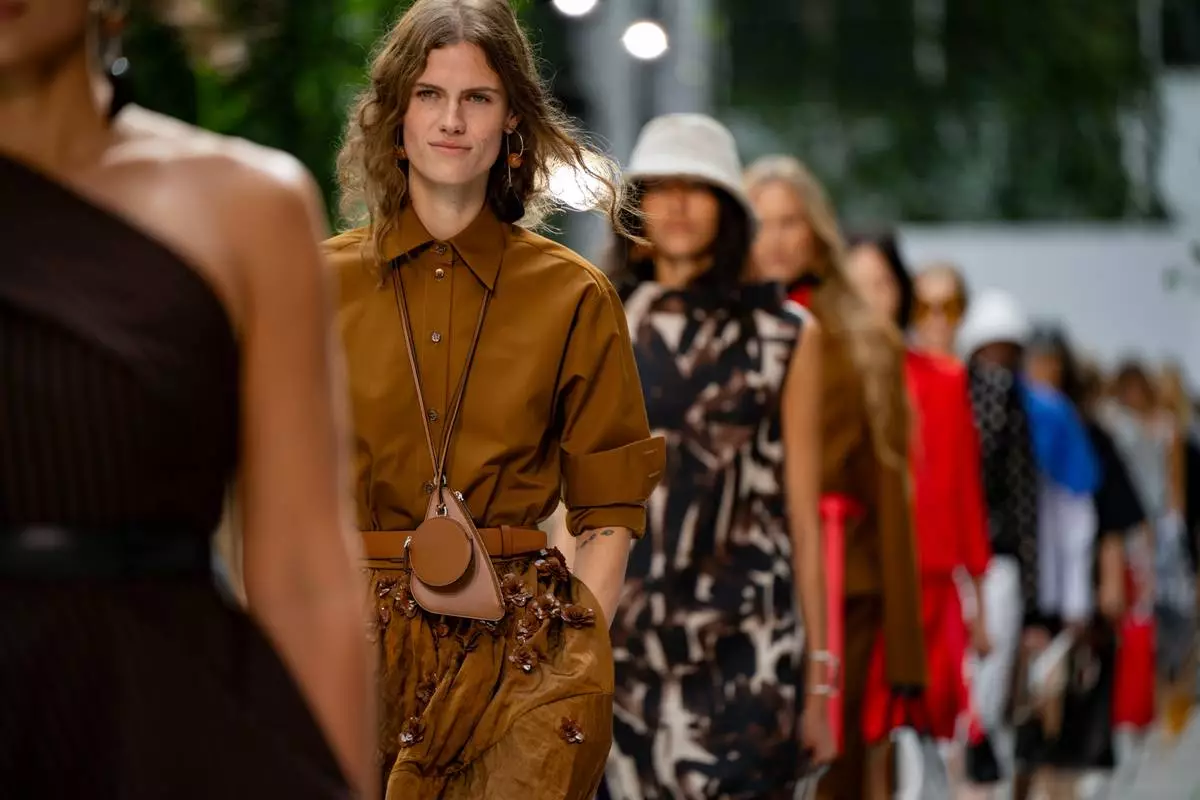
Michael Kors had the optimism to stage his show outside in the garden at the Museum of Modern Art, where a bright orange trench coat and sunny yellow shoes popped against his black and white looks.

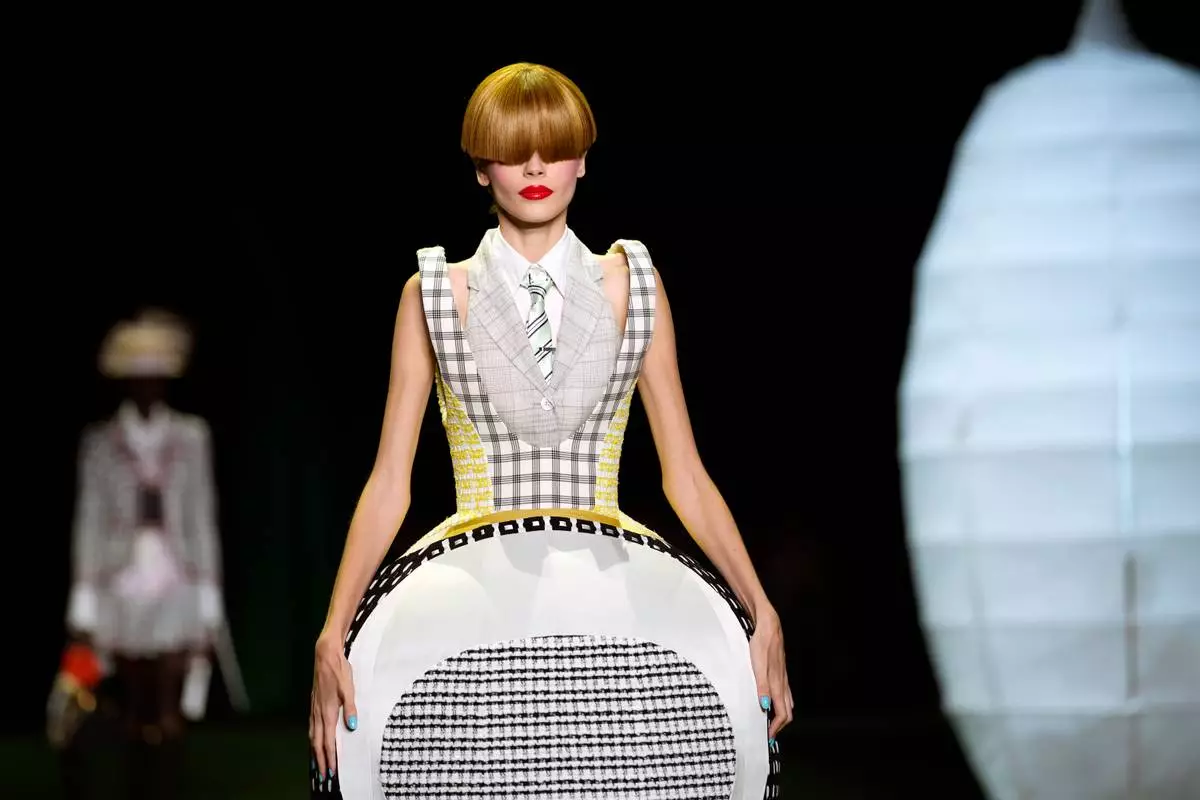
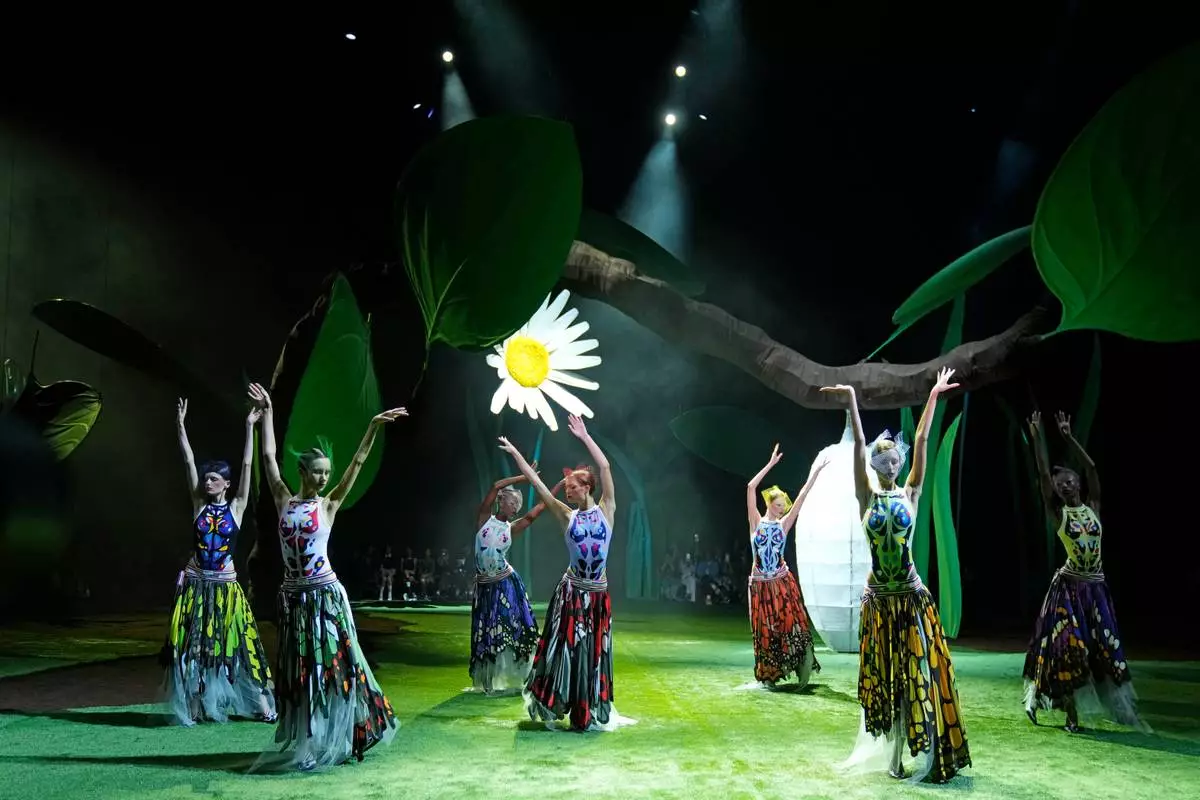
Thom Browne, who often leans into whimsy, created a show inspired by “A Bug's Life,” with a giant indoor garden and models dripping in green crystals that hung from layered suiting. Some channeled actual ladybugs and butterflies with giant colorful hoop skirts, and jackets that looked like cocoons, eliciting smiles from the crowd.

Designers may not be feeling blue this season, but the color was certainly interwoven throughout their collections.

Ralph Lauren played with a palette of blues — from his classic denim to satin and lace gowns, to suiting and blue fur and feather collars. Tommy Hilfiger said he often takes his inspiration from nautical flags, so primary colors — including navy — were prevalent on classic and oversized blazers and rugby shirt stripes on his runway at The Plaza Hotel. Tory Burch styled turquoise and navy, and Henry Zankov delivered teal on the runway this season for Diane von Furstenberg.

After a decade-long gap, the Diane von Furstenberg line returned to New York Fashion Week with Zankov unveiling his first collection as artistic director for the brand. Known for his namesake knitwear brand, Zankov highlighted animal prints on von Furstenberg’s signature wrap designs, while incorporating sheer blouses and dresses along with fluid suiting.

“You want to feel alive,” Huynh said, “like we’re coming out of the cold of winter, and color is such an easy way to accomplish that.”

“Chartreuse had its moment, but teal is something that feels really refined,” he added.

Cobalt blue or Klein Blue — made famous by artist Yves Klein — also took over the runways with Proenza Schouler and Sergio Hudson including the color in their collections.

All eyes were on waistlines this season as designers sent models down runways in cummerbunds, scarves and chunky belts.

For Daniella Kallmeyer of Kallmeyer, the designer added a cummerbund to a buttoned-down blue top over trousers, as well as a white cummerbund embellished with white beading over an all-black suited look.

“It’s that injection of androgyny with a cummerbund in womenswear that feels exciting and edgy,” Huynh said.

At Ralph Lauren, the designer wrapped fringed scarves around the models to break up an all-white look or add a pop of color to the waistline.

After shedding the constraints of winter coats and layers, designers introduced a freedom of movement and fluidity to their collections with fringe.

Asymmetrical dresses swayed with fringe at Jonathan Simkhai while shimmering fringe peeked out from an all-black look at Rachel Comey.

In a twist on tailoring, jackets dripping with fringe made their way down the runway at Monse.

“I always am a firm believer that with the Spring/Summer shows, designers really flex their prowess a little bit more than fall,” Huynh said. “You’re really getting the full spectrum of a woman and a man’s wardrobe.”

A model walks the runway during the Ralph Lauren Spring/Summer 2027 presentation as part of New York Fashion Week on Wednesday, Sept. 9, 2026, in New York. (Photo by Evan Agostini/Invision/AP)

A model walks the runway during the Ralph Lauren Spring/Summer 2027 presentation as part of New York Fashion Week on Wednesday, Sept. 9, 2026, in New York. (Photo by Evan Agostini/Invision/AP)

A model walks the runway during the Ralph Lauren Spring/Summer 2027 presentation as part of New York Fashion Week on Wednesday, Sept. 9, 2026, in New York. (Photo by Evan Agostini/Invision/AP)

A model walks the runway during the Ralph Lauren Spring/Summer 2027 presentation as part of New York Fashion Week on Wednesday, Sept. 9, 2026, in New York. (Photo by Evan Agostini/Invision/AP)

A model walks the runway during the Thom Browne Spring/Summer 2027 presentation as part of New York Fashion Week on Tuesday, Sept. 15, 2026, in New York. (Photo by Charles Sykes/Invision/AP)

A model walks the runway during the Thom Browne Spring/Summer 2027 presentation as part of New York Fashion Week on Tuesday, Sept. 15, 2026, in New York. (Photo by Charles Sykes/Invision/AP)

Models walk the runway during the Michael Kors Spring/Summer 2027 presentation as part of New York Fashion Week on Friday, Sept. 11, 2026, in New York. (AP Photo/Vincent Alban)

Models walk the runway during the Michael Kors Spring/Summer 2027 presentation as part of New York Fashion Week on Friday, Sept. 11, 2026, in New York. (AP Photo/Vincent Alban)

Models dance during the Thom Browne Spring/Summer 2027 presentation as part of New York Fashion Week on Tuesday, Sept. 15, 2026, in New York. (Photo by Charles Sykes/Invision/AP)

Models dance during the Thom Browne Spring/Summer 2027 presentation as part of New York Fashion Week on Tuesday, Sept. 15, 2026, in New York. (Photo by Charles Sykes/Invision/AP)

Recommended Articles