Yemen's Houthi group said Wednesday it had launched two missile and drone attacks targeting an Aramco facility and a military air base in response to Saudi air strikes against Yemen this week.
The Houthis accused Saudi Arabia earlier Wednesday of carrying out more than 450 airstrikes across seven Yemeni provinces over the past week. In response, the group used dozens of ballistic missiles and drones to attack the Saudi Aramco facility in the western Saudi city of Yanbu, and launched several ballistic missiles to struck the airbase in Khamis Mushait air base in southwestern Saudi Arabia near the Yemeni border.
The group claimed the Yanbu attack caused large fires and extensive damage, while missiles targeting Khamis Mushait accurately hit their targets. Saudi authorities and Aramco have not commented on the claims. The Houthis also said that it would continue operations against Saudi Arabia until the kingdom halts its airstrikes and lifts the blockade on Houthi-controlled areas of Yemen.
On the same day, Houthi military spokesperson Yahya Sarea said in a statement carried by Houthi-run al-Masirah TV that the group had shot down a Saudi F-15 fighter jet over the northeastern province of Marib. He said the fighter jet was struck by a locally manufactured surface-to-air missile while conducting "hostile operations" in support of Saudi-backed Yemeni forces in Marib.
Sarea said Houthi forces subsequently fired locally made air-defense missiles at two formations of Saudi F-15 and Typhoon fighter jets that entered Marib's airspace to search for the wreckage of the downed aircraft, forcing them to retreat.
Separately, Saudi air defenses intercepted and destroyed a Houthi drone south of Mecca on Tuesday evening before it entered the prohibited airspace of the holy city, the Saudi-led coalition said.
Coalition spokesman Turki Al Maliki said the security of the Two Holy Mosques and pilgrims is a "red line", adding that the coalition would not hesitate to take necessary measures to deter further Houthi attacks.
An official from the Houthis rejected the allegation on Wednesday.
"The claims about targeting Mecca are a worn-out lie that has been used before and no longer fools anyone," Houthi official Hazem al-Assad wrote on X.

Yemen's Houthis claim missile, drone strikes on Saudi Aramco facility, air base

Yemen's Houthis claim missile, drone strikes on Saudi Aramco facility, air base
Japanese Prime Minister Sanae Takaichi's one-day spacing of the ruling party's personnel reshuffle and the cabinet reshuffle is a move calculated to consolidate her influence within the party and seek re-election, said a Japanese scholar.
Takaichi, who also heads the ruling Liberal Democratic Party (LDP), reshuffled the party's executive lineup on Wednesday and her cabinet on Thursday.
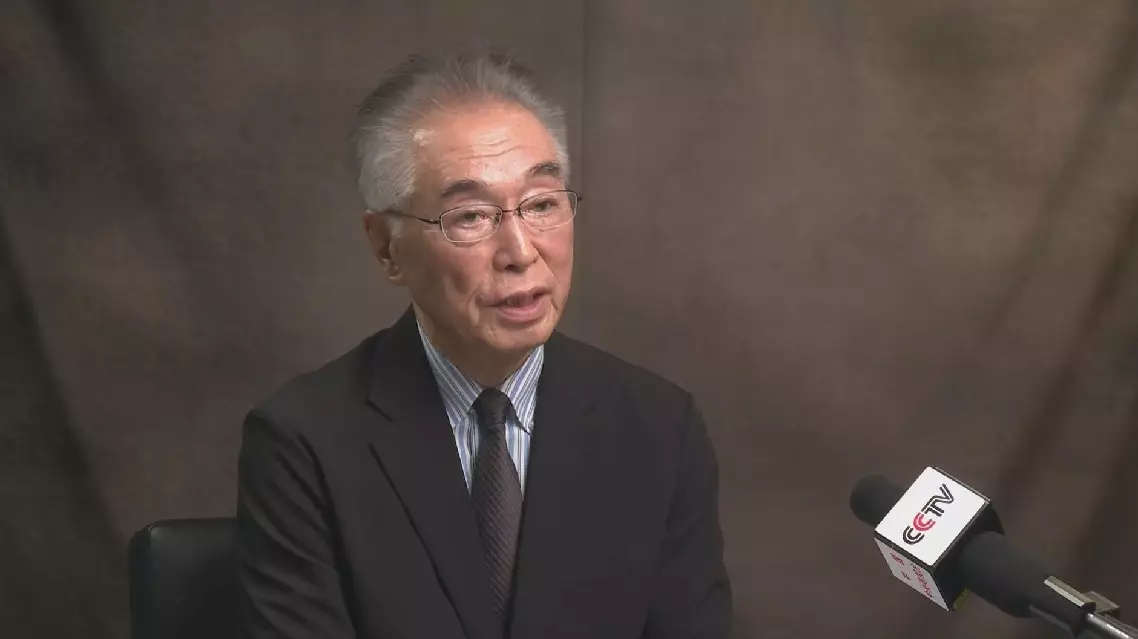
In an interview with China Central Television (CCTV), Tomoyoshi Kimura, director of the Northeast Asia Dynamics Study Group, said the schedule was carefully calculated.
"Takaichi deliberately left this gap, which actually means she wants to show her power within the party. In other words, for those who want to become cabinet ministers or vice ministers, she can show that she holds the power of appointment by making them hopeful. So I think this cabinet reshuffle is of no difference from the previous one; instead, it will likely head in a worse direction. That is the biggest concern I have," said Kimura.
The scholar noted that the reshuffle is less about the cabinet itself than about Takaichi's own political future.
"I think Takaichi has already set her sights on next autumn's LDP leadership election and hopes to win re-election. How to make her administration last longer, how to stay in power longer — that is the purpose of this LDP personnel change and the starting point of the cabinet reshuffle," he said.
The Japanese government recently approved a food consumption tax cut, deciding to lower the rate from the current eight percent to one percent for a two-year period starting April 2027.
Kimura said the consumption tax has been an important stable source of revenue supporting Japan's social security system, and how to fill the huge fiscal gap created by the tax cut is the biggest question.
He added that the tax cut could cause Japanese government bond yields to surge.
"I think it is highly doubtful how much effect this policy can actually produce. And where to find the funds to fill the fiscal gap resulting from the tax cuts? Obviously, the money can only be taken from some other tax. In that case, it will only create new burdens elsewhere," said Kimura.
Kimura also warned of a growing squeeze on livelihoods, as rising bond interest payments and higher defense spending add to the burden.
"In addition, the continuous expansion of government bond interest payments means that the burden of repaying interest in the national annual budget is growing, so the funds that can truly be used in other areas will be increasingly squeezed. This means the measures the state can take, that is, fiscal spending to protect people's livelihoods, will be continuously squeezed. If this continues, Japan will become poorer and poorer, and ordinary people's lives will become more and more difficult. At the same time, increasing defense spending will also add to the related tax burden," he said.
Takaichi seeks to consolidate personal influence via cabinet reshuffle: Japanese scholar