Micro-drama uploads in China exploded in the first eight months of the year, amounting to a stunning 13-times the amount posted online all of last year, media authorities revealed Thursday.
Wang Xiaoliang, head of the department of online audio-video management under the National Radio and Television Administration, presented the figures at a press conference in Beijing on accelerating high-quality development of the radio, television and online audio-video sector during China's 15th Five-Year Plan period (2026-2030).
The number of micro-drama users has exceeded 800 million in China, where the micro-drama market size surpassed 100 billion yuan (about 14.9 billion U.S. dollars) in 2025, according to Wang.
"In the first eight months of this year, a total of 430,000 micro-dramas were put online in China, that's 13 times that of the whole of last year. Among them, AI-generated micro-dramas accounted for over 90 percent, mainly due to the widespread application of artificial intelligence in the creation of such dramas. The application of AI has opened up new space for the dramas' innovative expression as well as the sector's cost reduction and efficiency improvement, while also bringing new challenges in such aspects as content quality and protection of rights and interests," Wang said.
The official said significant financial support will be given to support live-action micro-dramas, while effective management will be implemented amid the boom of AI-generated micro-dramas.
"As live-action micro-dramas are the main focus in the production of outstanding works, we will provide great support for their development. We will advance in-depth implementation of the plan for creation and dissemination of outstanding micro-dramas, guide the relevant platforms to set a special section of 'live-action micro-dramas', and give significant monetary support to help quality works gain market recognition and get due rewards," said the official.
"AI-generated micro-dramas are developing rapidly and account for a high proportion. We will stick to the policy of attaching equal importance to encouraging innovation and guarding the bottom line, requiring AI dramas to be marked with content labels, and prompting the relevant platforms to strictly adhere to the bottom line of image and voice authorization, with full-process management. Ultimately, AI is a tool, while it is the human beings who carry out the creations. The faster AI dramas develop, the more important it is to ensure effective management of their contents," he said.
Noting China has implemented takedowns of 68,000 regulation-violating micro-dramas from the internet so far this year, the official pledged persistent efforts to ensure a healthy ecology of the industry.
China started implementing the methods for management of micro-drama development on Sept. 1.
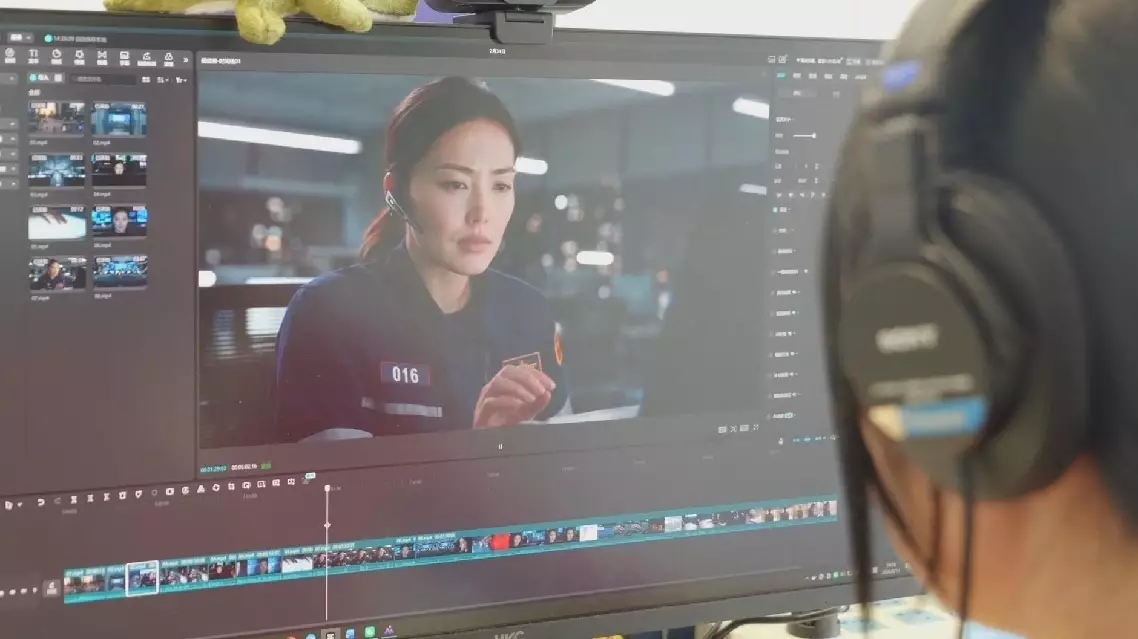
Chinese micro-dramas see exponential growth in first eight months
As the U.S.-Canada tension over trade and tariff escalates, Canada is aiming to diversify its export structure while seeking to negotiate with its southern neighbor, Wang Yaojing, associate professor of economics at Peking University noted.
As part of the responsive measure by the Trump administration to Canada's tariff retaliation on a range of U.S. goods earlier this month following a breakdown in trade talks, the United States banned several Canadian imports of alcohol, dairy, and motorcycles, which has taken effect on Tuesday.
While the new trade ban is considered part of the U.S. move to manipulate its partners with trade policy, the strategy is a double-edged sword for the country, said the professor.
"I think Washington is trying to use access to the U.S. market as leverage to force Canada to make concessions on issues such as dairy, alcohol, autos, and even the broader market access. Moving from tariffs to outright importer restrictions itself is sending a much stronger message. And there is also a wider strategic point here. The U.S. is increasingly treating trade policy as part of the national power even towards close allies. But I also want to mention that is that the leverage on the U.S. is not cost-free. The Canada has already retaliated I think against roughly 20 billion worth of American goods. it can hurt Canada, U.S. exporters, raise cost of retailers and consumers for both countries and also create uncertainty across the highly integrated North America supply chain," she said in an interview with China Global Television Network (CGTN).
As the cross-border rivalry escalates, the EU has proposed to make Canada its first associate member. While the unexpected move provides Canada with a new choice to diversify its overly reliant export structure, Europe cannot completely replace the United States to support Canadian economy, according to Wang.
"The current trade tension with Washington have reminded Canada just how dependent it is still on the U.S. market. And roughly two thirds of Canada exports still go south of the border. And that is why the EU proposal is very interesting, even though this idea of Canada becoming an associate member is still quite vague. But the political signal is very clear. Both sides want a closer relationship not only in trade, but also in defense technology, critical minerals, and Arctic security. But at the same time, Europe cannot simply replace the U.S. So, I would describe this relationship as becoming more triangular," she said.
The U.S. attempt to pressure its neighbor has triggered public resentment. A recent poll from CTV News, Canada's major broadcast TV network, showed that over 80 percent of Canadians support the country's tit-for-tat tariffs on U.S. imports, laying solid political foundation for Canada to hold its position, Wang noted.
"For many Canadians, the dispute is no longer viewed simply as a technical disagreement over tariffs. It has increasingly become a question of economic sovereignty and whether Canada should push back against the pressure from its much larger neighbor. And that matters politically because it gives the Canadian government more room to maintain a relatively firm negotiation position. But at the same time, public support does not automatically remove the economic constraints. And if this escalation prolongs, it could hurt jobs, investment, and supply chains. So, the Canadian government has an incentive to appear firm domestically while continuing to look for and negotiate a settlement and, as we just talked about, to increasingly diversify trade toward Europe and other markets," she said.
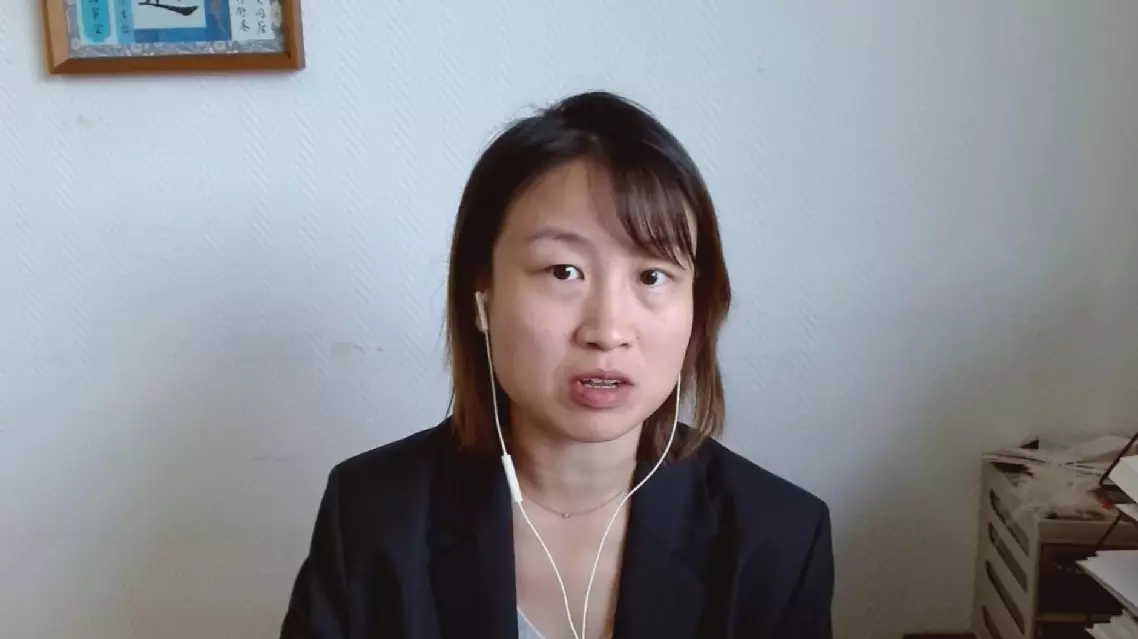
Trade tension with US prompts Canada to diversify trade structure: expert