Skip to Content Facebook Feature Image

Many Venezuelan immigrants shun Florida and turn to smaller cities in Utah, elsewhere

News

Many Venezuelan immigrants shun Florida and turn to smaller cities in Utah, elsewhere
News

News

Many Venezuelan immigrants shun Florida and turn to smaller cities in Utah, elsewhere

2026-09-17 23:09 Last Updated At:23:21

MIDVALE, Utah (AP) — Snow-covered mountains ringing a valley of wide, free-flowing roads remind Venezuelan transplants that the growing suburbs south of Salt Lake City offer what Miami can’t.

One million Venezuelans were released into the United States after crossing the Mexican border during a record immigration surge, and many shunned Miami and other longtime immigrant footholds for smaller places with less established communities — a pattern found in an exclusive Associated Press analysis of federal data from fall 2018 to summer 2025.

More Images
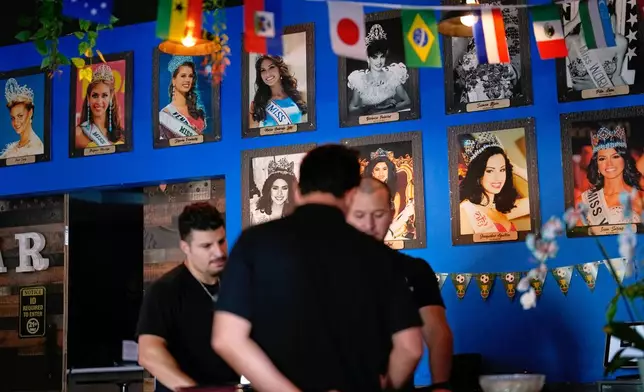
Photos of Venezuelan Miss Universe contestants line a wall at Arempa's restaurant Tuesday, July 14, 2026, in Midvale, Utah. (AP Photo/Gregory Bull)
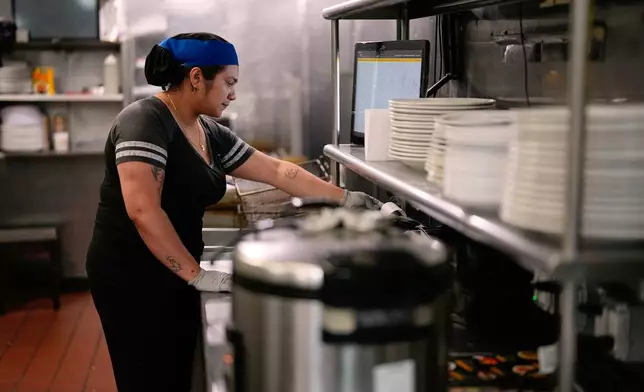
Photos of Venezuelan Miss Universe contestants line a wall at Arempa's restaurant Tuesday, July 14, 2026, in Midvale, Utah. (AP Photo/Gregory Bull)

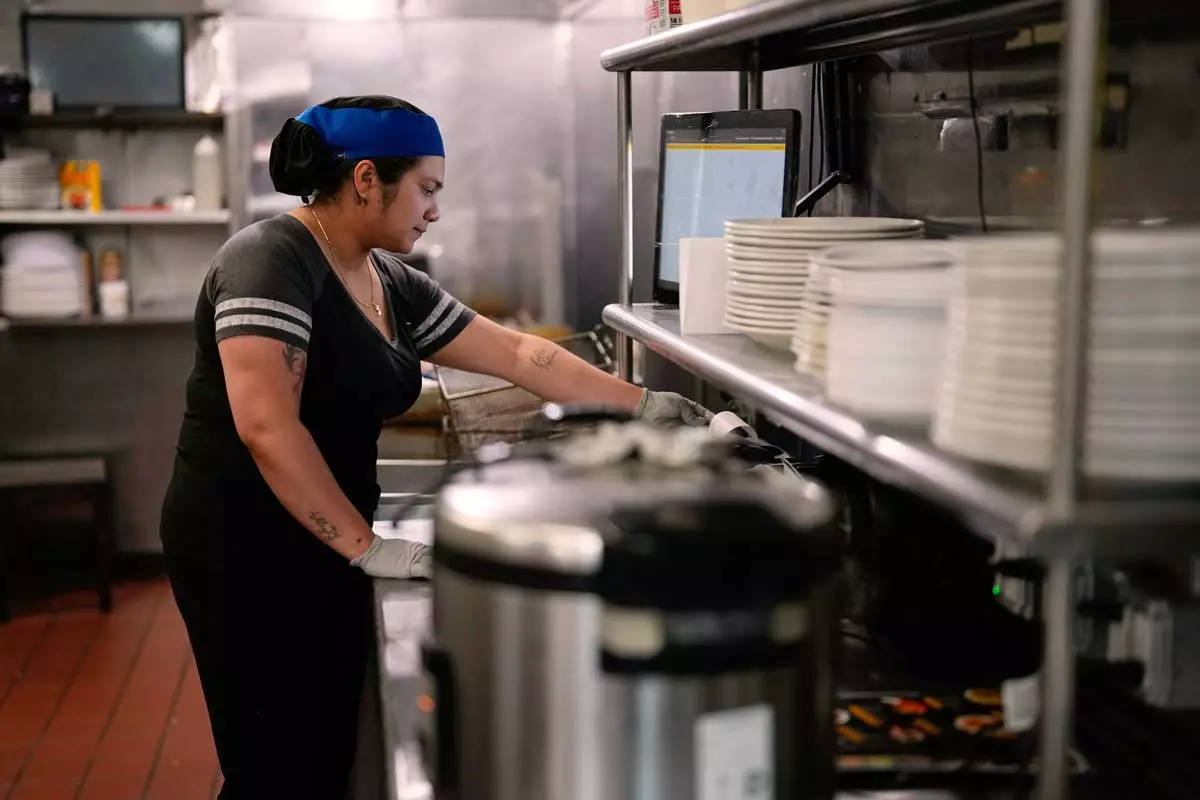
Dayana Ortega works at an Arempa's restaurant Tuesday, July 14, 2026, in Midvale, Utah. (AP Photo/Gregory Bull)
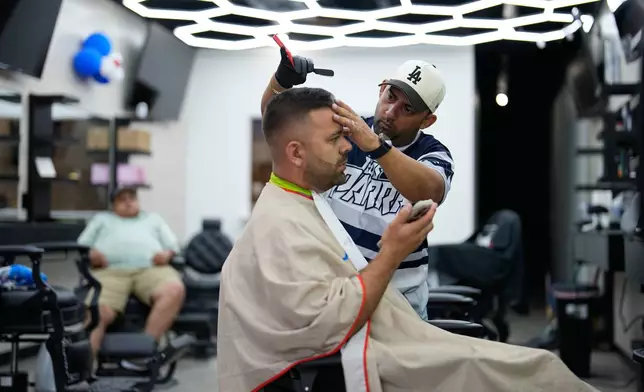
Dayana Ortega works at an Arempa's restaurant Tuesday, July 14, 2026, in Midvale, Utah. (AP Photo/Gregory Bull)

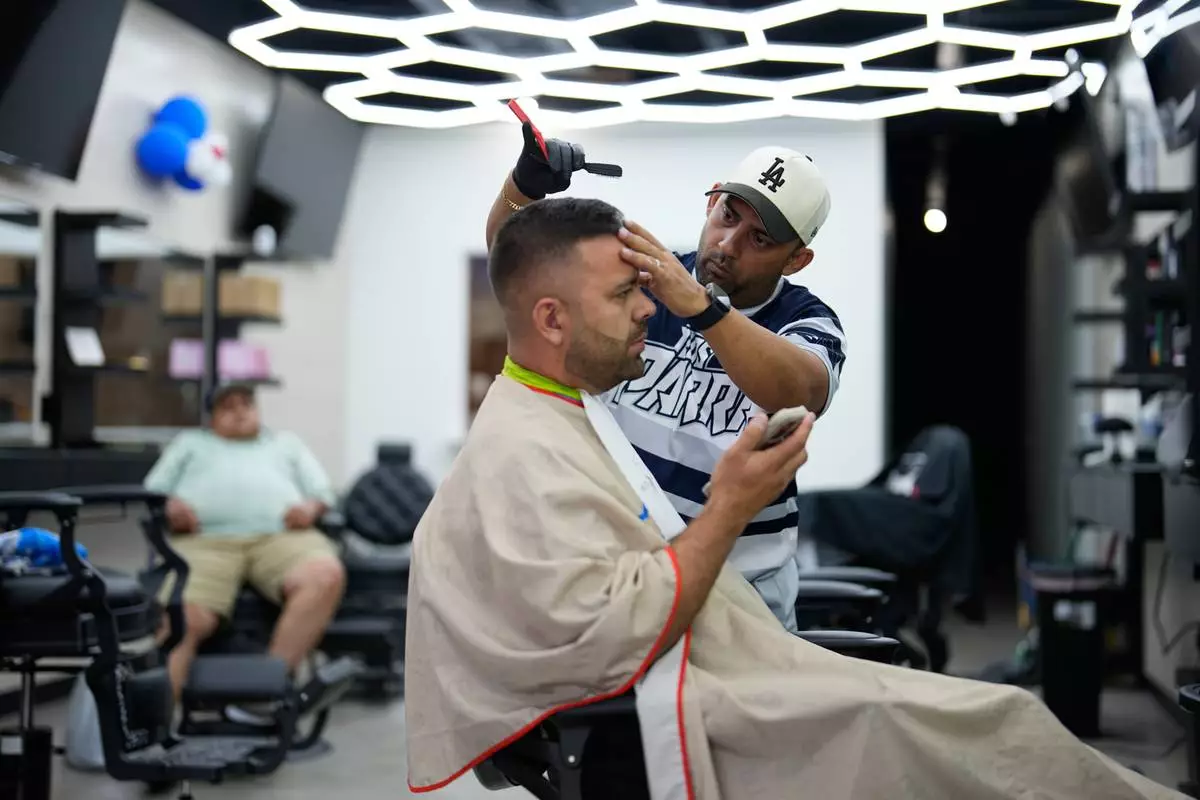
Barber Diego Contreras cuts the hair of fellow Venezuelan Diego Parra on Wednesday, July 15, 2026, in Midvale, Utah. (AP Photo/Gregory Bull)
Barber Diego Contreras cuts the hair of fellow Venezuelan Diego Parra on Wednesday, July 15, 2026, in Midvale, Utah. (AP Photo/Gregory Bull)

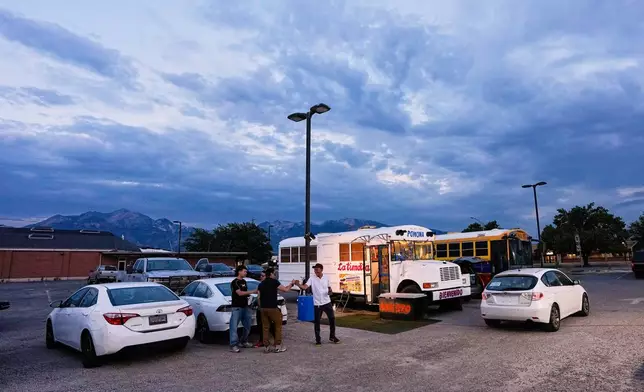
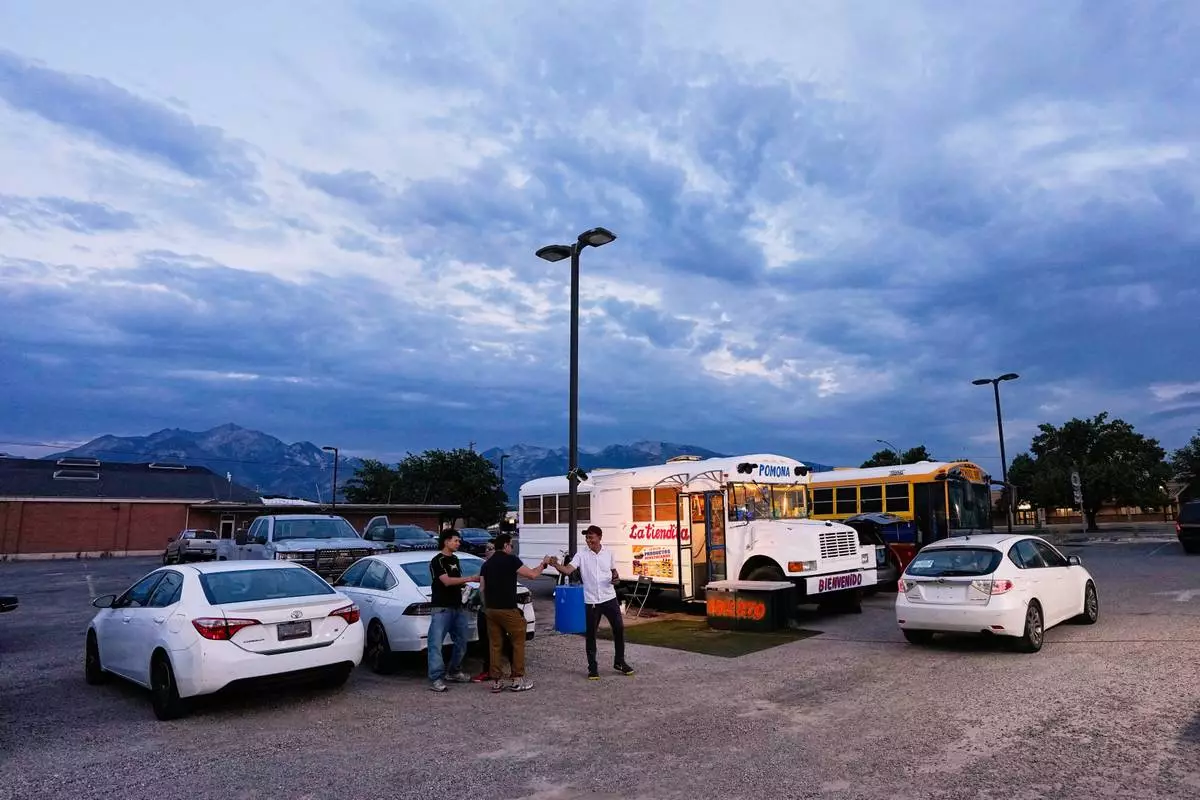
Venezuelan Jadiel Rodriguez greets people in front of his school bus turned store, catering to Venezuelan products Tuesday, July 14, 2026, in Midvale, Utah. (AP Photo/Gregory Bull)
Venezuelan Jadiel Rodriguez greets people in front of his school bus turned store, catering to Venezuelan products Tuesday, July 14, 2026, in Midvale, Utah. (AP Photo/Gregory Bull)

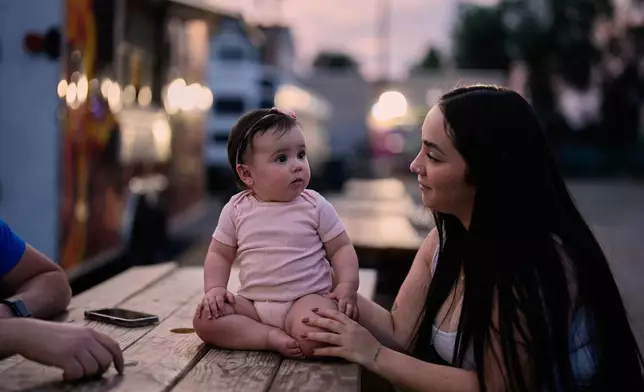
A Venezuelan mother sits with her daughter among food trucks Tuesday, July 14, 2026, in Midvale, Utah. (AP Photo/Gregory Bull)

A Venezuelan mother sits with her daughter among food trucks Tuesday, July 14, 2026, in Midvale, Utah. (AP Photo/Gregory Bull)

These cities and towns promised better jobs, cheaper homes, less traffic and higher quality of life, outweighing Florida’s allure of tropical weather and ease of getting by on Spanish alone.

Enrique Vera, 32, crossed the border in Yuma, Arizona, in 2021 and went to Miami to settle with his mother, who’d been there six years. But he found Florida untenable, he told AP: “the work, the conditions, the low pay.”

After less than two weeks there, Vera and his mother accepted a cousin’s invitation to Utah. In the southern suburbs, with massive new housing tracts and pristine shopping centers, Vera found factory work but soon quit to turn a hobby baking for co-workers into his own business. Today he employs 15 people — many, like him, asylum seekers — at a warehouse and two bakeries.

Utah — known as a relatively immigrant-friendly state despite deep Republican roots and support for President Donald Trump — became a top destination for Venezuelans crossing the border, along with parts of the Chicago, Denver, Atlanta, Dallas and Houston metro areas, AP’s data show. Venezuelans also went to smaller cities including Madison, Wisconsin; Albuquerque, New Mexico; and Savannah, Georgia.

It’s a pattern playing out across the U.S.: Some Cubans eschewed Florida and went to Louisville, Kentucky, and Odessa, Texas; Colombians chose the Boston and Denver areas; and Paterson, New Jersey, was the top pick among Peruvians.

Venezuelans stand out for their sheer numbers. About 8 million people, or one-fourth of the country’s population, have fled since 2014, many to the United States. About 30,000 of the 1 million released into the U.S. in AP’s data said they were going directly to Utah.

Despite the growing population here, there are few Venezuelan flags, bumper stickers or displays of patriotism on the bustling commercial strips of Midvale, an older suburb of about 40,000 people at the interchange of two highways.

President Donald Trump’s immigration crackdown instilled fear and made Venezuelans less visible since 2023, when arrivals peaked in Utah and in the United States as a whole. Everyone here seems to know someone who returned to Venezuela voluntarily because they feared being detained and deported or because they lost their work authorization.

In May 2025, Alberto Salcedo opened the parking lot of his Centro de Apoyo Familiar Church to Venezuelan food trucks. The asylum-seeking evangelical pastor dreamed of creating a vibrant gathering spot for Venezuelan immigrants. Nearly 20 vendors and 5,000 visitors came each week, he said, with trucks serving empanadas, arepas, even burgers and sushi. But that dropped down to maybe five vendors and a few hundred people. The fear of deportation is real, he said.

Carlos Trujillo, a 42-year-old lawyer who handles immigration cases, puts Venezuelan immigrants in three categories: those who came for the Church of Jesus Christ of Latter-day Saints; those who came to join family or friends; and those who came knowing no one. He has repeatedly heard variations of, “This is a place where I can bring my family and have a start.”

Many Venezuelan immigrants here work in food service — at restaurants or selling meals from their homes. Some proudly noted that a local Walmart now stocks special flour for arepas.

Others cycle through low-wage jobs: construction, nail salons, warehouse and factory work.

Gonzalo Rodriguez, 39, worked as a laborer, carpenter and office manager before rising to general manager of Fillerup Employment Services, a construction company. He said it had about 25 Venezuelans in its workforce of about 300 when he arrived in 2020. By 2022, that grew to 165.

In the 2024 election, Trump — and his immigration enforcement campaign messages — won Utah by 22 points. The same year, Carlos Moreno, who won asylum after fleeing Venezuela in 2009, was elected to the Salt Lake County Council.

The state’s immigrant-friendly reputation is tied to the Utah Compact, a 2010 document signed by hundreds of local governments, businesses and civic leaders that endorses “common-sense immigration reforms that will strengthen our economy, as well as attract talent and business to our state.”

But Trujillo, the immigration attorney, said goodwill cooled during the Biden-era immigration surge and some elected leaders who were allies became more guarded in public comments.

Gov. Spencer Cox called the Venezuelan Tren de Aragua gang “a growing threat in Utah” in 2024, but few major crimes in the state have been linked to the group.

Some asylum seekers were told to wait 10 years for an initial appointment in 2023, but the government has moved aggressively to winnow the backlog. Still, about 500,000 Venezuelans have pending cases in immigration court, more than any other nationality.

Loreana Pachano, who spent much of her childhood in Miami, has been waiting 10 years for an asylum interview. She was increasingly impatient but now wonders whether she might do better if her case remains open until after Trump leaves office.

“It feels like we’re building on quicksand. We’re trying to build a future here for ourselves, for our kids,” said Pachano, who flips homes and owns trucking and construction businesses with her husband while raising their 3- and 7-year-old daughters.

“Are we going to be here by the time we reach retirement age? We don’t know. You don’t know when the rug is going to be pulled right under your feet.”

Associated Press reporter Aaron Kessler contributed to this report.
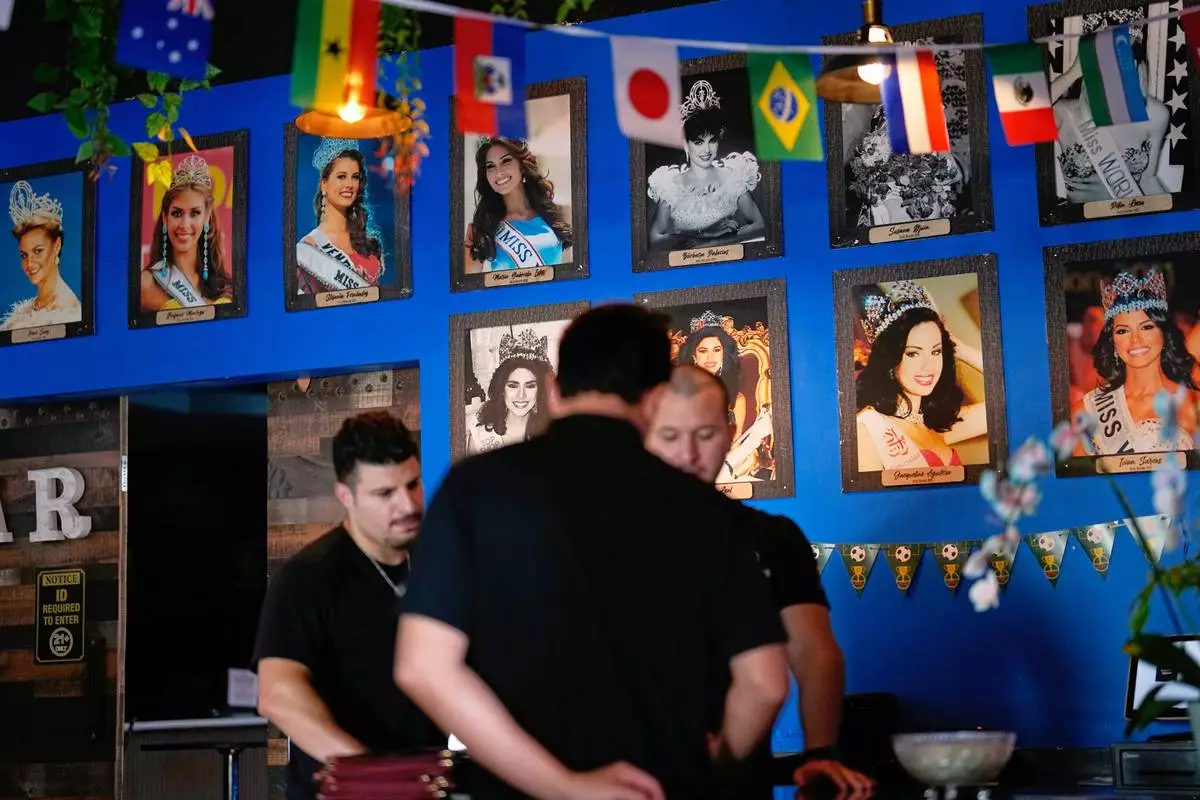
Photos of Venezuelan Miss Universe contestants line a wall at Arempa's restaurant Tuesday, July 14, 2026, in Midvale, Utah. (AP Photo/Gregory Bull)
Photos of Venezuelan Miss Universe contestants line a wall at Arempa's restaurant Tuesday, July 14, 2026, in Midvale, Utah. (AP Photo/Gregory Bull)

Dayana Ortega works at an Arempa's restaurant Tuesday, July 14, 2026, in Midvale, Utah. (AP Photo/Gregory Bull)
Dayana Ortega works at an Arempa's restaurant Tuesday, July 14, 2026, in Midvale, Utah. (AP Photo/Gregory Bull)

Barber Diego Contreras cuts the hair of fellow Venezuelan Diego Parra on Wednesday, July 15, 2026, in Midvale, Utah. (AP Photo/Gregory Bull)
Barber Diego Contreras cuts the hair of fellow Venezuelan Diego Parra on Wednesday, July 15, 2026, in Midvale, Utah. (AP Photo/Gregory Bull)

Venezuelan Jadiel Rodriguez greets people in front of his school bus turned store, catering to Venezuelan products Tuesday, July 14, 2026, in Midvale, Utah. (AP Photo/Gregory Bull)

Venezuelan Jadiel Rodriguez greets people in front of his school bus turned store, catering to Venezuelan products Tuesday, July 14, 2026, in Midvale, Utah. (AP Photo/Gregory Bull)

A Venezuelan mother sits with her daughter among food trucks Tuesday, July 14, 2026, in Midvale, Utah. (AP Photo/Gregory Bull)

A Venezuelan mother sits with her daughter among food trucks Tuesday, July 14, 2026, in Midvale, Utah. (AP Photo/Gregory Bull)
NEW YORK (AP) — U.S. stocks are rising Thursday and recovering most of their losses for the week.

Falling oil prices and easing pressure from the bond market helped Wall Street reverse many of its moves from the prior day, when the Federal Reserve hiked its main interest rate for the first time in years and suggested more may be ahead as it tries to get the nation’s high inflation under control.

The S&P 500 climbed 0.9% and was on track for just its second rise in the last nine days. The Dow Jones Industrial Average was up 213 points, or 0.4%, as of 11 a.m. Eastern time, and the Nasdaq composite was 1.4% higher.

Stocks got a boost after the price for a barrel of Brent crude oil slid 2.3% to $103.38. That’s down sharply from the nearly $110 it reached earlier in the week on worries that the war with Iran will keep oil bottled up in the Middle East instead of going to customers worldwide.

Brent is of course still much more expensive than the $72 per barrel that it cost earlier this summer, but Thursday’s slide helped pull yields lower in the bond market and removed some pressure on stocks. The yield on the 10-year Treasury fell to 4.95% from 5.01% late Wednesday.

Higher yields make it more expensive for everyone to borrow money, from the U.S. government to people looking to buy houses to businesses wanting to build data centers. That in turn slows the economy.

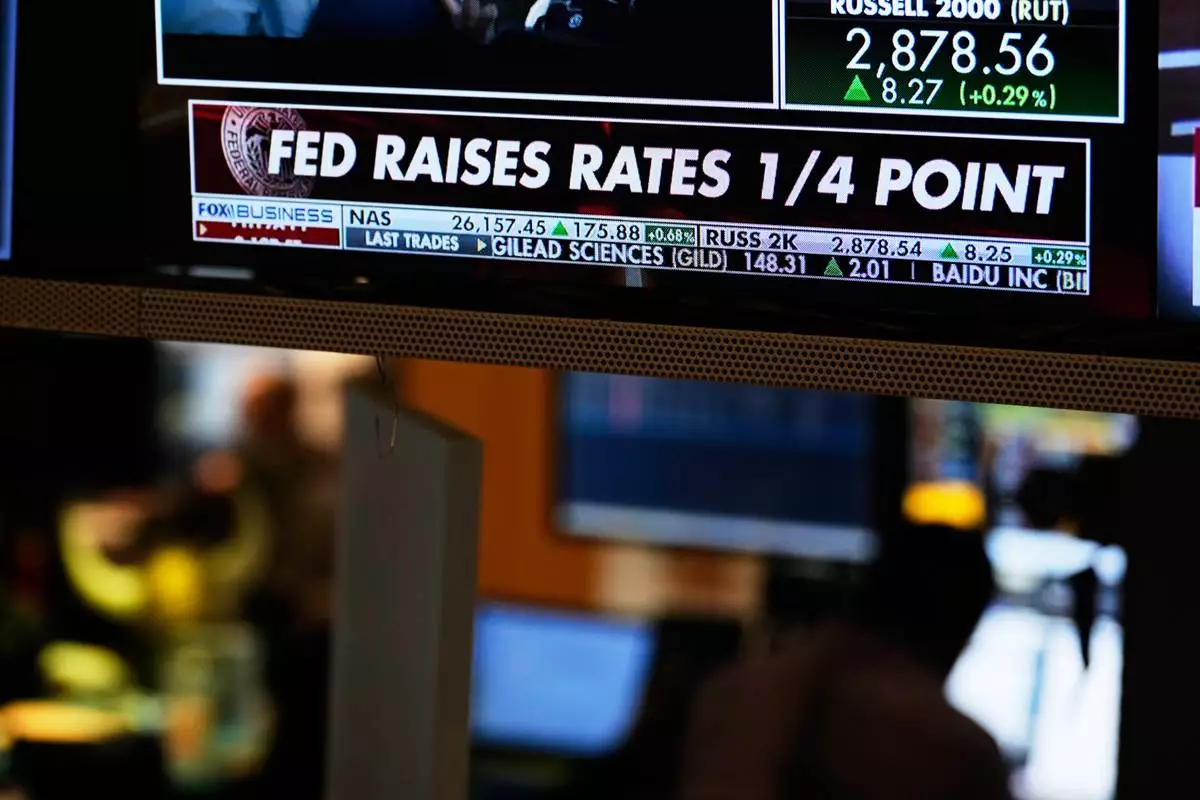
The Fed on Wednesday raised the short-term interest rate that it controls, the federal funds rate, by a quarter of a percentage point for its first hike in more than three years. Officials also indicated at least one more increase may be coming this year and that the Fed may then keep the federal funds rate high through next year.

The signals sent Wall Street on a roller coaster. Stocks initially held onto their gains from earlier in the day after the Fed made its announcement Wednesday. They then slid sharply before recovering a chunk of the losses before trading ended for the day.

On the upside for markets, the shift to higher interest rates built confidence that the Fed is committed to getting inflation back to its target of 2%. Questions had begun to bubble in the summer about whether it would feel pressure from President Donald Trump, who is calling for lower interest rates. And the short-term cost of pain for the economy could be worth it if it gets inflation under control following years of staying too high.

On the downside for markets, higher rates undercut prices for stocks and other investments. When investors are earning more in interest from owning bonds, which are considered safer investments, they’re less willing to pay high prices for other kinds of investments. That’s beyond the effect higher rates have on slowing the economy in hopes of removing fuel for inflation.

Some reports on Thursday signaled the U.S. economy may be strong enough to withstand higher interest rates. One said fewer U.S. workers applied for unemployment benefits last week. Another said that manufacturing growth in the mid-Atlantic region was stronger than economists expected.

Fed Chairman Kevin Warsh said on Wednesday that a strengthening economy is one of the reasons Fed officials moved to raise interest rates after keeping them on hold earlier this year.

He also cited “geopolitics,” along with the threat that increases in prices it’s causing could filter out and push up inflation elsewhere. That’s likely a nod to the war with Iran and its effect on oil prices.

On Wall Street, stocks in the artificial-intelligence industry continued to rebound following their worldwide slide on Monday.

Nvidia climbed 2.5%, and Advanced Micro Devices rose 5.8%. That was even though OpenAI disclosed six more reports of “unexpected or concerning” behavior in AI models. Leaders of the AI industry over the weekend called for a slowdown in development to address safety issues for humanity

Stocks of several homebuilders also rose, even though a report showed the industry broke ground on fewer new homes last month than economists expected. The housing industry has been one of the hardest hit by the climb for the 10-year Treasury’s yield, which topped 5% this week for the first time since 2023 and has sent mortgage rates higher.

Thursday’s ease in yields helped offer some support, and D.R. Horton rose 2.6%, while PulteGroup added 1.4%. Rival Lennar swung from an early loss to a gain of 1.3% after reporting weaker profit and revenue for the latest quarter than analysts expected.

In stock markets abroad, indexes rose across much of Europe following a weaker finish in Asia.

London’s FTSE 100 rose 1.2% after the Bank of England decided to keep its interest rates on hold.

AP Business Writers Chan Ho-him and Michelle Chapman contributed to this report.

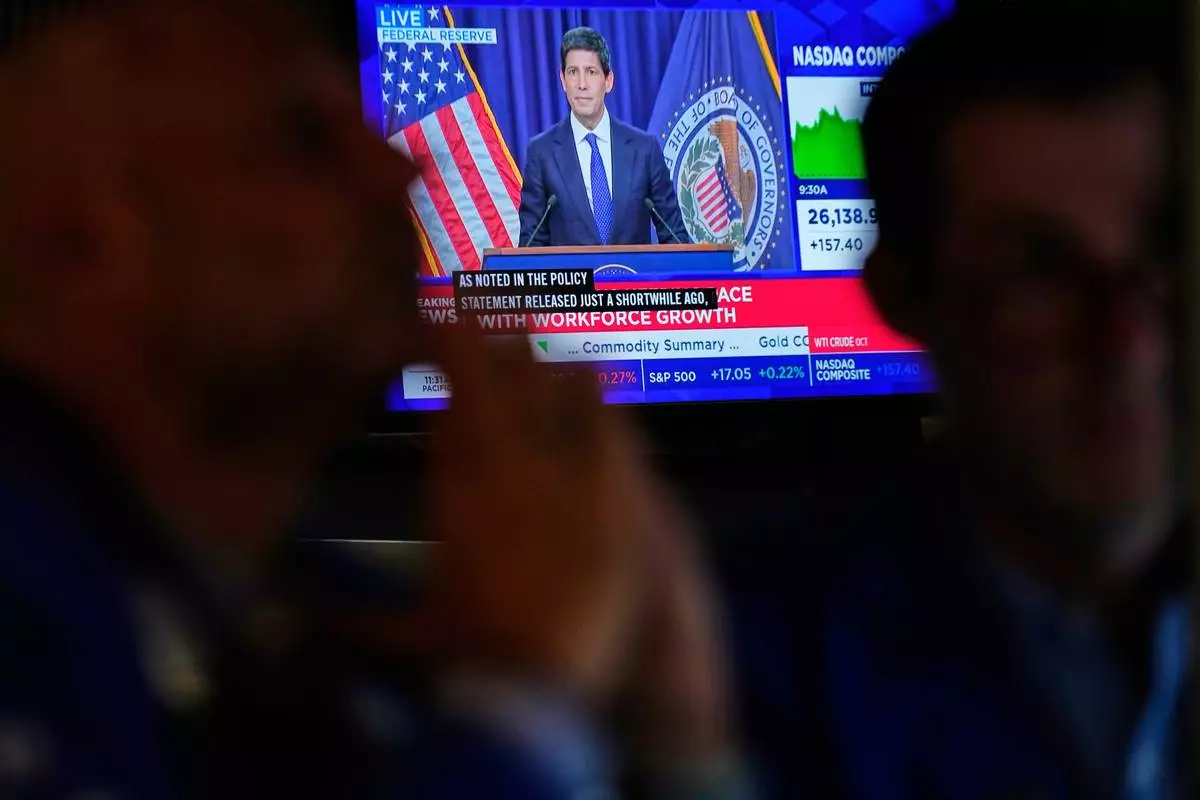
Traders work on the floor at the New York Stock Exchange in New York, Wednesday, Sept. 16, 2026. (AP Photo/Seth Wenig)

Traders work on the floor at the New York Stock Exchange in New York, Wednesday, Sept. 16, 2026. (AP Photo/Seth Wenig)

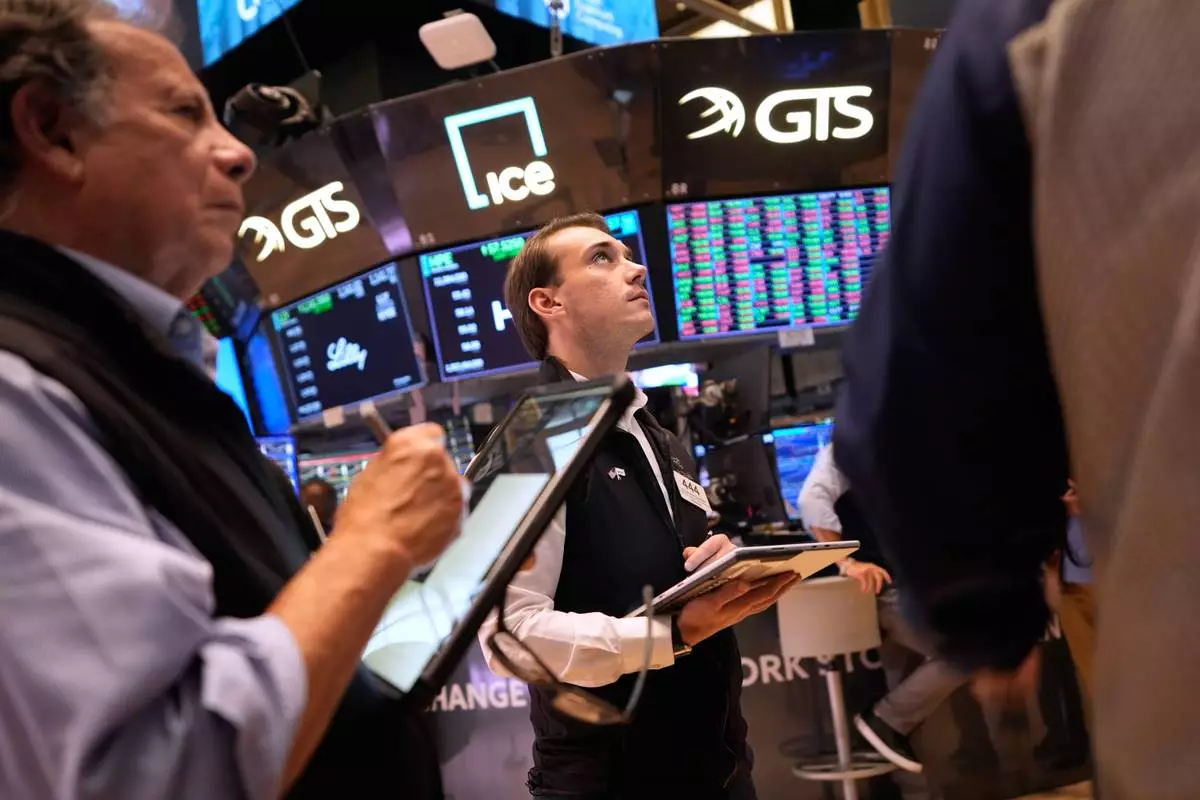
Screens display a news conference held by Federal Reserve chairman Kevin Warsh on the floor of the New York Stock Exchange in New York, Wednesday, Sept. 16, 2026. (AP Photo/Seth Wenig)

Screens display a news conference held by Federal Reserve chairman Kevin Warsh on the floor of the New York Stock Exchange in New York, Wednesday, Sept. 16, 2026. (AP Photo/Seth Wenig)

Screens display financial information on the floor at the New York Stock Exchange in New York, Wednesday, Sept. 16, 2026. (AP Photo/Seth Wenig)

Screens display financial information on the floor at the New York Stock Exchange in New York, Wednesday, Sept. 16, 2026. (AP Photo/Seth Wenig)

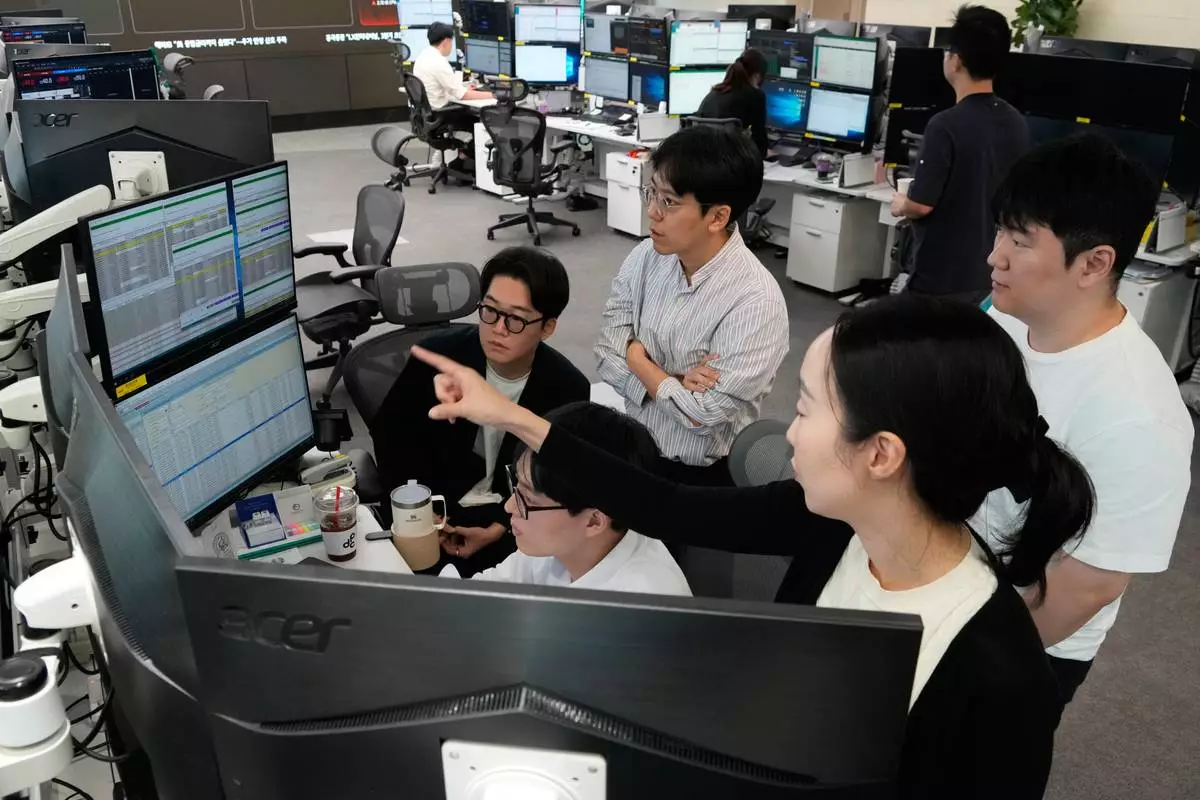
Currency traders work at the foreign exchange dealing room of the Hana Bank headquarters in Seoul, South Korea, Thursday, Sept. 17, 2026. (AP Photo/Ahn Young-joon)

Currency traders work at the foreign exchange dealing room of the Hana Bank headquarters in Seoul, South Korea, Thursday, Sept. 17, 2026. (AP Photo/Ahn Young-joon)

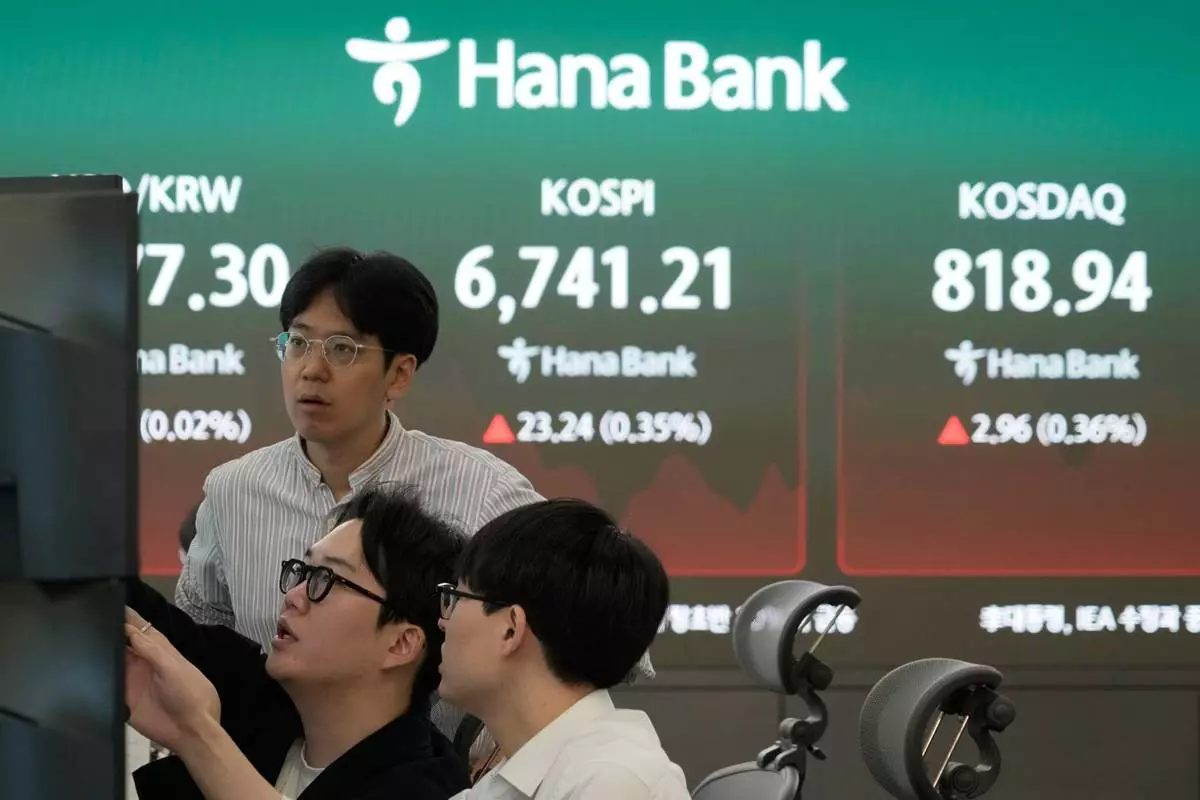
Currency traders watch monitors near a screen showing the Korea Composite Stock Price Index (KOSPI) at the foreign exchange dealing room of the Hana Bank headquarters in Seoul, South Korea, Thursday, Sept. 17, 2026. (AP Photo/Ahn Young-joon)

Currency traders watch monitors near a screen showing the Korea Composite Stock Price Index (KOSPI) at the foreign exchange dealing room of the Hana Bank headquarters in Seoul, South Korea, Thursday, Sept. 17, 2026. (AP Photo/Ahn Young-joon)

Currency traders pass by a screen showing the Korea Composite Stock Price Index (KOSPI) at the foreign exchange dealing room of the Hana Bank headquarters in Seoul, South Korea, Thursday, Sept. 17, 2026. (AP Photo/Ahn Young-joon)

Currency traders pass by a screen showing the Korea Composite Stock Price Index (KOSPI) at the foreign exchange dealing room of the Hana Bank headquarters in Seoul, South Korea, Thursday, Sept. 17, 2026. (AP Photo/Ahn Young-joon)

Recommended Articles