KUALA LUMPUR, Malaysia (AP) — Malaysia’s king on Friday granted jailed former Prime Minister Najib Razak a rare royal clemency, allowing him to serve the remainder of his prison term for graft under house arrest.
The decision came at a suddenly convened Pardons Board meeting, a week after the board deferred Najib’s latest clemency application to a future meeting. It marked an unprecedented use of house arrest as a form of royal clemency in Malaysia and could renew debate over royal powers, the rule of law and the treatment of Malaysia’s most prominent corruption convict.
A statement issued by the Legal Affairs Department under the Prime Minister's office said Sultan Ibrahim Iskandar has granted a “conditional pardon” for Najib during a Pardons Board meeting. Najib will be allowed to serve the remainder of his prison term under house arrest until Aug. 23, 2028, if he pays the 50 million ringgit fine ($12 million) imposed by the court, it said.
The statement said Najib must also follow conditions set, failing which the pardon will be forfeited. No details were provided.
Najib, 73, has been imprisoned since August 2022 after Malaysia’s top court upheld his conviction in a graft case linked to the multi-billion dollar looting of the state investment fund 1Malaysia Development Berhad.
He was originally sentenced to 12 years in prison and fined 210 million ringgit ($51.5 million) in 2020 for abuse of power, criminal breach of trust and money laundering involving 42 million ringgit ($10.3 million) channeled into his bank accounts from SRC International, a former unit of 1MDB.
In January 2024, a Pardons Board chaired by the then-king halved his sentence to six years and reduced his fine to 50 million ringgit.
Najib has maintained the previous king, Sultan Abdullah Ahmad Shah, also issued an addendum order allowing him to serve the remainder of his sentence under house arrest. But the High Court ruled that the alleged house arrest order was not enforceable because it had not been raised or discussed by the Pardons Board at its January 2024 meeting.
The house-arrest order also raises questions about a separate graft sentence for Najib.
In December 2025, Najib was found guilty for abuse of power and money laundering related to over $700 million channeled into his bank accounts from 1MDB, in his main trial tied to the fund. He was sentenced to another 15 years in prison and fined 11.4 billion ringgit ($2.8 billion), which is to take effect after his existing sentence ends. He is appealing that conviction.
House arrest had been discussed as part of broader criminal-justice reforms in Malaysia. In 2024, the government said proposed legislation allowing home detention in certain circumstances was aimed at reducing prison overcrowding and recidivism, not designed specifically for Najib.
Najib set up the 1MDB development fund shortly after he took office in 2009. Investigators allege at least $4.5 billion was stolen from the fund and laundered by Najib’s associates through layers of bank accounts in the U.S. and other countries. The funds were allegedly used to finance Hollywood films and extravagant purchases that included hotels, a luxury yacht, art and jewelry.
A national outrage over the 1MDB scandal led to the historic 2018 election defeat of the party that had governed Malaysia since independence from Britain in 1957.
Despite his conviction, Najib still holds clout in his party, the United Malays National Organization, which is now part of Prime Minister Anwar Ibrahim's unity government that took power after the 2022 elections.
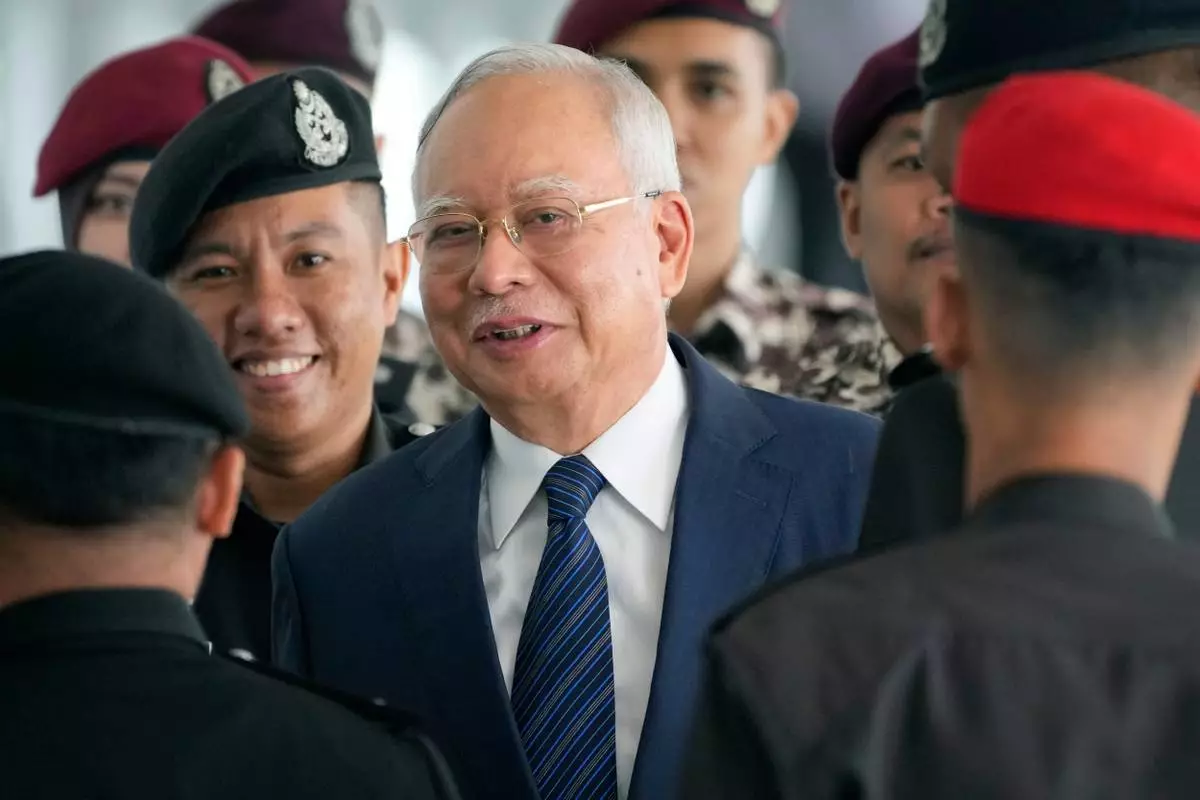
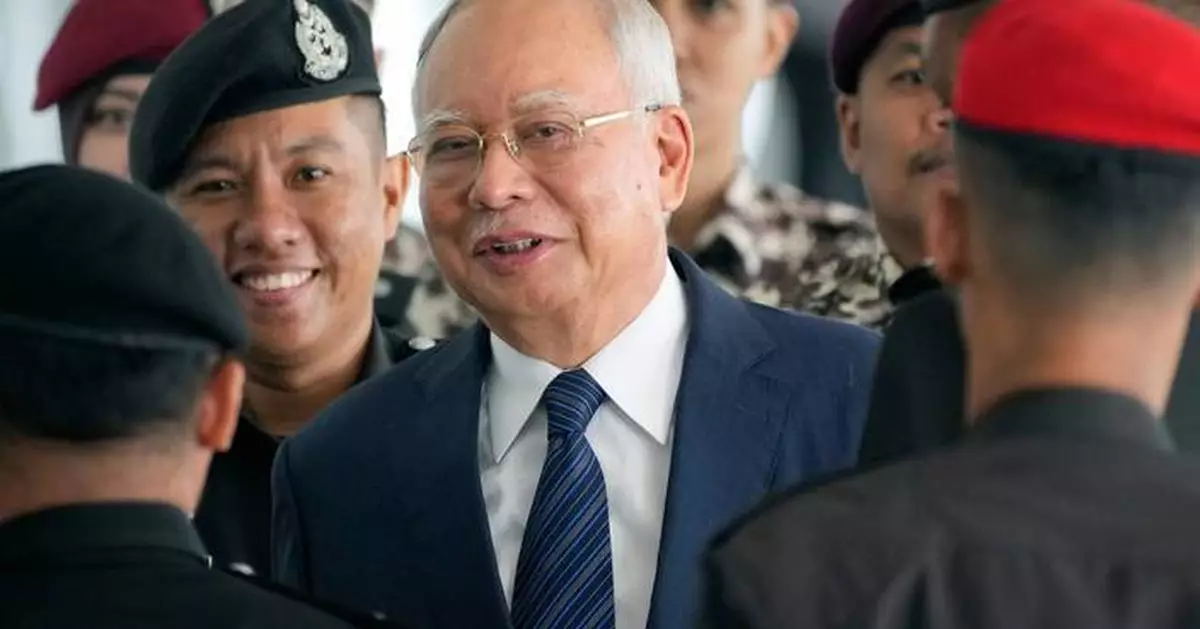
FILE - Former Malaysian Prime Minister Najib Razak arrives at the Kuala Lumpur High Court complex escorted by prison officers in Kuala Lumpur, Malaysia, on April 4, 2024. (AP Photo/Vincent Thian, File)
Watching her staff happily hand out free meals for hundreds of residents outside their Wailua commercial kitchen, food truck co-owner Kelly Kakalia felt fulfilled.
It was the day after Hurricane Lowell finished knocking out power, washing out roads and felling trees across Kauai, and Kakalia was focused on her community, not sales. The island where she was born and raised needed time to get back on its feet and put locals first.
But now The Musubi Truck, Kakalia's family-run business with three locations, has had to lay off half its 50-person staff and shut down one truck. Since the Sept. 7 storm, there is simply not enough demand for their poke bowls, spam musubi and bento boxes.
Officials and some residents asked in the wake of Lowell for tourists to reconsider plans to visit Kauai, an island that can see over 28,000 visitors on a given day. Tourists might exhaust limited resources and clog roads needed for utility restoration and aid delivery, and some hotels and vacation rentals were badly damaged.
Kakalia is grateful would-be visitors heeded calls to give the island space to recover, work that continues since the storm. But she and other small business owners across the island worry too long a pause will wreak economic havoc, forcing more layoffs and creating financial gaps too big to recover from.
“Now that power and water is being restored, we should start to switch the narrative before many of us go out of business,” said Kakalia, 36. “People are canceling their trips in November.”
When visitors should return is a familiar dilemma on Hawaii, where tourism injected $21.75 billion into the economy last year, according to state data. After disaster, crowds of sometimes less-than-conscientious tourists can be logistical and emotional barriers to recovery. At some point, however, they are key to jump-starting much of the economy.
That tension was especially pronounced on Maui, after wildfires wiped out the historic town of Lahaina in 2023, killing more than 100 people.
On Thursday, Kauai County Mayor Derek Kawakami said Kauai is now “welcoming visitors back,” while asking them to respect the ongoing recovery. “Come with patience, spend local, and help us recover,” he said.
More than 3,000 Kauai households and businesses still lack power, with some areas still required to conserve water. Affected residents need generators, financial assistance, food, and help removing debris and mucking out property.
The community has led recovery efforts, donating supplies, setting up relief hubs, distributing gas and generators, and offering up tools and vehicles to move trees and clean up damaged neighborhoods.
As the work progresses, some businesses feel ready to at least partially open to customers, but foot traffic is slow.
“It’s scary out there,” said Kristal Scott of Kauai Juice Co., the business she has run for 16 years. “Other businesses are already shutting their doors.”
Scott’s three juice bar locations and warehouse went dark after Lowell, and one store remains without power. Most of the fresh product spoiled, though Scott held on to her frozen goods by running a freezer off generators filled with pricey fuel.
All her shops sustained minor damage, but not enough for Scott, 41, to receive a meaningful insurance payout despite paying for business interruption coverage.
With sales down 85%, Scott had to let go of half of her 45 employees, though she hopes they return when things improve. “I beg them,” she said. “I'm like ‘Please, please, this is temporary.’ ”
The effects ripple beyond storefronts, spreading to farmers and fishermen who supply the hospitality industry along with the local food supply chain.
“It’s not just about the money, or me, it’s about all the fishermen we’re supporting and their families and their livelihoods,” said Cadena Ragsdale, owner of Kauai Fresh Fish, a seafood supplier that sources 100% Hawaii-caught fish from local fishermen for hotels and restaurants. “Without us, where are they going to sell fish?”
Ragsdale's “heart sank” when she saw video of the terrible damage sustained at her largest client, a seaside restaurant on the south shore. Interrupted air cargo prevented her from shipping interisland. She laid off all but one of her eight-person team this week and is selling two vehicles to fill the gaps.
Even though the experience has been “eye-opening” for some small business owners about how much they rely on tourism, Ragsdale, 41, said the immediate focus is just staying afloat. If an area is closed, she said, “Don't go there." But, “Please come ... be patient, have respect and aloha.”
Hawaii Gov. Josh Green requested an expedited major federal disaster declaration for Kauai and Maui counties in response to Lowell, the latest in a series of climate disruptions this year including major flooding, Hurricane Lala and Tropical Storm Moke.
A disaster declaration would unlock the opportunity for low-interest loans from the Small Business Administration, though President Donald Trump has not yet approved the request. The state has made small business grant funding available for earlier disasters.
Mayor Kawakami said returning tourists should check with their accommodations and activity providers about possible interruptions, and cautioned that some beach parks, as well as communities on the far north shore, remain closed.
Those who do visit Kauai can help not just by spending locally, Kawakami said, but also signing up for volunteer opportunities listed on a county website.
Even those off island can find ways to support, like buying online gift cards from local shops.
The Musubi Truck already collected money online for its Feed Our Keiki program, which distributes free meals in the community. Now the program serves a double purpose.
“It helps us feed the kids, but it also supports our business," Kakalia said, "keeps us cooking.”
——
Associated Press coverage of philanthropy and nonprofits receives support through the AP’s collaboration with The Conversation US, with funding from Lilly Endowment Inc. The AP is solely responsible for this content. For all of AP’s philanthropy coverage, visit https://apnews.com/hub/philanthropy.
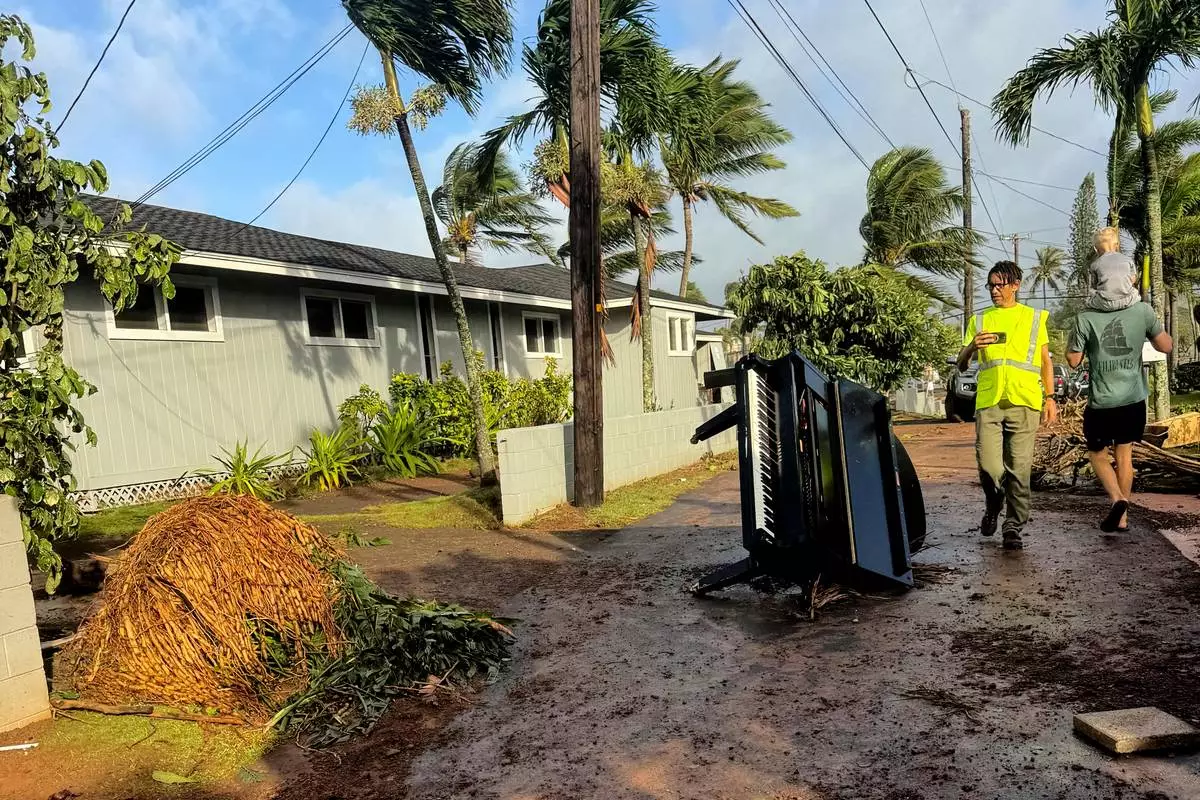
This photo taken by a smartphone, Damage caused by Hurricane Lowell is seen on Tuesday, Sept. 8, 2026 in Poʻipū on Kauaʻi's south shore, in Hawaii. (Guy Miller/Honolulu Civil Beat via AP)
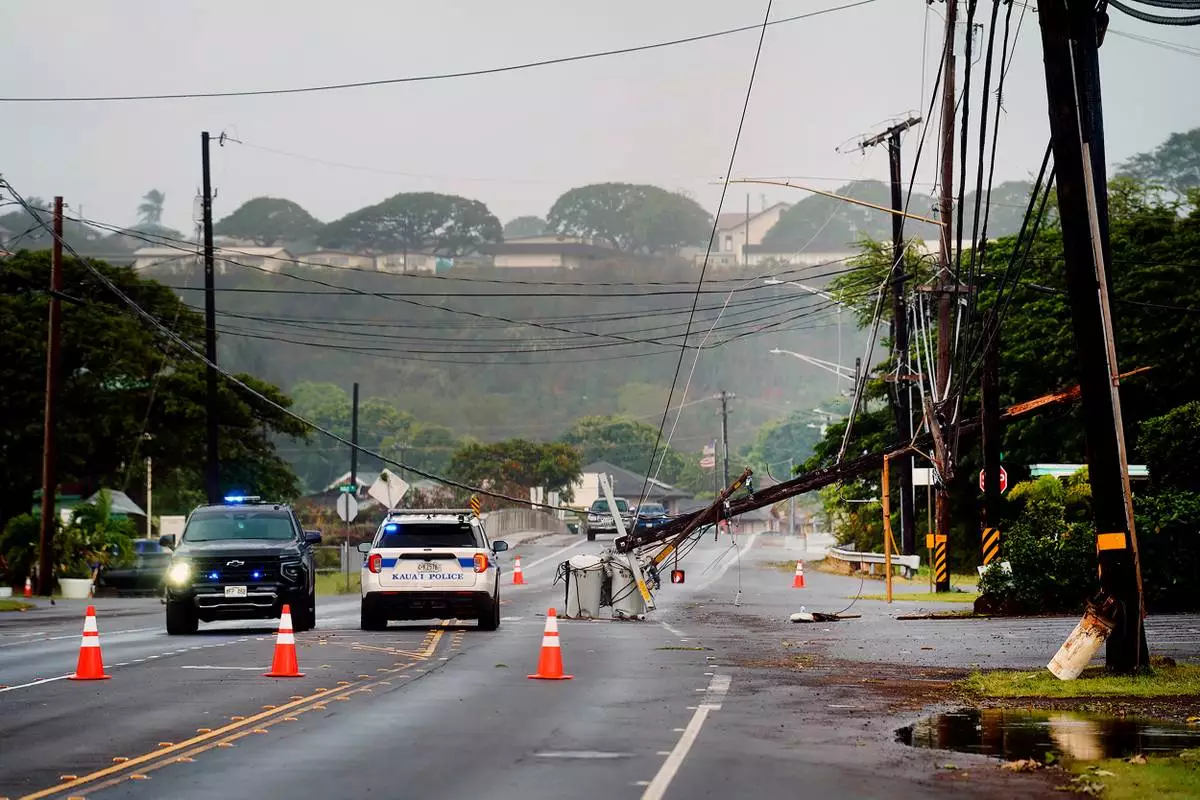
Downed power lines caused by Hurricane Lowell are seen across a road Tuesday, Sept. 8, 2026, in Hanapēpē, Kauaʻi, Hawaii. (Kevin Fujii/Honolulu Civil Beat via AP) CORRECTION: Location corrected from in Poʻipū on Kauaʻi's south shore to Hanapēpē.
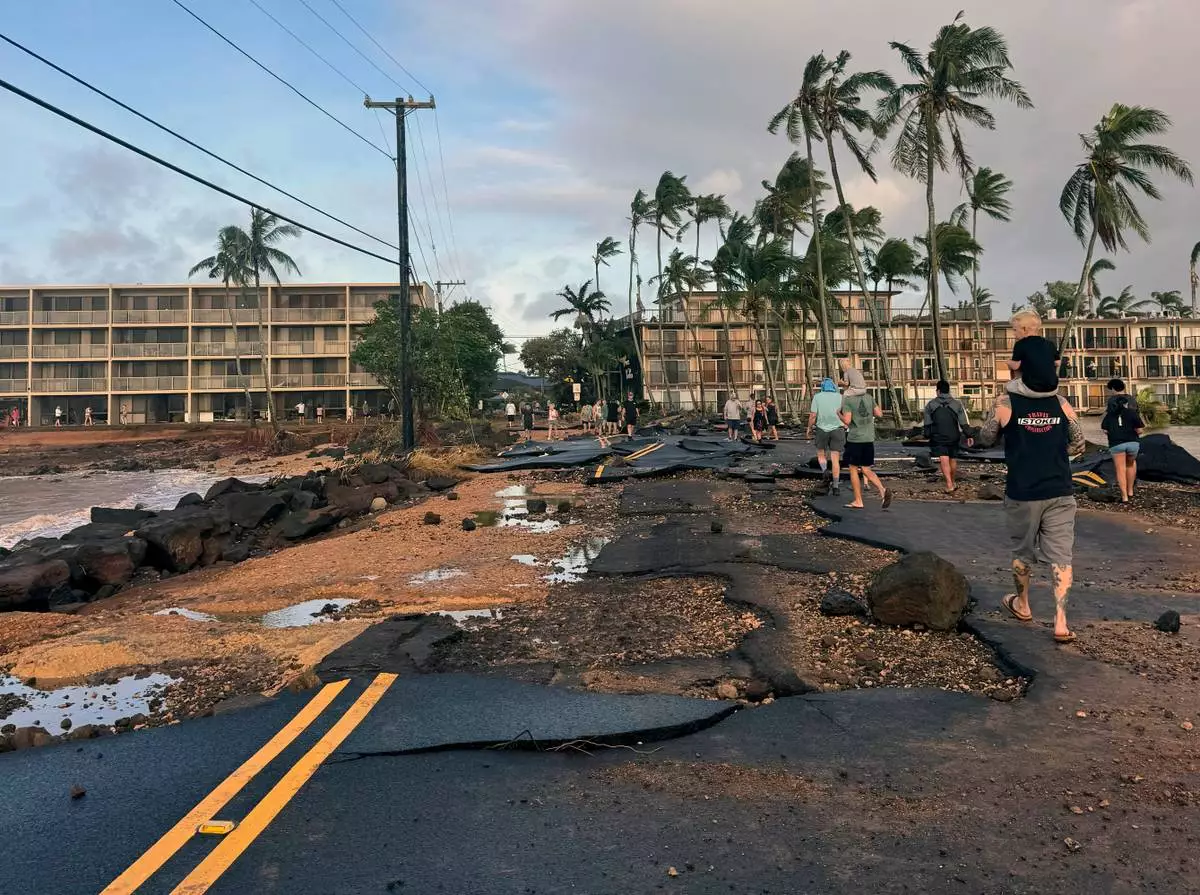
This photo taken with a smartphone, People walk past damage caused by Hurricane Lowell on Tuesday, Sept. 8, 2026 in Poʻipū on Kauaʻi's south shore, in Hawaii. (Guy Miller/Honolulu Civil Beat via AP)