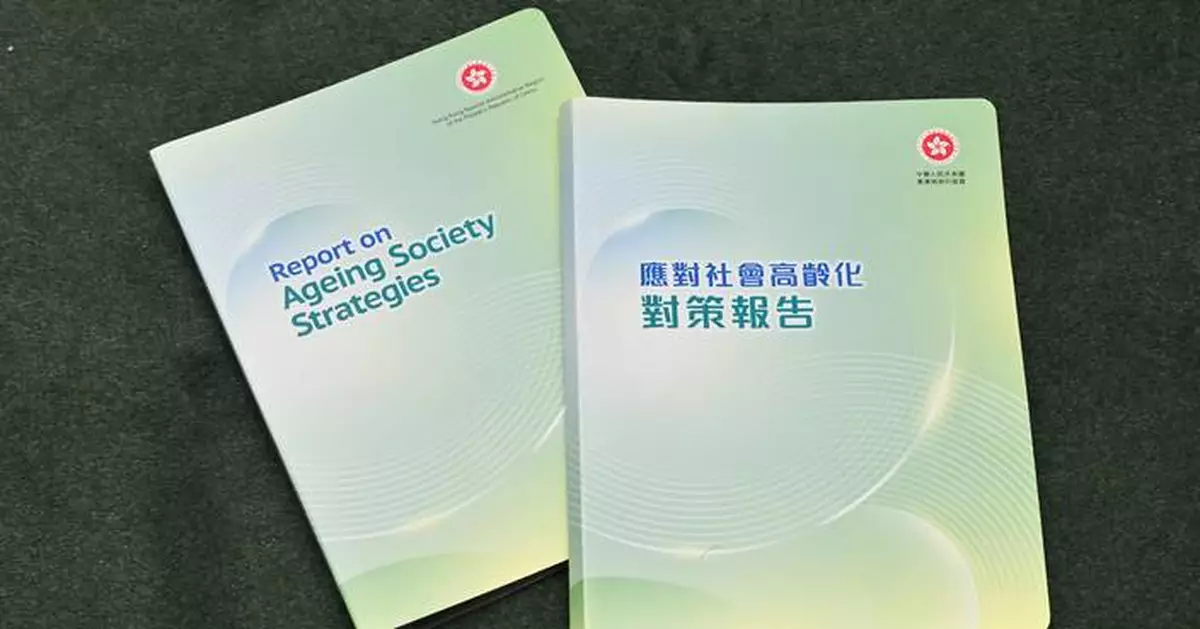
Government announces Report on Ageing Society Strategies
The Deputy Chief Secretary for Administration (DCS), MrCheukWing-hing, joined by the Secretary for Labour and Welfare (SLW), Mr Chris Sun, and the Secretary for Health, Professor Lo Chung-mau, held a press conference today (September 18) to announce the Report on Ageing Society Strategies (the Report) (see attachment).
Mr Cheuk said, "Hong Kong's society continues to age. It is projected that by 2046, the population aged 65 and above in Hong Kong will increase to 2.74 million, accounting for more than one-third of the total population. By then, approximately one in three Hong Kong residents will be an elder. In view of the challenges brought by an ageing society, the Government and all sectors of society must plan ahead. Since its establishment in November last year, the Working Group on Ageing Society Strategies (the Working Group) has comprehensively reviewed and explored the policies and measures of various bureaux in response to our ageing society, and has submitted the Report to the Chief Executive. The Report puts forward 73 strategic measures, including innovative and new measures as well as enhanced measures, representing the collective effort of cross-departmental collaboration to address the challenges brought by an ageing society."
The strategic measures cover 11 areas, including elderly health care; elderly residential care services; cross-boundary elderly care; elderly community and living support; leveraging technology for "smart ageing"; elderly-friendly urban planning and design; elderly travel, social life and learning; elderly financial security and safety; human resources and public finances; silver economy, industries and opportunities; as well as after-death planning and related services. These multipronged strategic measures not only cater to the needs of the elderly across different aspects, but also comprehensively tackle the challenges spawned by an aging society.
Among the measures put forward in the Report, on elderly health care, the Health Bureau (HHB) will strengthen healthcare services, facilities and manpower. It will integrate the services of Elderly Health Centres this year by increasing the number of service points and service capacity, providing more comprehensive health assessments and reducing waiting time with appropriate referrals to the Primary Healthcare Co-care Network for chronic disease management. The HHB will also explore including additional pilot medical institutions under the Elderly Health Care Voucher Greater Bay Area Pilot Scheme, and facilitate health management and cross-boundary health record sharing through eHealth in an orderly manner. The services of the Chinese Medicine Hospital of Hong Kong and the Integrated Chinese-Western Medicine Services of the Hospital Authority (HA) will also be enhanced, covering diseases common among the elderly. As regards healthcare facilities and manpower, the HHB will take into consideration the service needs arising from an ageing population when reviewing the Second Hospital Development Plan. Moreover, the HHB has commissioned the HA to carry out a new round of the healthcare manpower projection exercise, under which the supply and demand of healthcare manpower will be assessed taking into account factors such as demographic and age structure shifts (including an ageing society).
For elderly residential care services and community care services, as announced in the Policy Address, the Labour and Welfare Bureau (LWB) will increase the number of subsidised long-term care places for the elderly by around 3500 by end 2027. Moreover, the LWB will provide, on a pilot basis, residential care home for the elderly premises newly built by the Government to the industry for self-financed operation to increase the overall capacity of residential care home places and allow service providers greater flexibility to provide diversified elderly residential care services according to market demands.
Leveraging technology for "smart ageing" is another important aspect. To this end, the LWB will establish the "welfare information sharing e-platform" in phases to integrate social welfare data of relevant government departments and non-governmental organisations, as well as utilise AI to facilitate early identification of high-risk individuals or families, so as to enable timely intervention and targeted response. In addition, the LWB will set up an "AI for Welfare Lab" to identify pain points and difficulties encountered in social welfare services, as well as fund the development and pilot implementation of AI solutions, with a view to promoting their wide adoption across the social welfare sector. This will help enhance service efficiency and quality, improve resource matching, reduce administrative burdens on organisations and bring more precise and efficient support to groups in need. The LWB and the Social Welfare Department will also encourage the social welfare sector to provide services with innovative approaches, such as providing remote care services through online or hybrid modes so as to provide more flexible and sustainable care options for the elderly and their carers. Tentatively, social welfare organisations will test out such arrangements within 2026.
The Government will continue to promote silver economy development. The Office of the Government Economist will analyse the changes in the socio-economic characteristics of the elderly population and consumption patterns, etc, to help formulate silver economy measures in line with market characteristics. In addition, the Commerce and Economic Development Bureau will actively expand the certification schemes for elderly products and services and explore with relevant organisations the expansion of the scope of certification to other areas. This includes exploring the formulation of relevant standards for mobility aids, such as walking sticks, wheelchairs and exoskeleton systems, and studying their inclusion in the list of Greater Bay Area Standards.
As the Report is forward-looking, the Government will review and update relevant parts based on the latest circumstances and data. For instance, the LWB will, having regard to the results of the 2026 Population Census, review the planning ratios for elderly facilities in the Hong Kong Planning Standards and Guidelines. The Financial Services and the Treasury Bureau, together with relevant policy bureaux, will closely monitor the impact of the ageing society on public finances and consider the need to formulate appropriate measures in a timely manner.
Mr Cheuk added that during the course of deliberation, the Working Group held five consultation sessions to widely listen to the views of the Elderly Commission and relevant industry stakeholders. The Working Group thanked all relevant sectors for providing valuable views, which are conducive to the formulation of measures by the Working Group to effectively respond to the needs of society. Policy bureaux and departments will progressively implement these measures. The Government will continue to join hands with all sectors of society to actively address ageing.
The Chief Executive announced in the 2025 Policy Address the establishment of the Working Group, with the DCS as the leader and the SLW as the deputy leader. Members of the Working Group include all 15 policy bureaux and the Chief Executive’s Policy Unit.
The full report is available on the website (www.cso.gov.hk/eng/links/rass.htm).
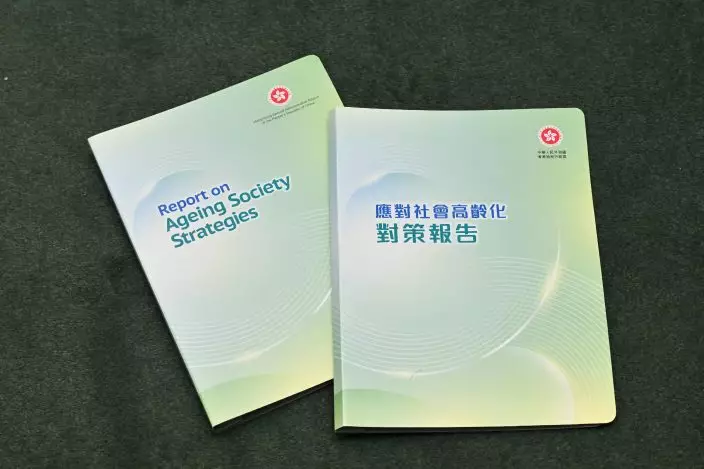
The Government announces the Report on Ageing Society Strategies today (September 18), putting forward 73 strategic measures across 11 areas. Source: HKSAR Government Press Releases
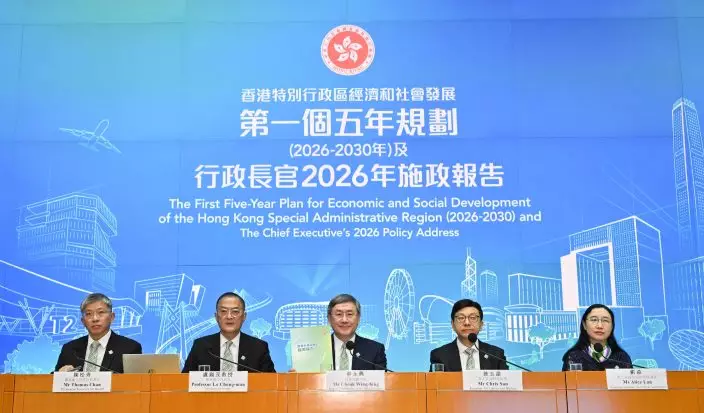
The Deputy Chief Secretary for Administration, Mr Cheuk Wing-hing (centre), is joined by the Secretary for Health, Professor Lo Chung-mau (second left); the Secretary for Labour and Welfare, Mr Chris Sun (second right); the Permanent Secretary for Labour and Welfare, Ms Alice Lau (first right); and the Permanent Secretary for Health, Mr Thomas Chan (first left), at a press conference today (September 18) to elaborate on initiatives for support for the elderly and children and healthcare system reform in the First Five-Year Plan for Economic and Social Development of the Hong Kong Special Administrative Region (2026-2030) and the Chief Executive's 2026 Policy Address. Photo shows Mr Cheuk holding the Report on Ageing Society Strategies. Source: HKSAR Government Press Releases