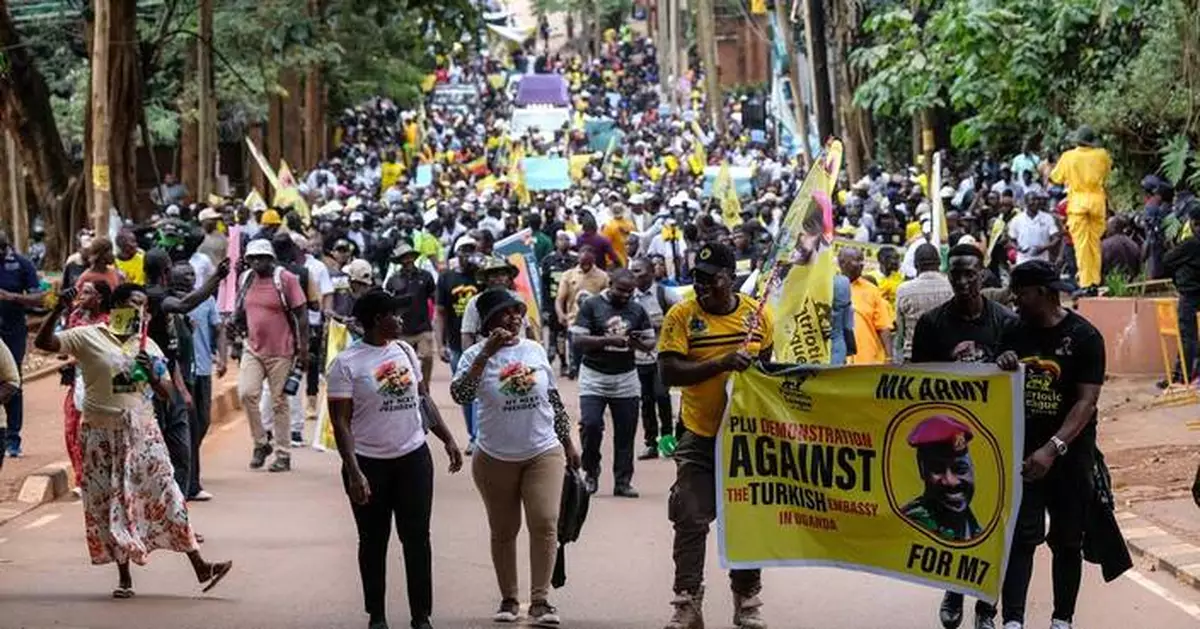
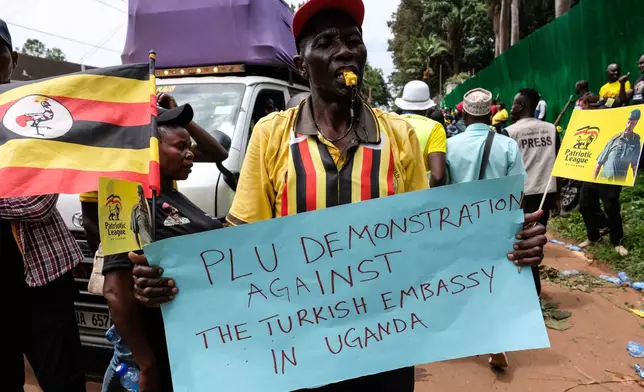
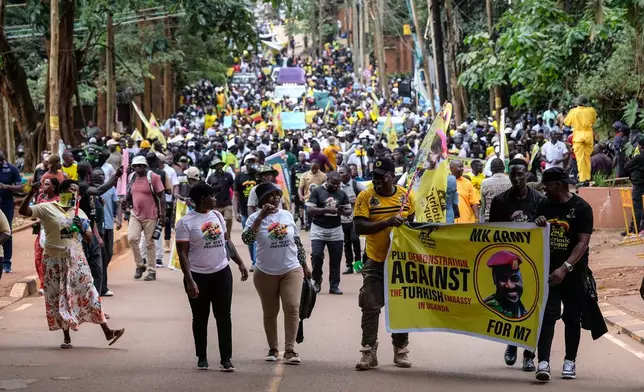
KAMPALA, Uganda (AP) — Hundreds of Ugandans demonstrated outside the Turkish Embassy on Friday to demand the extradition of a dissident whose online activities are seen by local authorities as anti-government propaganda.
The dissident, Fred Lumbuye, has lived for years in Turkey, but his legal status there is unclear. His posts about Ugandan politics are viewed by thousands, giving him a unique platform and influence not available to critics at home.
Click to Gallery
Members of the Patriotic League of Uganda demonstrate outside the Turkish Embassy demanding the extradition of a dissident, Fred Lumbuye, whose online activities are seen by local authorities as anti-government propaganda in Kampala, Uganda, Friday, Sept. 18, 2026. (AP Photo/Hajarah Nalwadda)
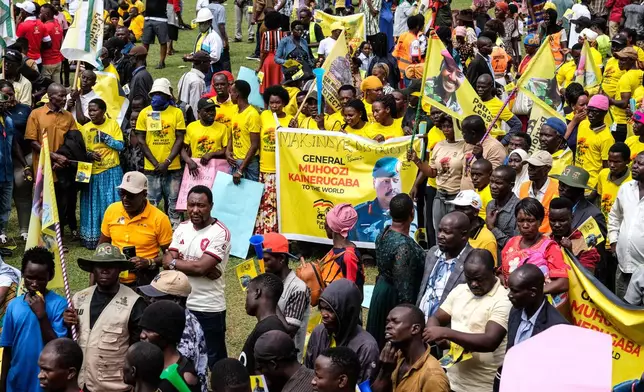
Members of the Patriotic League of Uganda demonstrate outside the Turkish Embassy demanding the extradition of a dissident, Fred Lumbuye, whose online activities are seen by local authorities as anti-government propaganda in Kampala, Uganda, Friday, Sept. 18, 2026. (AP Photo/Hajarah Nalwadda)
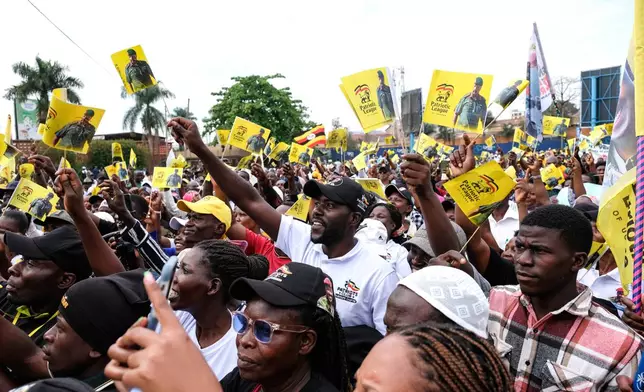
Members of the Patriotic League of Uganda demonstrate outside the Turkish Embassy demanding the extradition of a dissident, Fred Lumbuye, whose online activities are seen by local authorities as anti-government propaganda in Kampala, Uganda, Friday, Sept. 18, 2026. (AP Photo/Hajarah Nalwadda)
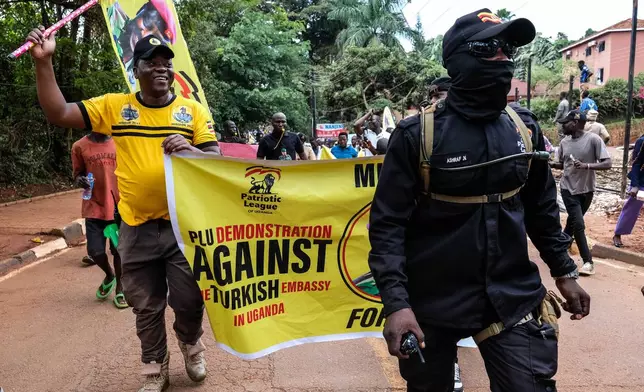
Members of the Patriotic League of Uganda demonstrate outside the Turkish Embassy demanding the extradition of a dissident, Fred Lumbuye, whose online activities are seen by local authorities as anti-government propaganda in Kampala, Uganda, Friday, Sept. 18, 2026. (AP Photo/Hajarah Nalwadda)
Members of the Patriotic League of Uganda demonstrate outside the Turkish Embassy demanding the extradition of a dissident, Fred Lumbuye, whose online activities are seen by local authorities as anti-government propaganda in Kampala, Uganda, Friday, Sept. 18, 2026. (AP Photo/Hajarah Nalwadda)
The rally outside the Turkish Embassy in Kampala, the Ugandan capital, was called by the Patriotic League of Uganda, a group whose chair is military chief Gen. Muhoozi Kainerugaba.
“We have gathered here today not as enemies of Turkish people but as patriots of Uganda who are deeply disappointed,” said Fadil Twalla, the group's secretary-general. "(Lumbuye) is based in Turkey and has continued to use the territory to attack our national leadership.”
Lumbuye is wanted in Uganda over allegations relating to harmful propaganda, incitement and cybercrimes, Twalla said. It was not possible to get a comment from Lumbuye.
Kainerugaba, the eldest child of Ugandan President Yoweri Museveni, has railed against Turkish authorities for months. His previous plans for a rally at the embassy were repeatedly postponed as diplomats tried to resolve the issue.
Kainerugaba, in posts on X, earlier this year demanded $1 billion from Turkish authorities as well as that country’s “most beautiful woman” to escape the threat of severing diplomatic ties or closing the embassy.
Kainerugaba has emerged in recent months as Uganda’s de facto leader, perhaps even more powerful than the 82-year-old Museveni. Kainerugaba says he will seek the presidency in 2031, when Museveni’s current term expires, and the Patriotic League of Uganda is currently mobilizing signatures of Ugandans in a symbolic show of support for Kainerugaba's presidential ambitions.
Uganda's issues with Turkey also extend to tensions in the Horn of Africa nation of Somalia, where Ugandan peacekeepers for years have backed the weak federal government against al-Shabab militants, said Angelo Izama, an analyst with the Uganda-based Fanaka Kwawote think tank.
Turkey has become more influential and a more desirable security partner for Somalia, Izama said. Uganda is expected to withdraw all its troops from Somalia by August 2027.
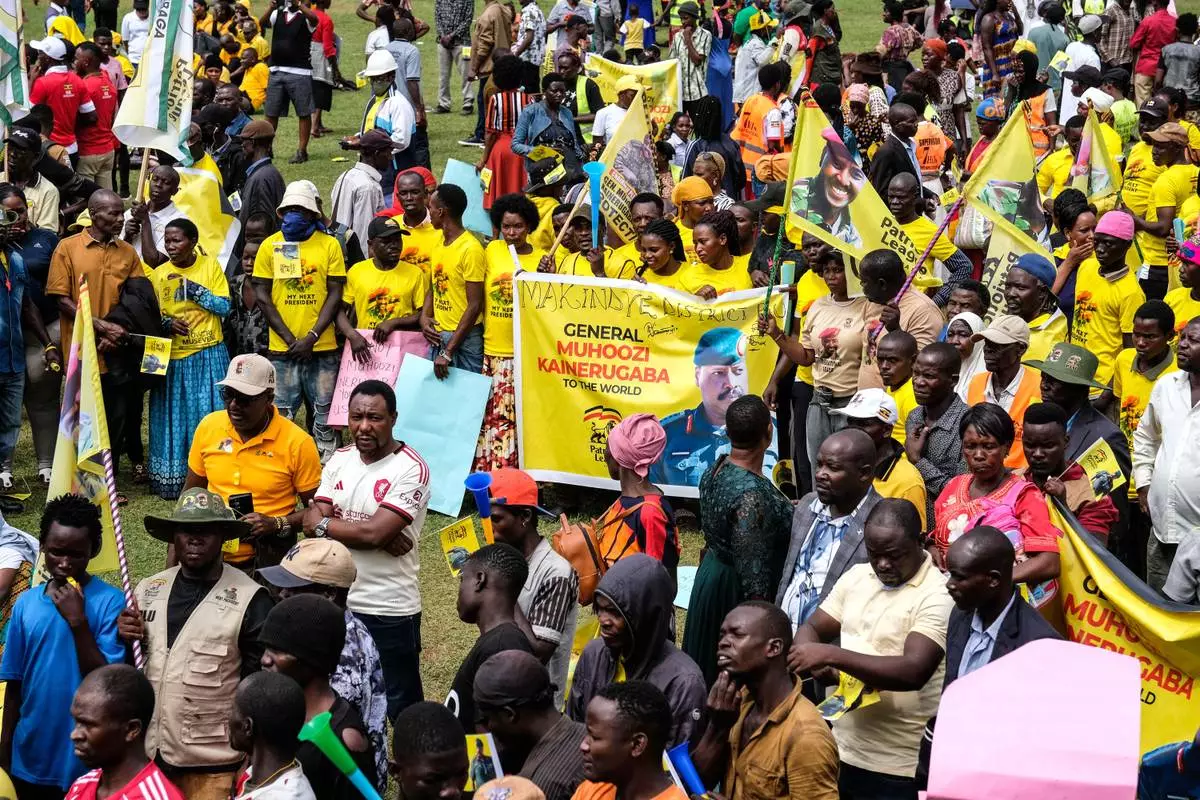
Members of the Patriotic League of Uganda demonstrate outside the Turkish Embassy demanding the extradition of a dissident, Fred Lumbuye, whose online activities are seen by local authorities as anti-government propaganda in Kampala, Uganda, Friday, Sept. 18, 2026. (AP Photo/Hajarah Nalwadda)
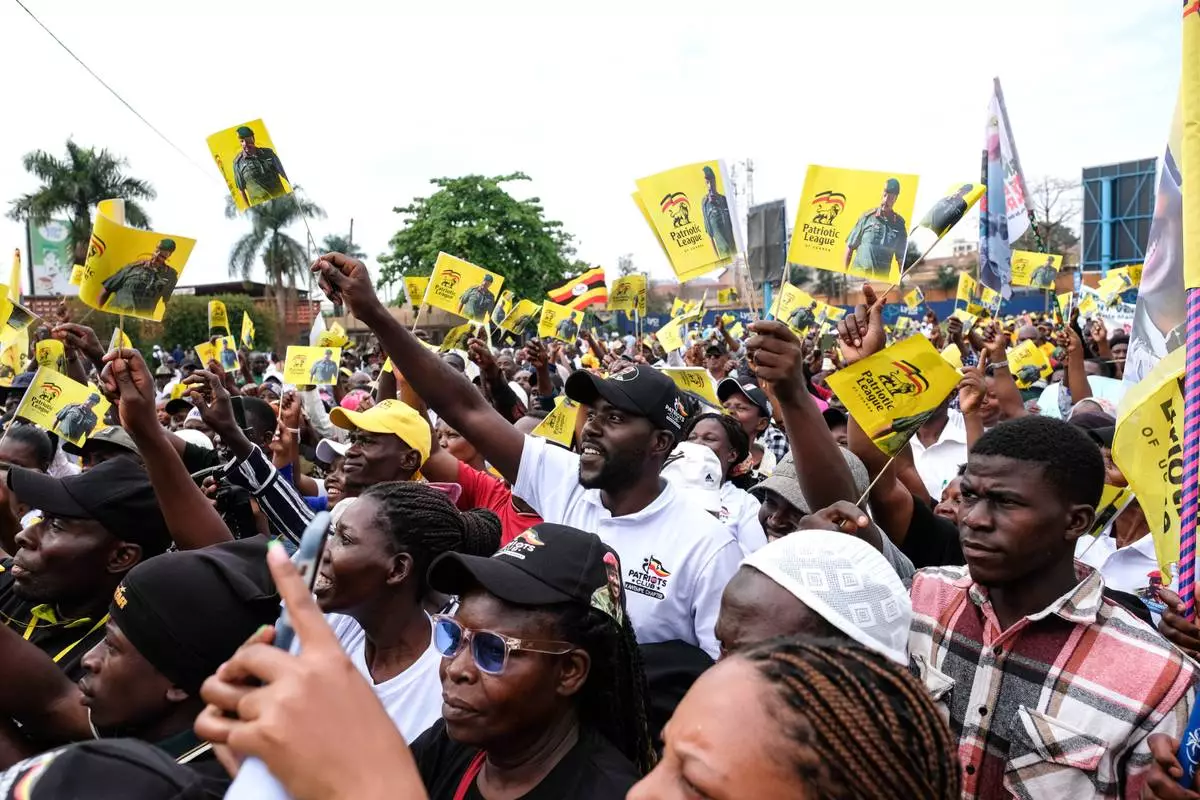
Members of the Patriotic League of Uganda demonstrate outside the Turkish Embassy demanding the extradition of a dissident, Fred Lumbuye, whose online activities are seen by local authorities as anti-government propaganda in Kampala, Uganda, Friday, Sept. 18, 2026. (AP Photo/Hajarah Nalwadda)
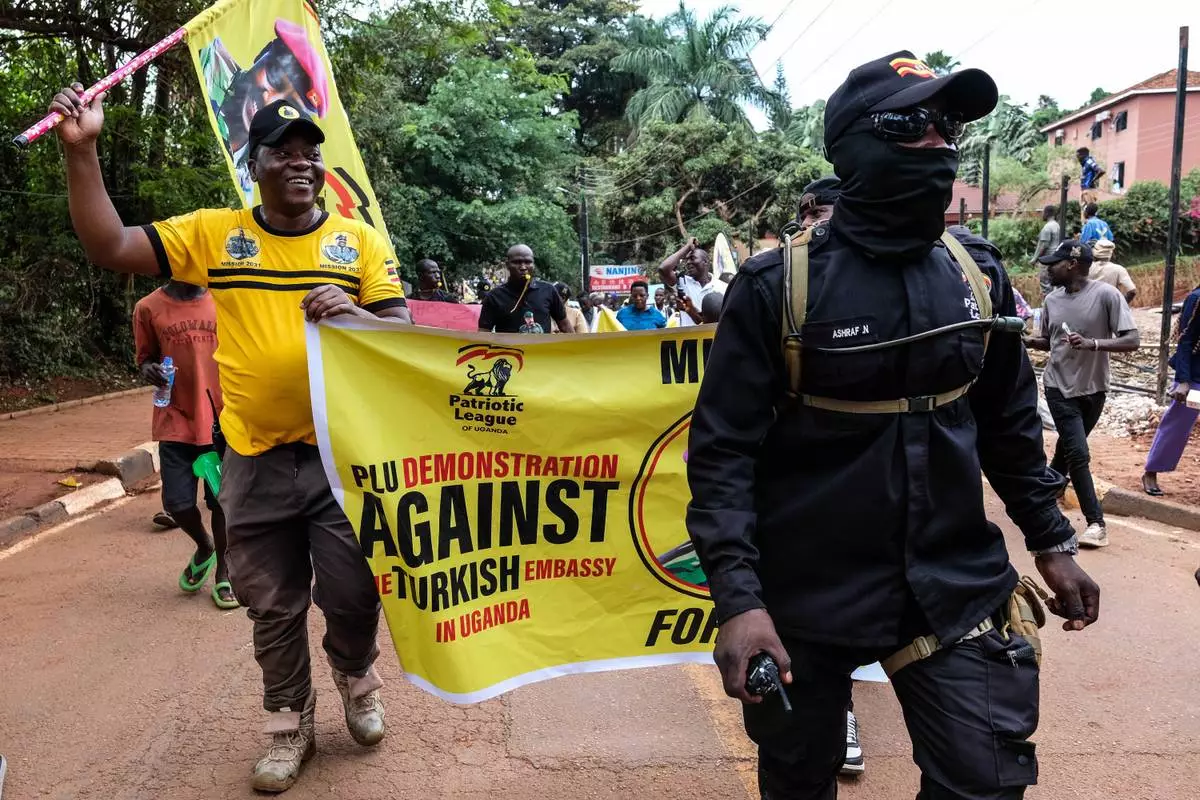
Members of the Patriotic League of Uganda demonstrate outside the Turkish Embassy demanding the extradition of a dissident, Fred Lumbuye, whose online activities are seen by local authorities as anti-government propaganda in Kampala, Uganda, Friday, Sept. 18, 2026. (AP Photo/Hajarah Nalwadda)

Members of the Patriotic League of Uganda demonstrate outside the Turkish Embassy demanding the extradition of a dissident, Fred Lumbuye, whose online activities are seen by local authorities as anti-government propaganda in Kampala, Uganda, Friday, Sept. 18, 2026. (AP Photo/Hajarah Nalwadda)
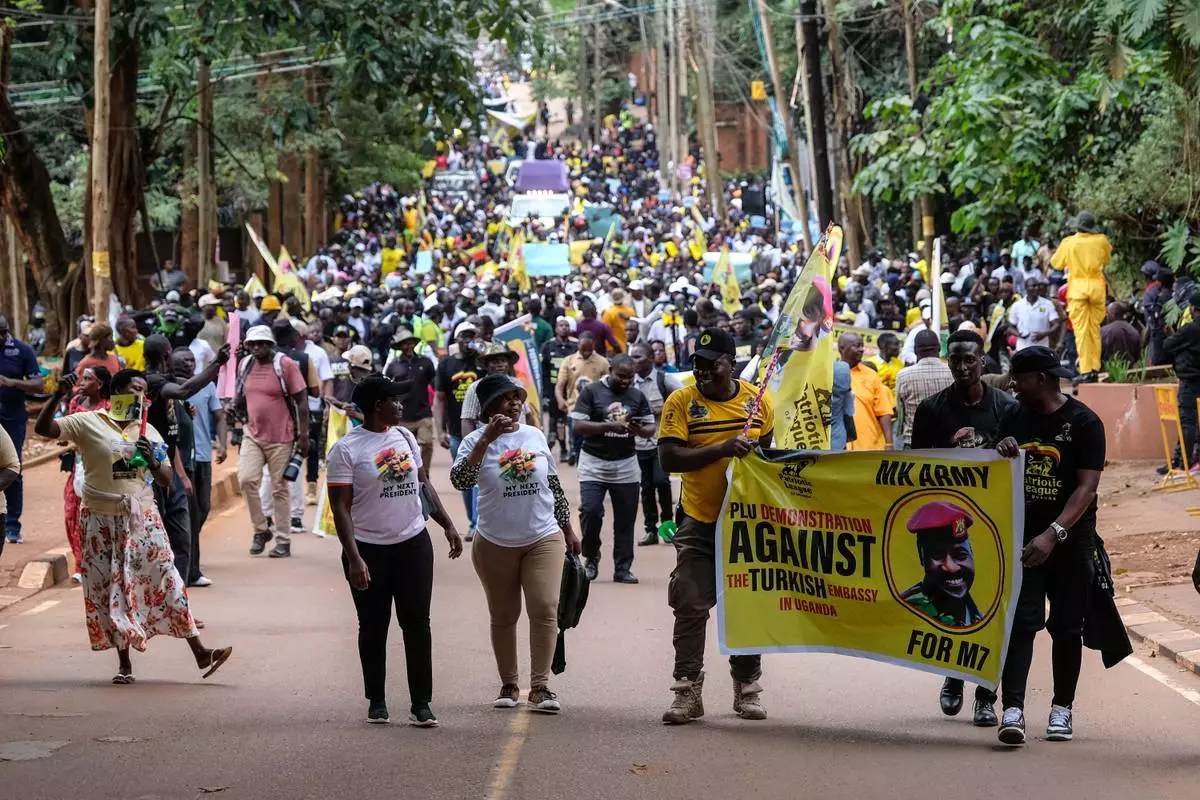
Members of the Patriotic League of Uganda demonstrate outside the Turkish Embassy demanding the extradition of a dissident, Fred Lumbuye, whose online activities are seen by local authorities as anti-government propaganda in Kampala, Uganda, Friday, Sept. 18, 2026. (AP Photo/Hajarah Nalwadda)
HENRICO, Va. (AP) — In-person voting for this year’s midterm elections began Friday, ushering in the final six weeks for Americans to decide which party they trust to lead Congress through a cost-of-living crisis, a prolonged war in Iran and other pressing issues.
Election administrators say they are prepared and confident the vote will be accurate and secure. Nevertheless, President Donald Trump has continued with efforts to denigrate certain voting methods and reshape how elections are run, through court challenges, an expansive federal hunt for noncitizen voters and a pressure campaign to force election officials to share sensitive voter data.
Friday marked the start of early voting in Virginia. Voters in a handful of other states, including Idaho, Minnesota and South Dakota, can cast absentee ballots in person, typically at a local election office or voting center. More expansive early voting is scheduled to begin in those and other states in the coming weeks.
At a voting location in Fairfax, Virginia, 18-year-old college student Sanya Singhal was among the first to vote early in person Friday morning, arriving well before the site opened to get in line.
“Why not just have a little fun in life, you know, try to be the first early voter?” she said. “I really want to participate in my democracy.”
The Nov. 3 election includes votes for governor and state legislature in most states and will determine whether Republicans maintain control of the U.S. House and Senate. If Democrats retake Congress, it will alter the trajectory of the final two years of Trump’s term, most likely leading to investigations and other oversight efforts.
The start of early voting comes at a time of deep angst among many Americans about issues including rising gas and grocery prices, the war in Iran, the looming risks of artificial intelligence and Trump’s aggressive immigration enforcement campaign.
It also follows an unprecedented spate of mid-decade redistricting for the U.S. House that began when Trump urged the Republican-controlled legislature in Texas to redraw its congressional map to help the party. California and other states followed.
The changes affect millions of people: Research shows 1 in 10 Americans this fall is a resident of a different congressional district than in 2024.
Those partisan efforts are expected to continue before the 2028 elections after a landmark ruling this year from the U.S. Supreme Court weakened the federal Voting Rights Act’s protections against racially discriminatory redistricting.
As the start of early voting approached, Trump was focused on efforts to assert federal control over election administration, even as the Constitution bestows the power to run elections on the states and, in some cases, Congress. The nation's highest court rejected Trump's bid to restrict mail ballots this week, but several of his administration's other efforts to influence the voting process and mine state voter lists for illegitimate voters continue.
Virginia's attorney general said Thursday that Trump's administration may have violated several of the state's laws after a whistleblower accused federal employees of misrepresenting themselves on voter lookup tools to hunt for noncitizen voters. In a letter, Attorney General Jay Jones demanded that the Department of Homeland Security confirm in writing whether it had directed anyone to access Virginia voters’ information without first obtaining permission from those voters.
Trump for years has raised the specter of widespread noncitizen voting in U.S. elections, and this year is no exception. But despite his administration's insistence that hundreds of thousands of people are illegally on voting rolls across the country, research continues to show noncitizen voting is exceptionally rare.
David Becker, executive director and founder of the Center for Election Innovation and Research, said he wouldn’t be surprised if the Republican president continues “his disinformation campaign and his attack on election officials.” But he said he thinks despite that and other challenges, “ultimately the process will hold as it has in past years.”
Voting rights advocates have encouraged voters this year to cast mail ballots early, in part because of concerns about recent changes in U.S. Postal Service operations that could delay the application of postmarks to ballots.
“Voting early, whether in person or by mail, is good for all of our communities because it gives voters options, eases lines on Election Day and can even mean faster results,” said Hannah Fried, co-founder and CEO of the voting rights group All Voting Is Local.
In a news briefing Thursday, Minnesota Secretary of State Steve Simon urged people not to be swayed by stories they might have seen or read that cast doubt on election operations. They would be able to vote “just like they always have,” he said.
“I just want to reaffirm that Minnesota’s elections are fundamentally free, fair, accurate, honest and secure,” he said.
Swenson reported from New York and Raza reported from Sioux Falls, S.D. Associated Press writer Mike Catalini in Philadelphia and AP video journalist Nathan Ellgren in Fairfax, Va., contributed to this report.
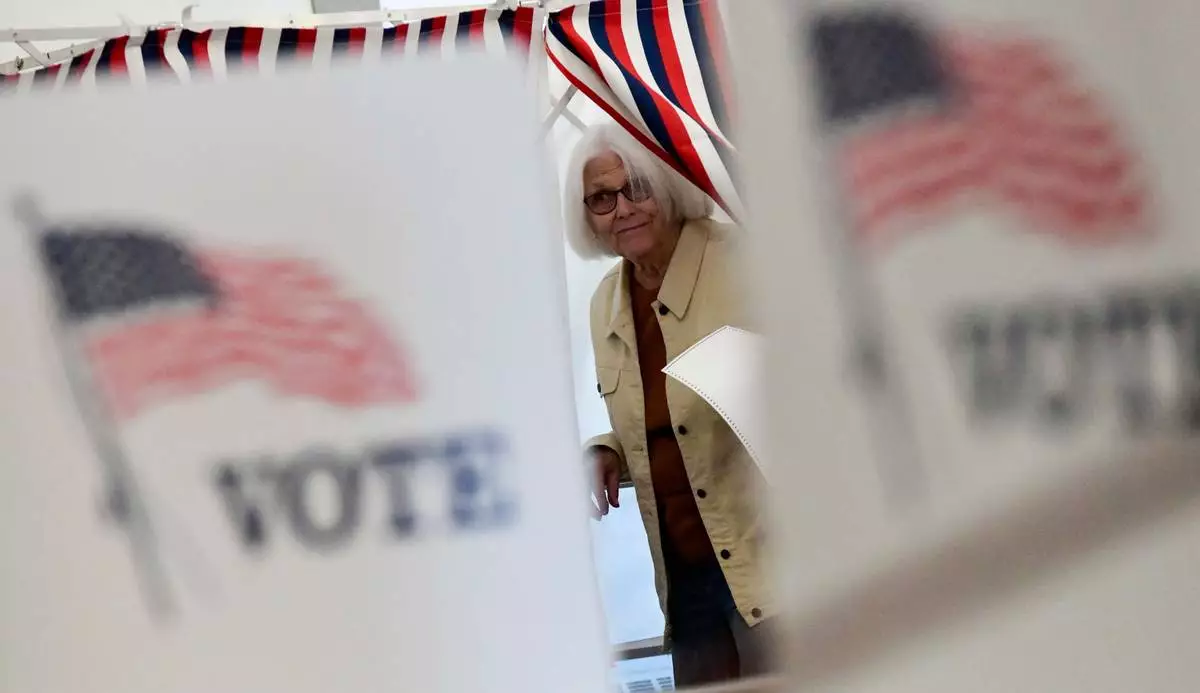
Peggy Jacobs of Chesterfield, N.H., leaves the voting booth in Chesterfield during the New Hampshire State Primaries on Tuesday, Sept. 8, 2026. (Kristopher Radder/The Brattleboro Reformer via AP)
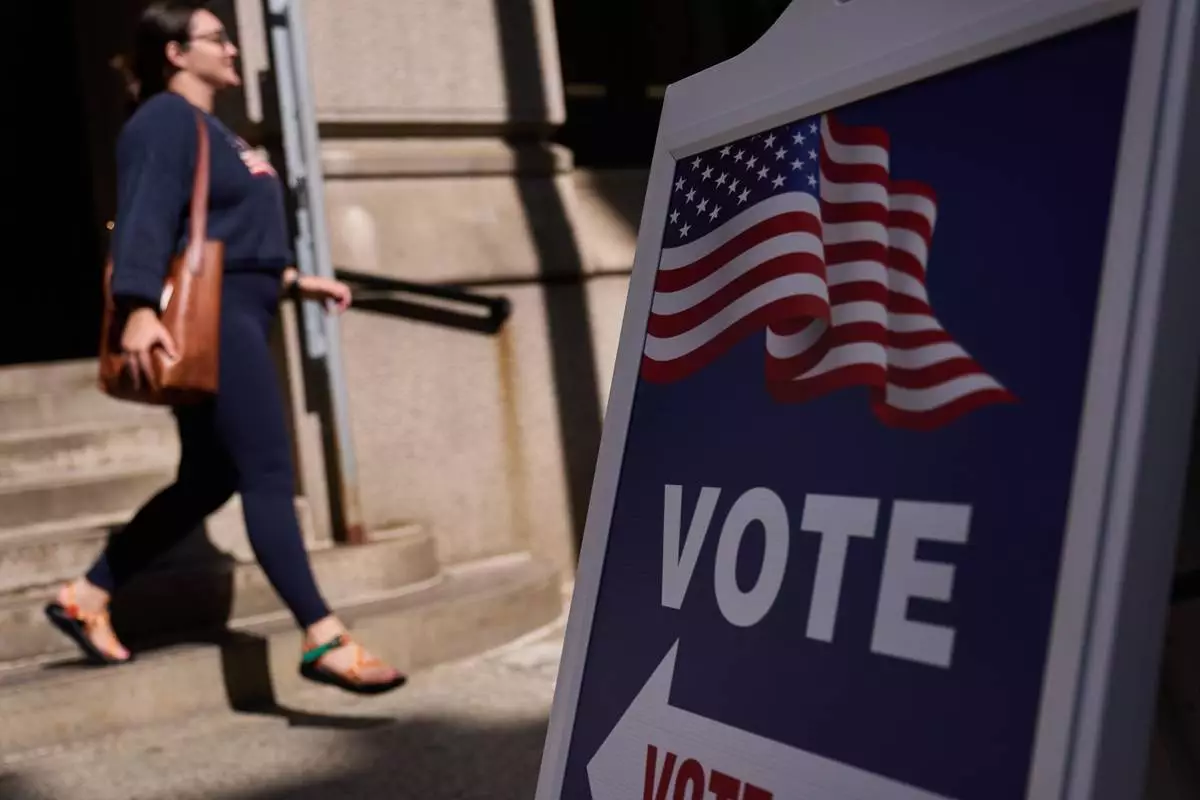
A sign directs voters to an entrance for City Hall during early voting for the Rhode Island primary election, Wednesday, Sept. 2, 2026, in Providence, R.I. (AP Photo/David Goldman)