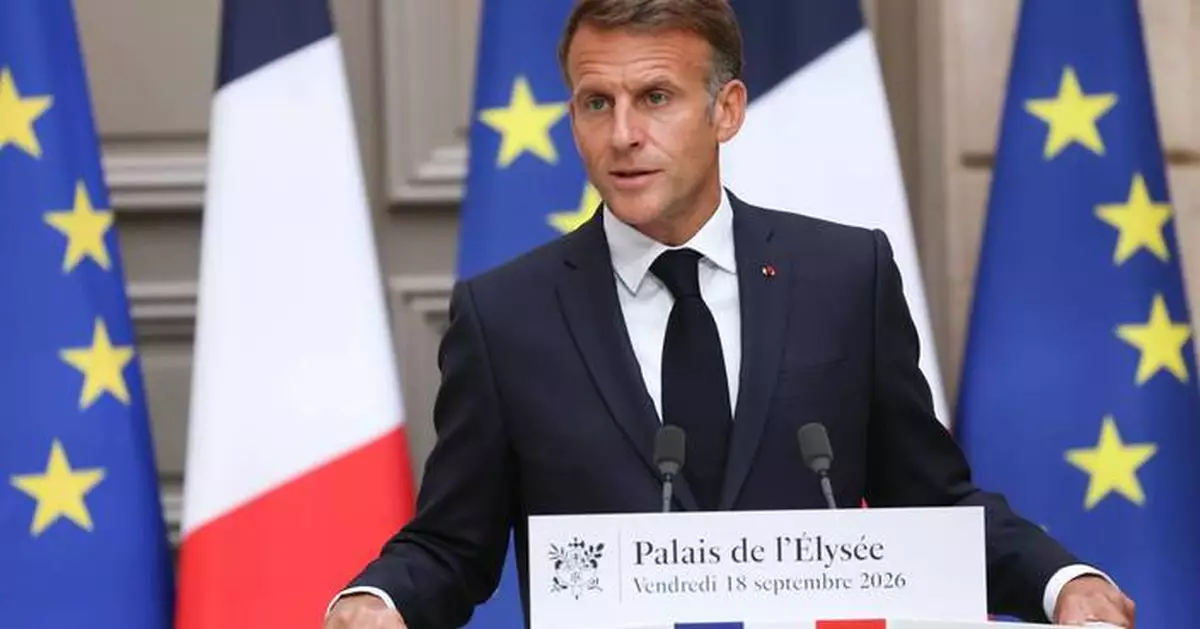
PARIS (AP) — French President Emmanuel Macron said Friday he had asked his government to prepare a plan to protect critical infrastructure, including sensitive defense industry sites, against drone attacks and cyberattacks amid what he described as an intensifying Russian hybrid threat.
“In recent weeks, the threat — particularly the Russian hybrid threat — facing Europeans and France has intensified,” Macron told reporters at the Elysee Palace after meeting political party leaders.
Macron specifically cited drone attacks and cyberattacks against critical infrastructure. The European Union describes Russian hybrid activities as including sabotage, cyberattacks, disinformation and interference in democratic processes.
Macron warned that the attacks would not go unanswered and accused Moscow of trying to intimidate Europeans into weakening their support for Ukraine.
“We are not intimidated,” he said, arguing that Europe’s present and future security was at stake in Ukraine.
Macron also said he would convene a Group of Seven meeting in the coming weeks to coordinate the response to the energy crisis.
He linked surging energy prices to the conflicts in the Middle East and Ukraine and disruption to shipping through the Strait of Hormuz.
Macron acknowledged the strain of rising energy costs on households, saying, “The situation is very difficult and distressing for many families.”
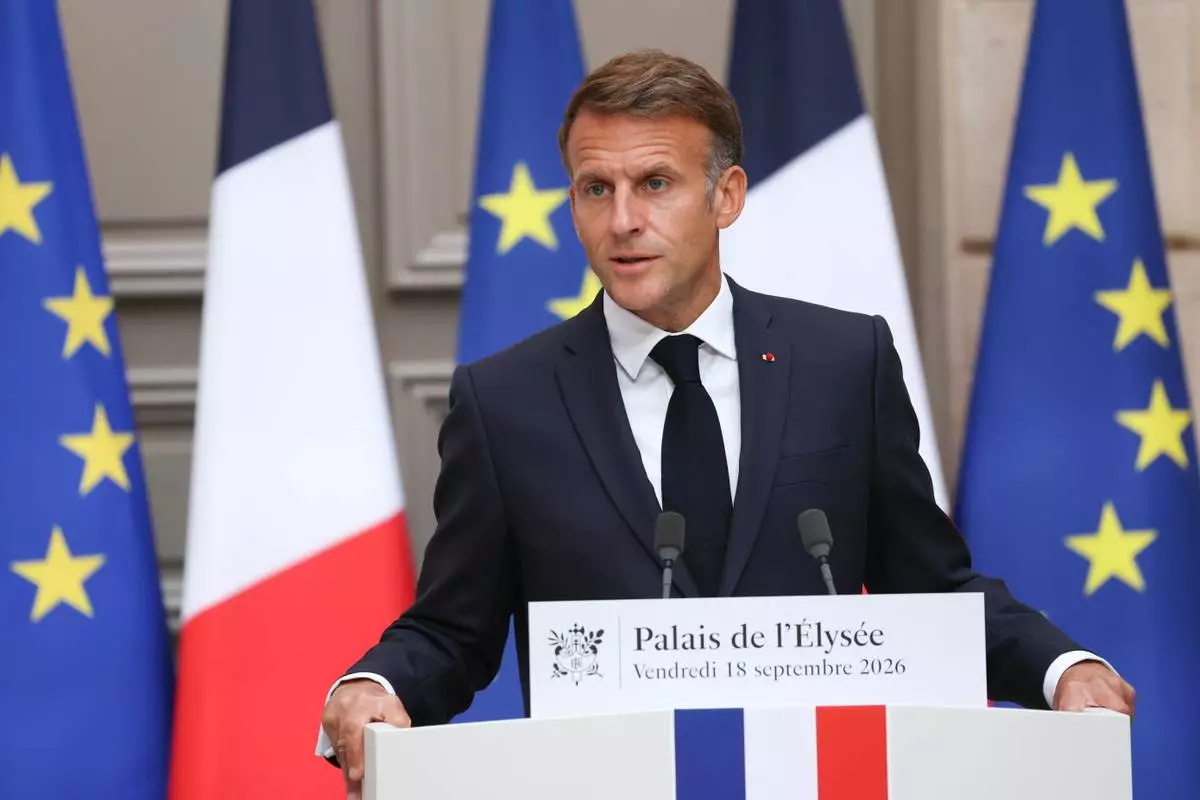
French President Emmanuel Macron gestures as he addresses the audience during a press conference following a meeting with the 2027 presidential election candidates and party leaders focused on the geopolitical situation and its consequences, at the presidential Elysee Palace in Paris, Friday, Sept. 18, 2026. (Thomas Samson/Pool Photo via AP)
Iran says it struck an oil tanker trying to transit the Strait of Hormuz, while hundreds of thousands of people rallied in Tehran in the largest show of support for the government since the United States and Israel launched attacks in February.
Meanwhile, South Korea says it is considering expanding a naval operation in the Gulf of Aden to protect its ships and oil-shipping routes, but it will not send troops to intervene in the Iran war.
Here is the latest news from the Middle East on Friday. Full coverage is available here.
Iran said it struck the Togo-flagged oil tanker Trend over what it described as an “illegal attempt” to pass through the Strait of Hormuz on Thursday night, according to the state broadcaster, which cited the Revolutionary Guard Corps.
The Associated Press could not immediately confirm the report.
The Guard's navy warned that vessels attempting to pass through the strait without authorization would face “destruction,” the broadcaster said. Tehran has asserted control over much of the waterway since the U.S. and Israel launched the war on Feb. 28.
Separately, the United Kingdom Maritime Trade Operations, which alerts about attacks or military operations, said another tanker was struck Wednesday by an “unknown projectile” while transiting out of the strait, with the crew reported safe. No other details were available.
Hundreds of thousands of Iranians filled the streets of Tehran in the biggest rally since the war began in February, pledging to take up arms as “Janfaday-e Iran,” or those “who sacrifice their lives for Iran.”
Iran’s government has sought to rally the people and stress national unity, even as the economy worsens under a U.S. naval blockade of Iranian ports and new U.S. sanctions meant to increase Tehran’s economic pain.
Some participants trampled flags of the U.S. and Israel. Others chanted “Death to America” and “Death to Israel.”
Hundreds of people rallied in northern areas of Yemen in support of the Houthis and to protest Saudi Arabia’s accusation that the rebels targeted Islam’s holiest site, Mecca.
Houthi-controlled Al-Masirah TV showed protesters carrying pictures of the Kaaba, a landmark in Mecca, along with Yemeni, Iranian, Lebanese and Palestinian flags. A speaker reiterated the Houthis’ opposition to Saudi Arabia, which supports Yemen's internationally recognized government.
The Saudis said they intercepted a Houthi drone targeting Mecca earlier this week. The Houthi leadership has denied responsibility.
The Iran-backed Houthis are fighting Saudi-backed Yemeni forces, and the conflict recently has fueled mass displacement of more than 100,000 people.
Container ships and oil tankers continued to transit the Bab el-Mandeb Strait after the Houthis said they are only targeting Saudi-linked vessels. But a dip in traffic has been reported over the last week after a lightning advance by Houthis on islands in the waterway.
About 26-35 vessels per day have transited this week, down from the 35-40 daily average of the prior eight weeks, according to Dimitris Ampatzidis, Maritime Risk & Compliance Manager at Kpler.
Many shipping companies abandoned the route after Houthi attacks on Israeli-linked vessels began in 2023, though vessels from Russia and China appear to have no trouble.
“Traffic remains severely impaired and increasingly selective,” said Mohamed Kotb with United Insurance Brokers in London.
South Korean President Lee Jae Myung said his government is considering expanding the operations of a naval unit deployed in the Gulf of Aden off the coasts of Yemen and Somalia to protect his country’s vessels and oil shipping routes.
But he stressed that South Korea would not take action that would draw it into the U.S.-Iran conflict, pushing back against recent pressure from the Trump administration. South Korea has deployed the anti-piracy Cheonghae Unit for years.
The growing threat from Houthis in Yemen to shipping in the region has alarmed countries and markets, even though the rebels have said they are only targeting the assets of neighboring Saudi Arabia, the world's top oil exporter.
“There will be no troop deployment that involves or intervenes in the war,” Lee said.
In Lebanon, the state-run National News Agency said the Israeli army threw stun grenades where Lebanese army forces were stationed at the entrance to the town of Deir Mimas.
The Israeli military said in a statement that the Lebanese army had entered what Israel refers to as the “security zone," an area the Israeli army occupied during its latest war with Hezbollah, and established roadblocks "without prior coordination.”
A Lebanese security official said the soldiers wanted to escort villagers to their olive orchards and the area was not part of a security zone. He said Lebanese soldiers eventually withdrew. He spoke on condition of anonymity because he was not authorized to comment publicly.
In June, Lebanon and Israel reached an agreement under which Israeli forces would gradually withdraw from occupied areas in southern Lebanon and allow the Lebanese army to take control, in exchange for disarmament of Hezbollah. There has been little progress in implementing the deal.
— By Abby Sewell
This piece will be updated throughout the day as new developments emerge.
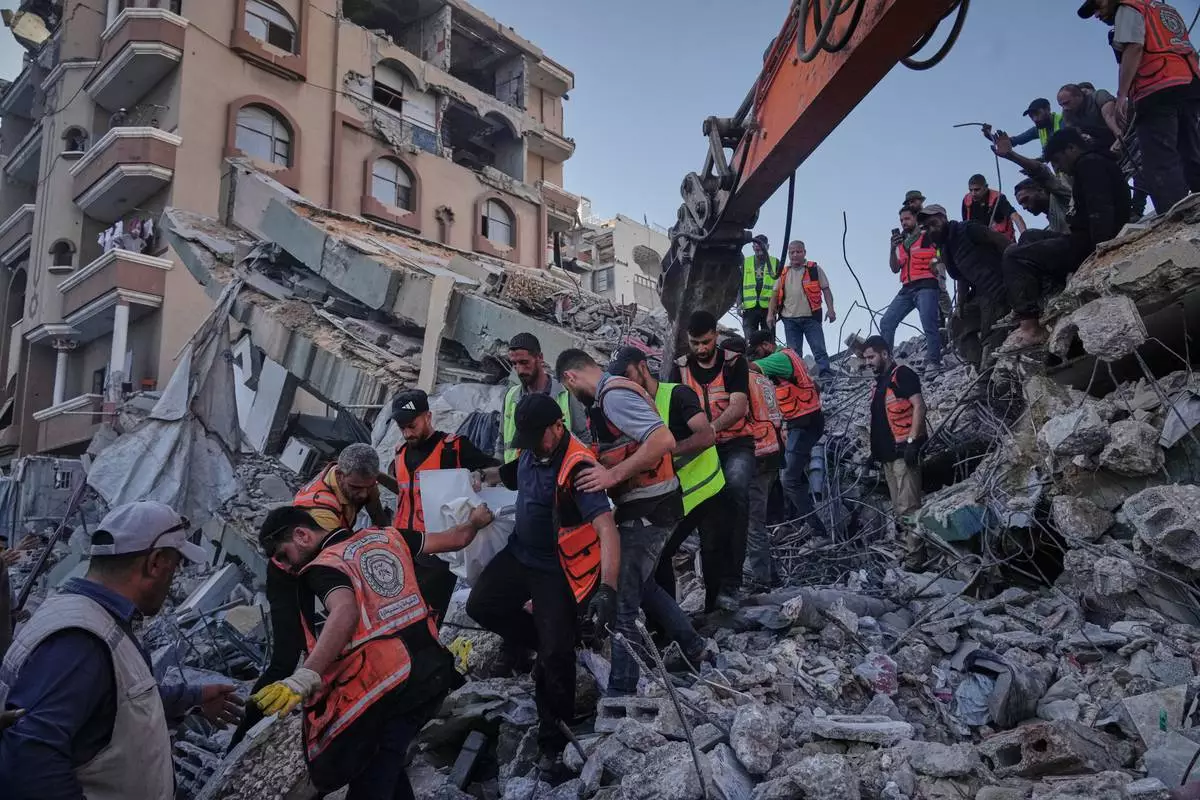
Palestinian civil defense crews carry a body from the rubble of a collapsed building that housed displaced Palestinians and was heavily damaged during the Israel-Hamas war, in Gaza City, Wednesday, Sept. 16, 2026. (AP Photo/Jehad Alshrafi)
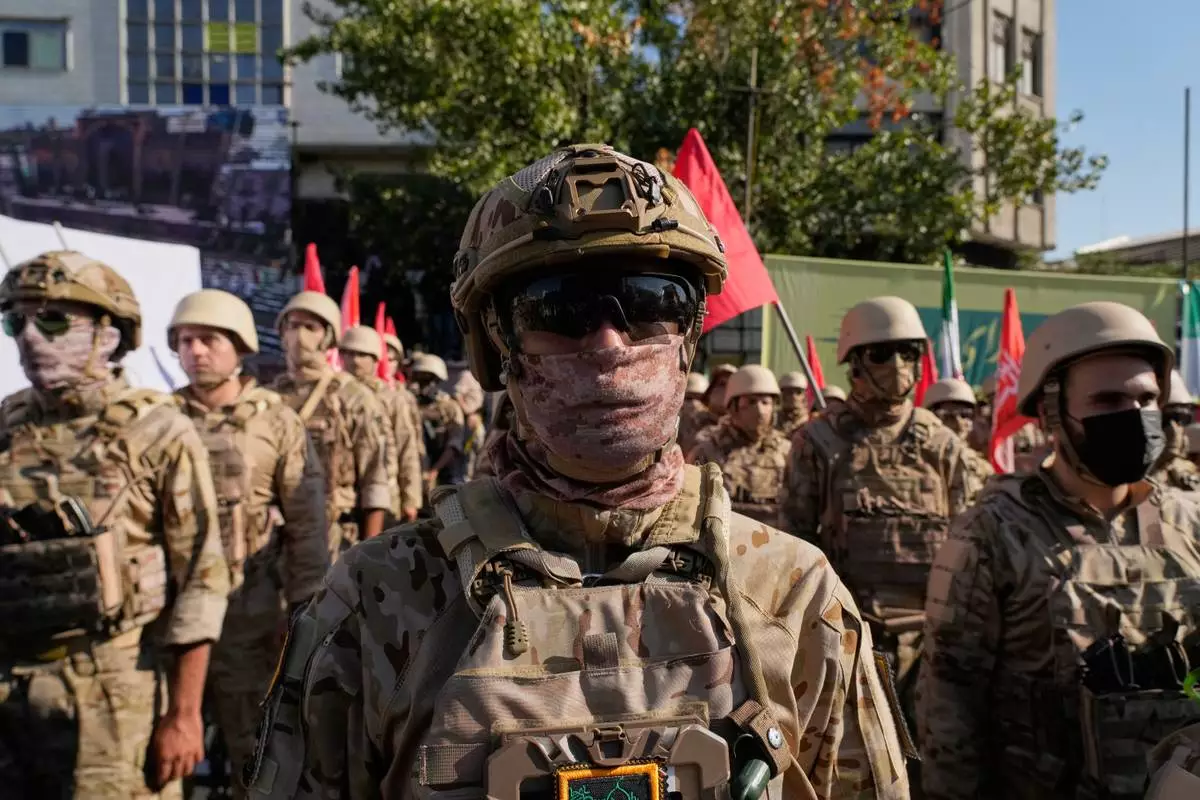
Armed personnel affiliated with Iran's Revolutionary Guard take part in the state-organized "Janfada," or "Sacrifice for Iran," military exercise in Tehran, Iran, Friday, Sept. 18, 2026. (AP Photo/Vahid Salemi)
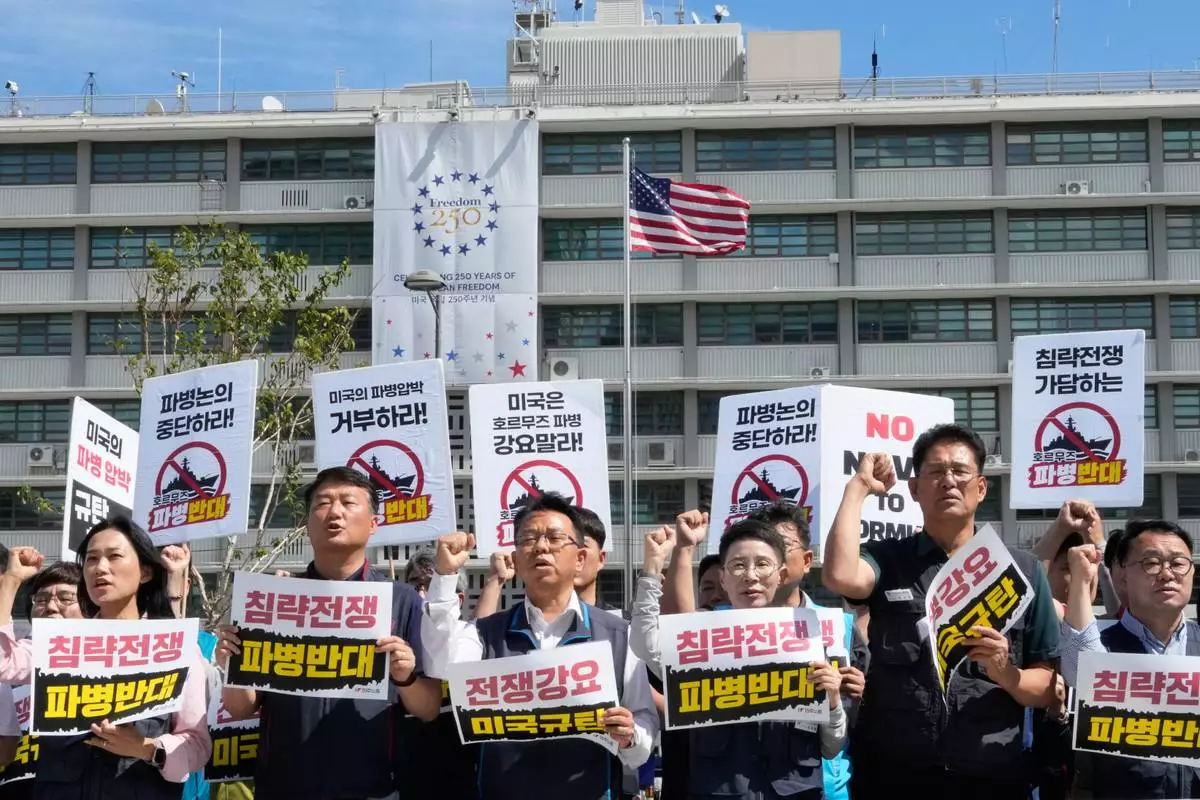
Protesters stage a rally against the possible deployment of South Korean troops to the Strait of Hormuz and a U.S. demand for the deployment, near the U.S. Embassy in Seoul, South Korea, Thursday, Sept. 17, 2026. The banners read ''Oppose troop deployment.'' (AP Photo/Ahn Young-joon)