Casey Toohill recently announced his retirement after a six-year NFL career and the defensive end admits to playing with a certain amount of “existential dread" when it came to the pounding his brain took during years of competitive football.
Sure, he knew of the health risks. But outside of quitting the sport, was there anything anyone could really do about it?
Now that his playing days are over, he's encouraged that answers are being sought.
"We have these clinical trials happening — we’re making progress,” said Toohill, now an advocate for former players with head injuries. “We’re trying to help people. We’re not helpless in this situation.”
Toohill became a member last month of the advisory board of the Concussion & CTE Foundation, which is joining with Emory University School of Medicine to start a clinical trial on whether an FDA-approved medication called baricitinib that reduces inflammation can improve depression and cognitive symptoms in former football players.
The trial comes as medical researchers are trying to pinpoint how to diagnose chronic traumatic encephalopathy (CTE) in the living. The degenerative brain disease — which can only be diagnosed after death — has been found in more than 100 former NFL players, casting a pall over the United States’ most popular sports league.
“This is a special moment,” said Chris Nowinski, CEO of the Concussion & CTE Foundation. “This is the scientific community, which is not normally part of the world of CTE research or concussion research, recognizing there’s a problem and stepping forward to provide information.
“This will hopefully be the first of many studies showing the scientific community coming to the aid of the football community.”
CTE can affect regions of the brain involved with regulating behavior and emotions. This can lead to memory loss, depression, violent mood swings and other cognitive and behavioral issues, though researchers note these symptoms can also be linked to other illnesses such as Alzheimer's.
The current study is seeking adult men ages 30-55 who played 11 or more years of tackle football and have depression and cognitive concerns.
“We're not trying to treat CTE, we're not saying the (former football players) have CTE, but we do understand that they are at risk for CTE,” Nowinski said. “We know this community needs hope and needs answers."
Christina Gavegnano — a co-principal investigator on the study who is an associate professor at Emory — said it's important to make a distinction between good and bad inflammation when talking about head injuries.
Acute inflammation in the brain after injuries like a concussion is a natural response to trauma and helps with the initial healing process. The problem is if it never goes away after the initial injury.
“What we've found is that when there's inflammation in the brain — when there's too much of it — it causes neurons to ball up, die and not be able to talk to each other," Gavegnano said. "We see this with many different diseases, whether it's depression, ALS, Parkinson's, Alzheimer's or dementia.”
The hypothesis is that symptoms from a variety of brain diseases — including CTE — could improve if inflammation is returned to normal levels.
Some high-profile professional football players diagnosed with CTE after their deaths include Hall of Famers like linebacker Junior Seau and quarterback Ken Stabler, along with former Patriots tight end Aaron Hernandez.
Gavegnano said baricitinib is a particularly promising drug for many reasons, including that it's a once-a-day pill that has been heavily researched and targets specific inflammatory factors.
“We know how it behaves, we know how to dose it, we know the safety,” Gavegnano said. “We're really going in ahead of the game with a drug that's already on the market, we know so much about. We already have it in clinical trials for many other diseases that have inflammation in the brain.”
She added that baricitinib is also a good choice because it's considered safe and even been approved in use for young children.
Toohill played in the NFL for the Washington Commanders, Philadelphia Eagles and Buffalo Bills and upon retirement quickly become an advocate for former players dealing with head injuries.
The 30-year-old Toohill, who played in college at Stanford, said he was only diagnosed with one concussion during his NFL days and feels good, but said that concussions are only one potential consequence of repeated head impacts.
“It's the large head impacts that you have consistently in games and in practice that's the concern,” Toohill said. “My health has been good, but at the same time, this is such a wake-up call for so many players. You realize, even if I didn't have a diagnosed concussion, there could still be harmful effects.”
Toohill said he didn't play quite long enough to join the current study, but is working to get in contact with former teammates who might be a good match. He's hopeful that potential treatments will give NFL players hope that there's a way to mitigate the symptoms of potential brain trauma.
“Let's push forward, let's make progress,” Toohill said.
See AP’s full NFL coverage here
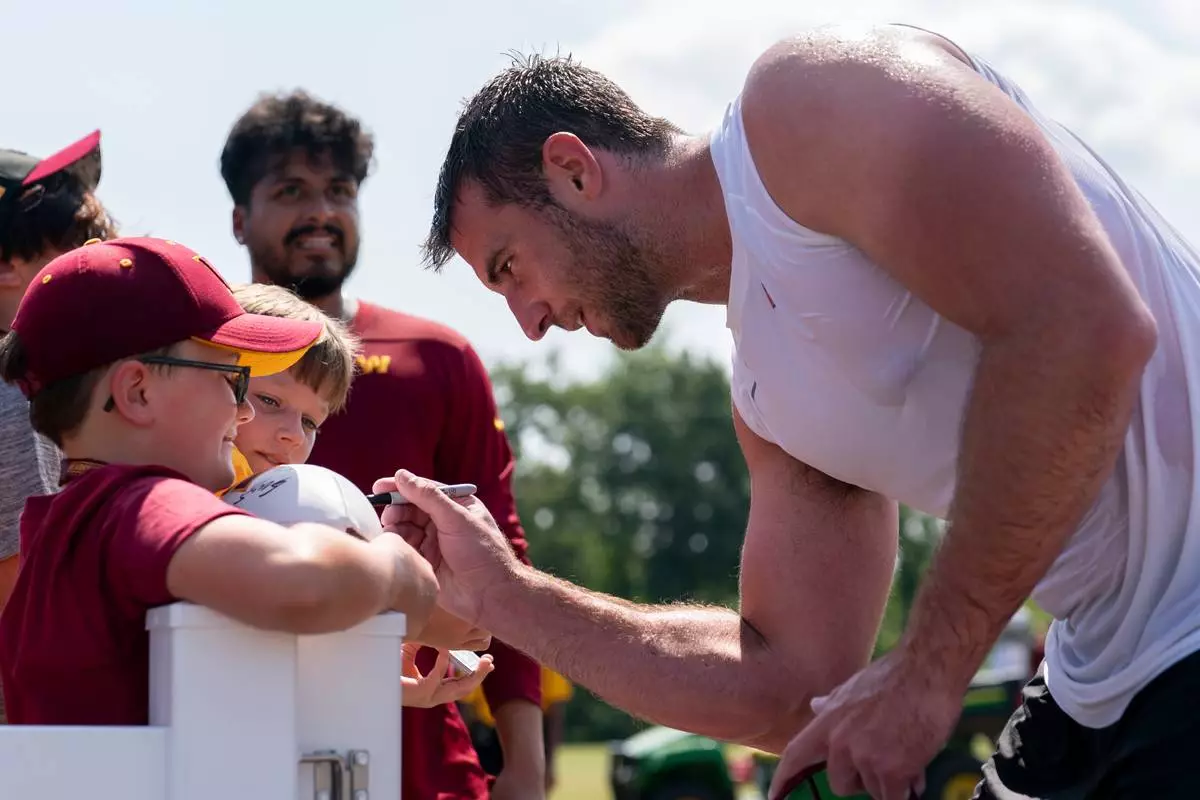
FILE - Washington Commanders defensive end Casey Toohill signs a young fan's football at the end of a NFL football practice at the team's training facility, July 28, 2023, in Ashburn, Va. (AP Photo/Stephanie Scarbrough, File)
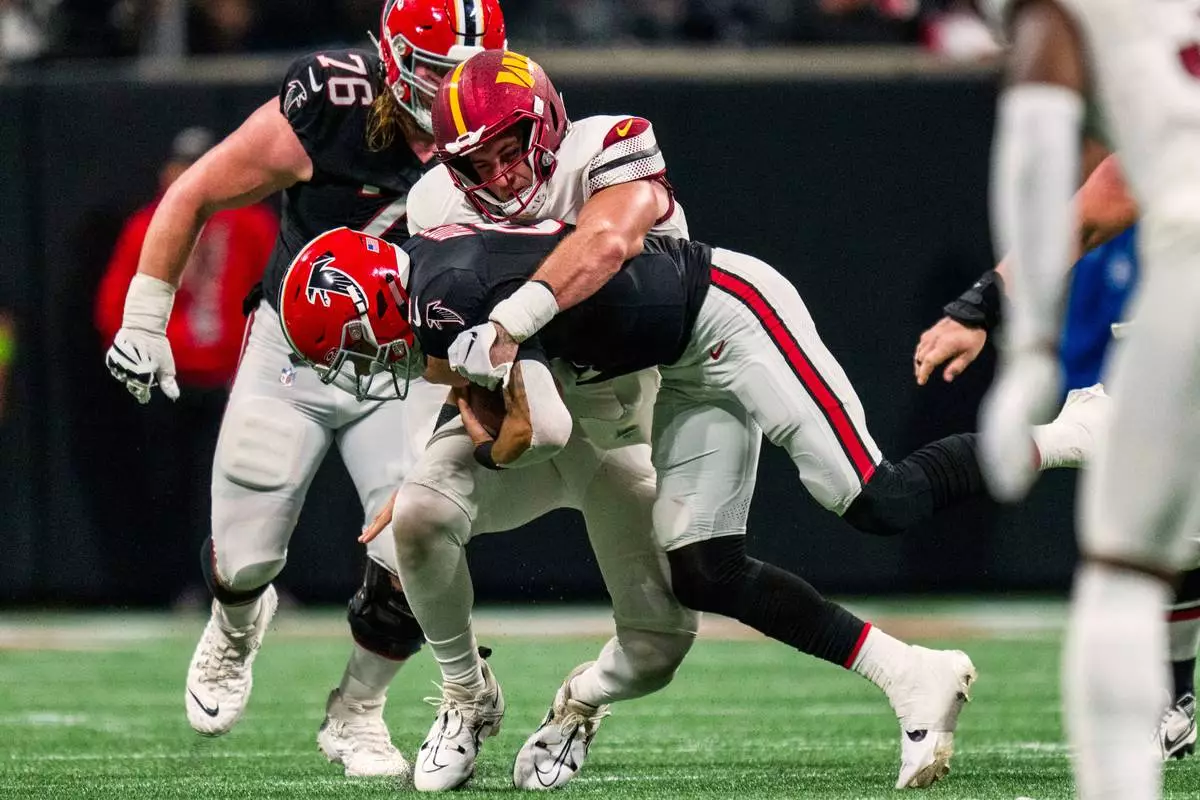
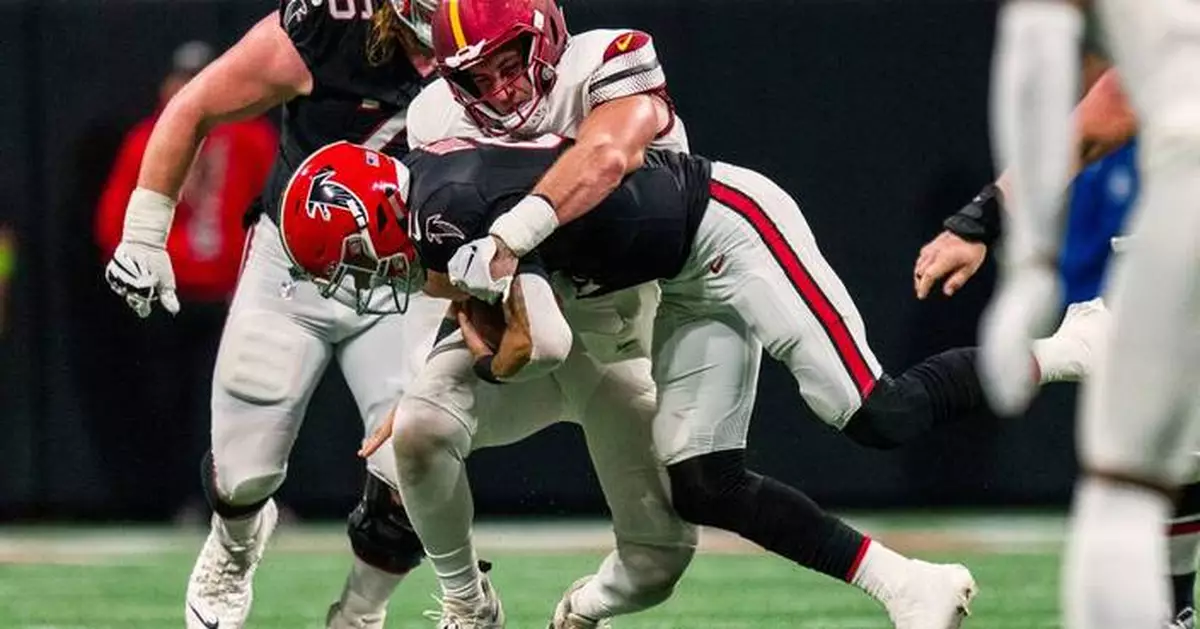
FILE - Washington Commanders defensive end Casey Toohill (95) sacks Atlanta Falcons quarterback Desmond Ridder (9) during the second half of an NFL football game, Oct. 15, 2023, in Atlanta. (AP Photo/Danny Karnik, File)
NEW YORK (AP) — President Donald Trump said Friday that he was barring CNN, MS NOW and Politico from the White House due to what he called unfavorable coverage and “fake news,” and threatened that more such media bans could be coming — the latest salvo in the president's increasingly aggressive response to media coverage he finds unfavorable.
Like many of Trump's other confrontations with news organizations — some of which are playing out in the legal arena — this threat has potential First Amendment implications. There was no immediate indication, though, that he was following through.
Trump wrote on his social media site that effective immediately, “I am banning” CNN, MS NOW and Politico “from the White House as a result of their constant ‘reporting’ FAKE NEWS!” Minutes later, speaking at an event in the Oval Office, Trump was asked to explain his statement.
“Because they’re fake news,” he said. “You get so tired of reading and seeing fake news. When you look at CNN, it’s just fake. That’s why their ratings are no good. When you look at MS NOW … , it’s fake news.”
“And when you look at Politico ... the stories they wrote are fake. So there’s a lot of news and there may be others to join them, and maybe they can get better," he said. "But our country has to have honest news.”
He gave no further details on how the ban would be implemented. Journalists from CNN, MS NOW and Politico were still on the White House grounds as of late Friday afternoon with no signs of being removed.
CNN denounced the move, saying it stands behind its White House team and their “fair and accurate reporting.”
“We have a right under the U.S. Constitution to do that reporting without hindrance or interference from the government,” it said in a statement posted on X. “Should the ban which President Trump threatened go ahead, it would be an illegal assault on that fundamental and constitutionally-protected right.”
Politico said it would “continue to fairly report on this White House and future ones. We will vigorously defend our First Amendment rights against any attempt to restrict them.” MS NOW did not immediately return an email asking about the ban.
In his second term, Trump and his administration have upped the ante and punished certain media outlets, both in the courtroom and through regulatory action. Trump has also lashed out at individual reporters in person or over social media, sometimes in strikingly personal terms.
The move follows the president's decision last year to bar Associated Press reporters from the Oval Office, Air Force One and other events in retaliation for the news outlet’s decision not to follow his lead in changing the name of the Gulf of Mexico, which lies partially in Mexican and other waters. The AP said that it would note when appropriate that Trump had ordered it renamed the "Gulf of America."
The AP filed suit and the case is ongoing. Since returning to office, Trump has pursued other legal action against a variety of different outlets, including The New York Times, The Wall Street Journal and the BBC. His administration is also involved in a long-simmering confrontation involving ABC over renewal of its broadcast licenses.
Trump seeking to block White House access for CNN is especially notable, as it could upend the traditional five-network television pool that travels with the president and tracks his every move — meant to provide independent coverage of his actions and interactions for the Americans who elected him and for the world. CNN was traveling with the vice president on Friday to Iowa.
The National Press Club was one of several groups immediately criticizing Trump's threatened action. “Banning news organizations from the White House based on the administration’s disapproval of their coverage is a clear attempt to control which voices are allowed to witness and report on the exercise of presidential power,” said the group's president, Mark Schoeff.
In legal terms, that's called “viewpoint discrimination” — the government singling out specific media outlets for the content of what they say or publish. That legal principle is at issue in many of the court cases around Trump's treatment of the media,.
“Someone needs to explain to President Trump how the First Amendment works,” said Tim Richardson, journalism and disinformation director at PEN America. “As we’ve seen time and time again, this administration’s hostility toward the press is never about the accuracy of news stories, but about its inability to withstand scrutiny of its actions."
And Seth Stern, chief of advocacy at Freedom of the Press Foundation, said it was “difficult to imagine a more blatant violation of the First Amendment than Trump banning news outlets from the People’s House for criticizing the government.”
He added: "These outrageous attacks only demonstrate how scared he is of an informed public.”
In his social media announcement, Trump did not provide details on how the ban would be implemented.
It came moments before he spoke to reporters in the Oval Office as part of a health care event. He later planned to take the press pool to his golf club in Virginia for a meeting and dinner sponsored by his Super PAC before spending the weekend at Camp David — one of the few places reporters don’t follow him.
“Media Outlets shouldn’t be able to constantly write or report FICTION and LIES when they’re covering the President of the United States, the Trump Administration, or the United States of America,” Trump wrote. “Other Fake News Media Outlets to follow.”
At the event, Trump doubled down on his opinions about various media outlets.
"The New York Times is so fake. Washington Post is disgusting,” he said.
Trump's defense secretary, Pete Hegseth, applauded the decision in a post on X. “The Department of War fully supports President Trump’s decision to kick CNN, MS NOW and Politico to the curb so they can publish their Fake News from outside the White House,” Hegseth wrote.
In the 1977 case Sherrill v. Knight, a federal appeals court ruled that although the White House is not required to open its doors to the news media, once it establishes press facilities for credentialed journalists, it cannot deny access based on the content of a journalist’s coverage.
The court held that any denial must serve a compelling government interest and that the journalist must receive notice, the chance to respond and a final answer in writing.
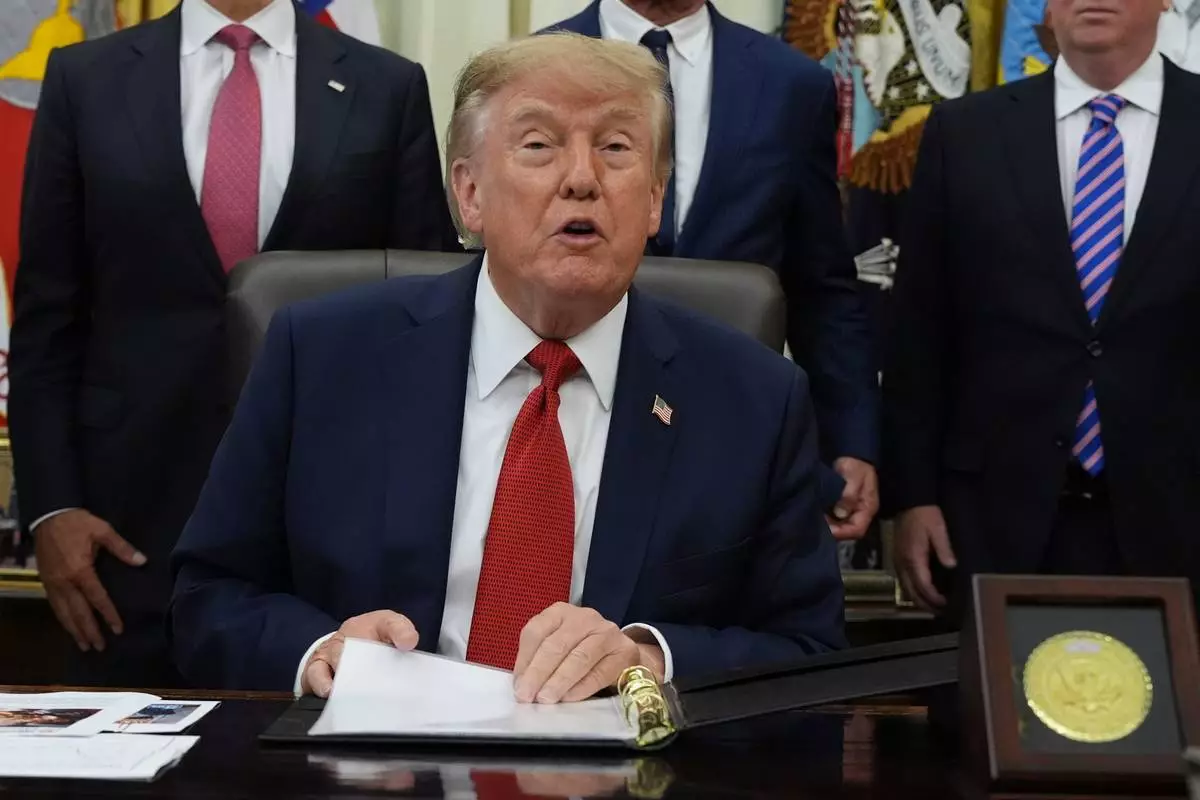
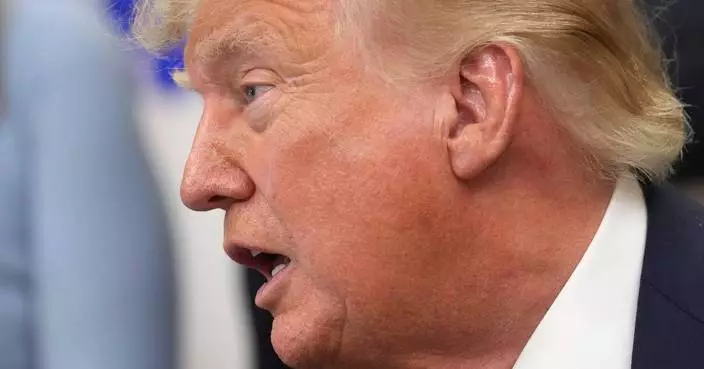
President Donald Trump speaks about healthcare in the Oval Office of the White House, Friday Sept. 18, 2026, in Washington. (AP Photo/Jacquelyn Martin)
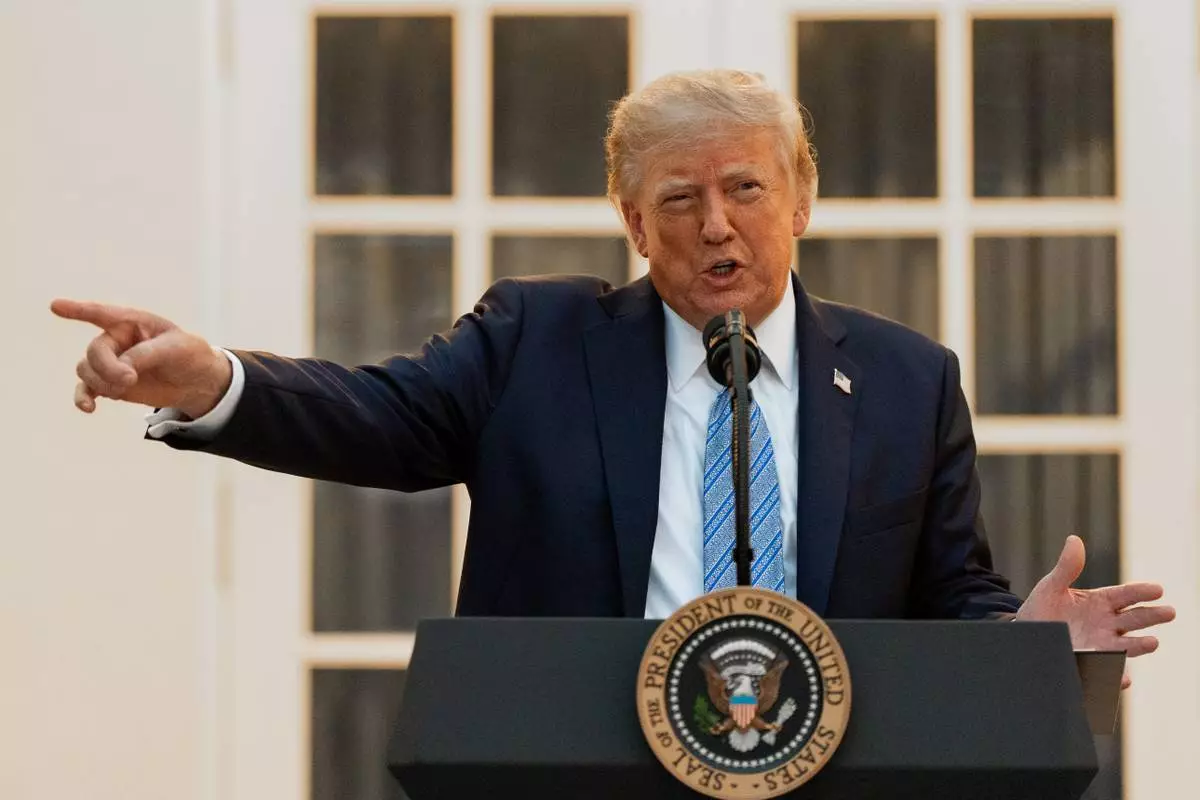
President Donald Trump speaks during a dinner in the Rose Garden of the White House, Thursday, Sept. 17, 2026, in Washington. (AP Photo/Alex Brandon)