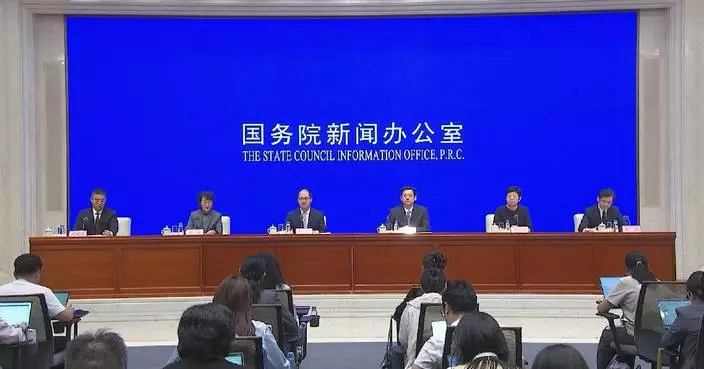
China's general public budget revenue reached 15.66 trillion yuan (around 2.33 trillion U.S. dollars) in the first eight months of 2026, up 5.7 percent year on year, according to data released by the Ministry of Finance on Friday. The central general public budget revenue increased 9.1 percent year on year to 7.0118 trillion yuan, while the local general public budget revenue increased 3.1 percent year on year to 8.6515 trillion yuan.
Tax revenue climbed 6.6 percent year on year to 12.91 trillion yuan in the period.
Domestic value-added tax rose 5.9 percent, driven by continuous growth in the industrial and service sectors and an upward trend in factory-gate prices, while corporate income tax grew 7.3 percent on the back of rapid profit growth. Meanwhile, value-added tax and consumption tax on imported goods increased 12.6 percent, driven by rapid import growth.
A total of 1.65 trillion yuan was refunded for value-added tax and consumption tax on exported goods, an increase of 70.7 billion yuan compared with the same period last year. By region, the revenues of eastern, central, western and northeastern regions increased 3.2 percent, 1.4 percent, 4.6 percent and 2.1 percent, respectively.
From January to August this year, China's national general public budget expenditure reached 18.15 trillion yuan, up 1.2 percent year on year. Expenditures on public well-being grew rapidly in the eight-month period, with social security and employment spending rising 6.5 percent and health care outlays increasing 9.2 percent.
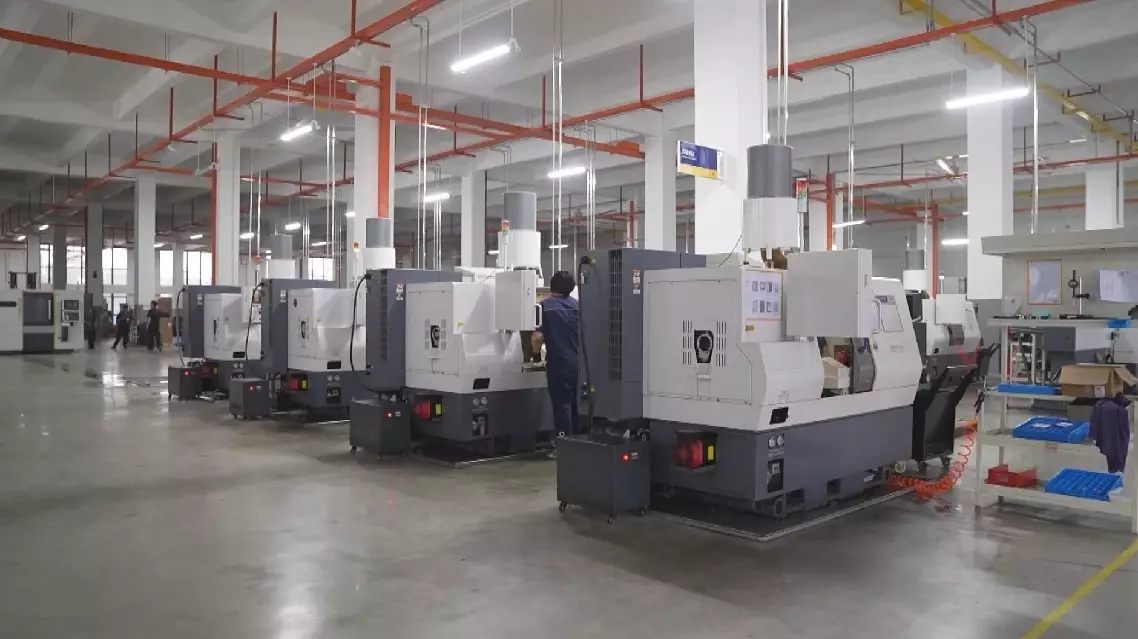
China's general public budget revenue up 5.7 pct in first eight months
A lineup of cutting-edge electric vehicles (EVs) from Chinese automakers is stealing the spotlight at the ongoing International Motor Show (IAA) Transportation 2026 in Hannover, Germany.
The leading commercial vehicle exhibition in Europe is being held in Hannover from Sept. 14 to 20, 2026.
China Day has become a regular feature at IAA Transportation, reflecting growing ties between the Chinese and European automotive industries.Chinese companies have one of the biggest international presences at the event, as they increasingly target the European market with electric vehicles, autonomous driving and other new technologies.
But their ambitions extend beyond simply selling vehicles, with some looking at local production and partnerships with European companies.
Commercial vehicle giant FOTON calls Europe a core market, but says its strategies stretch beyond just vehicle sales. Wu Zongtian, president of BAIC FOTON International, officially introduced the CAVAN BEACON zero-carbon intelligent long-haul heavy-duty truck to the global market.
"Just selling vehicles is easy, but it's not our strategy. Here, our target is to set up a long-haul, or long-term cooperation here," said Wu.
FOTON is building its sales and support network, while working with European partners to bring new commercial vehicle technology to the market.
And it's not just the established players. Chinese electric truck maker DeepWay is making its European debut at IAA, unveiling its 3.0 next-generation truck, designed specifically for European regulations and customers. But its ambitions here go further.
"We're not bringing the product here, we're gonna bring the value here. So I think the next plan for DeepWay is to find a manufacturer, cooperate here, and then to be made in Europe. And also we're gonna build a local team," said Zhao Minyu, general manager of DeepWay International.
DeepWay says that could include local R and D, suppliers and jobs; following a similar model to European manufacturers when they expanded into China decades ago.
But Chinese companies are expanding here at a difficult time for Europe's automotive industry, already restructuring because of amid high costs and growing global competition. DeepWay believes that, when it comes to electric trucks, European and Chinese manufacturers are ultimately trying to solve the same problem. "We don't think the other big player in this Euro market is our competitor. We think we are competing [with] the diesel truck. We think we should cooperate with the local player and tend to get to the zero emission together to beat the diesel, to beat the pollutions," Zhao said. Competition between the two industries isn't going away. But here at IAA, China's growing presence is also creating new opportunities for the two industries to work together.
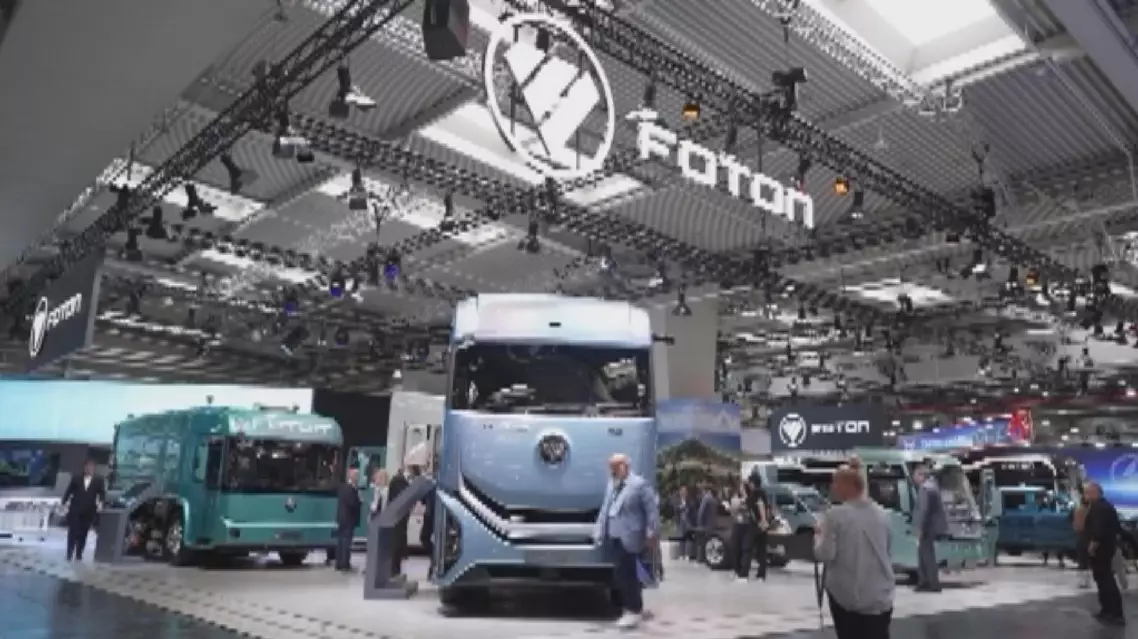
Chinese EVs take center stage at IAA Transportation in Hannover