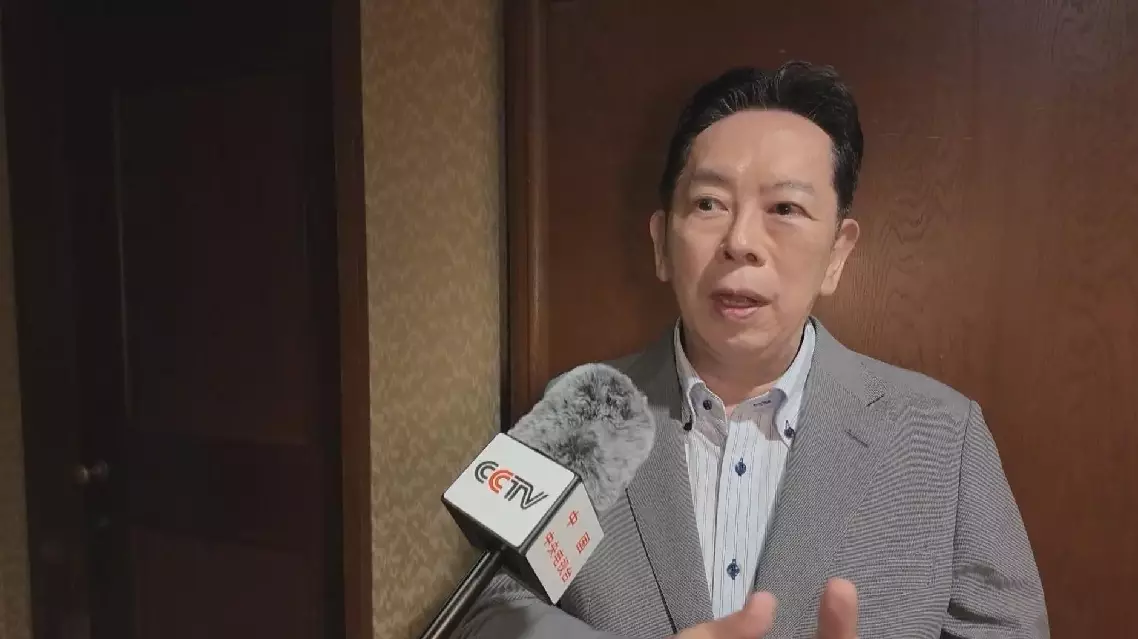
Japan's reliance on U.S. economic policy is allowing foreign funds to acquire Japanese assets at bargain prices, according to Japanese economist Kazuhide Uekusa.
He warned that the government's economic and defense strategies prioritize foreign capital and political profits over public welfare, failing to bring true prosperity to ordinary citizens.
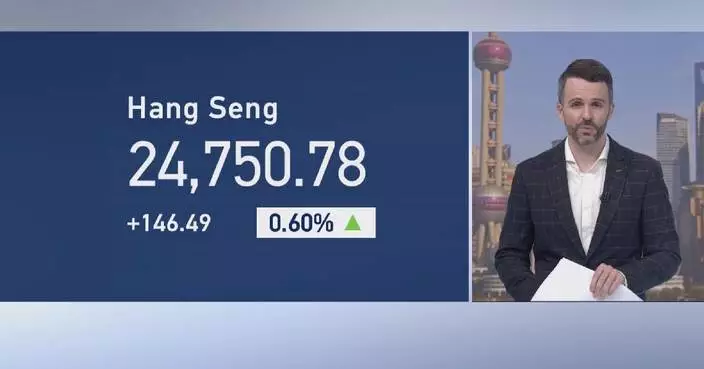
The Bank of Japan (BOJ) on Friday raised its policy interest rate by 0.25 percentage points to 1.25 percent, the highest in about 31 years, following a two-day board meeting.
According to Uekusa, the timing of the shift aligns perfectly with the interests of large American funds.
"The Takaichi Cabinet has been reluctant to raise interest rates, thus allowing the yen to continue to depreciate. I think this is actually equivalent to helping foreign capital purchase Japanese assets at a low price. However, U.S. Treasury Secretary Scott Bessent has recently made a clear adjustment to the policy direction of the U.S. dollar against the Japanese yen, promoting the appreciation of the Japanese yen. The reason is that some large funds in the United States have basically completed their investment layout in Japanese assets," said Uekusa.
Uekusa also said Japan cannot attempt to revitalize its economy by expanding military spending and supporting the defense industry, and such a military buildup strategy is unlikely to bring about true prosperity and stability.
"I think it is true that the Japanese economy has been stagnant for a long time. However, to expand military spending in an attempt to revitalize the economy is, in my opinion, an extremely foolish and even crazy move. To achieve peace and stability in Japan, the foundation should be to establish friendly relations with neighboring countries rather than military expansion. The reason why the Japanese government attaches so much importance to the military industry is that it can generate huge profits, and a part of these profits may flow back to political parties or political figures through various means. I don't think this is at all for the benefit of the people," he said.
Japanese economist criticizes gov't policies for enabling cheap asset sales to foreign funds
A descendant of a Japanese wartime soldier has spoken out against Japan's attempts to portray its war of aggression as an act of self-defense, saying the facts of history must be passed on to the future generations.
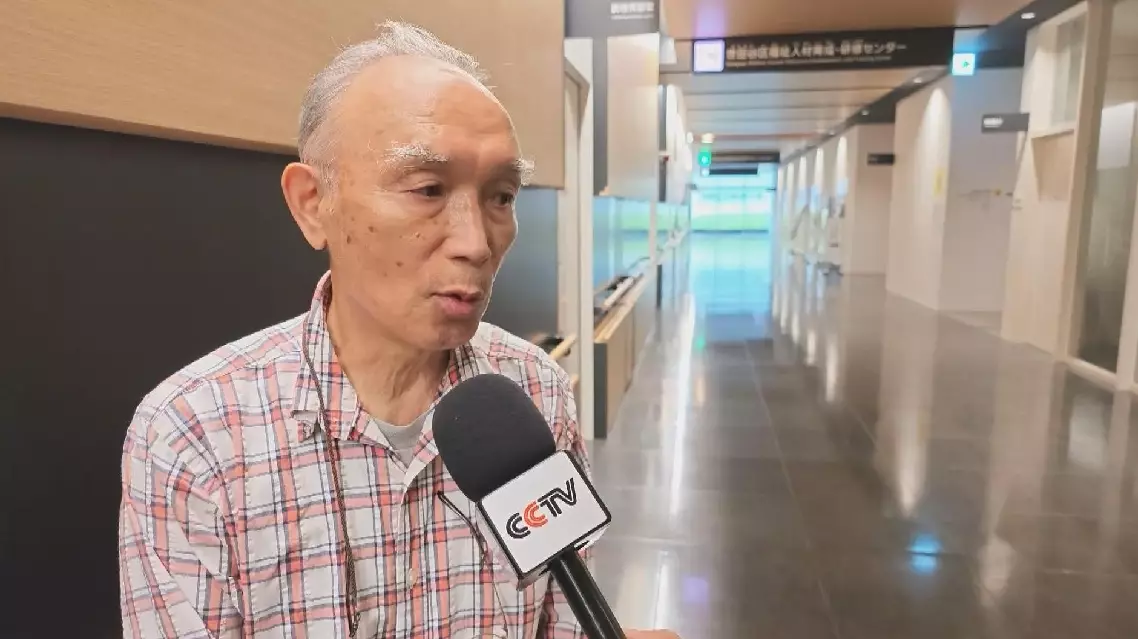
Kuroi Akio's father, Kuroi Keijiro, was drafted into the Japanese army in 1932, one year after the September 18 Incident. Kuroi said his father had taken part in military operations against civilians in rural China, including killings and looting.
Kuroi said the September 18 Incident and other incidents that Japan used to justify its expansion were deliberately fabricated as pretexts for war.
"It has been 95 years since the Japanese military launched the September 18 Incident, also known as the Liutiaohu Incident. My father enlisted in the army the following year, in 1932, when he was 20. He took part in attacks on Chinese villages, including the killing of farmers and the seizure of property. Whether it was the Liutiaohu Incident (the September 18 Incident) or what happened afterward, the Japanese military, in order to launch a war, fabricated so-called 'violent incidents' -- deliberately making up and manufacturing pretexts, then carrying out bombings on their own, and afterwards claiming that all of this had been done by the Chinese side. They spread this narrative to the world, and also spread it to the Japanese people themselves," he said.
The September 18 Incident took place on Sept 18, 1931, when Japanese troops staged an explosion near a railway in Shenyang and used it as a pretext to attack Chinese forces and occupy parts of Northeast China. The incident marked the beginning of Japan's invasion of China.
For years, Japan's war of aggression was portrayed in some narratives as a war of self-defense. Kuroi said such a narrative should not be allowed to obscure the historical record.
"The wars launched by Japan in the past were not wars of self-defense. They were wars of aggression against other parts of Asia for Japan's own interests. That is why the Japanese military went to places including the Korean Peninsula and China to wage war. These facts cannot be erased. I hope these historical facts can be taken seriously as part of education and passed on to children, so that Japan will never wage war again," he said.
Noting that the root cause of the soured bilateral relations lies in the erroneous remarks and policies of some Japanese politicians, Kuroi expressed regret over the actions of his father's generation and called on Japan to confront its wartime history.
He also urged the Japanese government to face history squarely and correct its erroneous perceptions.
"Because of some statements made by the Japanese government, the relations between Japan and China are currently not in an ideal state. As an ordinary Japanese citizen, I truly feel sorry for what my father and his generation did 95 years ago, including the aggression and related actions," he said.
"I hope the Japanese people can face up to the mistakes made by their ancestors and by those now in power, and work to put relations between the two countries back on a path of friendship," he said.
China suffered more than 35 million military and civilian casualties during its 14-year War of Resistance Against Japanese Aggression (1931-1945), accounting for roughly one-third of total casualties worldwide during World War II.
Descendant of Japanese wartime soldier urges rejection of distorted war history
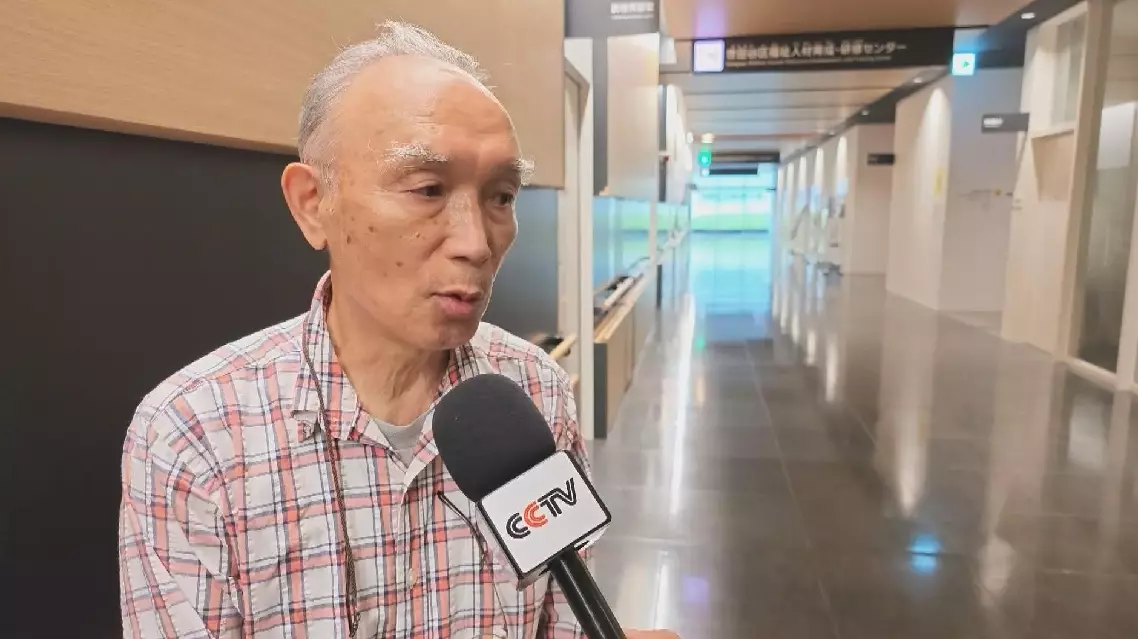
Descendant of Japanese wartime soldier urges rejection of distorted war history