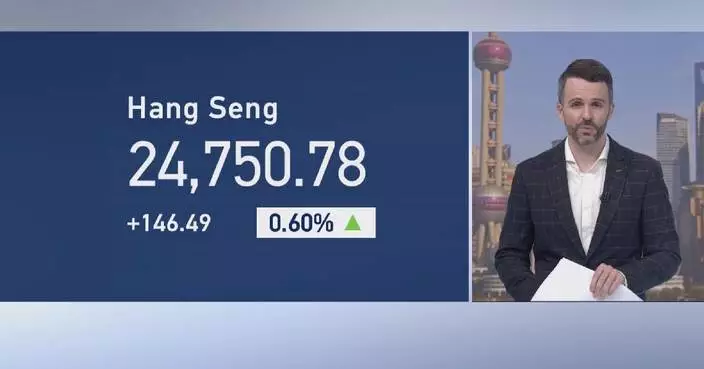
Chinese mainland stock markets staged a surprisingly robust finish to the week, as investors shrugged off the brief turbulence over AI and shifted their focus to the highly anticipated China-U.S. summit, according to Timothy Pope, an analyst for China Global Television Network (CGTN).
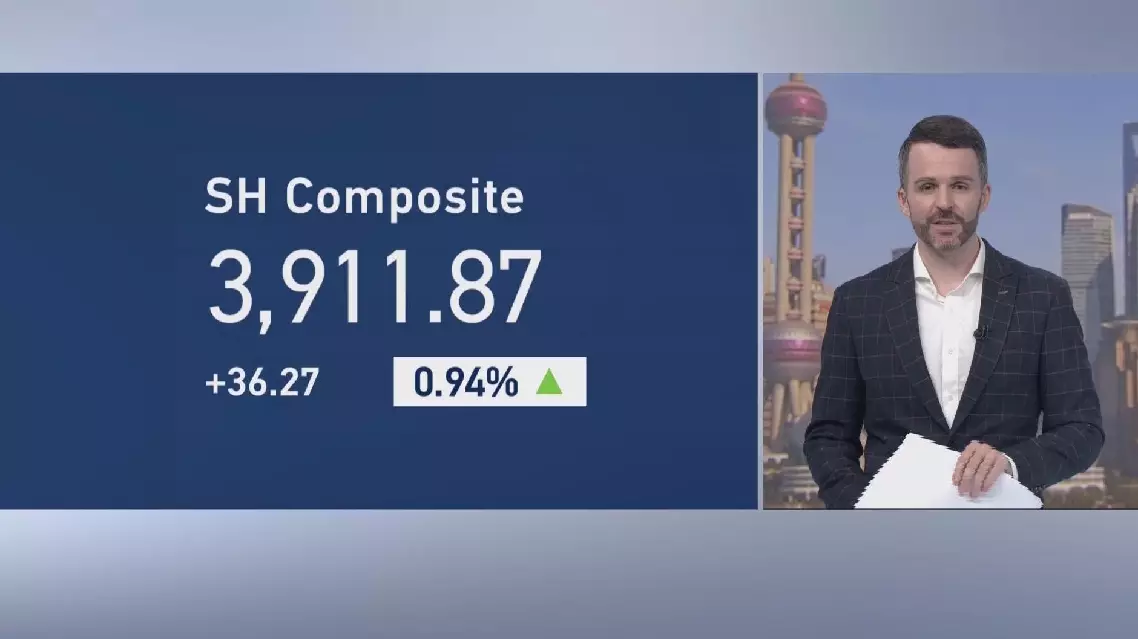
The benchmark Shanghai Composite Index rose 0.94 percent to settle at 3,911.87 points, while the Shenzhen Component Index closed 1.72 percent higher at 13,640.87 points.
The ChiNext Index, tracking China's Nasdaq-style board of growth enterprises, gained 2.25 percent to close at 3,372.68 points.
Pope noted that the rally came despite a hefty release of economic data painting a picture of stronger factory output and weakening domestic demand.
"Chinese mainland markets had a surprisingly strong finish to the week, given how much turbulence they encountered along the way. The Shanghai Composite Index closed almost 1 percent higher on Friday, ending the week about 0.6 percent up. And for Friday, the Shenzhen Component [Index] added 1.7 percent, the ChiNext was up 2.3 [percent] and the STAR 50 gained 2.9 [percent]. So the emphasis was there, pretty heavily on tech. Firstly, of course, on the news front, we had a big data dump this week. The overarching story was stronger factory output and weaker domestic demand. Crucially, we saw fixed-asset investment down 7.2 percent in the first eight months of the year, its steepest contraction since April 2020, and property investment down almost 20 percent over the same period. But we did have some quite interesting comments coming from PBOC (People's Bank of China) Governor Pan Gongsheng on Chinese lending rates, which we know have also been under pressure. He said this week that slower lending growth in China might be the country's new normal, although he did say the emphasis really does need to shift towards the quality of that loan growth," said the analyst.
Meanwhile, the technology sector quickly recovered from what the Wall Street Journal recently dubbed "The Great AI Freakout", according to Pope.
"The other thing that really hit the markets this week was what the Wall Street Journal called 'The Great AI Freakout' - I love this expression, but it seemed to last all of about 48 hours, because the markets didn't really share the same sense of impending doom as the news headline writers and the podcasters. Partly that's because the market seems to be betting that even if there is a slowdown or pause in frontier [AI] model research and development, the demand for more compute isn't simply going to disappear, and that really is what is feeding most of the AI infrastructure trade at the moment. So by mid-week, we saw AI and semiconductor shares really back on on the Chinese mainland, and they enjoyed a strong finish today as well. We saw the processor designer Hygon up 5.6 percent and SMIC, the country's biggest chip maker, gaining 3.9 percent. Going forward, investors' eyes will now be on a meeting between Chinese Vice Premier He Lifeng and U.S. Treasury Secretary Scott Bessent in New York this weekend. That, of course, comes ahead of a highly anticipated Trump-Xi meeting next week. And AI is certainly likely to be on the agenda -- both of those meetings -- along with trade and rare earth," said the analyst.
Chinese mainland stocks rally as investors shrug off AI jitters
More than eighty years after the end of World War II, the history of Okunoshima Island, Japan's "poison gas island," remains little known in Japan, concealed by its modern image as a tourist destination called "rabbit island."
Okunoshima, a small island covering about 0.7 square kilometers in Japan's Seto Inland Sea, is known today as "rabbit island" for the wild rabbits roaming across it, attracting tourists from Japan and abroad.
But during wartime, the island was a major hub operated by the Imperial Japanese Army to manufacture poison gas, where chemical warfare agents were produced and used to inflict suffering on countless innocent people. It was, in reality, a "poison gas island."
Japan's production and use of chemical weapons violated the Geneva Protocol. To conceal its activities, the Japanese military kept the construction and operation of the poison gas facility on Okunoshima secret throughout the war.
Between 1929 and 1945, Japan produced a significant amount of chemical agents in defiance of international bans, with nearly 90 percent of them originating from Okunoshima. The island housed around 200 rabbits used for testing the efficacy of poison gases.
In an attempt to cover up their chemical warfare crimes after their defeat, Japan exterminated all experimental rabbits. Rabbits seen on the island nowadays were later introduced to attract tourists.
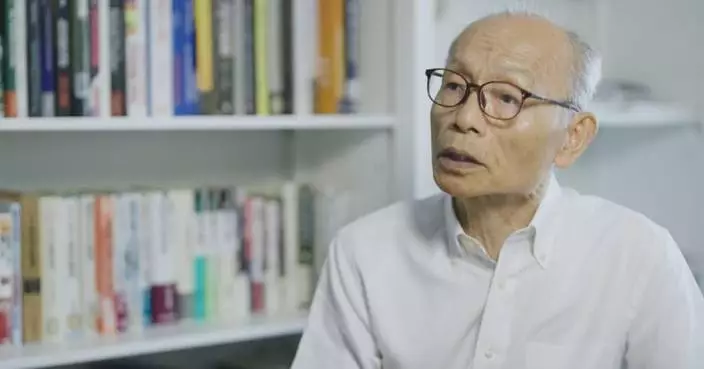
Masayuki Yamauchi is director of the Poison Gas Island Historical Research Institute, a civic group that gives tours of the poison gas facilities. He has been sharing the history of the "poison gas island" for 28 years.
As Japan's historical education focuses on the victim's narrative while neglecting its past as a perpetrator, most visitors are aware of "rabbit island" but remain oblivious to the dark history of the "poison gas island," Yamauchi said.
"Whenever someone calls it 'rabbit island,' I get angry. I say, 'This is Okunoshima, not rabbit island. Please don't use that erroneous name, which will make this important history disappear," he said.
Records indicate that the Japanese Imperial Army established a chemical gas factory on Okunoshima in 1927. From 1929 to Japan's surrender in 1945, over 6,000 people worked in the factory, producing poison gas that was transported continuously to the Chinese battlefields. Documented instances of Japanese chemical gas warfare on Chinese soil numbered more than 1,241, resulting in over 200,000 casualties among the Chinese military and civilians.
During the years of aggression, the Japanese government wiped Okunoshima off maps to protect its secrecy and banned entry to the island without the permission of the military minister. This suppression of its aggressive history somehow persists to this day.
In Yamauchi's view, it was precisely this suppression of its aggressive history that exposed Japan's intent to use chemical weapons at the time.
"Japan knew very well that secretly using poison gas violated the international treaty, yet it still planned to use it secretly after reaching China. The international treaty stipulated was that poison gas could not be used, but it did not prohibit the production of poison gas. Even so, Japan still kept its production secret. This shows that they actually already had a plan to use it. When they first used it in China, they began in the area around Shanxi Province, in places relatively close to mountainous regions. That was because such places were relatively less likely to attract attention. But later, the war did not develop in the direction Japan had hoped. Japan moved steadily toward defeat. At that point, they could no longer afford to worry about such things. Originally, they had used it in secret. Later, they gradually began to use it openly and on a large scale," he said.
On Aug 15, 1945, Japan announced its unconditional surrender. Following Japan's surrender, the poison gas facility destroyed its stockpiles and burned relevant documents in an apparent effort to prevent the crimes from being exposed. After the war, Okunoshima was transformed from a poison-gas production island into a leisure tourism destination.
"As far as Okunoshima is concerned, from my own personal perspective, I believe the government at the time wanted to eliminate the island's 'poison gas' image as quickly as possible. Everyone actually knew about the island's production of poison gas during the war. It was just that if anyone spoke about it, they would be arrested and face very serious consequences, so no one dared to speak. After the war ended, the Japanese government neither issued a formal apology, nor compensated the Chinese victims, nor clearly acknowledged that 'Japan violated the international treaty by using poison gas.' It has always adopted an evasive and vague attitude," he said.
The Poison Gas Museum was established on the island in 1988, built through grassroots efforts and fundraising by peace advocates. The museum displays equipment for poison gas production, remnants of gas shells, gas masks, and documents ordering the use of gas in China, among others.
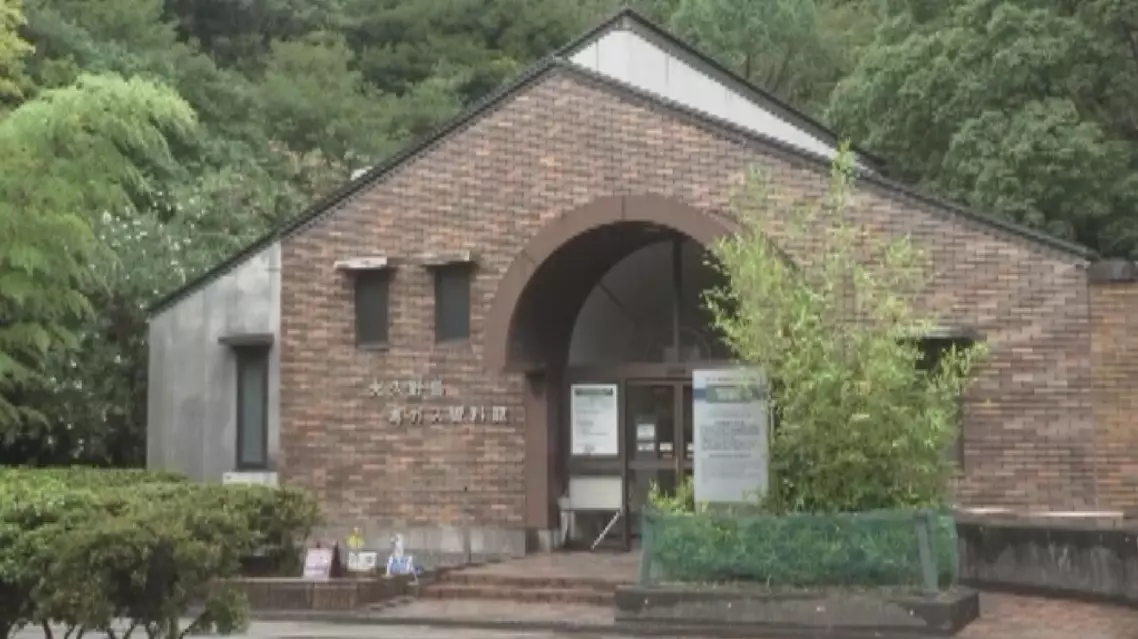
Uncovering the poison gas past of Japan’s "rabbit island"